Podcasts Archive - Page 5 of 12 - Sanford Health News

Leaders share keys to retaining the senior care workforce

Alan Helgeson (announcer):

“Reimagining Rural Health,” a podcast series brought to you by Sanford Health. In this series, we explore the challenges facing health care systems across the country from improving access to equitable care, building a sustainable workforce, and discovering innovative ways to deliver high-quality, low-cost services in rural and underserved populations. Each episode examines how Sanford Health and other health systems are advancing care for the unique communities they serve.

In this episode, Matt Holsen with Sanford Health News talks with Tammi Lehto, administrator, and Allyson Tator, administrator home health, at Good Samaritan Society – Loveland Village in Colorado on the topic of retaining the senior caregiving workforce.

Matt Holsen (host):

I’m chatting with two administrators from the Good Samaritan Society in Loveland, Colorado. Tammi Lehto leads a very large campus with a variety of services, and Allyson Tator directs the home health team. Thanks for being here.

Tammi Lehto (guest):

Thank you for having us.

Allyson Tator (guest):

Thank you.

Matt Holsen:

We’re talking about retaining caregivers, the senior caregiving workforce. What are some of the biggest challenges you face when doing that, Tammi?

Tammi Lehto:

I think we’re still seeing a little bit of the aftereffects of the COVID-19 pandemic with some occupational burnout and, you know, just trying to work with our staff. Just engaging a little bit more and trying to recognize that stressor in their life.

We also have competitive wages with other competitors in the area. There’s a strong desire for more enhanced work-life balance with our staff, and just patient safety overall of our residents, and the overall workload I think are probably some of the biggest factors that we are kind of still seeing.

Matt Holsen:

And for people who don’t know, Loveland is a big facility. How many employees do you have?

Tammi Lehto:

Oh gosh. Well, we are a continuing-care campus. So, we have independent living, assisted living, and then our skilled nursing, which we call “health care.” And I’m the administrator for the health care side of Loveland Village. We probably have anywhere from maybe close to 275 employees overall on our campus.

Matt Holsen:

Allyson, what are some of the challenges your team faces?

Allyson Tator:

I think for me, just having all of my staff at different campuses, not only at Loveland but also in the community, is the communication. I think that’s a huge barrier to just making sure that everybody is informed and feels like empowered and recognized. I mean, it’s obviously something that you have to have a heart for and a lot of the staff that I do retain have been with me 12 years, five years-plus. I think that’s the hardest part is finding that staff member that can do it and encouraging them and knowing that it’s hard taking care of somebody. And sometimes they can be grumpy and don’t take it personal and but also support them.

Matt Holsen:

What are some of the other roles that fill out your team?

Allyson Tator:

There’s the caregiver. I have business office coordinators in the office. Then I have nursing and therapy.

Matt Holsen:

So what strategies are you using to try to address this issue that are proven to be successful, do you think?

Allyson Tator:

For me, it’s like I always have an open door. They also, if my door is closed, they know they can text me if I’m in a meeting. I think that they all know that. And that’s kind of when I came over to Services at Home side in 2016, that’s kind of been mine, where I try to send cards. I try to send texts. I recognize them. When they start orientation, I ask what their favorite soda is or just little things because I think that goes a long way when you just notice them for those little things. Birthdays, anniversaries, kids’ birthdays, husbands’ birthdays.

Matt Holsen:

The little things mean everything to many people. Tammi, what’s working for your team?

Tammi Lehto:

When we do have a new hire, we do what’s called bubble wrapping the employee, and we highly try to protect them in that first 90 days of employment. We have a scoreboard posted at our facility, and we do have scoreboard rallies to celebrate when they reach their 30 days, 60 days, and 90 days. There’s dancing, there’s music, it’s just a great time overall.

But part of that is also our current employees and trying to invest with them at the same time. So, we connect them – our new employees – with mentors. And so we celebrate those mentors with mentor bonus checks. Like big checks, like you’re on the “Price Is Right” on our scoreboards.

We also do employee referral bonuses. We started a new program called “pick up points” about a year ago as well. So, when staff do pick up shifts, they earn points and they can cash them in on a catalog that we have. And so, we award those at our scoreboard rallies when somebody does cash in for pick up points. And so that’s like allowed us to now be totally agency free for over a year now. So, that in and of itself is a great celebration.

And then one of the things, as Allyson was alluding to, finding that perfect caregiver, whether it’s a CNA or nurse, especially with my director of nursing, it’s becoming more, our interviews are more intentional. More behavioral-based questions, engaging other staff as part of the interview process or taking that prospective new employee on a tour so you’re just trying to find the right fit for success for the new employee and then also for the organization.

Matt Holsen:

That’s incredible. So, you’re obviously not sitting back and you’re being active in this and trying to recruit and retain. How do you gather and act on feedback from your caregiving staff?

Tammi Lehto:

We do huddles throughout the day. Some of them might be like intentional touch points and just rounding, seeing how the staff is doing that day. What their challenges are? Is there anything we can do as far as assisting with supplies or answering questions? So those are throughout the day. And then we also obviously just completed our Peakon engagement survey. So, we’ll be finishing up a review of all of our comments, putting our action plan together.

And just for example, I have a meeting scheduled with my staff next week just to kind of share the results from our side of the building and just try to engage them and OK, what are some things we can work on? You know, like what are your specific challenges? Because if you’re trying to put an action plan together, you really need to involve your staff in that, otherwise your action plan could go in a totally different direction that isn’t going to address what their concerns are.

Matt Holsen

Allyson, what would you add to that?

Allyson Tator:

I would say that it’s a complete blessing to be at Loveland’s campus and I think for my staff there, they feel that, and it does, it’s a family. It’s a happy environment. I know when there are tours, when there’s anything that’s going on or at when I am taking a new hire around, they’re like, “Is it really this happy?” It is. It’s not me. I mean, people, the residents are happy. The staff is happy, you know, they’re there.

And so, yeah, I would just probably say along that it’s knowing your staff, just really being there for them and having them know that they’re a part of it and that you’re trying to communicate all of the changes that happen with our company, let alone at a location level. So, they feel like they’re not being blindsided. That they know what’s going on.

Matt Holsen:

How do you see your roles evolving to better support caregiver retention, Allyson?

Allyson Tator:

I would say to continue to be positive. I know I have a board in my office that says, “I get to, instead of I have to.” I get to go to work. I get to make a difference. I also have it at home, but I think that is something to make sure that I stay positive even when there’s days you close your door for a minute and you’re taking a deep breath yourself.

But I think that positivity and then just reassuring people that it’s the right fit. That it’s a great place and all the other benefits our company has.

Tammi Lehto:

And for myself, I’ve been in this industry for over 30-plus years now and it’s always been highly recognized that for the resident and their quality of life, the biggest factor for that is the CNA that is assigned to them. So, you can’t utilize techniques that you might’ve used like when I first started. You have to evolve with all the changes that are happening yourself.

In our workforce now, they want to be engaged and they want to be involved in the decision making. So, I feel like the more transparent you can be with everything, the better. And as Allyson has said, we’re a fun campus and we enjoy having fun and you should have fun at work. So, we go dancing down the halls, you know. There’s just all kinds of fun themed events that happen on our campus. And so, the more that you can do all that, I think is for success in the long run.

Matt Holsen:

I’ve been there a few times. It really is a fun community like you describe. I want to thank you both for joining me here in this discussion about this important topic, retaining the senior caregiving workforce. Have a great day. Thanks.

Allyson and Tammi:

Thank you. You too.

Alan Helgeson:

You’ve been listening to “Reimagining Rural Health,” a podcast series brought to you by Sanford Health. Hear more episodes in this series or other Sanford Health series on Apple, Spotify and news.sanfordhealth.org.
Get more episodes in this series

Vaccinations help older adults stay stronger for longer


Alan Helgeson (announcer):
This is the “Health and Wellness” podcast brought to you by Sanford Health. The conversation today is about the importance of vaccination for older adults. Our guests are Amanda Petrik, director of nursing, Good Samaritan Society – Canton, South Dakota, and Courtney Vroman, director of nursing, Good Samaritan Society – Battle Lake, Minnesota. Our host is Matt Holsen with Sanford Health News.

Matt Holsen (host): 
I’m joined by two nursing directors. Amanda Petrik serves the Good Samaritan Society in Canton, South Dakota. And Courtney Vroman is a nursing leader in Battle Lake, Minnesota. Welcome. Thanks for being here.

We’re talking about vaccinations, and let me start with you, Courtney. Why should older adults be getting vaccinations and which ones are the most common in your setting?

Courtney Vroman (guest):
Well, older adults, we really want to see them get vaccinations as they get older. Their immune system really declines. It doesn’t respond as well in its ability to fight off infections and diseases, so they really become susceptible.

Matt Holsen:
What are some of the specific vaccinations that you’re giving to folks?

Amanda Petrik (guest):
Typically during the year? Flu, COVID, RSV and pneumonia are the big ones we hit in our facilities.

Matt Holsen:
And how is that managed in a long-term care setting?

Amanda Petrik:
I have a wonderful infection preventionist and I’ve also went through the training. So we kind of work well together but we do set up with Lewis long-term care and we do have a plan. The first year we gave all the vaccinations at once and it was kind of hard on our elders. So now last year we spread it out more so that we have good protection through that fall season.

We started with our flu in September, RSV in October, and then we did our COVID in November. So they had that great protection through the holiday.

Matt Holsen:
Courtney, what is the process like at your location?

Courtney Vroman:
At our location, it’s really a team effort. We too have an infection preventionist, but we’re really looking at resident vaccines prior to them coming to the nursing home. As soon as they come to us, we have the infection preventionist and the case managers interviewing the residents, reviewing records, interviewing families, so that we can really bring all of that information together. We have a flu vaccine clinic every fall, COVID vaccine clinic every fall and as well when booster time comes up. So we’re really looking at all of those things.

Matt Holsen:
Would you describe this as easy to access? I mean, it’s very convenient for residents, or how would you describe that?

Amanda Petrik:
I would say it’s very convenient when you have a good team that works together. Like she said, with admission, you get that baseline of what’s going on and you update and educate. It’s a lot of education that goes into it with families because some families are hesitant. You just really have to speak to what the recommendations are by the CDC (Centers for Disease Control and Prevention).

Matt Holsen:
That actually leads me right into my next question. Do you encounter a lot of vaccine hesitation at your location?

Courtney Vroman:
At our location, it’s not unusual to encounter that. We probably encounter it more with new admissions. Usually when new admissions are coming, they’re coming to us after a hospital stay, an illness. So their focus is on something other than vaccines.

So again, it’s really about educating them, the importance on the vaccines, the risks and the benefits, and at the same time you’re trying to develop a trust relationship with them. They’re oftentimes unfamiliar with our caregivers and they don’t have their usual providers around them. So it’s really many things coming into play there.

Matt Holsen:
Amanda, what do you do when you encounter vaccine hesitation?

Amanda Petrik:
A lot of education. I really do emphasize the communal setting and how infections do spread quite a bit faster than if you were at home. So it’s really important for that primary prevention in nursing to start with your vaccinations when coming into the setting.

Matt Holsen:
What are the risks when you do avoid getting vaccinated? What happens?

Courtney Vroman:
Well, there’s risk for increased illnesses, disease, spreading amongst not just your resident population, but also over to your workforce population. Increased hospitalizations.

Amanda Petrik:
I would say that too.

Matt Holsen:
From what I remember, you guys both have high vaccination rates at your location. Can you tell us a little bit about that?

Courtney Vroman:
Yeah, we’re really excited about that. We achieve high vaccine rates. Right now we’re in the 97th percentile for vaccine compliance rates through the Good Samaritan/Sanford platform.

Matt Holsen:
When we talk about vaccination rates and having rates that high, what does that do for a community? What are the benefits?

Amanda Petrik:
The benefits are, I’m going to tell you and I should knock on wood somewhere, but we did not have any positive cases of influenzas this year. Our COVID outbreak that we did have in January was a minimum of, I think we had five that tested positive, none of which had any symptoms. It was just kind of a fluke. The one got tested and I had to test the whole building. So we really know that the vaccinations work because we’re not seeing people passing away from COVID per se.

Matt Holsen:
Courtney, what would you add to that?

Courtney Vroman:
So I can also add that usually we end up seeing a healthier community. They’re developing herd immunity when they’re getting those vaccines. If they do get the illness, oftentimes what we’ve seen, especially in the last year, is that they’ve had just a decreased level of acuity as far as the illness goes. So the vaccines are beneficial even if they do get COVID or influenza. The illness just hasn’t been quite as strong.

Matt Holsen:
And we talked a lot about residents during this, but this goes for staff too, right? I mean you’re chatting with staff, encouraging staff?

Courtney Vroman:
Yes, absolutely. Because of course if your staff gets sick, then you have other issues that you’re dealing with in long-term care all while you have to continue providing cares to the residents.

Matt Holsen:
Anything you’d like to add to that?

Amanda Petrik:
We just really encourage if they’re not going to do their vaccination, that they wear a mask, obviously. And then making sure we’re doing great hand hygiene and all the infection prevention precautions that we do.

Matt Holsen:
Thank you for joining us on this important topic.

Alan Helgeson:
This podcast is part of the “Health and Wellness” series by Sanford Health. For additional podcast series by Sanford Health, find us on Apple, Spotify, and news.sanfordhealth.org.

Get more episodes in this series

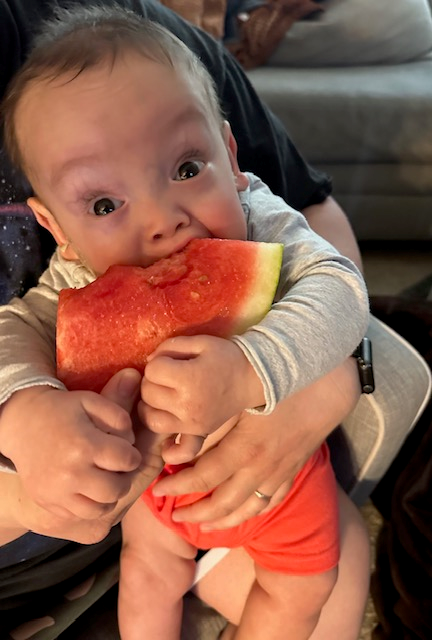
Growing the Gill family comes with help from Sanford Health

Nikki Gill (guest):

You feel just this sense of desperation and panic because it’s like, is this all that you can do? I don’t think I’ve ever prayed more in my entire life. Just like out of just pure desperation of just, “I’ll do anything. Just like save my baby,” you know?

Cassie Alvine (announcer):

This is Family Portraits, a new podcast series by Sanford Health.

Alan Helgeson (host):

So what is a family? Google says it’s one or more parents and their children living together as a unit. Another definition is all descendants of a common ancestor. Likely my family is different than your family. We celebrate this. It’s what makes us unique and develops the chapters of our own stories.

In this new series, with each unique story of family, we’ll sew these stories together with a common thread. That thread is one of compassionate care and expertise. And while these stories intersect with the caregivers from all across the many rural communities that Sanford Health serves, the stories belong to the wonderful people that trust us with that care each and every day.

In this episode, our family portrait begins with the story of Nikki and Polly Gill and of all places, on the volleyball court.

Polly Gill (guest):

So Nikki and I met at Dakota Wesleyan and we both played volleyball together, and that’s the first time we met. And then yeah, we were just roommates.

Nikki Gill (guest):

So Polly was like a really big volleyball star in high school. And when I was in high school, my team actually played against hers, and her senior year, she’s from Pierre and they were undefeated all season. And she was a senior and I was a junior. And from our high school in Rapid City at Stevens High School, we ended up beating them in the state championship. So that was like the first encounter and to this day she does not get to live that down. And so yeah, we played volleyball in college together and then like she said, we were roommates and then became more than roommates and fell in love and got married and had a baby. <laugh>

Alan Helgeson (host):

Polly Gill. She keeps track of their time together.

Polly Gill (guest):

I think we dated about seven years before we got married. And then now we’ve been married for, it’s gonna be seven years. It’s been the best 14 years of my life. Yeah.

Nikki Gill (guest):

Yep. Good answer. <Laugh>

Alan Helgeson (host):

When you’re together, at some point the conversation is likely to come up. You know, kids. For Nikki, the answer was easy.

Nikki Gill (guest):

I’ve always known that I wanted to have kids.

Alan Helgeson (host):

For Polly Gill, not so much at first.

Polly Gill (guest):

I actually didn’t want to have kids. When I met Nikki, that’s just something we talked about. I just knew she was gonna be amazing and that’s like all I wanted at the end of the day is a family with her. So that’s kind of when I changed my mind and, that’s what I wanted.

Alan Helgeson (host):

Starting a family is filled with so many challenges, but for Polly and Nikki agreeing on having kids was only the beginning.

Nikki Gill (guest):

I was with boys my whole life before I had fallen in love with Polly. And so I had imagined having babies in the traditional sense. And so when Polly and I fell in love, we had to look at how we wanted our family to work. And initially, I remember having a conversation with Polly at one point saying like, I don’t know how we would … that was like a deal breaker for us at one point.

Polly Gill (guest):

We almost didn’t make it because of that.

Nikki Gill (guest):

I was like “I want to have babies. I want to  have a family. I don’t know that this is going to work.” So yeah, I just, I hope that people can listen to this. Or there’s at least somebody out there who can listen to this and think, “Oh gosh, like that’s awesome that I can marry who I want to marry, or love who I want to love and have a family.” Like you can have all of that.

Polly Gill (guest):

Right? And then going into Sanford too, not once did they look at us like we were a same-sex couple. They looked at us like every other couple and didn’t even bat eye at us being same-sex.

Nikki Gill (guest):

Can’t say enough good things about those doctors.

Polly Gill (guest):

Yep. They just acted like we were just a heterosexual couple. And they just made us feel loved and like it wasn’t anything different. And we really appreciated that.

Alan Helgeson (host):

Nikki on how they started on that journey to having a baby.

Nikki Gill (guest):

We wanted both of us to be involved with having our child. So what we actually did with Theo was we had Polly get her eggs ready. So we kind of like split the IVF process together. So Polly had her eggs retrieved for the IVF process and then those eggs were created, like the embryos were created with her eggs and the sperm donor. And then those were put into me. So like, Theo would not have been able to exist without either of us put together, which is like what we were really hoping for in a perfect world.

Alan Helgeson (host):

The Gills found it took a good deal of patience.

Nikki Gill (guest):

I also have PCOS, so I have polycystic ovary syndrome.

Alan Helgeson (host):

And more patience.

Polly Gill (guest):

He has always been the last chance of everything during this whole pregnancy. And the last chance we were going to quit, that’s when we tried something different.

Nikki Gill (guest):

It took about three to four years for the whole process.

Alan Helgeson (host):

Things started turning the corner when the Gills visited with the team at Sanford Fertility and Reproductive Medicine Clinic.

Polly Gill (guest):

We started at Sanford Health because I believe that they’re the only fertility clinic in the whole state of South Dakota. So we’re very, very blessed that they’re nearby. And we couldn’t ask for the better doctors. I think we started off with Dr. Hansen. From the very start we just worked as a team and they said, “We’re going to get you guys through this and we’re going to do everything we can to get you guys pregnant.” And they give us a lot of hope. And they pushed through until we, until we got there.

I was super excited. But how many times we had negative after negative after negative. It was like, “There’s no way we can be pregnant. This is just not going to happen.” And we just didn’t want to celebrate yet. Man, but when we found out, when those were two solid blue lines and the pregnancy (test) said positive, we just bawled. And we just said, you know, we’ve been working on this for four years, trying to have our family and it was the best moment of my life.

Nikki Gill (guest):

Polly is much better at being in the moment and being just really present and really grateful and really happy. And my personality is more like analytical and it’s just like, “OK, what’s the next step? What’s the next step?” So when I saw those positive lines, for me it was like, “We’re not out of the woods yet. We don’t have a baby. I could still have a miscarriage. We’re in the first trimester.” So I wasn’t ever able to really stop, take a breath and enjoy things because in my head it was like very factual, medical, “What do we have to do next?” And also I will say I felt a ton of pressure, like emotional pressure, to be perfect all of the time when I was pregnant. Because it’s like, if I do anything wrong, I’m going to ruin this pregnancy. So like every emotion that comes along with it.

Polly Gill (guest):

Yeah, there’s a lot of pressure on comes with it — women who get pregnant — and I think that’s for every pregnant woman. There’s a lot of pressure onto, it’s like, they feel like it’s your job to make their family. Everything’s on you. You have to do everything perfectly.

Nikki Gill (guest):

And when you’ve never been pregnant before.

Polly Gill (guest):

Yeah, it’s scary.

Nikki Gill (guest):

It’s like, is this normal? Is this not normal?

Polly Gill (guest):

Right. It’s scary.

Alan Helgeson (host):

The Gills found that when it came to starting their family, they experienced a whole new family at Sanford Health.

Nikki Gill (guest):

We have gone through a lot of doctors at Sanford for this whole journey. So we started with our fertility doctors, Dr. Hansen, and let us add their amazing team of PAs. And then as soon as I got pregnant and we graduated from the fertility doctors. Then we went to Dr. Kemper.

Polly Gill (guest):

Oh and man is she, she’s awesome!

Nikki Gill (guest):

So then really after you graduate from the fertility doctors, it’s like a normal pregnancy, right? So then you just have like a normal baby doctor, which is so weird because you have these fertility doctors who are checking you and ultrasounds all the time to going to just like a regular baby doctor.

Polly Gill (guest):

Dr. Kemper would look at the ultrasound and say, “You guys are good.”

Nikki Gill (guest):

Because it was IVF, that’s what labeled us as a high-risk pregnancy. But yeah, we just had like a normal experience from that, at that point. And then at my 20-week scan, we found that my cervix was shortening and funneling, which is a sign of labor.

Alan Helgeson (host):

This really wasn’t part of the plan, right? Nikki’s doctor knew what to do,

Nikki Gill (guest):

So they had to put in a cervical stitch to like stitch up my cervix to stop it from opening in hopes that that could keep the baby in long enough to get to viability. So I remember at that 20-week appointment, they were like, “You could have a baby within the next couple of weeks.” And we were like,”Um, that can’t happen!” So we had Dr. Rodel do my cervical stitch and she is just amazing.

Polly Gill (guest):

She’s amazing too.

Nikki Gill (guest):

Yeah.

Alan Helgeson (host):

While Polly and Nikki hoped that this would help keep the baby in Nikki for a while longer, things didn’t quite work out that way. At 24 weeks and five days, things changed.

Nikki Gill (guest):

Ugh. You think you would be able to like get through it? After telling the story so many times. OK, so the night before the emergency C-section happened, I had felt pressure in my vagina and they came and did a pelvic exam and they said everything looks good. Theo was reading normal on the fetal monitor. There was like, I had the cervical stitch in. So they said if he were dilating at all, there would be blood. Everything looked good. So they had just said like, “No concerns at this point.” So we said, “OK.” So I woke up that next morning and I went to the bathroom and it felt like my vagina was falling out of me. And I had called Polly into the bathroom and I said, “This is not normal.” And something was coming out of me.

And so we called the nurse in and she’s like, “Let’s get you into bed.” And I said, “What is this?” And it was his umbilical cord that was falling out of me. And it was like, they say, when you’re waiting and you’re in bed rest, they talk to you and they say, “I hope that you never have to experience an emergency C-section, but if you do, it’s like a beautiful symphony.” It’s like everybody comes in and they all have their roles and it’s just like a flawless, beautiful symphony and there’s really no other way to describe it.

So they wheeled me out and I had a nurse by my side who I had on Day One, and I just grabbed her hand and I said, “Is he going to live? Is he going to be OK?” And she said, “We’re going to get him out of there. You have to stay calm right now and not give yourself anxiety with everything else that’s happening.” And it was really urgent to get him out of me because with his umbilical cord falling through, that’s cutting off oxygen to him. So we go into the emergency room and they put me on the bed and one person’s at my head and she’s saying, “Do you give consent to be put out?” And I said, “Yes, just save my baby!” And there’s a person like down below, and she’s just like sticking a catheter in and the surgeon comes in. They have to time the procedure perfectly because they’re putting me under general (anesthesia). Like they’re knocking me out completely. Normally with a C-section, they can give you like, an epidural kind of and like numb you.

Polly Gill (guest):

Paralytic. Yeah.

Nikki Gill (guest):

And they couldn’t, they needed to just put me out completely. There was no time. And so they’re like scrubbing my stomach up and the person by my head is saying, “Are you ready for her to be put out?” And the surgeon’s saying, “Nope, not quite ready yet. Not quite ready yet.” And then I have somebody holding my hand and they’re looking for the heartbeat. And I said, “Is there a heartbeat? Is he alive?” And they couldn’t find one. And so they’re getting ready to like put this mask on my face. And I said, “Stop. Is there a heartbeat?” And they said, “Yes, yes, we have a heartbeat.” I said, “OK, put me under.”

Polly Gill (guest):

So when her cord fell out, all the doctors ran in and everybody left. And I was by myself. And I like, had a little moment with God where I dropped to my knees and I just said, you know, I pray that, because she could have had an infection and if the umbilical cord wouldn’t have come out, she could have died and so could have he. I had a rush of peace over my heart, and then from that moment I knew that everything was going to be OK. And then I went and saw him for the first time and it was the most beautiful thing I’ve ever seen. And he was kicking and he was sassy. And we actually got to have a delayed cord clamping because he was such a fighter. And ever since then, he’s been a fighter.

Alan Helgeson (host):

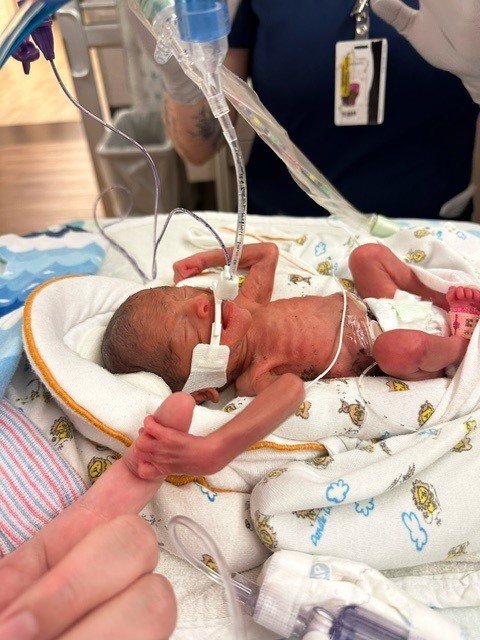
Baby Theo is born one pound, eight ounces and now begins a new chapter for the Gill family. A 120-day stay at the neonatal intensive care unit at Sanford USD Medical Center in Sioux Falls. And new doctors to care for this growing family.

Nikki Gill (guest):

From our fertility doctors to our OB/GYN to our maternal-fetal medicine doctor, Dr. Rodel, we then had Theo and then we had a new team of doctors, all of our NICU doctors. They’ve got like a rotation, and so we had talked about how every week that doctor was exactly what we needed at that time.

Polly Gill (guest):

They had different ideas.

Nikki Gill (guest):

And they all like bounce ideas off of each other. And every step along the way, it was exactly perfect for what Theo needed.

Polly Gill (guest):

And we can’t even get started on the NICU nurses. I mean, they’re a family.

Nikki Gill (guest):

Just the whole team.

Polly Gill (guest):

We still think about ’em and yeah, they’re just amazing.

Alan Helgeson (host):

During this whole journey to starting a family, the Gills encountered things they never expected in each step along the way. Four months in the NICU took its toll.

Nikki Gill (guest):

He was going to have to go to the NICU regardless. We knew that that was going to happen. We just didn’t know how sick he was going to be when he was in the NICU. His first week, they say that like, the baby is going off of the hormones that I had provided for him when he was inside of me, and it’s like a honeymoon stage. So the first week he was great, and then after my hormones like kind of leave his body and it’s up to his little body to be like, “Whoa, like I gotta do this on my own,” that’s when reality sets in.

The first week was a breeze compared to everything else. And then it got like more complicated. You feel just this sense of desperation and panic because it’s like, “Is this all that you can do?” And I don’t think I’ve ever prayed more in my entire life just like out of just pure desperation of like just, “I’ll do anything.”

Polly Gill (guest):

Just pleading.

Nikki Gill (guest):

It’s just like, “Save my baby,” you know? And they can’t promise you that he’s going to live, right? Like I kept asking the nurses, I would be like, “He’s going to live, right?” And they would say like, “We’ve got really good doctors.” And they would say like, “We’ve got a really good team.” And they would say like, “He’s just doing what preemie babies do.” But nobody could ever tell me like, “Yes, he’s going to live.” Because you can’t promise that to families. And you just so desperately want somebody to just say “He’s going to make it. He’s going to be OK.” But you can’t. So you just have to like, hold onto your faith that everything is going to make it.

Polly Gill (guest):

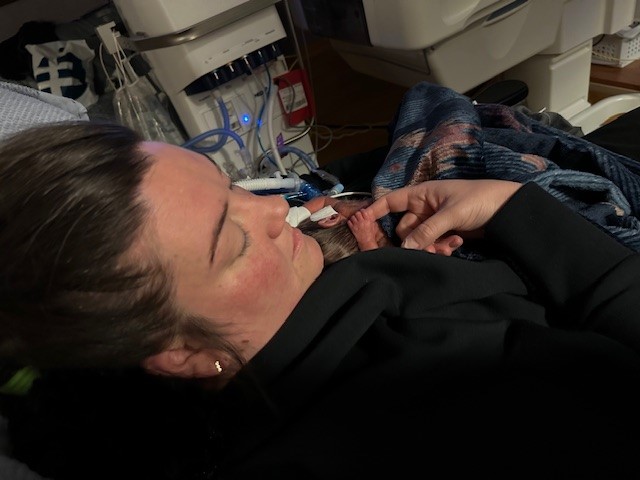
And just seeing your little guy hooked up to that many things is just the hardest thing to look at.

Nikki Gill (guest):

Those nurses deserve all of the good in the world. They are not only medically taking care of your child, but then they’re like counselors to you.

Polly Gill (guest):

They become like your family.

Nikki Gill (guest):

Yeah. And they’re like therapists.

Polly Gill (guest):

They were like our angels.

Nikki Gill (guest):

Yeah. They wear so many hats throughout the day just to, they’re just phenomenal.

Alan Helgeson (host):

In the months that have passed for Polly and Nikki, some of the challenges they faced were the things that could have had the power to transform or the power to tear them apart. For the Gill family, Polly, Nikki and Baby Theo, it forged a strength like none other.

Polly Gill (guest):

So the hardest part about it in the NICU was the roller coaster that we had to go through. We made progress. You know, two steps forward and then you’d digress five steps back. And so you’d think he was doing good, we’d be OK, we’d be happy, we’d be like, “Yes, he’s got this.” And then we’d get bad news and his lungs weren’t functioning the way we wanted to. He’d make a little more progress and then he’d fall back.

So I think that was the biggest roller coaster of emotions, was really hard to maintain. And I mean, it gets to you. We had a lot of times where Nikki and I broke down thinking he was going to die. So many times. And it is just an emotional roller coaster that I was not ready for. But at the end of the day, it’s made us stronger and a stronger family.

Nikki Gill (guest):

They say the hardest part about being in there is the beginning and then right at the end. Because at the end he looks like a baby, he’s doing so good, but like, you can’t go home yet. And then he’s like big enough where he just wants to be held. And like, when he’s really little, he’s just on a machine and he’s sedated. When he is big enough, he’s crying out and you want to see him, and you want to love him, and you want to hold him, and you can’t take him home. And you’re at work, right? Like you can’t just be in the NICU 24/7.

Alan Helgeson (host):

Where the Gill family has been, they know that others will be too. As a couple that has experienced a journey filled with challenges and opportunities, some words of encouragement.

Polly Gill (guest):

During the whole NICU stay too, we had our neighbor who went through the exact same thing as us. We had that person to talk to, and finding people who understand you was helpful for me anyways. Our neighbor was kind of going through the same thing, and talking to that mom really helped. And so I think finding your community is helpful.

Nikki Gill (guest):

Our NICU neighbor.

Polly Gill (guest):

Our NICU neighbor. Yes. And then talking to her, her child right next to us has gone through the same thing Theo has been. It’s helpful to find your community and also like, things might be really, really dark at the time and really, really tough. But like, things are going to get better. It’s going to get better. It just takes time.

And you might be in the darkest place of your life, but Sanford’s there to help you. The nurses are, the doctors are, your family is, but it does get better. And there were all those moments where we couldn’t hold him because he was in an isolette. We could only put our hands through a hole and touch him. And Nikki goes, “He is sleeping in our bed until he’s in college.” <Laugh>. I’m sure he’d love that.

Alan Helgeson (host):

Theo is a growing boy and the Gill family story is just beginning.

Polly Gill (guest):

He’s just the best boy and he’s so happy and he is laughing and we finally get to see him actually acting like a baby, which we were waiting for for so long. And we just love him so incredibly much.

Nikki Gill (guest):

I would do all of that over a million times if this was like the result of it. It was like so worth it.

Polly Gill (guest):

I agree.

Nikki Gill (guest):

Yeah.

Alan Helgeson (host):

Remember when we began this episode and Polly said they had been together for 14 years.

Polly Gill (guest):

So Nikki and I were still together when marriage wasn’t even legal and we were together when marriage was legalized for same-sex couples.

Nikki Gill (guest):

Nationwide.

Polly Gill (guest):

Nationwide. And so that’s how long we’ve been together and it’s like, we’ve been through all of that. And so knowing that we’ve worked through that together as a couple and then now we can work as a family, as a same-sex couple to get pregnant. It’s something that’s very realistic, even for other couples of same sex. It’s a very realistic opportunity for them and it’s possible.

Alan Helgeson (host):

And for their part, Polly and Nikki are grateful for the medical team who helped them along the way as they begin this new chapter in their life together.

Polly Gill (guest):

They are the story. They are our beginning, our middle, and our end, and our family at the end of the day, even when we’re home. So they are our complete story and they saved his life and they helped us have a baby and her family. They just didn’t do it for their jobs. They truly loved us and loved Theo. Been an awesome journey with Sanford and our family.

Nikki Gill (guest):

Yeah. We’re forever, forever, forever, forever grateful for all of the people who have helped us along the way.

Polly Gill (guest):

And of course couldn’t get through this without God too. So a lot of praying and a lot of good team is what made it made this happen, possible.

Alan Helgeson (host):

Well, we couldn’t really finish this episode without Nikki and Polly telling us the best part of this whole experience.

Polly Gill (guest):

Theo. That’s just it.

Polly Gill (guest):

He is like, he’s just our whole world. So in my happiness with him.

Nikki Gill (guest):

I would say that too. Yeah. I mean, just having him and looking into his eyes and just seeing him smiling at you. A close second though would be watching Polly be a mom. It’s like the most beautiful thing ever from somebody who didn’t even want to have kids, to now seeing her love him is amazing, and it’s like she’s just blossomed into this version of perfection that I’ve never seen before. So watching her be a mom is a very close second.

Polly Gill (guest):

You’re making me cry. <Laugh>.

Learn more

Creating healthy communities at work is an ongoing process

Alan Helgeson (announcer):

“Reimagining Rural Health,” a podcast series brought to you by Sanford Health. In this series, we explore the challenges facing health care systems across the country from improving access to equitable care, building a sustainable workforce, and discovering innovative ways to deliver high-quality, low-cost services in rural and underserved populations. Each episode examines how Sanford Health and other health systems are advancing care for the unique communities they serve.

In this episode, Courtney Collen with Sanford Health News talks with “future of work” expert and bestselling author Eric Termuende and Ashley Wenger-Slaba, Sanford Health senior vice president of employee experience, education and workforce relations. The conversation is on workplace culture and the future of work.

Courtney Collen (host):

Thank you both so much for your time.

Eric and Ashley (guests): Thanks for having me.

Courtney Collen:

Eric, what are the top three opportunities you see when it comes to building a resilient and thriving workforce?

Eric Termuende:

Yeah, so first of all, let’s get a better understanding of resilient. To me, resilient is able to navigate change, able to bounce back from uncertainty, able to navigate whatever the future of work is for sure going to promise us. So given that that’s an understanding of what resilience is, a foundation of trust on the team is imperative.

We have to make sure that people feel seen, heard, and understood. You know, a sense of belonging, I think is a better way of saying that. And there has to be an opportunity or a forum to do things different than the way we’ve always done it. Because, in the work that we did, what we found is that the actual root of happiness is a sense of contribution. And when we’re able to contribute, try new things, feel seen, heard, and understood, built on a foundation of trust, resilience is present, and the future of work is not something we have to shy away from.

Courtney Collen:

Where have we made progress when it comes to workplace culture? Where does work remain? How will this shape strategy and policy moving forward?

Ashley Wenger-Slaba:

Courtney, when I think about the progress we’ve made over the last several years, one of the things I’m most proud of is how we have really grown our listening culture at Sanford. We’ve built out a number of different strategies where we are actively listening to our employees in a number of different ways, trying to really stay in tune day-to-day with the employee sentiment across the organization. Whether that be our employee survey work, our SAFE rounding, our employee connection process – just a number of different ways that we are getting real-time feedback from our employees and utilizing the information to pivot our strategies and offerings as an employer.

Eric Termuende:

I think we’ve identified that culture is an important thing. And we’ve also identified that it’s very nuanced. So something that might work at Sanford Health might not necessarily work at the media company downtown or for the sports team, and that’s totally fine.

We recognize that culture is important, but it’s not necessarily universally the same. I mean, even if we were to just look at the best places to work in the country according to Fortune magazine, one of them, well, let’s say Sanford Health, of course, we’ve got that one there. But, but another one is like Cisco, out of San Francisco, internet infrastructure. And another one is the Hilton hotel chain. And I guess the point that I’m trying to make is that yes, three great places to work, but that doesn’t mean that somebody who’s a valet at a Hilton wants to work at Cisco in a server room, or somebody who’s making a bed at a Hilton wants to work at a hospital and that’s fine. We’ve got three great cultures, but not necessarily great for each other.

So where’s there progress that needs to be made? We have to understand that culture is not static. You know, we heard this throughout the pandemic so often: How do we preserve, how do we maintain the culture we have? I think the answer is you don’t. With every new hire, with every person that retires, with every new patient, with every new customer, culture changes and is supposed to recognize that it’s a moving target that we’re always looking to move forward. And I think we’ll get there eventually and continue to get to wherever we need to be.

Courtney Collen:

Fascinating, great insight. Thank you. You talk about one-degree shifts that build communities at work. In other words, small changes can have a big impact on workplace culture. Eric, can you share some examples of that?

Eric Termuende:

Yeah, let’s make it a little easier and make it more on a personal level. Let’s just say I wanted to lose 10 pounds or gain 10 pounds. Instead of just setting that goal of losing 10 pounds, which of course we need to do, what are the little shifts that I can make right now that will eliminate excuse, eliminate distraction and eliminate any reason for me to not ultimately get that done?

So maybe I’m putting my shoes beside the door so that they’re there. Maybe I’m blocking a spot in my calendar because my calendar’s been busy and I haven’t been able to make time. And the excuse that I tell myself is that I’m too busy – relatable. Maybe I just have that, you know, clothes that are folded at the base of my bed. Maybe if I’m looking to lose 10 pounds, I might say, well, I’m not just going to go on an all salad and juice diet. Maybe I’ll just take the sugar out of my coffee this morning. You know, which might be a bigger than a one-degree shift change for some people. But instead of saying, how do I cut everything? What’s the small change that I can make? And I found that in the workplace, the same thing happens.

We often have our big strategic initiatives, our five-year plans, and they can be overwhelming. They’re huge. Right? They’re daunting. They’re exhausting. Instead, set that goal, but then say, what’s the one small shift we can make to get a little bit closer to that goal today? And I found that that often lies in how we communicate and connect with each other.

So the best tip that I’ve got is, ask that one extra question that you’ve told yourself you didn’t have time for. My favorite question when we’re trying to build camaraderie is what are you most excited about? It’s just such an easy way to find out what people are looking forward to, what they’re passionate about, and what they’re excited about.

Courtney Collen:

Well, that segues nicely into our last question, Eric, because I’d love to know what excites you most about the future of work.

Eric Termuende:

Sure. The pandemic obviously has hopefully long, long passed us. But we had this rhetoric around going back to like a new normal. And I think based on how fast the world around us is changing, there is, and there never will be a new normal, which again, can be daunting and anxiety inducing. Sure.

At the same time, it can be very optimistic. It can be very exciting. What I’m most excited about for the future of work is that it might be a turbulent time right now. But as we settle into change being constant, as we settle into a new way of doing things, what I think is going to happen is that the workplace will reconfigure itself a little bit. We’ll see short-term turbulence, but in the long-term, we’ll see people landing exactly where they need to be, working in places they love to work, doing work they love to do with people they love to do it with. And ultimately on Monday morning, not dragging their feet to work and on Friday afternoon, not necessarily skipping out of the office. I see the future of work is very positive, very optimistic, and very human centered.

Ashley Wenger-Slaba:

What I think excites me the most about the future of work at Sanford is that I think we have just this incredible group of people with such a diversity of talents. And as we build upon that listening culture, as we increase trust and that psychological safety in the workplace, we’re really able to just better leverage and pull out those diverse talents, those diverse lived experiences, and we really truly are stronger, too – better and better together because we’re able to do that.

Courtney Collen:

Yeah. I love to know, Ashley, what do you love most about what you do?

Ashley Wenger-Slaba:

I’m a lawyer by background. And so I started my career trying to mitigate risk in the employment law world. Stop bad things from happening in the workplace. And now I’m able to do preventative, proactive things to make the workplace better and try to avoid ever having to be in those situations, and that’s just a really rewarding and engaging shift for me professionally.

Courtney Collen:

Well, we appreciate all that you do. Thank you both so much for your time.

Ashley Wenger-Slaba:

Thanks, Courtney.

Eric Termuende:

I’m grateful to be here.

Alan Helgeson:

You’ve been listening to “Reimagining Rural Health,” a podcast series brought to you by Sanford Health. Hear more episodes in this series or other Sanford Health Series on Apple, Spotify, and news.sanfordhealth.org.

Get more episodes in this series

How to begin the talk about assisted living

Karis Gust:

Probably 80% of the residents that I talk to who are currently in assisted living, when they move in, they say, boy, I should have done this a long time ago. And that’s OK. It’s sometimes hard to hear because, you know, maybe they could have stayed in assisted living longer, or maybe they could have, I guess, I don’t know what it could have been.

But they realize the benefits of being in assisted living. They’re getting more support. They’re having opportunities to socialize with other people. And that’s something that they realize once they get there that had been severely lacking in their lives.

Cassie Alvine (announcer):

This is the “Health and Wellness” podcast brought to you by Sanford Health. The conversation today is about caregiver burnout and recognizing when it might be time to consider assisted living. Our guest is Karis Gust with the Good Samaritan Society. Our host is Alan Helgeson with Sanford Health News.

Alan Helgeson (host):

Welcome to our podcast today, and our topic is tips to avoid caregiver burnout and really recognizing when it might be time to consider assisted living. And joining us is Karis Gust, and Karis is with Good Samaritan Society. Karis, thank you for joining us.

Karis Gust (guest):

Thank you for having me.

Alan Helgeson:

Well, can you tell us what your title is with Good Samaritan Society?

Karis Gust:

Yes, I am a nursing and clinical services consultant. I cover assisted living specifically. So this topic is right in my bailiwick or whatever you want to call it.

Alan Helgeson:

OK.

Karis Gust:

My backyard.

Alan Helgeson:

So every day you’re dealing with folks that are going, alright, here’s where I’m at. This is all new. Help me sort all this stuff out. Right?

Karis Gust:

Absolutely. Every day. Yep.

Alan Helgeson:

Because people are always moving into this topic because, you know, we’re growing up and there’s always some amazing statistic about the graying of America. And the Baby Boomers are getting older and needing more health services, right?

Karis Gust:

Yep. They absolutely are. We’re, you know, the gray tsunami. I mean, we’re not really seeing that as much yet. But what we are seeing is that certainly people have needs and people want to stay in their homes as long as possible. And I’ll be one of those people too, I’m sure. My parents are.

But the bottom line is none of us are getting any younger. And so we’re all going to eventually get to a point in our lives where we probably need some assistance. Alright. And so, you know, that’s where assisted living can come in, and home health, and there’s lots of resources that can come in and be helpful.

Alan Helgeson:

So let’s start right away here, Karis. Let’s talk about who might be benefiting from what we’re going to be talking about. So those different groups – the caregiver relationships or those family members who might benefit from what we’re going to be talking about.

Karis Gust:

Honestly, just about everybody. If you’re young, if you’re in your teens, if you’re, maybe not in your teens, but if you’re an adult and you’ve got parents who are aging maybe you’ve got grandparents who are aging, you know, maybe you have a spouse. Maybe you yourself are older and you have an older spouse or an older loved one, or somebody, an aunt.

There’s all kinds of people who have family members or friends who are going through various transitions in their lives. Of course, assisted living targets, our audience is mostly elderly people. I mean, certainly 55 and over. I think this information can be helpful for anyone with a person in their life, regardless of the relationship, who is at a point where they might need some more assistance.

Alan Helgeson:

So for those caregivers, and if you are working with somebody that’s needing some different that you’re helping with – folks that have some health issues and you’re taking care of someone in the home, or maybe not in the home, but a family member, somebody – that there might come with some burnout and some stressors that come with doing that. Because life can be challenging when you’re adding on a lot of these things. And you talk to folks like that every day, right, Karis?

Karis Gust:

We do, yes. Every day. Sometimes we have a lot of our people who are caring for their parents, they are also working a full-time job. Maybe they’re trying to pay for their kids at college. They’re moving their kids in and out of college, but they’re also caring for Mom or Dad. You know? So there’s those stressors.

The stress of maybe it’s a spouse and they’re both getting older. One maybe has some health concerns. So, you know, then there’s that dynamic. So there’s all kinds of different ways that people come to a point where they say, boy, I really need some help. And oftentimes it doesn’t happen as soon as it maybe should.

Probably 80% of the residents that I talk to who are currently in assisted living, when they move in, they say, boy, I should have done this a long time ago. And that’s OK. It’s sometimes hard to hear because, you know, maybe they could have stayed in assisted living longer, or maybe they could have, I guess, I don’t know what it could have been.

But they realize the benefits of being in assisted living. They’re getting more support. They’re having opportunities to socialize with other people. And that’s something that they realize once they get there that had been severely lacking in their lives.

Alan Helgeson:

And it’s that 20/20 hindsight. But let’s talk about right now, today. And those caregivers that are feeling, you know, like they’re a little stretched thin, what are some things that you maybe counsel people on? What are some of those ways and some things that we can do right now that maybe we can do to manage stress?

Karis Gust:

So, different signs. I would say, first we need to identify the stress, right? How are we sleeping at night? Are we taking care of ourselves? Do we find that we’re a little bit maybe less patient than we used to be? We’re maybe more short. Maybe our family is saying to us, Mom, boy, you seem edgier. Or you seem, you don’t seem like yourself, and you just don’t feel like yourself and you’re investing time and you’re caring for your loved one. Sort of stepping back and just recognizing those signs is kind of the first thing.

And then the second thing is giving yourself permission to care for yourself. And that is critical. A lot of people who are caregivers, they put the other person first, but that’s the nature of a caregiver, right? We want to care for others. We want to make them better. We want to make their lives better. But we can’t be good caregivers unless we also take care of ourselves.

Alan Helgeson:

We really don’t do that. And I think that’s a pretty common thing you see in the upper Midwest too, right, Karis?

Karis Gust:

Absolutely. Absolutely. Yes. We are horrible at taking care of ourselves. And you know, I started off my medical career as an ambulance person. I was an EMT, and one of the first things they told us is, do not injure yourself. Because if you injure yourself, we just have another patient, right?

And so the first thing was to focus on your own safety, which was counterintuitive because you were there to help, right? And to save and to care. But you also had to preserve your own safety so that you could do those things for the other person, so you could offer assistance and not also be a patient yourself.

So I like to think of it like, that’s almost the same thing that happens in a situation where we have a spouse, a couple, and where the wife or the husband is caring for one or the other. And they can become a patient themselves if they don’t look after themselves. So they don’t care for themselves. So they can provide care to the person who officially needs the care.

Alan Helgeson:

So Karis, what are some things we can do to care for ourselves then as we’re talking about that?

Karis Gust:

Great question. So the first thing we need to make sure we’re caring for ourselves physically, right? We need to get enough sleep, have enough hydration, proper nutrition, exercise, really take care of our bodies.

Second thing, get equipped. If our loved one that we’re caring for has mobility issues, we want to make sure that we have our home set up to facilitate that. The bed can, maybe we get a hospital bed that can go up and down so we don’t have to find ourselves lifting so much. Get the vehicle modified for an easier routine. Make sure that we can easily get Dad or Mom in and out of the car without endangering ourselves or our loved one.

Maintaining other interests. Take some time for yourself, even 15 minutes away can be rejuvenating. Maintain some of your hobbies. Do you like to play cards once a week with your friends? Don’t give that up. Make time for it. Because if you do, and I’ll talk to you moms out there. Remember when our kids were really little, all you mom caregivers, it’s not that much different. We were told you’ve got to take some time for yourself to be a better mom. And it’s the same thing with caregiving.

We really need to carve out that time for ourselves, even 15 minutes, and keeping those special activities and work activities and social activities to just have that sense of self still.

Alan Helgeson:

Let’s switch a little bit now and talk about how to cope when you and your spouse might have different health needs.

Karis Gust:

Sure. So a lot of times we see situations where one spouse maybe has health needs that aren’t quite as intense as another, as their spouse. And so in those situations, it’s difficult. You know, the healthier spouse may feel very obligated or like it’s their duty to really care for their spouse and they love them and they want to be with them, but their spouse needs a lot more care. And so they sort of, and often it happens very gradually and all of a sudden you realize, oh my goodness, like I am practically providing, Mom is practically providing nursing home level care to Dad, and Mom is 95 and frail. And is this really safe for either one of them?

And so that can be kind of a scary conversation. Maybe Dad has dementia and is wandering, and Mom isn’t sleeping because she’s so worried. And so that creates a really intense dynamic and a really hard one, I think, for families to navigate. And I think one of the greatest gifts that a family can give their parents in a situation like that, or any caregiver, is to give them permission to say, it’s OK to ask for help. It’s okay to look at or even visit some memory care or assisted-living locations or something like that. Just giving them permission to ask for help.

Alan Helgeson:

One thing that I noticed too, Karis though, is that when they stop doing things is that if they don’t do those things – those things they’ve always done – that’s a sign that they’re not valued anymore. Or they’ve always taken care of Dad in that way, or they’ve always made supper. You see what you’re saying?

Karis Gust:

Yes. And so that’s where family can come in and say, you know, Mom, you’ve made dinner for Dad for 55 years. It’s time for you to have a break. You deserve a break.

Alan Helgeson:

It’s all in managing the conversation.

Karis Gust:

It’s all in managing the conversation. Keeping it very positive, being very supportive. And, you know, if people are proud, they may insist on doing that, and you know, try to find some middle ground where you can say, let us get you some help. Even if it’s just bringing somebody in once a week to help you give Dad a shower so that it’s safer for both of you.

Alan Helgeson:

We’ve talked about some tools, and how to maybe help managing those. Are there things that you offer and some resources where we can maybe direct people to find more things like this to help them out?

Karis Gust:

Yes, absolutely. So a couple ways to do that. Certainly. I know a lot of us go on the internet and we do some search, and we might talk to our physician, or we might go on to, of course, I’m here from the Good Samaritan Society. We have a great website, good-sam.com.

There’s an 800 number on there that people can call and they can talk to our connection center folks and they will talk to them about different options and different service offerings that we have.

You know, we have a great home health line that can come in. They have people that can come in, help manage medications, they can help provide bathing assistance. They can even do some housekeeping.

You have services at home. There’s a lot of things that can be done that can help sustain and keep you safe in your home for longer.

There’s the temporary, the respite care where maybe Mom wants to go on vacation. Dad has, you know, some health care needs that don’t let him travel. And so he can go have a short stay in one of our assisted living buildings for respite care. Maybe, you know, a weekend, 10 days, something short. And then Mom can go or Dad can go and rejuvenate and rest and relax or maybe even have, I don’t know, a procedure done, what have you, take care of themselves.

And then, you know, Dad’s in, or Mom is in great hands being completely taken care of by staff. And then we come back and we go back to our normal cadence of life without having to make any drastic move out of our house. You know, downsize, anything like that. It’s just a temporary thing.

Alan Helgeson:

So really some great options and a variety of options. And again, where can people find out all these things? I mean, from just reading up on some resources to how to learn about all these options, where do they go again, Karis?

Karis Gust:

So good-sam.com has a lot of great resources for caregivers, for if you’re looking at different options, if you’re thinking about memory care, assisted living, or home health or hospice, we have all kinds of resources on there. There’s knowledge articles, there’s you name it. We have got all kinds of resources on there. That’s one place to look. I know caregiver.org is another good one to go to.

Alan Helgeson:

Now we want to switch the conversation. So we’re talking about caregivers looking after folks right now in their homes or however they’re managing those relationships and looking after their loved ones. Eventually it might come time to have that conversation. When do we ask the questions to consider it might be time to consider assisted living options?

Karis Gust:

I’ll say one thing first, when you’ve been into one assisted living, you’ve been into one assisted living. Every assisted living is a little bit different. And so finding an assisted living that is appropriate for you does require some research. And so we always encourage people to go and visit and look. And a lot of times you can have lunch at the facility. You can even, sometimes there’s a try out stay. Stay one night and see how it goes. You know, there’s all kinds of different options with that.

But how do we identify when it’s time for that? Well, first of all, I would advise don’t wait until you’re like, oh my gosh, Dad had a stroke and now he can’t walk anymore. And now we really have to move into assisted living. Or even go straight to the nursing home. Don’t wait until that point because then it’s a lot harder, you know, to actually choose a place that you want to live. You’re sort of stuck like wherever there’s –

Alan Helgeson:

Forced into a tough situation.

Karis Gust:

Yes. And that is so stressful. And it always happens like on Christmas Eve. Honestly, it’s just, it’s awful. It makes it a horrible transition for the loved one, for the person transitioning. It makes it horrible for the family. So as we age, start having a plan in the back of your head just knowing that if there would be a catastrophic fall, we live in the Midwest, there’s ice and snow and there’s always the potential that something …

Alan Helgeson:

Three seasons of the year (laugh).

Karis Gust:

Exactly. Yes. We have three seasons of winter and a month of summer. And so there’s always a chance that we could have a catastrophic event that would cause that. And so being prepared for that and just sort of having a plan in place ahead of time about, OK, we’ve checked out these places, you know, this is one that we really liked. We think we could be happy here. We don’t have to move in today, but we have a plan. So let’s get on the waiting list. Let’s just have that plan laid out.

When do we know? Well, I’ll give you an example from some of my own experience. The house that my loved one was living in – was getting elderly – had steep stairs to the basement. That’s where the washer and dryer were. Well it was getting, I couldn’t even hardly safely navigate the stairs.

And so, you know, at that point then it’s becoming much more difficult for my loved one to make it up and down the stairs to do laundry, well, right then and there, that is a safety risk. But it’s also going to start impacting that person’s personal hygiene. Maybe they don’t feel safe showering anymore on their own because they’re afraid they’re going to fall. Maybe they are falling and they’re not telling anyone because they’re afraid somebody’s going to make them move.

So really being transparent and open, maybe if we want, you know, are noticing that our loved one is getting thinner and they’re not trying to lose weight. That’s a sign that maybe we’re not taking good care of ourselves. More aches and pains, maybe being more tired all the time. Really paying attention to your loved one.

What’s the state of the house like? Did Mom always used to be a fastidious housekeeper, and now it’s just kind of rack and ruin? Open the fridge. What’s in the fridge? Is there food in the fridge? What’s Mom eating? You know, really thinking about those things and paying attention to what, you know, are we eating healthy? You know, regular meals, are there just pill bottles sitting everywhere? And it makes us wonder, is Mom taking the pills the way her medications as prescribed? Because that alone, we’ve had people move in who aren’t doing very well into assisted living and within a week they’re almost a hundred percent better because they’re eating three meals a day. They’re getting their medications on time. They no longer have to worry about cleaning their house or mowing the yard or doing their own laundry. It’s so freeing. So there’s all kinds of great things that can happen.

So one of the big things to consider, Alan, is the financial considerations.

And certainly that is a huge area of concern for a lot of people thinking about long-term care. It is expensive. There are a lot of different ways that that gets paid for, depending on the state that you live in. If you don’t have funding, many of our assisted living locations in Minnesota take the Elderly Waiver program, which is through the state of Minnesota. South Dakota has similar programs. There are funds available to assist with that. Certainly, you know, you can look at different cost options of, you know, can we make it work, staying in our home, bringing home health in. That might be a more affordable decision. But really looking at all of your options.

And that’s another reason why it’s really important to visit multiple locations because some assisted living providers have what we like to call the chandelier effect.

You walk in and you see the big price tag and it’s all fancy and it’s, everything’s just high end and it looks amazing. And then maybe you walk into an assisted living that isn’t quite as fancy. Maybe it’s not as new, but the staff are really kind, the price tag isn’t quite as high. They have good ratings on their, maybe their Google reviews. So there’s just a lot of different things. So, I guess my point is more is not necessarily more (laugh). So higher expense does not necessarily equate higher level of care. There are a lot of things to really go into it. There really are. And the price tag can be frightening.

But when you think about no longer having to pay insurance on your house, no longer having to pay for the upkeep on your home. So when you pay the flat fee in assisted living, you’re paying for health care, you’re paying for all the meals, you’re paying for all the activities and outings, and you’re paying for also the bricks and mortar around you and the maintenance of the bricks and mortar and the lawn care. I mean, everything. It’s all included in that price. So yes, the price tag does seem high, but you have to remember how much it includes.

Alan Helgeson:

I want to go to this next thing because what you said earlier, Karis, you talk about so many folks wait until it’s too late where you’re forced into something. You got to do it right away. Right away. So if this is apparent, we wait till it’s too late, how do you start that conversation? Because I think so many people are afraid to start this because no one wants to talk about it. How do you start it with a parent?

Karis Gust:

So the best way to go about doing it then, Alan, is to really sit down with your loved one, and sort of have the discussion going in a way and get to a point where it feels like it maybe is their idea to move into an assisted living. You know, Mom, wouldn’t it be great to just be able to walk down the hall or take Dad down and play bingo. A lot of our assisted living locations are putting in pubs, sports bars. I mean, you name it, the spa. There’s a pool. There’s a movie theater. I mean, there’s all kinds of amenities and you don’t have to drive anywhere. It’s right there. Wouldn’t it be nice not to have to cook for yourself anymore?

I remember when my grandma moved into an assisted living. She thought she had moved into the Taj Mahal. I mean, she was like, I have had it made. She was so tired of cooking for one person. Her spouse had died years ago, my grandpa. And she’d been cooking by herself and living in her little tiny house for so long. And when she got into assisted living, they were preparing meals for her. She didn’t have to cook anymore. Her laundry was done for her. Everything was, she thought she had moved into a resort. She was thrilled and it was really a good thing for her at that point.

Unfortunately, we do have situations where people stay in their homes, and they aren’t taking their meds on time. They aren’t eating what they need to be eating. And that accelerates their decline into frailty. And having social isolation can lead to a hastening of the dementia process. So if we have early stage dementia, having more activity and more stimulation can really slow that process down.

Regular meals, regular eating, all of those things are so important to delaying the aging process. And that’s where assisted living can really, those vibrant communities and being part of a vibrant community can sometimes even reverse the aging process. And this is clinically shown when we talk about frailty and early-stage frailty can be reversed.

When we get to severe frailty, though, that cannot be reversed. And that’s when we get to a point where it’s no longer possible to reverse that. So recognizing those early stages of frailty, maybe we’re weaker than we used to be. You know, you get into assisted living, you have a regular exercise program you’re going to, and you don’t have to drive anywhere. It’s right there down the hall. You have physical therapy and occupational therapy right there who can come down and work with you in your apartment.

There’s all kinds of things that can help sustain you and even reverse that aging process. And so not waiting until the point where, honestly, Alan, we have a lot of cases where we assess somebody for assisted living. They need the nursing home. They bypass us completely.

Alan Helgeson:

You know, this rapid decline – this goes back to what you were saying about recognizing those signs, having that conversation earlier rather than when you’re forced to something in a difficult, quick, bad situation.

Karis Gust:

Correct. And so what I always tell people is, could we keep Dad or Mom safe here for now? Yeah. We could. Is it the best place for them? Not really. They’re isolated socially now. They can’t drive anymore, say, or they don’t feel comfortable driving anymore. Maybe they don’t feel comfortable. They’ve got some early dementia. They don’t feel comfortable being in a big crowd anymore. They don’t want to go out to big social gatherings like they used to. Maybe they need smaller group engagement.

And so they progressively become more and more socially isolated. And that leads to depression. It leads to self-neglect. It leads to all kinds of things. And, and especially if we have maybe somebody who’s caregiving, a spouse who has higher care needs, they feel very bound to the home and they can’t really leave or do the things that they used to enjoy.

And so then that contributes to their decline as well, to the point where they’re not able to safely care for Dad. And so it’s a fine balance, and every situation is completely different, but opening up those discussions and not being afraid to have those discussions and giving everyone around the table permission to just say it’s OK to not try and be a superhero and not try and do everything ourselves.

And maybe the best way to show love to Dad or Mom is to help them move into an assisted living where they can have all the support and care that they need. In our assisted livings, especially in Minnesota, we’ve got lots of blended assisted living. So we have couples who move in. Mom is completely independent, or Dad. So one person is receiving assisted living services, the other one is just living in the building as an independent resident. And they can come and go as they please knowing that Mom or Dad is safe in the building, that they’re having a meal, their beds are being passed, they’ve got eyes on the person and they can go and continue doing their activities in the community and that type of thing if they want to.

Alan Helgeson:

Oftentimes here we have adult children that are scattered across the U.S. And we know that with siblings, siblings never agree ever. Usually, you might have one or two that might be closer that are taking care of Mom or Dad, others are off maybe in other parts of the country and the burden may fall on that adult sibling that is here. Right? And when you’re having to have these discussions, it may not go well among these adult siblings.

When it comes time to have these conversations with Mom and Dad, how do you have that discussion among the siblings?

Karis Gust:

You know, Alan, that’s one of the hardest dynamics that we have to deal with, frankly. It really is.

Alan Helgeson:

Are there any tips for that? It is incredibly difficult. And maybe there aren’t.

Karis Gust:

(Laugh) I wish I had some. But what I can say is that it is very frustrating for the family, the children maybe who are close and who are seeing Mom on a daily basis. And so they have seen Mom’s decline. They understand what’s happening. They’re in the house, they smell the urine, they see the home in a state of disarray. They see the changes whereas, you know, the center daughter who’s living far away only talks to <om once a week on the phone and Mom’s lucid during that time or whatever, and they don’t see and they don’t smell. And so it’s difficult, if you haven’t been part of that, to accept, you know. I don’t want to call it denial necessarily, but not fully understanding or grasping the full extent of what’s going on.

And I don’t know how to fix that. Except to encourage that loved one to just come physically if they can, to come and be part of it. Maybe get on a Zoom call or a WebEx. Get on a FaceTime call and really have them show the home or try and get a better sense of the bigger picture. Because when we’re only remembering the way Mom was a year ago when we were here for a visit and now significant changes happened during that time, it’s almost impossible to fully grasp what that’s what’s actually going on. And recognizing that and affirming that that’s OK.

Alan Helgeson:

There are so many people that are going through that, right? So many folks, but there really isn’t a magic recipe for it.

Karis Gust:

There isn’t. And you know, I think some of those children who live far away probably feel guilty too, that they can’t be here more. And there’s so many reasons why they can’t. And so being kind to ourselves and understanding that it’s OK to maybe let go and be supportive. There’s no easy answers and every family dynamic is so different. Those are really tough. And I acknowledge that. And I think that those of us who are trying to help families through those discussions need to acknowledge and just affirm that that makes sense, that people feel that way. And it’s OK to try and be understanding of that.

Alan Helgeson:

Let’s switch topics now and change that whole topic to how do you have this conversation with a spouse on when it might be time to consider assisted living?

Karis Gust:

You know, I think being really honest and open with each other to the extent that you can, given that maybe one of you has dementia and just really opening up the discussion about if you’re still living in your own home and you’ve got steep stairs, you’ve got a yard that needs to be mowed and saying to your spouse, you know what, I don’t want to burden the kids with this.

We’re at a point where we really do need more help doing things. You know, I’m not as strong as I used to be, so trying to help you bathe. You know, I’ve got back issues or whatever it might be. Or it’s just getting harder to go out and get groceries. I don’t feel comfortable driving in the winter. Let’s start looking at a place where maybe we can get more help, where we don’t have to worry about mowing our yard anymore.

We don’t have to worry about cleaning our house anymore or doing our laundry or all the things that are just getting harder for me to do physically. Maybe I have a lot of arthritis in my hands and it’s really difficult for me even to wash dishes anymore. Let’s go and just visit. We don’t have to move in today. Like, let’s just go in and visit and see what services and offerings are out there and let’s look at prices and let’s talk.

It’s just opening up the discussion. You know, neither of us are getting any younger. I’ll speak for myself. When I get to that point, I don’t want to be a burden to my kids. My kids are like, oh, I’ll take care of you, Mom. And I’m like, I don’t want you to do that necessarily. And I know that there’s a lot of cultural dynamics and certainly this discussion gets very different when we have certain cultures where that’s very much the expected practice, and that’s OK too. And so for those situations, that’s maybe a separate discussion than this one, but really trying to bring then services as much as possible into the home as much as we can is probably the way to go.

Alan Helgeson:

And that goes back to the options that you offer too.

Karis Gust:

Yes, and we do have a lot of options. I guess just having an open discussion about, let’s really talk about where we’re at right now, and let’s not wait so long that we have to make a sudden move. Because it would be really nice for us to be able to have time to go through our stuff, to go through our belongings and maybe make sure that our grandkids get things that we really want them to have, that we involve our kids in maybe taking the things that are of value to them. And by the way, when you move into assisted living, you don’t have to get rid of all your stuff. You move in, you’re still going to be surrounded by the things that are important to you. You’ll still bring your family photos. You’ll have your favorite artwork on the wall. I mean, you’re still going to have all of your treasured items with you – probably less of them. But the things that are most important to you certainly can come with you to assisted living. But taking that time to downsize out of your home in a more proactive way than being forced to do it in a really quick way when something horrible happens is something that is best to avoid if possible.

Alan Helgeson:

When you’re having these conversations, talk about a few of those things that you should consider regardless of who you’re talking to, some of those things you want to make sure are part of it, like including empathy. What are some of those other things that are part of that?

Karis Gust:

Great question. So just really listening and opening it up into an open discussion and really talking about the challenges of, you know, Mom, you’re still living in the family home. You still have to clean and maintain the house and we’re, mowing the yard. We’re happy to continue doing those things, but I’m really concerned and using those, what I call “I messages,” using those concerns.

We’re really concerned that you’re not getting out to have coffee with the ladies like you used to. We’re concerned that you’re not able to go and play Mahjong like you used to and you loved Mahjong and it was your favorite, you looked forward to it. You had pinochle or you had whatever you had game night, used to do all these things with your friends and get out with the ladies and go shopping, do a shopping day. You don’t do those things anymore.

And you know, we understand that you’re really looking after Dad and that’s great. But we want to make it so that you can also still have some things for just you. So let us help you take care of you, is really a good way to put that.

And one way to do that is either bringing additional help into the house which is really the first place to start. Or saying, you know what, Mom, this house, it is not safe for you and Dad to be here anymore. The stairs, if you fell and broke a hip, what would happen to Dad? You could not take care of Dad because you would have to have surgery and then you’d be in a rehab facility to get physical therapy for your hip.

And what would happen with Dad? You’re taking care of him. We all work full-time. We need to make sure that we have resources in place in case something like that happens. So let’s talk about assisted living or let’s talk about what we kind of a plan we can have in place. Let’s go look at a few places just to see. Sort of really having those frank discussions because it’s always an unexpected thing when that happens. You know, Mom, you’re Dad’s sole caregiver. So let’s talk about what happens if something happens to you and let’s also talk about your quality of life.

So really opening up that dialogue and just expressing concern for Mom and your love for Mom or Dad, whoever’s the primary caregiver, and really encouraging them to just consider it. And let’s just visit. You don’t have to move today, but let’s talk about how much stress that would take off your life.

Alan Helgeson:

Karis, thank you for sharing such great information today. As people are considering caregiver burnout and when it might be time to consider assisted living, we talked about those resources and just a bunch of information and how to learn more about this. Can you share with us where to find out more?

Karis Gust:

So I would recommend first going to a place near and dear to my heart, which is good-sam.com. We have great resources on there, lots of knowledge articles, lots of good information that can help point you in that direction. There’s an 800 number (866-528-8240) on our website that will give you the connection center, and we have counselors and consultants on those lines that can help you discuss your care needs and where you’re at or where your loved one is at, and help you understand the different service offerings that we can offer to support you wherever you’re at in your journey.

Alan Helgeson:

Karis Gust, our guest today. Thank you so much for being here.

Karis Gust:

Thank you so much for having me.

Cassie Alvine (announcer):

This episode is part of the “Health and Wellness” series by Sanford Health. For additional podcast series by Sanford Health, listen on Apple, Spotify, and news.sanfordhealth.org.

Get more episodes in this series

An economist takes the pulse of today’s health care economy

Written by Courtney Collen

Alan Helgeson (announcer):

Reimagining Rural Health,” a podcast series brought to you by Sanford Health. In this series, we explore the challenges facing health care systems across the country from improving access to equitable care, building a sustainable workforce, and discovering innovative ways to deliver high-quality, low-cost services in rural and underserved populations. Each episode examines how Sanford Health and other health systems are advancing care for the unique communities they serve.

In this episode, Courtney Collen with Sanford Health News talks with Ford Koles, a national spokesperson with the Advisory Board for a conversation on the state of today’s health care economy.

Courtney Collen (host):

I have Ford Koles joining me now. Thank you so much for your time. Welcome to Sioux Falls.

Ford Koles (guest):

Thanks, Courtney. Good to be here.

Courtney Collen:

You are a health economist by training. You’re well versed in health care history and the many reform initiatives we have been through over the past few decades. Ford, what do leaders need to know today to shape the future of health care beyond 2024?

Ford Koles:

Courtney, I think the most, I mean the most fundamental truth is that we built a health care system in the United States with the assumption of commercial reimbursement. Right? When I was in econ school and you wanted to understand how much commercial payers paid for a surgery, we would plug in 120% of Medicare, not on the medical side. On the surgical side, that number now according to Rand Corporation is 2.7 times higher. It was 20% higher. Now it’s 2.7 times higher, meaning commercial.

The cross-subsidy model is under immense strain to keep up with growing government payment. So more and more of our future is Medicare and Medicaid, and that’s a fundamental challenge to the cost structure we built in America. We have to change it.

Courtney Collen (host):

What do you see as the industry’s most urgent challenges and greatest opportunities?

Ford Koles:

Wow. So many amazing things going on in this industry. As always, I think that the need to remake costs per my last point – there are three things. We spend most of our money on labor, which was an unholy mess in COVID. And we’re just getting it back, you know, to a place of maybe not sustainability, but calm supplies and purchase services where we were making immense progress before COVID, by the way. You know, unifying the spend under different vendors, getting better, long-term relationships. All of that went out the window with COVID because of the collapse of the supply chain. And lastly, capital spending, which as you know, Courtney is it, and buildings, right? Yep. So we need a lot of progression.

There’s not much on the labor front right now. We’re reinventing the social contract, hopefully using artificial intelligence. So I think there are long-term savings there and good things, but most of the progress we’re making right now has to be in the supply chain.

Courtney Collen:

You talk about an increasingly tough business climate dominated by those increasing costs and prices tightening margins and other headwinds. Ford, how will these disruptive market forces affect decision making and outcomes for patients?

Ford Koles:

We went through a phase. If you look at the patients themselves, and the numbers are bad, the quality numbers held, Courtney – really strong for the first few years of COVID in a way that I think people don’t talk about enough. We held it together in an unbelievably ugly time for health care, and the quality numbers stayed pretty strong in the last year. They’ve really started to drop. And I think what you’re looking at is not some long-term crisis. I think it’s exhaustion, frankly.

It’s like somebody holds it together in a tough situation in their life for a few years, and then when things finally improve, they kind of fall apart. I think that’s sort of what’s happened. So I’m not as worried about it long-term for the health of America. You know, lifespan has stopped improving, but that’s largely, those are COVID deaths, you know? And that’s not the fault of the health care system, right? Americans tend to blame the health care system for things that are largely lifestyle-related issues.

Courtney Collen:

How do these challenges and opportunities play out for nonprofit health care systems in particular?

Ford Koles:

Yeah. I mean, the truth is it’s still, to me a wonderful model. It’s a mission-driven model. Yeah. We need a workforce. This workforce keeps telling us the people coming out of school that they want purpose, and they want motivation. What’s more purposeful and motivating than the mission of most, not-for-profit hospitals and health systems and providers, right? So I think we have some natural advantages there, right? Not-for-profits tend to be far better at physician integration. The for-profits generally don’t do much of that. That’s not their history. That’s not been their business model. That’s not a criticism. It’s just a difference between not-for-profits and for-profits.

But I think so much of what happens in health care is local and has to do with our relationship with the medical staff. I like Sanford as a regional player. I like what they do. They have rural challenges, you know, that are far more aggressive than a lot of the urban systems I work with. But I like the relationship they have with the medical staff.

Courtney Collen:

You spoke here in Sioux Falls, South Dakota, to a number of Sanford’s top leaders. What was your one key takeaway or golden nugget as I like to say, that we can take home?

Ford Koles:

Relatively speaking, American health care is in better shape, way better shape than a year or two ago. Sanford’s in much better shape than most so I guess I’d want them to take the win in that sense. You know, Sanford’s numbers are better than most numbers.

The biggest issues that I hear about at Sanford are largely workforce issues that have to do, not with Sanford, but with South Dakota. They have to do with, you know, population growth or lack of it. They have to do with the cost of living increases that have been huge between Sioux Falls and Omaha. So I think that there are challenges here, but they’re not the challenges I think of a poorly run health care system. Let me put it that way. I like the leaders here impressed me.

Courtney Collen:

Good to hear. What excites you the most about the future of health care?

Ford Koles:

I said it in my talk, which is we are on the cusp of some major advances, both in treating obesity and in treating Alzheimer’s. Both of those things are present in my family. And I would typify them as the two great health care challenges of our lifetimes. And the fact that we’re making significant progress in both of them, to me is miraculous and wonderful and they come with all kinds of reimbursement and spending challenges, but I refuse to look them in the face as something bad. I think we’re seeing amazing progress here.

Courtney Collen:

Ford Koles, I really appreciate your time. Your insight is so valuable, and we thank you for being here and for joining us for this podcast.

Ford Koles:

My pleasure, Courtney. Thank you.

Alan Helgeson:

You’ve been listening to “Reimagining Rural Health,” a podcast series brought to you by Sanford Health. Hear more episodes in this series or other Sanford Health series on Apple, Spotify, and news.sanfordhealth.org.

Get more episodes in this series

Doctors are feeling more valued, less burned out after COVID

Alan Helgeson (announcer):

“Reimagining Rural Health,” a podcast series brought to you by Sanford Health. In this series, we explore the challenges facing health care systems across the country from improving access to equitable care, building a sustainable workforce, and discovering innovative ways to deliver high-quality, low-cost services in rural and underserved populations. Each episode examines how Sanford Health and other health systems are advancing care for the unique communities they serve.

In this episode, Courtney Collen with Sanford Health News talks with Dr. Kevin Hopkins, senior physician advisor with the American Medical Association, and Sanford Health OB/GYN and leader in clinician well-being Dr. Heather Spies on the topic of well-being and resilience.

Courtney Collen (host):

I have Dr. Kevin Hopkins and Dr. Heather Spies joining me now. Thank you both for your time. Welcome.

Dr. Kevin Hopkins (guest):

Sure. Thanks for having us.

Courtney Collen:

What are the top three opportunities that you see when it comes to caring for our caregivers and building a resilient workforce and organization?

Dr. Kevin Hopkins:

I’m going to give you the answer from two different perspectives. I’m going to talk about the short term or short run. And then a little bit about the long run.

So I think from a short-term perspective, there are things that we can choose to do from an operation standpoint that would be impactful pretty quickly. One of those is probably engaging health system leaders in making the business case for caregiver well-being and making sure that our health system leaders understand the value proposition there. The second thing is reducing unnecessary or low-value work that doesn’t really bring value to the care we deliver to our patients or even to our health system. And then the third thing is delegating the valuable work that needs to happen across the capable team. So those are three things that we can choose to do that would have a significant impact right up front.

Thinking about the long game, longer-term things we need to look at, and we know this from research data, survey data: number one is addressing EHR (electronic health record) efficiency just to make it more efficient for users to use and a really valuable tool for patient care delivery. The second thing is addressing staffing, adequacy of staffing, the workforce shortage, obviously, that most health systems are experiencing. And the third is autonomy. Doctors want to be doctors and they want to be respected, and they want to have some degree of autonomy and freedom in things like their schedules and those sorts of things that we haven’t always been able to afford as much as we’d like.

Courtney Collen:

Thank you. Dr. Hopkins.

Dr. Spies, where have we made progress and where does work remain? How will this shape strategy and policy moving forward, would you say?

Dr. Heather Spies (guest):

Yeah. Thank you. I love everything that Dr. Hopkins said because we’ve really partnered with physicians like him who are leading the way in this work in the AMA and other health care organizations across the country, because, like he spoke of, we really need to prioritize the operational things that are affecting our clinicians and the ability they have to care for patients well.

And so the things that we have done is, number one, collaborate. You know, so collaborating with the people that we need to, to move the work forward. So for instance, how do we decrease those administrative burdens? How do we decrease the extra clicks in the EHR? And so not only are we collaborating externally with what our best practices and what ways can we make adjustments, but also internally, you know, from our clinician experience standpoint and our department, we are consistently meeting with Dr. (Roxana) Lupu and our MDIs (medical directors of informatics) to say, what progress have we made? And reducing these burdens, and what do we need to keep pushing for?

We also want to communicate consistently, right? So asking for feedback from our clinicians, what EHR burdens that we have reduced have really been helpful, and which ones are new that are now bothering you, or that haven’t been fixed yet that are building more than we realized. So really that collaborating and the communication piece, I think we’ve made big strides on and we’re making, and we’re seeing some improvement.

But then I think we also have to be sure that we’re communicating back and making people realize the things we have changed. Because sometimes we just have our head to the ground and we’re taking care of our patients, and we think, oh, yeah, I haven’t noticed that BPA alert as much as I did. So I think it’s just, we’re just so busy. We’re so overburdened sometimes that just continuing to cheer each other on and push each other forward with the work. And we’re making great strides, but we’re never going to be happy because we want to keep making sure that we’re taking care of each other and doing the best we can in this.

Courtney Collen:

Can you talk about the national landscape and the AMA’s efforts to support physician well-being?

Dr. Kevin Hopkins:

Sure. Yeah. I’d be glad to. I’ll share just a little bit of what I’m going to share this afternoon in our breakout session, the 2023 AMA organizational biopsy national report that gives sort of a high-level summary of the state of burnout and job stress in physicians across the U.S.

So currently, our report shows that the national burnout rate among physicians is at 48%. It’s significantly improved from a high of 63% back in Q3 of 2021. So all in all, that’s encouraging, but we also have to keep in perspective, it’s still about 30% higher than burnout levels in the normal population that aren’t physicians. So I think we’ve got to take those gains and trends. Within context from 2021 to 2023, overall job stress and burnout levels have declined, and overall job satisfaction has increased steadily. Those two things seem to be inversely proportionate. So as job satisfaction goes up, job stress, at least perceived job stress and symptoms of burnout go down.

The second trend that we’re seeing is a steady increase over the last two years in physicians feeling valued by the organization that they work for. Another inversely proportionate relationship is feeling valued and intent to leave. So as people feel more valued, they’re less likely to leave their current organization within the next two years. And so intent to leave has gone down as feeling valued goes up.

So that’s some of the trends that are happening on a national landscape perspective around burnout and well-being. We still have a lot of work to do. The AMA is, this is our mission. And so certainly there’s a lot that goes on around advocacy for policy change and redevelopment.

But there’s so much content that’s put out by our team in professional satisfaction and practice sustainability from our Steps Forward content, which are tools and modules to help people change the way they deliver care in a more patient-friendly and caregiver-friendly way. Debunking regulatory myths, things that people think are regulatory requirements that really aren’t. Research around EHR use metrics and how we can improve the efficiency of our EHR systems.

And then convening, bringing people together, national and local and regional conferences about how we can deliver care better and take better care of our physicians and other caregivers and health systems. So those are some of the things that the AMA is doing to help encourage the course that we’re on.

Courtney Collen:

Thank you so much for your insight there. Dr. Spies, we’ll wrap up with you here. What excites you the most about the future of well-being and resilience for the health care workforce? And feel free to chime in as well, Dr. Hopkins.

Dr. Heather Spies:

Oh, there’s so many things. I think that you know, over the five years or so that I’ve been really deeply involved in some of this work with clinician well-being is just to see the momentum that we’ve gained when you’re both locally in our regions, in our markets, when you’re at a national conference, to see that it’s actually being lifted to the top of priorities is so great. You know, a few years ago there were small little pockets of people maybe that were trying to push this work, and how can we make sure that the top executive level leaders understand the importance of it? And now, even today, in the beginning of a lot of our meetings, we are talking about it on a daily basis. And so people understand the importance of it.

And now that the momentum is really going, we’re going to start to see huge strides in it. We’re going to start to see changes and unique ideas that we can do to make our clinicians’ lives better. I really am hopeful that over the next few years, we’re going to see people really finding their joy in medicine again, so much more in how they can care for their patients and not feel burnt out day in, day out. And we’re going to just keep making strides. So I’m really excited.

Dr. Kevin Hopkins:

Yeah. I agree. Heather, what we’ve heard from your Sanford leaders, they’re saying the right things. You know, not only is there an awareness of this as a priority, there’s also engagement around it and really making it an organizational and system priority. We know that if we take better care of our people, our people will take better care of patients, we’ll take better care of the organization. And the CEO at my organization talks about treating each other and our patients as family and the organization as our home. But I think if we really do that and do that with consistency, we can’t go wrong.

Courtney Collen:

Dr. Hopkins, Dr. Spies, thank you so much for your time and for all that you do.

Dr. Heather Spies:

Thank you so much.

Dr. Kevin Hopkins:

Thanks.

Alan Helgeson:

You’ve been listening to “Reimagining Rural Health,” a podcast series brought to you by Sanford Health. Hear more episodes in this series or other Sanford Health series on Apple, Spotify, and news.sanfordhealth.org.

Get more episodes in this series

Midwives are part of pregnancy care spectrum

Amanda Sauer:

I did speak a lot about how we do low intervention, low risk. If you want all the things, we do all the things too. So, if you go into pregnancy care and you want to be induced as soon as possible, you want all the medications, you want the epidural, you want all the things – as midwife, we’re there for you to support what you want.

Courtney Collen (Host):

Hello and welcome to “Her Kind of Healthy,” a podcast series brought to you by Sanford Health. I’m your host, Courtney Collen, with Sanford Health News. We are starting new conversations about age-old topics from pregnancy to postpartum, managing stress, healthy living and more. “Her Kind of Healthy” is here to bring you the honest conversations about self-care, happiness, and your overall wellbeing with our Sanford Health experts.

In this episode, we are learning about midwifery and the practice of caring for women in pregnancy, newborns, and also families. If you are a patient exploring provider options and maybe you’re wondering if a midwife would be a good fit, you have come to the right place. Here at Sanford Health, we are so fortunate to have so many wonderful midwives across the region, and Amanda Sauer is one of them in North Dakota. She is a certified nurse-midwife at the Southpointe Clinic in Fargo, and she is here for this conversation. I’m so happy to have her.

Amanda, welcome.

Amanda Sauer:

Thank you.

Courtney Collen (Host):

To start, I’d love to hear about your journey to becoming a midwife, specifically your education and your training, but also what inspired you to pursue this field of health care?

Amanda Sauer:

Initially, I was first a nurse. When I was working as a nurse, I was working at a small hospital, a critical access hospital, that included labor and delivery. Labor and delivery was the area that I loved the most. And we had a certified nurse-midwife that was working there. And I loved being a part of her deliveries. I loved everything about them. As I watched her deliveries, I kind of grew in my desire to want to be able to do more for women. That kind of led me to my path of becoming a nurse-midwife. I took my education further. I went to graduate school, got my master’s and specialized in nurse-midwifery.

Courtney Collen (Host):

What is the difference between an OB/GYN and a midwife?

Amanda Sauer:

So an OB/GYN is a doctor. They went through medical school. They went through that residency. They specialized in OB/GYN. They specialize more in like the high-risk OBs, high-risk pregnancies. They also do surgery, so they can do C-sections, they can do operative deliveries.

As a midwife, we focus more on the fact that pregnancy and labor is a normal thing. We focus more on the low risk, the low intervention pregnancies and labors. Like I said, we view labor and pregnancy as a normal thing. And we’re trained to recognize when things deviate from that normal. And when those deviations happen, that’s when we intervene.

Courtney Collen (Host):

Correct me if I’m wrong, but there are different types of midwives, is that right? And you are a certified nurse-midwife. Can we just talk through briefly the different types of midwives and what makes them all unique?

Amanda Sauer:

Yeah, so there’s three main types of midwives. There’s the certified nurse-midwives (CNM), the certified midwives (CM), and certified practical midwives (CPM). CNMs and CMs are kind of similar in our training. The CNMs are unique as we were nurses first. But both CNMs and CMs go to graduate school. We either have our masters or our doctorates and then we go on and complete a national certifying exam. And we are nationally certified.

CPMs are a little different. They don’t have that formal education. They’re more trained through apprenticeship. So they go with another midwife that’s been a midwife for about three years. They do more out-of-hospital births and home births. They don’t have that formal training and they don’t take that formal certifying exam that the CNMs did and CMs did. But they are certified in their own way. CPMs can only do home births where nurse-midwives and certified midwives can do home births if we want to, but we also do hospital births and birth centers if we want to.

Courtney Collen (Host):

Let’s talk through the prenatal, labor, delivery and postnatal care that you provide as a midwife at Sanford Health.

Amanda Sauer:

So I do all of it. We can do preconception care. We can do the normal routine prenatal care. We manage our own patients in labor and delivery, and then we also do the postpartum care, as well.

Our visits tend to last longer than an OB’s visits would. We like to spend more time with our patients. We like to spend more time doing education, getting to know our patients, doing like anticipatory guidance, letting them know what to expect with what’s coming up in their pregnancy. Kind of preparing them for when they’re in labor and then helping support them through labor and birth as well. At least for the certified nurse-midwives, we were nurses first, so we like to have that patient interaction. We like to do that bedside care. So we like to provide that labor support while they’re in labor and then be there for the end, too.

Courtney Collen (Host):

So you’re really there for the whole process almost, which is really, really cool. What do you, Amanda, love most about providing this type of care at Sanford?

Amanda Sauer:

The part of it that I love the most is the labor support. Here in Fargo we manage the triage and we do the postpartum care, but if I’m not busy in other areas of the hospital, then I really try to be at the bedside with my patients. I like to support them through that labor process and be as present as I can. Studies have shown that having the midwife be there and be present throughout the labor process can decrease the chance of needing interventions.

Courtney Collen (Host):

Yeah, I’m sure they appreciate that too, having you there bedside. If I’m shopping around for a provider and maybe looking to grow my family, how would I know that a midwife is the right care provider for me?

Amanda Sauer:

I think the best way to know if a midwife would be the right care provider for you would be to make an appointment with a midwife. We do a lot of pregnancy care, prenatal care, but we do care outside of pregnancy as well. We do wellness visits, we do preconception visits, we do contraception counseling and things like that, too. So if you’re ever wondering if a midwife would be a good fit for you just make an appointment with us. It could be a preconception counseling, it could be anything, a wellness visit, whatever you need.

Courtney Collen (Host):

Sure, thank you. How do midwives collaborate with physicians who specialize in obstetrics or OBs? Is there a collaboration for care at Sanford?

Amanda Sauer:

There is. Here we collaborate a lot with the maternal-fetal medicine doctors. But we collaborate with the OBs as well. So like I said before, midwives focus on the low-risk pregnancies. But things happen in pregnancy there. Things can change. Your pregnancy can turn into a high-risk pregnancy. And there are certain conditions that we can’t manage on our own and we would have to collaborate with an OB or maternal-fetal medicine.

And an example would be gestational diabetes. If the pregnancy outside of the gestational diabetes is a healthy pregnancy and the baby’s growing appropriately, it’s completely appropriate for the midwife to continue to do the routine prenatal care. And then having either maternal-fetal medicine or the OBs manage the part that makes the pregnancy a little more high-risk, like the gestational diabetes portion. So they would monitor that aspect of the pregnancy while the midwife manages the rest of it.

Courtney Collen (Host):

One of my first podcasts at Sanford was with Megan Bergers, who is a certified nurse-midwife down here in Sioux Falls. And we talked all about low-intervention birth options at Sanford. And I didn’t know anything about low intervention birth. And that’s one thing that really makes the birthing process unique is being able to kind of choose your own, I don’t know, lack of better words, settings, you know. Can you kind of speak to that and elaborate more on that low-intervention option that I know midwives are really proud to offer at Sanford Health?

Amanda Sauer:

As a midwife, we’re trained to view pregnancy and labor as a normal and natural thing. Going into your own natural labor, it’s a normal process. And we are trained to support that natural physiologic process. If you go into your own spontaneous labor and things are progressing normally there’s no reason for us to intervene. Not everyone needs their water broken. Not everyone needs Pitocin.

Sometimes once you get to the hospital, everyone kind of gets all anxious and thinks that things need to be put on the clock and things need to progress in a timely manner. As long as that labor’s occurring spontaneously and things are progressing, there’s no reason for us to intervene as long as both mom and baby are healthy.

Courtney Collen (Host):

I love the perspective that, you know, birth is a normal and natural thing. I just went through it nine months ago. So I love seeing what our bodies are capable of doing. And then having the care support kind of around you, whether it be midwives or obstetrics or nurses in the room for that support. Amanda, just like shopping around for any health care provider, for example, in pregnancy – what are some questions that we should be asking before we choose a midwife?

Amanda Sauer:

I think before going into your first prenatal appointment, I think it’s important to think about what’s important for you out of your pregnancy care. If you have strong desires or things that are very important to you, I think it’s important to bring up to whoever you’re wanting to see just to make sure that your desires would match up with that specific provider. If you’re going down the midwife route, I think it’s important to have a conversation about “What would happen if my pregnancy does turn high risk? If I have to transfer over to one of the OBs, what would that look like? Would I still get that support from the midwife or would I have to cut ties completely? What would my prenatal care look like?”

Courtney Collen (Host):

Yeah, there’s so much to think about, but I do love that there are so many options at Sanford. Do you feel that way too as a provider, assisting your patients or supporting your patients in that way?

Amanda Sauer:

Yeah, there’s someone here for everybody. I know here in Fargo we have a lot of different OB/GYNs. We’ve got a lot of different midwives. The midwives here, we all kind of share patients. So usually they see each of us at least once throughout their pregnancy. But then on the OB/GYN side, there’s a bunch of them. So even if you start your prenatal care with one provider, and if you feel like you’re not meshing well, you can always switch and meet with another provider too and see if you mesh a little bit better with that other provider.

Courtney Collen (Host):

Sure, thank you.

Amanda Sauer:

If you’re questioning midwifery care or you are unsure about anything, make that appointment with us. I did speak a lot about how we do low intervention, low risk. If you want all the things, we do all the things too. So, if you go into pregnancy care and like you want to be induced as soon as possible, you want all the medications, you want the epidural, you want all the things. As midwife, we’re there for you to support what you want.

So, if you want all the things, as long as it’s safe and reasonable and evidence-based, we’ll allow that as well. So just because we’re midwives and we’re low intervention doesn’t mean that we can’t do all the things if that’s what you want of your pregnancy care.

Courtney Collen (Host):

Amanda, thank you so much.

Amanda Sauer:

Thank you.

Courtney Collen (Host):

To learn more about certified nurse-midwives providing care near you or to book an appointment, visit sanfordhealth.org. This was the “Her Kind of Healthy” podcast by Sanford Health. I’m Courtney Collen. Thanks for being here.

Get more episodes in this series

Stadium announcer loses speech, recovers from stroke

Written by Alan Helgeson

Randy Preston (guest):

On our refrigerator was a little decal, little magnet saying, “BE FAST. The signs of a stroke.” And she in her brain immediately go, well, he’s disoriented. He’s not speaking properly. He can’t feel his left side. These are all signs of a stroke. Randy, you’re having a stroke. Stay where you are. Turn the car off. We’ll come and get you. We’ll find you.

Courtney Collen (announcer):

This is the “Health and Wellness” podcast brought to you by Sanford Health. Welcome.

The conversation today is all about stroke awareness. Our guests are Dr. Abd Elazim, a neurologist with Sanford Brain and Spine Center in Sioux Falls, South Dakota. And joining Dr. Elazim is Randy Preston, a Sanford Health patient here to share his story. Our host is Alan Helgeson with Sanford Health News.

Alan Helgeson (host):

Randy, why don’t you go ahead and say a few things that people might recognize behind the microphone if they were to go to a hockey game here in the Sioux Empire.

Randy Preston:

Ladies and gentlemen, welcome to the ice, your Sioux Falls Stampede!

Alan Helgeson:

And maybe see a baseball game during the summer? They might hear something a little bit different.

Randy Preston:

Ladies and gentlemen, welcome to the Birdcage, home of your Sioux Falls Canaries!

Alan Helgeson:

Now, recently another venue opened up here in Sioux Falls where people could go see collegiate hockey for Augustana.

Randy Preston:

Ladies and gentlemen, welcome to Midco Arena, home of your Augustana Vikings!

Alan Helgeson:

So Randy Preston is not really a stranger to the microphone, so I’m glad you’re here today, but we’re going to talk about something that isn’t something you normally talk about behind that microphone.

Not long ago you came to Sanford Health for a different reason. So let’s go ahead and talk about the day of the stroke and tell us your story of what happened, Randy.

Randy Preston:

Certainly. My wife and I were getting ready to go out on the road. We had some appointments in Fairmont, Minnesota. The entire family was getting ready to leave. So that morning I grabbed the car, filled it with gas, went to the car wash, vacuumed out the car because it was just dirty.

And all of a sudden I started feeling very, very odd. I couldn’t use my left hand, reached up to grab the door handle and it just wouldn’t grab the door handle. Well, this is weird. Well, maybe I, maybe my arm fell asleep while I was vacuuming. Something’s just not quite right. I get in the car, manipulate the car door shut, couldn’t find the seatbelt, tried calling my wife at that point and she didn’t answer the phone. Well, I better get home.

So I backed out of the slot at the car wash, started driving home and on the way home I got lost. And that’s obviously not normal because I drive all the time. Made a left hand turn into a curb instead of turning right onto a street. And at that point I thought, well, OK, this is definitely not normal. I better pull over and try to get ahold of my wife again and find out what’s going on.

Alan Helgeson:

So how much time had passed by this time here, Randy?

Randy Preston:

Less than 10 minutes. This time it was probably five or six minutes and I pulled into a parking lot behind the 18th Amendment in Sioux Falls. It was familiar to me back in the day when I used to drive Lyft and Uber. And that was a good place to stop and get rides. Called my wife and started mumbling through words, telling her, I have no idea where I am. I know where I am, but I can’t, the words won’t come out. And thank goodness for a Life 360 app that we have a locator app. They found me and got me to the – my wife and son both came – my son Trevor grabbed me out of the car, out of the driver’s seat of the car, threw me in the back seat. He got in and basically drove me to the emergency room at Sanford.

I was there within 25 minutes of onset. And at that point I was mumbling through my words. You know, the typical what you hear, the typical stroke thing. I wasn’t able to really communicate very well. Couldn’t feel my left side at all. My left arm, my left leg, none of that was working. My face was drooping. As I go back and look at the dash cam video that I have in my car you can definitely see signs of a stroke, but I didn’t really know what was going on. My wife, when I called her, immediately knew what was happening. And I give all the credit to her for getting me to the hospital as quickly as they did.

Alan Helgeson:

Amazing that they had the quick speed. There were so many things that just aligned to happen right at that time. So how did they know what to do at that time?

Randy Preston:

Well, my wife has been a caretaker for her parents for a number of years. And her dad had a stroke about, oh, I suppose it’s been five or six years ago. And at that point she became involved in a bunch of advocacy groups and some other support groups.

And on our refrigerator was a little decal, little magnet saying, “BE FAST. The signs of a stroke.” And she in her brain immediately go, well, he’s disoriented. He’s not speaking properly. He can’t feel his left side. These are all signs of a stroke. Randy, you’re having a stroke. Stay where you are. Turn the car off. We’ll come and get you. We’ll find you.

And that was ultimately how this, how it all happened.

Alan Helgeson:

Thank goodness that recognizing those signs and symptoms, really one of those big things in the awareness of somebody possibly having a stroke.

I want to turn now to Dr. Abd Elazim, and he was one of the physicians that at the time was part of your care team. And doctor, can we talk about when Randy came to Sanford? Can we talk a little bit about that time and when you may have entered into his care team? Let’s talk about what went on that day.

Dr. Ahmed Abd Elazim:

Certainly. So Randy came to us as a level one stroke alert, and what we mean by level one stroke alert that someone who comes into the hospital, the stroke symptoms or signs very early on in the window for an intervention. And what I mean by intervention is being a candidate for a clot busting medication and an intervention to do a thrombectomy or pulling out a blood clot from the brain.

So he came to us with stroke symptoms and signs in the form of left sided weakness with the left-sided facial droop, left sided upper and lower extremity weakness. And since we lost on the left side, certainly that was very concerning for a stroke.

Alan Helgeson:

So when he came in seeing those signs, now they brought him into the emergency department at Sanford. Is that normally what a person would do if they see something like that?

Dr. Ahmed Abd Elazim:

Correct. So going to the emergency department is the first thing. Anyone with a stroke symptoms and signs should do, calling 911 immediately or going to the ER immediately. Every minute counts.

Alan Helgeson:

I’ve heard a statement, “time is brain.” Can you explain that?

Dr. Ahmed Abd Elazim:

Absolutely. So time is brain in the sense of the sooner an intervention can be done for a stroke patient, the better the outcome is. If you can imagine every minute in a stroke about 1.9 million neurons or brain cells die if we do not do an intervention. So really time is very critical here to improve the outcome by doing an intervention to dissolve the blood clot.

Alan Helgeson:

By that time, his wife and his son getting him here so soon and the ER team knowing that, that’s what really helped him and the positive outcome that he had. Right?

Dr. Ahmed Abd Elazim:

Absolutely.

Alan Helgeson:

So at what point do you come in and do they say, doctor, we want to bring in your expertise as part of the ER care team for a stroke? How does that happen?

Dr. Ahmed Abd Elazim:

So once a stroke patient comes to the ER, a stroke code gets activated and stroke team responds immediately to the ER for an evaluation. The first thing we do is we take quick history, know the exact last known, well, perform a detailed stroke examination and review the brain scans. And based on these results, we’ll take a decision about what to do next.

Alan Helgeson:

Doctor, let’s talk a little bit about you and your team and your expertise and why you are brought in as part of the care team for treating strokes.

Dr. Ahmed Abd Elazim:

We are a stroke team by training. So we are specialized in treating stroke patients. So we do have the capabilities of evaluating the stroke patients and make decisions about giving clot busting medication and doing an intervention to remove a blood clot from the brain and reversing the stroke symptoms on time.

Alan Helgeson:

Let’s talk about those signs and symptoms because we know there are people out there that are maybe not knowing what to look for. So can you share those with us?

Dr. Ahmed Abd Elazim:

Absolutely. So like Mr. Randy said BE FAST. Every letter is specific for certain stroke symptoms or sign. If any of these symptoms or signs happens, we always say, please call 911 or go to the ER immediately.

So B stands for any balance problems that is of a sudden onset.

E for eye, any visual problems like losing one side of the visual field or seeing double or losing vision in one eye.

F for face if there is any facial drooping.

A for arm or leg weakness or numbness.

S for speech, if there is hard time finding words, unable to speak, frustrated because you can’t just find the word that you want to say or if your speech doesn’t make sense, you cannot understand people and people cannot understand you. Or if there is a slurred speech.

T stands for time is brain. If any of these symptoms or signs happen, call 911 or go to the ER immediately. Because we always say time is brain. The sooner you come to the hospital, the more we can offer to reverse the stroke symptoms.

Alan Helgeson:

Now I want to be clear on this too. It’s not that a person has to have all of these symptoms.

Dr. Ahmed Abd Elazim:

Correct. Any of these symptoms.

Alan Helgeson:

Let’s move on to risk factors. We hear with a lot of medical conditions that sometimes things can be more likely to happen if we have certain risk factors. Can you go into some of those?

Dr. Ahmed Abd Elazim:

Certainly. High blood pressure, diabetes, high cholesterol level, smoking, age, also a heart problem called atrial fibrillation. All these are known stroke risk factors.

Alan Helgeson:

Is there anything regarding heredity, history, family history that can bring up some stroke risk factors at all?

Dr. Ahmed Abd Elazim:

So family history of the risk factor we just talked about might be an alarming sign. For example, family history of stroke, previous stroke, family history of high blood pressure, family history of diabetes, all these medical problems that run in family could be an alarming sign for those who have these symptoms or signs.

Alan Helgeson:

Now I wanted to ask you too, now that Randy’s had a stroke and for other people that may have had a stroke, is there more heightened risk of a follow-up stroke or are things just going back to normal if he’s taking care of normal preventive care now?

Dr. Ahmed Abd Elazim:

Whenever we see a stroke, there are really two questions that we try to answer. The first question is, why did that stroke happen? And by understanding this question, we can answer the second question, how can we prevent another stroke from happening in the future? And this is really when the stroke expertise come to play.

So for Mr. Randy, we worked hard to figure out why did the stroke happen in order to place him on the right treatment to prevent another stroke from happening in the future. And by understanding why the stroke happened, we certainly can prevent future strokes from happening again by putting the patient on the right treatment.

Alan Helgeson:

Well, we’re so glad that Randy had such a positive outcome here and that he’s sitting here today and telling his story because I’ve known Randy for a long time. And I know Randy, you’re going to be (laugh) telling everybody, go out and be aware and know these signs and symptoms, right?

Randy Preston:

That’s correct. Be aware, know the signs and symptoms. BE FAST (laugh) and honestly, don’t be scared of asking the questions. You know, don’t be scared of running yourself into the into the ER If you have any symptoms at all. It’s much better to be safe than sorry. I don’t want to say I’m a living proof of that, but you know, my father had a stroke several years ago before he passed away and he was never the same after he – and he didn’t get it treated properly. It took him two and a half hours to get to the ER. So it was a whole different, a whole different outcome.

Alan Helgeson:

Randy was very fortunate living in Sioux Falls, 25 minutes getting to the ER. But for listeners that may live in some of the more rural remote parts, if that happens, what can we share with them and how is Sanford connected to care for those patients in that same way?

Dr. Ahmed Abd Elazim:

So same thing applies, call 911 or go to your local ER immediately. We have the capability of connecting to remote ER and other remote facilities and do what we call a telestroke. So if there is a stroke case in these remote areas, they can connect to the camera, have me on board, look at the patient immediately on the camera, and make decisions also to treat the stroke case.

Alan Helgeson:

That’s fantastic, fantastic. Connected care regardless of where you are.

Dr. Ahmed Abd Elazim:

Exactly.

Alan Helgeson:

So good to know that. And that’s really comforting for people regardless of where you live —

Dr. Ahmed Abd Elazim:

Absolutely.

Alan Helgeson:

— to have that kind of care. What’s that one takeaway you’d like people to take away from this today about stroke?

Dr. Ahmed Abd Elazim:

Time is brain. If you have any stroke symptoms or sign, please remember the BE FAST acronym and go to the ER or call 911 immediately.

Alan Helgeson:

Randy, how about you?

Randy Preston:

I’ll put it in my own personal perspective because I’m the kind of guy that will just suck it up and not bother other people. Don’t worry about it. If you see any signs, get yourself to the ER immediately. Don’t suck it up.

Alan Helgeson:

I want to thank you both for being part of this podcast. Randy Preston, thank you for sharing your story with us today. Dr. Abd Elazim, a neurologist with Sanford Health, we appreciate you taking your time today.

Courtney Collen:

This episode is part of the “Health and Wellness” series by Sanford Health. For more from Sanford Health, find us on Apple, Spotify and news.sanfordhealth.org.

Get more episodes in this series

Patient trust depends on clear information, shared values

Alan Helgeson (announcer):

“Reimagining Rural Health,” a podcast series brought to you by Sanford Health. In this series, we explore the challenges facing health care systems across the country from improving access to equitable care, building a sustainable workforce, and discovering innovative ways to deliver high-quality, low-cost services in rural and underserved populations. Each episode examines how Sanford Health and other health systems are advancing care for the unique communities they serve.

In this episode, Courtney Collen with Sanford Health News talks with Lynn Hanessian, chief health strategist for global communications company Edelman, on the topic of health care trends and the trust barometer.

Courtney Collen (host):

Lynn Hanessian, thank you so much for your time and joining us for this episode.

Lynn Hanessian (guest):

Courtney, delighted to be here. Thank you.

Courtney Collen:

I’ll start with this. What are the top three opportunities you see when it comes to building trust in the business of health care?

Lynn Hanessian:

You know, it’s a great question, and one of the things that we value so much from the trust barometer is it gives us the data and the understanding of our audiences, and then we can make recommendations on how to build trust. And what we see time and time again is that trust comes from not only clear information, but information and dialogue and a shared sense of values.

And so, you know, it is incredibly heartening to see that information can make a profound difference in how well people take care of themselves, but also how empowered they feel to take care of themselves and also their level of trust in the health system where they get their care.

Courtney Collen:

And speaking of trust, Lynn, where have we made progress when it comes to patient trust of health care providers? And where does work remain? How will this shape strategy and policy moving forward?

Lynn Hanessian:

It may be a glass half full solution, Courtney. What worries me is that our trust in so many aspects of the society around us is down, but our trust in our primary care provider has surged this year. It’s both a trust and confidence that I’m in charge of my health, but also together with a primary care provider. And so it’s really balancing those dynamics that are really, really fundamental to getting people engaged, not only empowered, but trusting in their health system. And that makes a big difference.

I worry a lot about health information, but we actually saw some, dare I say, regret in people recognizing that they may have made decisions about their health based on product ads, based on user-generated content, based on friends and family that they regret. So maybe they’re beginning to realize that their ability to access credentialed information through their health care provider should have a higher priority this year.

Courtney Collen:

You talk about the trust barometer revealing a new paradox, Lynn. Rapid innovation offers the promise of a new era of prosperity, but also risks, exacerbating trust issues leading to polarization. How do companies navigate this rocky territory, and how can we use innovation to help build rather than erode trust?

Lynn Hanessian:

So, don’t take for granted the importance of bringing all of your stakeholders along on the innovation journey. It is, of course, incredibly important that we don’t roll out anything that’s not a proven technology, but people are hearing about the impact of AI in so many different aspects of their lives, and they’re worried. So having that dialogue, how helping people to understand what innovation means for Sanford and how you are bringing it to the care that they, that you provide? And also, you know, how do we involve your workforce, your colleagues, in understanding that as well?

There is very clear evidence from what we’ve seen that people expect to be informed. They want to have a dialogue around it, and they also want to understand what the impact is for them. It’s this very generic “AI’s going to take over the world” when in fact, AI may help me manage the care of my family better. So it’s really about bringing everyone along in the journey so that their expectations are informed, and potentially giving them an opportunity to engage in a new way that makes life better for them.

Courtney Collen:

Bringing everyone along, that’s a key takeaway right there. What about the unique role that nonprofit health care systems play in their communities and opportunities to strengthen trust?

Lynn Hanessian:

Yeah, so one thing that’s really, really notable. People want to work someplace where their workforce and their colleagues look like the community that they serve. I would say that nonprofit organizations like Sanford are in and of the community that you serve. And so there’s an important opportunity as you build relationships and trust with your own employees for that to radiate outward into the community. You know, it’s a little, a little bit sort of live and practice what you preach.

Courtney Collen:

What excites you the most about what you call the ultimate challenge, getting the right patients, the right care, resulting in the best possible outcomes? What excites you most?

Lynn Hanessian:

Well, what excites me is there’s new models, new proven models of getting people to their care and the power of virtual care and digital tools in a rural health setting is remarkable and wonderful. That assumes that we have a great trust between our care providers and our patients. And our patients are savvy, they’re smart, they’re not one-size-fits-all. They’re people who are going to be able to determine where they get their flu shots, where they get their specialty care, where they get their primary care, and where they have an ongoing conversation when there may be an urgent care moment.

So I’m really excited that we have a health care ecosystem that’s adapting to the needs of patients and that patients are pretty clear that they have a sense that they can be empowered and when shared the information, shared the control of their own health, a better outcome can happen. It’s one patient at a time, one community at a time. But I’m excited that we’re able to make health care happen in places that are convenient and still quality for patients today.

Courtney Collen:

Yes. Incredible insight. Lynn Hanessian, thank you so much for your time and for all that you do.

Lynn Hanessian:

Courtney, thank you. Have a great day.

Alan Helgeson:

You’ve been listening to “Reimagining Rural Health,” a podcast series brought to you by Sanford Health. Hear more episodes in this series or other Sanford Health series on Apple, Spotify, and news.sanfordhealth.org.

Get more episodes in this series

Amazon Pharmacy chief: Patients demand more convenient care

“Reimagining Rural Health,” a podcast series brought to you by Sanford Health. In this series, we explore the challenges facing health care systems across the country from improving access to equitable care, building a sustainable workforce, and discovering innovative ways to deliver high-quality, low-cost services in rural and underserved populations. Each episode examines how Sanford Health and other health systems are advancing care for the unique communities they serve.

In this episode, Courtney Collen with Sanford Health News talks with Dr. Vin Gupta, Chief Medical Officer of Amazon Pharmacy and keynote speaker at the 2024 Sanford Health Annual Meeting on the topic of leading through change and uncertainty to create the next breakthrough.

Courtney Collen:

Dr. Vin Gupta, thank you so much for joining us this morning, and welcome to Sioux Falls.

Dr. Vin Gupta:

Thanks for having me. Great to be here.

Courtney Collen:

What are the top three opportunities you see when it comes to finding solutions to the most complex challenges in health care and society now and into the future?

Dr. Vin Gupta:

You know, Courtney, it is the essential question we have to ask the entire U.S. health care system, and everybody involved: In the care of patients, how can we do better? Especially coming out from the wake of, or the very peak of the pandemic.

What we’ve ignored is that there has been a baseline chronic epidemic of chronic disease undergirding all of American society. It’s a challenge that has its roots in a lot of issues, but I think number one, the biggest opportunity is people often don’t know they have illness when it first sets in. And so how do we empower patients with better diagnostics so that they know when they have early-stage hypertension that they can get treated soon?

And that leads me into the second opportunity, which is we’ve seen such an emergence of telemedicine at home health care efforts. If you can compare better diagnostics that if you can let somebody know that there’s a problem early on in their illness, whether it’s a chronic disease like hypertension, better diagnostics for cancer. Courtney, I’m a pulmonologist. 5% of people that are eligible for a lung cancer screening test, like a CT scan, actually take advantage of it. People don’t get, utilize the diagnostics that they have available to them right now, but better diagnostics coupled with these at-home health care services, hopefully will allow us to really intervene earlier when somebody has disease, to keep them out of the hospital, to keep them out of the four walls of an inpatient facility like exist at Sanford and maybe within the outpatient environment.

And then lastly, I’ll just say generative AI. We were all talking about how artificial intelligence can help augment the clinician experience. I think it’s going to help us with burnout. I think it’s going to help us with documentation of notes and also reduce misdiagnosis. So there’s a lot of opportunity there.

Courtney Collen:

Thank you for the insight. That’s really eye-opening.

Dr. Vin Gupta:

Yes. It’s pretty extraordinary.

Courtney Collen:

Where have we made progress, Dr. Gupta, when it comes to innovation and success in health care technology? Where does work remain? How will this shape policy and strategy moving forward?

Dr. Vin Gupta:

You know, what we’ve seen already is that now 30% of primary care visits are virtual. People are now normed to experience health care with the doc that they may love within the comfort of their home. And so now our behaviors for health care have changed dramatically in just five years. I’m Chief Medical Officer of Amazon Pharmacy. 10% of pharmacy scrips are delivered direct to home. 90% people still go into the retail environment, which is difficult, especially if you’re sick and pick up their medications.

A survey was recently done showing that a third of people waste on average 13 hours every single year waiting in line at the pharmacy. So when we think about what’s taking root, how we can make it more convenient, how we can make the health care experience more engaging for patients, and maybe reduce risks for medication on adherence, what we’re seeing take root here is, is real traction in virtual telemedicine and services that are direct to doorstep that like getting your medications direct to doorstep. This is not just convenience. This is not just consumerism and health care. This can improve health care outcomes. Yeah.

Courtney Collen:

That’s great to hear. Change is hard, Dr. Gupta, for most people, let alone large organizations like Sanford Health or Amazon. What does it take to get everyone on the bus moving forward in the same direction? How can we motivate our teams to embrace change and innovation?

Dr. Vin Gupta:

You know, I often think that. I’ll say this, at Amazon, one of the criticisms I would have of my own company is that we often build products and services, especially in health care, with the best of intentions but without an understanding of what problem we’re trying to solve. And often in traditional health care, I see patients 30% of my time and in the four walls of an ICU. And we’re rooted to think that we know better because we’ve gone to school more than say somebody else that’s trying to do the right thing but might be an engineer or might have a different skill set but is really focused on the customer or the patient experience.

That’s why I’m so glad to be here today at Sanford because, as somebody that has feet and roles in both sides of health care, I think we need humility more than anything else. If we’re really talking about meaningful, durable change. We’re not just talking about disruption for disruption’s sake. If we’re talking about change that’s going to have traction and scale, both sides need humility. We both have to be open to conversation. But no one knows better.

And that’s the problem I’ve seen too often, especially in traditional health care, that we think we know better. We’re patriarchal in that there’s only one way to do things. And at a place like Amazon, they often build products and services with the best of intentions without clarity on if they’re actually solving a real pain point or a problem for a patient or provider. That’s why we need to come together.

Courtney Collen:

What excites you most about the evolving health care landscape and the potential for the next great breakthrough?

Dr. Vin Gupta:

You know, I think people are talking about health care. The average American is talking about health care in a way that maybe we were not four years ago, Courtney. That the pandemic, if there’s a silver lining to the last four years of crisis, is that now we are much more aware of our own health. What it means to be medically higher risk and what it means to receive care in different types of environments. Like, like again, your home. And oh by the way, different tools to, and different ways to reduce cost of care.

It’s a lot cheaper sometimes just to buy a medication through say, cost-plus drugs that Mark Cuban is innovating on than using your insurance co-pay. People are understanding now that health care innovation means something for the bottom line, their pocket, and also for convenience, ultimately for their own health care outcomes.

That is what’s given me a lot of hope here, that we’re not having to convince corporate administrators of what the right thing is to do. We’ve gone directly to the people. The people have seen the change that’s happening before their eyes. They’ve seen the ways in which the health care system has struggled that the last four years of the pandemic and they want change. And that is now going to cause a demand for a different way to do things. That’s what’s giving me hope.

Courtney Collen:

What is one thing you want us to take away from your conversation on the stage and your visit here in Sioux Falls?

Dr. Vin Gupta:

I think everybody likes to talk about the future of health care buzzwords. Like AI, it’s sexy to talk about. And what I’m going to focus on today are actual true innovations that are scaling as we speak, that represent real opportunity for Sanford, for Amazon, for all of us to come together to do what’s right for patients. But we’re not going to talk about the abstract today.

We’re going to talk about ways in which we can help the Sanford health care system grow, grow in a way that’s fiscally sustainable, that’s going to be able to reach your patients in a scalable way. By 2030, we expect that there’s going to be less health care workers for the demand that’s going to exist in a place like Sioux Falls.

So how can Sanford grow and meet that challenge by 2030? It’s going to be through technology, but it’s not going to be through abstract ethereal conversations on technology. It’s going to be about what I’m going to talk about today, the movement towards at-home health care, meaningful integration of generative AI in the electronic medical record and better diagnostics.

Courtney Collen:

Dr. Vin Gupta, thank you so much for your time, your insight, your leadership, and all that you do in the medical industry. Thank you.

Alan Helgeson (announcer):

You’ve been listening to “Reimagining Rural Health,” a podcast series brought to you by Sanford Health. Hear more episodes in this series or other Sanford Health series on Apple, Spotify, and news.sanfordhealth.org.

Get more episodes in this series

Doctors, nurses sound the alarm as vaccination rates drop

Alan Helgeson (announcer):

This is the “Health and Wellness” podcast brought to you by Sanford Health. The conversation today is about childhood immunizations and vaccines. Our host is Dr. Joseph Segeleon, vice president medical officer, Sanford Children’s Hospital.

Dr. Jospeh Segeleon (host):

Good afternoon. This is Joe Segeleon, and welcome to a Sanford podcast on childhood immunizations or vaccines. I’m very excited today to talk about this subject that I know has caused some controversy and has been in the news quite a bit in the last couple of years. Vaccines have generated a lot of attention in the past few years, so let’s tackle this important issue so we can shed guidance and clarification and really give our recommendations on science-based guidance. So today, I’m excited I’ve got two great, great experts that are going to add quite a bit to this conversation, and I’ll have them introduce themselves first. So, Andrea, why don’t you go first?

Andrea Polkinghorn:

Yeah, thanks for having me. My name is Andrea Polkinghorn. My background is I’m a nurse and I’m currently the lead immunization strategist for Sanford Health.

Dr. Jospeh Segeleon:

Great. And welcome. It’s good to have you here. And then we also have Dr. Dani Thurtle as well. Dr. Thurtle, why don’t you introduce yourself as well?

Dr. Dani Thurtle:

So, I am a pediatrician. I am boarded in general pediatric medicine as well as pediatric hospital medicine. I also have a special interest in vaccines and immunization, and I co-chair the (Sanford Health) Enterprise Immunization Committee with Andrea.

Dr. Jospeh Segeleon:

So as our audience can tell, we have two experts that have significant experience in childhood vaccines. And so we’ll go ahead and dive in.

I think what we’ll start with is, I know the entire subject of vaccines as a whole is fairly daunting. But for our listeners, maybe if either one of you would like to offer a brief history of vaccines, why are they important both in the United States and in the world for everyone? What is their place in preventive health medicine, and perhaps what have been some of the success stories, or what have we learned and what have we gained from having childhood vaccines?

Dr. Dani Thurtle:

So I guess I can kick it off. Vaccines have been around for a really long time. Actually, the first that we think of is a smallpox vaccine, which was developed in the late 1700s. Our vaccine science has come a really long way. Modern vaccines really started around the 1950s with the polio vaccine. And since then, our technology and our knowledge of viruses and bacteria has really taken off in a way that’s allowed us to create safe and effective vaccines against a wide range of diseases that we see every day.

I think the most impressive worldwide impact is when we can eradicate a disease. So like we did with smallpox in 1980, the CDC and the World Health Organization declared smallpox eradicated, which means you can’t really catch it anymore. It only exists in labs and we’re able to prevent death and hospitalizations in all kinds of settings from that.

Andrea Polkinghorn:

Yeah, so I think Dr. Thurtle outlined it really well. I think the other thing that I’d like to highlight or help people understand is, you know, when we’re vaccinating, we’re not always working to prevent a hundred percent of disease. And there are some side effects, very mild, that are associated or you can get from vaccines. But we see the same thing, and that’s why we developed the vaccine.

So if you think about the complications that came from polio, so people having to be in iron lungs or not being able to walk any longer. I know an adult polio survivor who lives in Brookings and he’s wheelchair bound. Thankfully those are his only complications and that he didn’t have a more severe reaction from that disease. And so everything is a risk versus benefits, but they’re safe and effective, and that’s why we have more vaccines now today than we have in the past.

Dr. Jospeh Segeleon:

Well, thank you. I appreciate that. So I saw Dr. Thurtle brought up smallpox and we certainly, I haven’t seen a case of smallpox in my career and we attribute that success to vaccines. And of course, a vaccine does not work unless it goes into an arm (laugh).

So let’s talk a little bit about other success stories in measles, diphtheria, pertussis. Other things come to mind. So maybe Andrea, maybe you’d be best to talk about that from the standpoint of, are vaccines effective in eradicating organisms from people or from the population in general?

Andrea Polkinghorn:

Yeah, so really it goes down to public health and we need so many people to get vaccinated so that we can prevent the spread of that disease or having like a large outbreak. We have seen great success. So if you go back and look at the data of the incidence of pertussis before the vaccine came out, it was very high. And it’s much, much lower today when you look at the data. So while we still see some cases, we’re not seeing the outbreaks because a sufficient number of people have been vaccinated to help prevent that from happening. And so when you look at the historical data compared to where we are today, the incidence that these diseases are happening is much less.

The flip side to that is that what they say is vaccines are a victim of their own success. And so people aren’t seeing the diseases as frequently, which leads them potentially to have a feeling that they’re not needed anymore. And that’s just simply not true. These diseases, you know, they occur more frequently or at a higher rate in other parts of the world. And so with international travel, if we loosen up on our immunization right here and people are traveling, if they’re not vaccinated, not only are they susceptible to those diseases, but potentially bring them back and cause an outbreak here.

Dr. Jospeh Segeleon:

Great, thank you. And I think we’ll expand upon that point maybe in a couple minutes here because we acknowledge that vaccine rate is in fact declining and we have concerns about decline of that uptake. So we’ll tackle that in just a couple of minutes.

What I’d like to do now for our listeners is I’ll go to Dr. Thurtle. Dr. Thurtle is a pediatrician. So Dr. Thurtle, if you will, for the individuals who may be on the listening end, let’s pretend that you are talking to new parents as they get ready to start their journey in parenthood, recognizing there’s no manual that I know of yet. And so they’re going to their pediatrician. And how would you discuss what does childhood immunizations look like and also influence their decision on how important the immunizations are for the health of their child?

Dr. Dani Thurtle:

Thank you for this opportunity. It’s definitely a really big topic. Anytime you’re letting someone affect the health of your child, it’s a really big decision. So I love that parents are curious about this. Childhood vaccination really starts at birth. We now have two different viruses that we can immunize against in the hospital, including RSV, which you may get in the hospital or shortly afterwards, or the hepatitis B vaccine, which we know is most effective the closer it’s given to birth.

So we try to give within the first few hours of life, childhood vaccinations go through the entirety of childhood up to 17 and 18 years old. And there’s over 17 different viruses or bacteria, depending on how you count, that are recommended for all children to be vaccinated against. The real bulk of those immunizations start at the 2-month visit. And then at the 2-, 4- and 6-month visit, we’ll see quite a few different vaccines. Those are mostly bacteria that cause brain and lung infections and even polio and tetanus and whooping cough are in that batch.

Then kind of scattered throughout the 15-, 18-month and 1-year visit, there’s a few more. And then at 4 years old we do the kindergarten shots. That’s the point at which most people think your traditional childhood vaccines are kind of wrapping up. Then we get into the group of older kid vaccines, which include more whooping cough and things that older children are more susceptible to, such as brain infections, like meningococcal disease.

So I think the important points here are that vaccines are really targeted to the population that is most at risk. So we know young babies are more at risk for some things, and that’s when we vaccinate. And older kids are specifically at risk for different things, so that’s when we vaccinate for those. It’s really targeted at the time and then you have to get quite a few doses of many of those to get a response. So that’s why there’s numerous booster doses.

Dr. Jospeh Segeleon:

Great. And so for those young children that are so vulnerable, what would be the risk if they did not get vaccinated?

Dr. Dani Thurtle:

So the risk really does go up and include death. And I don’t mean to be really morbid and the bearer of such bad news, but we really vaccinate against very serious diseases. Things like pneumococcus you might have heard of, or haemophilus influenza type B. Those are well known to cause very serious blood, brain and lung infections that can kill children in a short period of time.

We’ve seen a significant decrease in death in this age group because of those. Some of them like rotavirus you might know and have more experience with. Children do get diagnosed with rotavirus or vaccinated against rotavirus in the 2-, 4- and 6-month vaccines. That’s been more useful in preventing hospitalizations and like very severe dehydration. So it really runs the gamut of mild to severe. But I don’t want people to discount the importance of these vaccinations. They’re very important and very devastating illnesses.

Andrea Polkinghorn:

Dr. Thurtle, me, myself, I had chickenpox and I think that’s a really good example of a lot of people or a lot of adults today had chickenpox and probably thought, oh, I was uncomfortable for a period of time, but I did just fine. And so can you talk about some of the complications that we saw there, which is why we actually recommend vaccination now, even if somebody was lucky enough just to have that itchy rash when they had the disease in the past?

Dr. Dani Thurtle:

Yeah, so many common childhood illnesses actually have a small percentage of very severe complications. Chickenpox is going to be one of those where you can actually have a devastating brain infection that can cause scarring and seizure disorders later in life. Additionally, if you have a very severe chickenpox infection, it can put you at risk for bacterial infections.

The same thing with measles. Measles has a long-term complication that can cause devastating brain effects and neurological outcomes later in life. So things that people think are really simple illnesses, a small percentage of those do have devastating and severe complications that we can’t prevent, we can’t predict and we can’t reverse. So the safest and best way to prevent those is through vaccination.

Dr. Jospeh Segeleon:

I want to thank both of you for those great comments. As a physician and as a pediatric critical care physician, I was in my training and in my early practice years prior to some of those bacterial vaccines that Dr. Thurtle spoke about had come out. And so I did want to make sure that we pointed out that we don’t want to take it for granted that we don’t see as much of those illnesses because we don’t see it because, in fact, children are vaccinated against those. And so with our rates declining, I wanted to make sure we pointed that out.

I also wanted to comment on something that Andrea said earlier. We now have an RSV vaccine. RSV is the number one cause of hospitalization in children. We have a flu vaccine, which we’ve had for many, many years, and though you may still get the infection, if you are vaccinated, the likelihood that you will get very sick or hospitalized or die is significantly reduced if you’re vaccinated. So I thank you both for pointing out those extremely important points.

Andrea Polkinghorn:

Dr. Segeleon, I like that you touched on flu because I was going to lift that up relative to Dr. Thurtle’s comments. Every year there are on average probably about 150 to 200 children who die from influenza every year. A majority of those are unvaccinated. I think people also tend to think, oh, they’re probably kids with chronic conditions, but the data does not show that. These are completely healthy children who are dying from this disease. And so people who, you know, say that, well, the flu vaccine doesn’t work that well, I don’t want it, kind of what I’ve told them is like, it’s the best defense that we have. And yes, even if it’s only 30 to 60% effective in preventing you from getting sick, that’s still better than zero and it will prevent you from those severe complications like hospitalization and death.

Dr. Jospeh Segeleon:

Yeah, I appreciate that. As an intensive care doc, we’ve all taken care of children who have had severe flu, just like also you reminded me in asking about chickenpox. Prior to the chickenpox vaccine, the secondary pneumonia that kids can get is also extremely virulent. So thank you.

We said at the beginning of the conversation that vaccines have really been in the media quite a bit, and there’s been some, perhaps some unnecessary controversy surrounding vaccines. The unfortunate result of that is that the rates have been declining. So I would like to ask both of our guests perhaps what their opinions might be on why are these rates declining? And then for either of you, what are the consequences of vaccines declining for both an individual and also for the general population?

Dr. Dani Thurtle:

Yeah, I think that what we’ve seen is, especially through the pandemic, we saw a lot of this. That fear is an incredibly powerful motivator for people and how they act and how they protect themselves. Since vaccines are, as you’ve already heard Andrea say, a victim of their own success, fear is no longer on the side of these illnesses to motivate for vaccination. They do cause severe complications and death, and they are things that I think parents should be afraid of. Instead, fear’s on the side of what we see more often, everyday things in our social media feeds, right?

So there are complications to vaccines, just like with any medical treatment that we do. There’s always a risk-benefit analysis. As a pediatrician, for the majority of patients, the risk-benefit analysis is going to come out on the side of the vaccine. But people are going to see more about complications, particularly when you’re surfing social media. So people see more about different conspiracy theories and other considerations. There have been waves of these kinds of things such as in autism and other things going through the news.

These are always debunked with really, really good evidence and studies that again and again have affirmed that vaccines are safe, they’re constantly monitored, they’re constantly reviewed, they are constantly scrutinized. The CDC does a great job with this. So I fully endorse the safety of vaccines. But I think that there is serious fear out there and we know people respond to fear as a motivator.

Dr. Jospeh Segeleon:

I hear the passion in your voice. Andrea, go ahead please.

Andrea Polkinghorn:

So I think it’s important for people to know that vaccine hesitancy isn’t new. There’s a infographic or it was really a cartoon back from when the smallpox vaccine was coming out that essentially tried to tell people that if you accepted the vaccine it would turn you into a cow. I think what has changed since that’s not new is the ability to quickly, effectively, and broadly disseminate misinformation.

So you talk about things like Facebook, that’s absolutely true. But even some of these news articles, like if you saw something, there’s usually buttons below it that you could share it quickly with like 15 other websites. And so that’s something unfortunately that we have to work to overcome. I think the questions are OK. I totally agree with Dr. Thurtle. You know, when you see that information, it can be really alarming. So I think the important thing is that people are following up with their provider to have discussions about what they saw and to get their questions and concerns really addressed or seek credible websites. Some of the opposition groups actually have robust websites that really look credible, but they’re not.

Dr. Jospeh Segeleon:

Great. OK. Well thank you. I heard Dr. Thurtle use the word “fear” a number of times. And I think of fear, and then when it comes to information or misinformation, I naturally go to the word trust. So if I want to get a trusted information source – and Andrea, you appropriately pointed out the myriad of social media that is available to all of us when it comes to childhood vaccines – what should be my trusted source? Where is that information out there that we can advise and guide our listeners so that they can get credible science-backed information that they can trust?

Dr. Dani Thurtle:

I always say that the best source of information is going to be your child’s doctor. And the big reason for this is because they know you and they can respond to specific concerns in the context of your family and your child’s health. So for example, when I was seeing family in clinics, if I had a family who had a history of seizure disorders, then I could focus on the adverse reactions that I thought were most likely for that family. And then we can talk to those very specific concerns that pertain to you in a really methodical and thorough way to answer specific questions. But that’s why the pediatrician is going to be the best source of information.

Outside of that, the CDC has a wealth of websites and information that are really great to look at. They’re really easy to read, full of excellent information and infographics. You hardly have to read anything. It’s all in pictures, but it does address a lot of the concerns and controversies in a really evidence-based way that’s easy to digest. So I also enjoy the CDC. The American Academy of Pediatrics has good information as well, targeted towards families. But where else do you point families to Andrea?

Andrea Polkinghorn:

Probably not as well known, but Vaccinate Your Family has a pretty good website as well. I think the readability of the CDC is probably a little bit better there. That’s honestly my go-to, especially if you don’t have a clinical background. It’s put in into very good layman’s terms for people without that background.

Dr. Jospeh Segeleon:

Well, I appreciate that. I heard primary care physician, I heard some great sites on the CDC and other sites. We discussed some of the misinformation and the fear, and the importance of trust.

Before we go to access to vaccines, I think I did want to just for a moment talk about, as we’ve seen some decline in vaccines, well, every year in the United States we hear about measles outbreak. We look globally, we have seen some resurgence of diseases that we really haven’t seen in quite a while. So I guess I would like one of you to talk about with this misinformation which has resulted in a decreased (immunization) rate. Maybe we can use measles to talk about what’s the danger to both to our population. We hear about schools that have measles outbreaks, et cetera. Andrea, are you willing to tackle this one?

Andrea Polkinghorn:

I absolutely can. So I would say there is a lot of concern for those of us who work in health care or public health about potential measles outbreak due to the decline in childhood immunization rates.

Measles is a very contagious disease and we need about 95% of people to be immunized to prevent the broad spread of that disease. So even if you look at the data and see that we’ve dropped two, that’s like 2%, that’s still a lot because we can’t keep ourselves protected.

We kind of talked about the other parts of the world too, and measles occurs more often there. And so the concern that we have is that if we lessen, if we loosen up and drop our immunization rates, that our communities are going to be vulnerable to a measles outbreak, which we absolutely do not want.

Dr. Thurtle, I don’t know if you want to talk about some of the complications of measles?

Dr. Dani Thurtle:

Yeah. So I already kind of mentioned it earlier, but you can definitely get secondary bacterial infections, pneumonias, things like that. But the one that we really worry about is something called subacute sclerosing panencephalitis, which I like to say out loud because it sounds really scary, but it’s essentially a brain deterioration that happens years and years after your original measles infection.

So even if you think you get through the original infection and bounce back OK, there’s always that lifelong risk that you could have a reactivation and deterioration in your brain function later. It’s not uncommon to see rebounds of these. I think there were over 6,000 cases of mumps last year, and that’s over 50 cases of measles in the United States last year. These are things where we used to have zero cases every year. So they are around, you’re exposed to them and like Andrea said, we have to have a large percentage population to be vaccinated in order for everyone to be protected.

Dr. Jospeh Segeleon:

Well, thank you. I appreciate those comments. I think what I would add as well is with respect to whooping cough or pertussis, when you are a young child, until you complete your first three series of pertussis (immunizations), you remain vulnerable. And often when a young infant gets pertussis, it is life-threatening. Pertussis is the same as whooping cough, and they frequently may get it from a grandparent or a parent or an older sibling if they haven’t been immunized.

So we do continue to see pertussis. It is a very, very serious illness in our young children. And so that’s another circumstance where immunizing a general population protects our most vulnerable children. So really in recapping our conversation we had a great conversation about the history of vaccines. The phenomenal success of vaccines have been for our children both globally in the United States.

I appreciate Dr. Thurtle’s walking through that new parent to understand what lays ahead of them for childhood vaccines and the importance of them. We also unfortunately had to discuss why rates may be declining, predominantly because of fear and misinformation.

And the way for us best to combat that is to provide trusted information, to provide trusted resources and of course to have that valuable relationship between primary care provider and patient and family.

So now I’d like to talk a little bit about the logistics. How do we get access to vaccines? Are these given only in annual physical visits or just clinic visits? And perhaps we talk a little bit at the end about the Vaccines for Children program as well.

Andrea Polkinghorn:

Yeah, I can start us off here. So I think the rural nature of our footprint here in the Midwest does cause some access barriers in certain geographic areas. At Sanford, anybody can walk in a primary care clinic for a vaccine to get updated. I think what Dr. Thurtle kind of talked about earlier though is as children age, you know, they can talk to us and tell us if they aren’t feeling well. We do see those annual wellness exams start to decline at about 15, 18 months. And in particular she talked about kind of those sixth graders around 11 to 12 years. So we’ve been doing a lot of work to incorporate vaccines into things like sports physicals, or even better yet, educating the public that if they’re overdue for annual wellness exam to schedule it that way and the sports physical can be completed as part of that visit.

Along with updating immunizations, I know that our pediatricians really value the annual wellness exams because they’re looking for appropriate growth and development things that might not be caught as easily. I know my daughter’s pediatrician actually caught a small curve in her spine that had we not had that annual wellness exam, I wouldn’t have known at all. So they’re super important.

Dr. Dani Thurtle:

So we always do them at well child visits, we’ll always look at what you’ve had and what you need and what you’re due for. So that’s the best place to do them.

There’s other places to get them though, especially if you live far away from your primary pediatrician, as we know many people do. There are community health clinics or county health clinics. Sometimes the state has some health clinics out there. So there’s usually a very close place to you to get these vaccines.

Dr. Jospeh Segeleon:

Well, Andrea, I wonder if you could talk to us a little bit about the VFC program or Vaccines for Children.

Andrea Polkinghorn:

Yes. So the Vaccines for Children program, there was concerns, I think it was in the 1990s sometime about the risk for children without insurance to potentially, essentially the parents would not vaccinate them because they don’t have insurance. And therefore, again, our communities would be vulnerable to outbreaks of these diseases. And so the government funded a program called the Vaccines for Children program. So essentially the government is providing vaccines for children. This is through 18 years to any VFC-enrolled provider, for example. I think this is done very widespread.

All of our Sanford primary care clinics participate in this program, but it would provide any routinely recommended vaccine for a child at no cost to them. They can charge an administration fee, but if the person is not able to pay the administration fee, it must be waived. So you can always visit the Department of Health website no matter what state you’re in to identify if your local clinic participates in it. But again, it’s really well known, and I would say most health care providers or clinics who are caring for children participate in this program.

Dr. Jospeh Segeleon:

Thank you. I appreciate that. And the bottom line is that finances are not an impediment to vaccinating your child.

Andrea Polkinghorn:

Exactly.

Dr. Jospeh Segeleon:

Great. Well, I think we’ll go ahead and wrap up here. I want to thank my two guests, Dr. Dani Thurtle and Andrea Polkinghorn, for their expertise and their conversation on this very important issue. We continue to try to be a valuable resource and insight for our consumers to give them the most trusted information and to try to, with the goal of the best health care outcomes for our children.

Alan Helgeson (announcer):

Sanford Health has information about immunizations for all ages at sanfordhealth.org. This podcast is part of the “Health and Wellness” series by Sanford Health. For additional podcast series by Sanford Health, find us on Apple, Spotify, and news.sanfordhealth.org.

Get more episodes in this series

From IVF to NICU: One couple’s road to starting a family

Polly Gill (guest):

I was super excited. But you know how many times we had negative after negative after negative. It was like, there’s no way we can be pregnant. Like this is just not going to happen. And that line started getting, we started seeing double lines day by day by day, and we just didn’t want to celebrate yet. But when we found out, when those were two solid blue lines and the pregnancy said positive, we just bawled. And we just said, you know, we’ve been working on this for four years, trying to have our family and it was the best moment of my life.

Cassie Alvine (announcer):

This is “Her Kind of Healthy,” a podcast series by Sanford Health. The conversations highlight topics from fertility and pregnancy to postpartum, managing stress, healthy living, and so much more. In this episode, hear one couple’s story about starting a family through in vitro fertilization. Our host is Alan Helgeson with Sanford Health News.

Alan Helgeson (host):

Being able to share stories and inspire hope and joy is important when first meeting Polly and Nikki. Their story has so much to share and like all good stories, it has to have a beginning.

Nikki Gill (guest):

So, Polly was like a really big volleyball star in high school, and when I was in high school, my team actually played against hers. And her senior year, she’s from Pierre, and they were undefeated all season. And she was a senior and I was a junior. And from our high school, in Rapid City at Stevens High School, we ended up beating them in the state championship. So that was like the first encounter and to this day she does not get to live that down. And so yeah, we played volleyball in college together and then like she said, we were roommates and then became more than roommates and fell in love and yeah, got married and had a baby (laugh).

Alan Helgeson:

So when you decided to start having those serious talks about having a family, was it hard to find the resources or figure out how to go about doing that?

Nikki Gill:

So I had always just imagined like a really traditional way of being able to start a family. So when her and I fell in love and when we got together, we really had to sit down and think about like which avenue we would want to take in order to have a family.

We knew that we wanted to, in a perfect world use like a sperm donor. So what we actually did with Theo was we had Polly get her eggs ready, so we kind of like split the IVF process together. So Polly had her eggs retrieved for the IVF process, and then those eggs were created, like the embryos were created with her eggs and the sperm donor. And then those were put into me. So like Theo would not have been able to exist without either of us put together, which is like what we were really hoping for in a perfect world.

Alan Helgeson:

Ok, so at what point did you go to Sanford and say, Hey, here’s what we want to do. We want to start a family?

Polly Gill:

So once me and Nikki decided that that’s what we wanted to do, and we started at Sanford Health, because I believe that they’re the only fertility clinic in the whole state of South Dakota. So we’re very, very blessed that they’re nearby and we couldn’t ask for the better doctors. So we kind of went back and forth, and from the very start we just worked as a team and they said, we’re going to get you guys through this.

Alan Helgeson:

At Sanford Health, Dr. Keith Hansen and his team are part of a larger group of specialists in women’s health.

Dr. Keith Hansen (guest):

I’m a what’s called a reproductive endocrinology and infertility specialist, which means that we take care of hormonal issues and some other issues like to try to help couples to achieve their dream of starting a family and having a baby.

Alan Helgeson:

With your clinic and your expertise, you’re very specialized in what you do. So where do your patients come from and how do they hear about your services in your clinic?

Dr. Keith Hansen:

Our patients usually are referred to us. Sometimes they come as primary, they make an appointment to come in and be seen, but a lot of times they’re referred to us either by their family medicine doctor or by an OB/GYN. And we then evaluate them once they come to see us. And then we do get couples to just hear about it and call and make an appointment so they don’t have to have a referral to be seen in general. Usually when we have couples who are trying to get pregnant, one of the things we really want to do is try to help them conceive with the least invasive process that’s available to us.

Alan Helgeson:

For Nikki and Polly, they had to navigate other changes as well.

Nikki Gill:

I also have PCOS, so I have polycystic ovary syndrome and that means that like my hormones are just like imbalanced in my body, which can make it harder for like my lining to get really good. So when we started IVF, we had Polly’s eggs retrieved, but my lining couldn’t get thick enough to put the embryos in, so we had to actually freeze the embryos that we had until my body could get where it needed to be to hold the embryos.

Hear Dr. Hansen explain the IVF process

Polly Gill:

And that was a long process.

Nikki Gill:

That was a really long, a lot of like failed rounds of trying. Yep. We hadn’t put any embryos in at that point.

Polly Gill:

Yep. And it got to a point where we were very frustrated, so we just had to take like a year off.

Alan Helgeson:

OK, so for Nikki and Polly, having patience is important and working with the right team is key.

Nikki Gill:

So we started with our fertility doctors.

Alan Helgeson:

Dr. Hansen, can you please talk about the IVF process?

Dr. Keith Hansen:

Usually for in vitro fertilization, first we have to do testing so we can figure out the best medications and all that kind of stuff.

Then the first part of the process is ovulation induction, where we’re giving her medications to stimulate the ovary to try to make more follicles to grow. And so what we do is we start the shots and the gals have to take shots a couple times a day, I’m afraid.

Once the follicle gets to a certain point and her estrogen’s at another point we have to start her on even another medication to try to prevent her from ovulating. And once the follicles get up to a mature size, which is about 18 millimeters in diameter, then we give a shot called the HCG, a trigger shot, which completes the maturation of the egg and starts a process of ovulation. Then 36 hours after that we take the eggs out.

And the way we do that is we go back to a little room in the back here that’s attached to our laboratory and anesthesia comes down, puts the person asleep so they don’t feel what we’re doing. Once we’re asleep, we can clean the vagina out with saline, put a vaginal probe ultrasound, and this ultrasound has a little aiming guide on it.

So we put a needle down through there, we go through the top of the vagina and we just kind of pop into the follicle. Then we, it’s attached to a pump, pump the fluid into a test tube. We take the test tube off, hand it back to the guys in the lab. They’re sitting under a big microscope that’s heated. They pour out the fluid, find the egg, and put it in the incubator. And we do off other ones on one side. Then we go over and do off other ones on the other side.

Then we take everything out and then wake her up and then the lab gets the eggs ready, which probably takes them about four hours to do. They get the sperm ready, which takes about four hours to do. And then depending on the sperm, they either put a hundred thousand sperm right on top of the egg or they do what’s called ICSI, where they go in, find a normal sperm, pick it up and inject it into the egg. Then they put it back in the incubator and the next morning we get to see did it fertilize normally or not. And those that fertilize them can develop and we want them to get up to what’s called the blastocyst stage. So what we do is once we have the blastocyst, which usually takes five, six, or seven days, then we can put it back into the uterus.

Alan Helgeson:

With any medical procedure, there are always things to watch for and why Dr. Hansen and his team have many safeguards in place.

Dr. Keith Hansen:

There’s a number of risks associated with the procedure. The biggest one is multiple babies, and we like to follow the American Society of Reproductive Medicine guidelines, which tell us how many to put in to give us the least risky pregnancy and the most likelihood of a live born baby. And for most women under the age of 35, it’s usually one embryo. For those 35 to 40, it’s one or two, but no more than that. And it depends a little bit on a number of other factors, but it’s usually one, sometimes two, between 35 to 40.

Alan Helgeson:

Are there organizations that you work with to help make sure you’re providing the best care possible?

Dr. Keith Hansen:

We’re closely monitored by, you know, a number of different agencies. The FDA, the pathology group follows us closely, the American Society of Reproductive Medicine. And then we maintain certification and board certification so that we can provide the optimal care to our patients to reduce their risk and improve the chances of a healthy baby and a healthy mom.

Nikki Gill:

So typically an IVF process from beginning to end is not as complicated as mine was, but I had a lot of hiccups along the way.

Alan Helgeson:

When Dr. Hansen talked about the IVF process, the steps were a bit different for Nikki and Polly.

Dr. Keith Hansen:

In this situation, what we did was what’s called reciprocal IVF, where we stimulate the one individual’s ovaries through ovulation induction meds. We take the eggs out, then we fertilize them, and then what we do is we prepare the other person’s uterus to accept the embryo. Then we thaw the embryo and put it in, and then hopefully she gets pregnant, which in this case she did.

Alan Helgeson:

Is it common to do it this way, Dr. Hansen?

Dr. Keith Hansen:

It’s more common than it used to be. I’d say that the more common way is a lot of people decide to do the intrauterine insemination just because IVF has so much to go through. But there are a group and it’s becoming a larger group of patients where they want to use like reciprocal IVF where we stimulate the one, fertilize the eggs, then put the embryo in the other person. And it really does, you know, it’s kind of a cool way to expand a family and have a little baby.

Polly Gill:

I was super excited. But you know how many times we had negative after negative after negative. It was like, there’s no way we can be pregnant. Like this is just not going to happen. And that line started getting, we started seeing double lines day by day by day, and we just didn’t want to celebrate yet. But when we found out, when those were two solid blue lines and the pregnancy said positive, we just bawled. And we just said, you know, we’ve been working on this for four years, trying to have our family and it was the best moment of my life.

Nikki Gill:

So we started with our fertility doctors and they helped to get us little baby embryos that that we were able to work with from the beginning. And then as soon as I got pregnant and we graduated from like the fertility doctors.

Then we went to Dr. Kemper. Oh. And man is she, she’s awesome. Ugh. She is just the best. She’s amazing. She’s amazing. She was our OB/GYN. And she, so then really after you graduate with, from the fertility doctors, it’s like a normal pregnancy. Right? So then you just have like a normal baby doctor.

Alan Helgeson:

For Polly and Nikki, their journey to starting a family has been anything but normal. So at what point did you learn that it was a high-risk pregnancy?

Nikki Gill:

Because it was IVF. That’s what labeled us as a high-risk pregnancy. But yeah, we just had like a normal experience from that at that point. And then at my 20-week scan, that’s when they do like the anatomy scan. We found that my cervix was shortening and funneling, which is a sign of labor like you can go into labor soon. And I was only 20 weeks at that point, so they had to put in a cervical stitch. So I remember at that 20 week appointment, they were like, you could have a baby within the next couple of weeks. And we were like that, that can’t happen.

Alan Helgeson:

This is where the expertise of Dr. Rachel Rodel and her team comes in.

Dr. Rachel Rodel (guest):

Sanford Health as a whole has a vast team of experts to help people start families and to help them be successful in their journey. Fortunately with Sanford, we have multiple avenues for patient care, including certified nurse-midwives, family medicine physicians, OB/GYNs, and us as maternal-fetal medicine subspecialists. So we take care of patients really once they’re pregnant or if they’re planning a pregnancy. And then of course for those who might need extra support in starting a family, we’re fortunate to have the reproductive endocrinology and infertility specialists.

Alan Helgeson:

For Nikki and Polly, this level of care was important with their pregnancy.

Dr. Rachel Rodel:

Often what we see here in maternal-fetal medicine is when pregnancies get unique. So for any patient who might conceive by IVF or in vitro fertilization, they are typically referred routinely to a maternal-fetal medicine specialist at the time of their anatomy ultrasound around 20 weeks to have a little bit more in-depth look at the baby due to risks associated with the IVF process. But for them, some unexpected findings on the typical screening ultrasound led our team to stay involved. And if we fast forward a short time after that, our team became even more involved as her pregnancy progressed.

Nikki Gill:

So I remember at that 20-week appointment, they were like, you could have a baby within the next couple of weeks. And we were like that, that can’t happen.

Alan Helgeson:

With the physical challenges during this time, the mental stresses weigh heavy too.

Nikki Gill:

I felt a ton of pressure, like emotional pressure to like be perfect all of the time when I was pregnant. Because it’s like if I do anything wrong, like I’m going to ruin this pregnancy. So, and I think that’s for every pregnant woman. There’s the women, there’s a lot of pressure onto, it’s like they feel like it’s your job to make their family. Everything’s on you. You have to do everything perfectly. And, and when you’ve never been pregnant before, yeah, it’s scary. It’s like, is this normal? Is this not normal? Scary.

Alan Helgeson:

So let’s go a few weeks down the road. OK, 24 weeks, five days emergency delivery.

Nikki Gill:

Ugh. You’d think you would be able to like get through it after telling the story so many times. OK.

So the night before the emergency C-section happened, I had felt pressure in my vagina and they came and did like a pelvic exam and they said, everything looks good. Theo was like reading normal on like the fetal monitor. There was like, I, I had a, the cervical stitch in. So they said if you were dilating at all, there would be blood. Like, everything looked good. So they had just said like, no concerns at this point. So we said, OK.

So I woke up that next morning and I went to the bathroom. It felt like my vagina was falling out with me. I had called Polly into the bathroom and I said, this is not normal. And so we called the nurse in and she’s like, let’s get you into bed.

And I said, what is this? And it was his umbilical cord that was falling out of me. They say, so like when you’re in, like when you’re waiting and you’re in bedrest, they talk to you and they say, I hope that you never have to experience an emergency C-section, but if you do, it’s like a beautiful symphony. It’s like everybody comes in and they all have their roles and it’s just like a flawless, beautiful symphony.

And there’s really no other way to describe it. Like, they pulled the cord, people came in, they took my clothes off, they put me in a gown. So they wheeled me out and I had a nurse and I just grabbed her hand and I said, I said, is he going to live? Is he going to be OK? And she said, she’s like, we’re going to get him out of there. You have to stay calm right now and like, not give yourself anxiety with everything else that’s happening.

And it was really urgent to get him out of me because with his umbilical cord falling through, that’s cutting off oxygen to him. So we go into the emergency room and they put me on the bed and one person’s at my head and she’s saying, do you give consent to be put out? And I said, yes, just save my baby. And there’s a person like down below, like down below, and she’s just like sticking a catheter. And the surgeon comes in and they have to time the procedure perfectly because they’re putting me under general. Like they’re knocking me out completely. Normally with a C-section, they can give you like a, like a, an epidural kind of paralytic. And they couldn’t. They needed to just put me out completely. There was no time. And so they’re like scrubbing my stomach up and the person by my head is saying, are you ready for her to be put out?

And the surgeon’s saying, nope, not quite ready yet. Not quite ready yet. And then I have somebody holding my hand and I, and they’re looking for the heartbeat. And I said, is, is there a heartbeat? Is he alive? And they couldn’t find one. And so they’re getting ready to like put this mask on my face. And I said, stop. Is there a heartbeat? And they said, yes, yes, we have a heartbeat. I said, OK, put me under. And so then they said, are you ready to be put under yet? And the surgeon said, almost. We’re, we’re almost ready. And so then she said, OK, we’re ready. And so then just like that, I was out.

Polly Gill:

Everybody left and I was by myself, dropped to my knees, praying to God. I had a rush of peace over my heart. And then from that moment I knew that everything was going to be okay. And then I went and saw him for the first time and it was the most beautiful thing I’ve ever seen. And he was kicking and he was sassy. And we actually got to have a delayed cord clamping because he was such a fighter. And ever since then he’s been a fighter and just kicking butt in the NICU and dodged so many bullets. And God’s just held us in our hands.

Alan Helgeson:

Baby Theo is born one pound eight ounces. Now begins a new chapter in their story, a 120-day stay in the neonatal intensive care unit at Sanford USD Medical Center in Sioux Falls.

Nikki Gill:

He was going to have to go to the NICU regardless, like if he would’ve been inside of me and stayed until 34 weeks. We knew that that was going to happen. We just didn’t know how sick he was going to be when he was in the NICU. His first week they say that like, the baby is going off of the hormones that I had provided for him when he was inside of me and it’s like a honeymoon stage. So the first week he was great. And then after my hormones like kind of leave his body and it’s up to his little body to be like, whoa, what? Like I got to do this on my own. That’s when reality sets in. And so it’s like, you, you feel like just this sense of like desperation and, and like panic because it’s like, is this, is this like all that you can do?

And I don’t think I’ve ever prayed more in my entire life just like out of just pure desperation of like just I’ll do anything. Just, just like save my baby. You know? So I think that was like really hard is just feeling like hopeless and just feeling like you don’t know what’s going to happen and they can’t promise you that he’s going to live. Right?

Like I kept asking the nurses, I would be like, he’s going to live, right? And they would say, they would say like, we’ve got really good doctors. And they would say like, we’ve got a really good team. And they would say like, he’s just doing what preemie, preemie babies do, but nobody could ever tell me like, yes, he’s going to live. Because you can’t promise that to families and you just so desperately want somebody to just say he’s going to make it. He’s going to be OK, but you, you can’t. So you just have to like, hold onto your faith that everything is going to make it.

Polly Gill:

And just seeing your little guy hooked up to that many things is just the hardest thing to look at.

Nikki Gill:

Those nurses deserve like all of the good in the world. They are not only medically taking care of your child, but then they’re like counselors to you.

Polly Gill:

And they become like your family.

Alan Helgeson:

Four months in the NICU. Can you speak to what this was like for you and Polly?

Nikki Gill:

They say the hardest part about being in there is the beginning and then right at the end because at the end it’s like, he looks like a baby. He’s doing so good, but like you can’t go home yet. And then he’s like big enough where he just wants to be held and he just like, when he’s really little, he’s just on a machine and he’s, he’s sedated. Like when he is big enough, he is crying out and you, you want to see him and you want to love him and you want to hold him. You can’t take him home and you’re at work, right? Like you’re, you can’t just be in the NICU 24/7. So that was also a really challenging part is you still have to live NICU life with that.

Polly Gill:

That was really hard too because we’re at home with him and he, he’s just the best boy and he’s so happy and he is laughing and we finally get him to see he’s actually acting like a baby, which we were waiting for for so long and we just love him so incredibly much.

Nikki Gill:

I would do all of that over a million times if this was like the result of it.

Alan Helgeson:

In your journey, you guys have learned so much. So with your experiences, are there things you could share that might be helpful to others from your time in the NICU?

Polly Gill:

And so I think like finding your community is helpful.

Nikki Gill:

Like our NICU neighbor.

Polly Gill:

Our NICU neighbor. OK. Yes.

Anyways, and then talking to her, she, her kid, her child right next to us has gone through the same thing Theo has been. And so that was really helpful talking to her. And I think just like it’s helpful to find your community and also like, things might be really, really dark at the time and really, really tough, but like, things are going to get better.

It’s going to get better. It just takes time. And you might be in the darkest place of your life, but Sanford’s there to help you. The nurses are, the doctors are, your family is, but it does get better.

Alan Helgeson:

Dr. Hansen, you and your team have had such an important role in helping Nikki and Polly start a family. Why is it important that Sanford Health provides these services, your services and those that your peers provide for LGBTQ+ families seeking care?

Dr. Keith Hansen:

For any couple that wants to have a baby and wants to expand their family? The services at Sanford are here to supply care to patients from all walks of life to meet their dreams, to expand their family, and to stay up all night. (Laugh) I’m just kidding.

Alan Helgeson:

So what does it feel like for you knowing you are helping people become parents?

Dr. Keith Hansen:

It’s incredibly satisfying and rewarding to have a couple bring in their little one. I originally was in the Navy back when I first started, and I learned that one of the first kiddos that I helped her mom get pregnant with, his father was a Navy SEAL. The only thing he wanted to go into was the Navy SEALs. And I, I learned that he actually made it. He’s now been in, I think he’s probably getting ready to retire from it. But he was a Navy SEAL for quite a while, which is kind of cool, you know, to be able to talk to him. And some of the kids are playing baseball and it’s just really fun to see what they do with their lives.

Alan Helgeson:

Dr. Rodel, what’s it like for you?

Dr. Rachel Rodel:

You know, it’s a great feeling to see the successful outcomes such as with sweet baby Theo, given with what we do and sometimes the very unfortunate circumstances that we see, we really know that not all cases have such a happy ending and it’s, it really is a privilege to support families both in their grief and in their celebrations.

And of course it’s an incredible joy when patients can graduate from our care, don’t need us anymore. And, you know, sometimes bring us their sweet baby or babies to show off because some days can be really tricky and this is always a challenging time in people’s lives to support pregnancies. So it’s quite an honor to help families through the process.

Alan Helgeson:

And for their part, Polly and Nikki are grateful for the medical team who helped them along the way as they begin their new chapter in their life together.

Polly Gill:

They are the story. They are our beginning, our middle, and our end, and our family at the end of the day, even when we’re home. So they are our complete story and they saved his life and they helped us have a baby and our family. It’s just been a, been an awesome journey with Sanford and of course couldn’t get through this without God too. So a lot of praying and a lot of good team is what made it made this happen possible.

Alan Helgeson:

Ok, so what’s the best part of this whole experience?

Polly Gill:

Theo. That’s just it. He is like, he’s just our whole world.

Nikki Gill:

Watching her be a mom is a very close second.

Polly Gill:

You’re making me cry. (Laugh)

Get more episodes in this series

Nighttime routine can help with sleep problems

Simon Floss (Host):

Hello and welcome. You’re listening to the Health and Wellness podcast, brought to you by the experts at Sanford Health. I’m your host Simon Floss with Sanford Health News. Today we are talking about an issue that everybody faces at some point in their lives: sleep, or lack of sleep.

Here to help us drift through dreamland is Dr. Haven Malish, a pulmonologist and sleep medicine specialist at Sanford Health in Bismarck, North Dakota. Thanks for being here today.

Dr. Haven Malish:

My pleasure. Thanks for having me.

Host:

So, first things first, what are a few sleep stats that you can share with us?

Dr. Haven Malish:

Probably the most common sleep issue is insomnia. And I’d say at least half of the population experiences that at some point more common in older age, but it can affect any age of patients. And another common one is obstructive sleep apnea. That’s probably one of the most common organic sleep disorders. About 20% of the population is estimated to have that. So, a lot of patients out there who are still undiagnosed, there’s been quite some headway in terms of getting people diagnosed and treated over the last 20 years. And even 40 years ago, we had hardly ever heard of this condition. So, a lot of progress has been made and a lot more can be done though.

Host:

And what might be some signs of poor sleep?

Dr. Haven Malish:

So, I’d say, sleep deprivation kind of hits on that, and I think it’s kind of rampant that the average person only gets six to seven hours of sleep per night. And what’s recommended is seven to eight. When you have poor sleep or essentially a sleep deprived state, it’s either not enough sleep or the sleep quality is not as good as it should be, even if you’re getting that seven to eight hours of sleep. If you have either of those, you’re going to present with signs of sleep deprivation or of impairment in some way. And so that can be poor cognition difficulty thinking, difficulty even with executive function. It can affect your mood. Your partner might say you’re more irritable, you know, difficulty staying on task. And one of the most common public health issues is like sleepy driving, especially truck drivers not getting enough sleep or with undiagnosed sleep apnea. There’s a safety concern there. And so that all what applies to truck drivers also applies to the general population. You’re going to have difficulty with motor tasks you know, falling asleep during normal daily activities and so forth.

Host:

So, from a health standpoint, and I know you mentioned side effects, people can expect day to day if they’re not getting enough sleep, but what happens health-wise or physically if someone doesn’t get enough sleep? You know, I’ve heard things like weight gain, a lower immune system. So, what are some risk factors physically if someone isn’t getting enough sleep?

Dr. Haven Malish:

And that, that’s a really good question and that’s a really good distinction to make because the, the, the patient’s not going to come present and say, “hi, my immune system’s weak because I’m sleep deprived.” They’re going to come in with the immediate effects of the sleep deprivation type of situation. So, the actual health effects are going to be like you said, poor immune response. They’ve done actually done some basic science studies in rats where they just sleep deprive the rats and they eventually die from overwhelming infection. And so, every time a rat tries to fall asleep, they have them go on a little platform that they end up getting dunked into water <laugh>, which is kind of an interesting experiment.

Host:

Well, that is no fun for the rats by any means <laugh>.

Dr. Haven Malish:

Right. Even when I did my undergraduate at University of Pennsylvania and there were always these studies you could sign up for as a student and it would essentially be staying up for three days or (getting) maybe two or three hours of sleep a night over a three-day period, something like that. And then they would do blood draws and see how robust your immune system was. And I think the results were that you definitely have a weakened immune system with sleep deprivation. You also have a pro-inflammatory response. So, your cytokines go up, your interleukins go up. Things that promote inflammation, the markers that promote inflammation are all elevated. If you’re sleep deprived, you’ve got increased risk of hypertension. So, it’s got cardiovascular effects which can then lead to increased risk of stroke and heart attack.

Dr. Haven Malish:

In regard to the hormone changes you have the hormones that promote weight gain, or the balance of hormones will promote weight gain. So, with sleep deprivation, you have increase in the hormone grail in which makes you more hungry, and then you have a decrease in leptin. Leptins supposed to suppress your appetite. And so, you’ve got the hunger hormone increase in the appetite suppression hormone decrease and so that just makes you want to eat a donut instead of celery <laugh>.  So, you’re craving things that aren’t necessarily good for you. That tends to be what you’re predisposed to eat poorly with sleep deprivation. There are various other health risks as well. So, the bottom line is that sleep deprivation or poor quality sleep effects a broad array of systems within the body that can adversely affect your health.

Host:

So, doctor, what should good sleep look like then? And I know you mentioned it earlier, but how much sleep does a person really need? You know, some people say, “oh, I really only need four to five hours and I feel great,” but as we’ve talked about here today, that’s really not the case.

Dr. Haven Malish:

Essentially this breaches on the topic of good sleep hygiene and the framework is going to bed, trying to go to bed at a certain the same time every night. And even more importantly, getting up at the same time every morning because really getting up the same time every morning, really kind of set your clock for the whole day. And so, for example, if you go to bed too late, you’re going to want to wake up later. But if you’re waking up at the same time, then that kind of sets things in a regular pattern to where your body is used to, you know, a certain circadian rhythm. And so for most people, in terms of the actual sleep amount, seven to eight hours, with some rare exceptions, there was a saying when I was learning about sleep that they say scholars get seven, bankers get eight and gluttons get nine or more <laugh>.

Dr. Haven Malish:

And so that’s kind of a good way to remember it. Even if you’re sleep deprived, two nights, 10 hours (of sleep) should be sufficient to catch up in most cases. So, once you get more than that, it can also have adverse health effects. More sedentary, I think it’s related to being more sedentary. And so seven, eight hours is the target. There are some rare exceptions to that. But those are people with genetic where they are just short sleepers and it actually is true that there are some people rarely that can get four to five hours. They just can’t sleep more than that, they don’t have any other sleep conditions or underlying sleep disturbances. They feel refreshed after that. But that’s the rare exception. And there, it’s usually a genetic, there’s genetic markers, they’re genetically predisposed to that, but that’s rare <laugh>.

Host:

So, what are some ways to improve your sleep then?

Dr. Haven Malish:

It depends on what your starting point is. I’d say that if people are struggling with the quality of sleep, first thing to start with is good sleep hygiene. And so that has to do in part with what we’ve already discussed: trying to go to bed at a certain time, getting up at a certain time, minimizing what we call stimulus control, some minimizing things that can distract you. Making it a quiet place maybe with some white background noise, which sometimes can be helpful for people if the dead silence, some people will just go to sleep a little better if there’s a little bit of white back background noise, what we call white noise in the background, if you tend to stress about not being able to fall asleep, then we say turn the clock away from you so you don’t clock watch. Avoiding blue light in in the evening, which can disrupt kind of your melatonin and circadian rhythm and make you want to stay up later, which might be harder to get up at the time you want to get up if you’re going to bed later.

Host:

Ah, so what you’re saying is no mindlessly scrolling tiktoks in bed at night? Yeah. Okay. <Laugh>.

Dr. Haven Malish:

Yeah, so avoid the technology, the blue light feature on a lot of technology. It’s a good thing in general, but if you’re scrolling even with the blue light filter on, it’s the seeing things and saying, “Ooh, I like that,” or “, I don’t like this post.” Social media tends to activate your brain too, even if there’s no blue light. And so some people more than others, people who tend to get really into their social media, I’d say just forget the devices altogether for a good two, three hours prior to bedtime. But the blue light’s another factor. So, watching TV with blue light, for example, it doesn’t have the social media component, but then the blue light from it can be disruptive as well.

Host:

So, if you’re struggling to get good sleep and you’re noticing things just aren’t improving, could it be a sleep disorder? When does that come into play and when might that be a factor?

Dr. Haven Malish:

One of the most common presentations that I’ve seen is when there’s a change where people are used to getting a certain amount of sleep or being refreshed to a certain amount from their sleep, and then they notice things start to kind of go downhill where the sleep isn’t as refreshing or the sleep is good, but they’re just not able to get as much sleep could be from a medical illness that’s developing like thyroid condition, a new medication, they’re on a change in work schedule. So, it can be for a variety of different reasons, but when that’s the case, when the patient perceives a problem, they can always start by asking their primary care provider to guide them through the initial part of that. And then if they deem necessary, get a referral to a sleep specialist.

Dr. Haven Malish:

And so, if it’s not one of those first issues, then we look for a primary sleep disturbance. One of the most common ones is obstructive sleep apnea. Like I said, 20% of the population has it. It can present even in children, but it’s also associated with older age. Because, as we age, we tend to gain weight and weight gains associated with sleep apnea. It’s not the only risk factor, but it’s one of them. So, if there’s a problem with the sleep, I’d say go to your primary care doctor first, make sure you’re doing all the good sleep hygiene techniques that we’ve talked about. And then if it’s still an issue, then you might need to see a sleep specialist.

Host:

I know melatonin and zzquil are very popular for over-the-counter sleep aids. What are the pros and cons of over the counter sleep aids and are there any long-term use effects with those?

Dr. Haven Malish:

Well, that’s another good question. So, I’d say I’ll start with the most common over the counter sleep aid, and that’s going to be diphenhydramine, which is an antihistamine and its primarily antihistamines are not intended to make people sleepy. It’s one of the side effects <laugh>. And so oftentimes when you see like a PM in a sleep aid like acetaminophen with a PM or ibuprofen with a PM oftentimes the PM is really diphenhydramine or the common name is Benadryl, and Unisom is another antihistamine that’s pretty common. But they all are in these over the counter sleep aids. And so there can be some benefit short term, like if you’re going on a long plane ride and you just need something to help you sleep on the plane, just one time use, there’s not going to be a whole lot of harm in doing that.

Dr. Haven Malish:

In general, when you do use these types of over-the-counter antihistamines in this fashion, you get more light sleep earlier on, but it’s usually at the expense of deeper sleep later. And so, it’s a tradeoff. Everyone’s a little different. So, some people know that as long as they’re able to get to sleep initially, if they tend to be sleepy people in general, then maybe just getting the sleep, getting to sleep initially is their goal. But by and large, most of the people in the population, you have that trade off where you do get more lighter sleep earlier in the night, but then later you’re going to toss and turn a little bit more and not get that deep REM sleep that you’re supposed to be getting later in the night. Now in terms of long-term use, Benadryl or diphenhydramine has been linked to dementia, and initially we thought this was reversible, but studies have shown that it’s not necessarily the case. So, I would not recommend any long-term use of diphenhydramine to help people sleep.

Host:

Specifically for over-the-counter medicines and sleep aids that contain diphenhydramine, what would some name brands be that contain that?

Dr. Haven Malish:

It’d be Tylenol PM, Motrin PM those, those are probably the most common. One Unisom does (contain diphenhydramine). It’s not Benadryl, it’s another antihistamine. And so, those are the most common ones, I would say. There are somewhat, what I’d say reasonable alternatives and you asked about melatonin, that’s something our body kind of creates anyway. And that can be a good aid to help people kind of readjust their clock or as what we call a hypnotic to help them fall asleep at the beginning of the night. What I’ve seen is that for those, in those patients where it works, it usually works for an initial time period, then a lot of times it’ll lose its effect over time. But it can be very helpful, especially if you’ve got jet lag and, but you got to time it appropriately. Melatonin is a tricky one.

Dr. Haven Malish:

It’s one of those where more’s not necessarily better, and if you take it too late, it could have the opposite effect. And so, I’m going to circle back to Benadryl and the antihistamines is that some people, when they take the Benadryl or things like it, they’ll say that it makes them wired. And usually what I’ve seen in that situation is if those are people with restless leg syndrome. And so, it’s that the antihistamine, if you have restless legs, can make the restless legs a lot worse. And so they’re just moving their legs the whole night. And so, it’s not that it makes you wired, it just makes the restless legs worse and that’s why the Benadryl doesn’t work. If anyone’s out there listening, say(ing), “well, when I take Benadryl, I’m, I’m just crawling off the walls,” then you probably have restless legs and there is treatment for that <laugh>. The first one being avoid medicines that make it worse. <Laugh>.

Host:

So, just a couple more questions here before we let you get on your way. What type of care or programs does Sanford offer for sleep challenges or sleep disorders?

Dr. Haven Malish:

We, there are sleep specialists at most of the major locations. We do offer sleep study testing. This usually involves an overnight study where they hook a bunch of electrodes to your head around your nose. There’s an EKG, it’s got some limb leads on there. And so we get a lot of good information from a sleep study. And so that’s usually going to be the, the initial first step. I know here in Bismarck we go down to age three. We are accredited down to age three with the American Academy of Sleep Medicine, we’ve got a fully accredited lab. And then we also do some other, like daytime testing to look for things like narcolepsy and other, what we call conditions of hypersomnolence. And so we do have a pretty comprehensive sleep evaluation service here and clinicians that can follow up on those results.

Dr. Haven Malish:

And I think that holds through for most of the major Sanford locations. One of the new programs that we’ve developed recently is one of the alternative treatments for sleep apnea. Let’s start by just saying with obstructive sleep apnea, the primary treatment of it is something involving positive airway pressure or continuous positive airway pressure, which is CPAP, which a lot of people have heard of. And so about two thirds of the time patients can tolerate it and within that two thirds, a third of them love it initially, and the second third get used to it eventually. And then the final third just can’t do it <laugh>. And so there’s an alternative that kind of moves the tongue forward in your sleep and clears the airway. And so that’s a newer program. It’s called the Inspire device. And so an ear nose throat specialist puts that in.

Dr. Haven Malish:

Here it’s Dr. Sharon. We’ve done over a hundred of these here and really kind of pioneered the way here in Bismarck in terms of that therapy. I don’t think anyone else is offering that within the vicinity. And so patients are struggling with CPAP. That’s one of the newer programs is to get evaluated to see if the inspire device can help. We also treat the whole gamut of sleep disorders though restless legs, narcolepsy, even if you have insomnia, usually your primary care provider can try to help initially, but insomnia may also be indicator of an underlying sleep disturbance. So, if the initial approach with the primary care provider isn’t getting the patient where they need to be, then a sleep specialist referral may be very helpful.

Host:

Well, this really has been so great doctor, and you’ve shared just a plethora of information that I think is really going to help a lot of people, including me. I’m a rather light sleeper, so I was really excited to do this podcast with you because I was like, “well, I’m going to talk to a pro and I’m going to learn.” And you know what, I did learn a lot today. So, before I let you go here, what would be a good take home message or what’s maybe the most important bit of information that you want people to know who are going to listen and read this?

Dr. Haven Malish:

So, I’d say if, if you’re not happy with where your sleep’s at, be proactive. Start with the sleep hygiene. That’s the regularly going to bed at a certain time using the bed for only sleep. Waking up at the same time, but don’t suffer with it if you don’t have to. Talk to your primary care provider, see if they can help. And if needed, sleep specialty referral, we’re here to help and then we can see what else can be done. The other thing I would say is poor sleep. A lot of people chalk it up to old age and it’s not necessarily the case. I mean, we, just because you’re getting older doesn’t mean your sleep has to be poor. So, be proactive and try to try to get things better. If you’re not happy with where your sleep’s at, we’re here to help.

Host:

Thank you so much for your time and knowledge and for joining us today.

Dr. Haven Malish:

My pleasure. Thanks for having me.

Host:

This episode is part of the Health and Wellness series by Sanford Health for additional podcast series by Sanford Health. You can find us on Apple, Spotify, and news.sanfordhealth.org. Thanks again for listening. I’m Simon Floss.

Learn more

How to make your colonoscopy prep experience better

Dr. Johnathon Aho:

We know that polyps turn into colon cancer. We can take these polyps out when they’re small before they turn into colon cancer. The same people that are saying, “I don’t want to have a colonoscopy,” almost certainly they weed their garden, or they are doing other preventative things in their life. You take out a small weed from your garden before it becomes a big weed. A big weed in this case means colon cancer. Take it out when it’s small. Get it dealt with before it turns into something sinister that’s a threat to your life.

Cassie Alvine (announcer):

This is the “Health and Wellness” podcast brought to you by Sanford Health. The conversation today is about colonoscopy prep. Our guest is Dr. Johnathon Aho. Our host is Alan Helgeson with Sanford Health News.

Alan Helgeson (host):

Today we’re talking about getting ready for your colonoscopy. Our guest today is Dr. John Aho. And Dr. Aho, thank you for joining us.

Dr. Johnathon Aho (guest):

Yeah, thank you for having me, Alan. I’m Dr. John Aho. I practice general surgery in Luverne and endoscopy in particular. Colonoscopy is a large part of our practice preventing colon and rectal cancer within our population out in southwest Minnesota.

Alan Helgeson:

Let’s start right away with the importance of who should get screened for colorectal cancer. This may be done through a screening colonoscopy?

Dr. Johnathon Aho:

Yeah. Basically anybody over the age of 45 that is in this category we call average risk. So somebody who hasn’t had a colon and rectal cancer in a relative at a relatively young age, somebody who doesn’t have a family history of, or personal history of what’s called FAP or familial adenomatous polyposis, also called FAP or Lynch syndrome, which used to be called HNPCC.

But it essentially, people who are regular risk are regular in terms of their, their risk profile. Typically, we start colon and rectal cancer screening at about the age of 45. But there may be certain instances – talk to your family medicine doctor, your primary care physician – because that does get tailored pretty quickly if there are certain types of polyps or other risk profiles within your family or personal risks that you have, such as, you know, if you’re a very frequent lifelong tobacco user, some people would start screening a little bit early. But the guidelines would say age 45 for those at average risk.

Alan Helgeson:

So you’re talking about the age 45 here. Can we dig in a little bit into that, Dr. Aho, and some of the stats about colon cancer?

Dr. Johnathon Aho:

Yeah, sure. So colon and rectal cancer is a leading cause of morbidity and mortality, in particular mortality in the United States. People think it’s a lot of other diseases, but honestly, colon cancer is a leading killer.

And there’s a reason that your insurance company is willing to pay for a colonoscopy. It’s because it’s a good investment. It’s something that you can catch early. The earlier you catch it, the cheaper it is to treat. You can catch it when they’re polyps and when they’re not cancers, because we do know that certain kinds of polyps do turn into cancers, and we know that that happens with a certain frequency, and we know that that starts to happen as you age.

So there’s a reason that that age is being recommended. You start to have polyps around that age, and those polyps eventually turn into cancer in a not-trivial amount of people. I hate to see it where we screen somebody at age 70 and they have a more advanced polyp than they would’ve had at age 50 or 45.

Alan Helgeson:

Dr. Aho, I really appreciate those stats and really starting out with a who and the why for a colorectal cancer screening, but we know what really holds people back is – everybody talks about it, and it’s the big aura around the prep, right?

Dr. Johnathon Aho:

Yeah,

Alan Helgeson:

Now, I’m going to go out of here and talk about maybe a little too much information, but I’ve had a screen, a colonoscopy. I’ve had a couple of those, and you know, the prep isn’t great, I’ll be honest about it. But I would much rather have a colonoscopy. And I’ll tell you, I am thankful for doing it both times and that my Sanford providers have been amazing each time that I’ve done it.

But the purpose of this podcast here today is we want to talk about the prep for a colonoscopy, all the details that go into it, and give people the important information about that prep. So let’s get right into that. Why is it important to follow the prep instructions for a colonoscopy?

Dr. Johnathon Aho:

Well (laugh), without sounding too crass, your colon has stool inside of it. The polyps are on the inner lining or the inside of that pipe. Imagine your colon is a pipe, or just like your water pipes in your house. The polyps are on the inside of that pipe. I cannot see the polyps, or I would miss polyps if there were gunk on the inside of that pipe. All of that gunk has to get cleaned out, and in this case it’s stool so that I can see small polyps, medium polyps, and large polyps, and actually, you know, tell that they’re there. You can’t see them underneath the dirt. The dirt has to come out in order for me to see if there’s a polyp there or not.

Alan Helgeson:

So this might sound a little bit redundant, and these next questions may follow that, but I really want to get to the core of that and really underscore why you’re saying that. So what happens if the prep is not done correctly?

Dr. Johnathon Aho:

I will miss a polyp and/or I won’t be able to get all the way through the colon. The colonoscope that’s going through your colon, you cannot safely see where the lumen or the hole or the center line of that pipe is. So you’re not able to drive that colonoscope all the way to the end of the colon because there’s stool in the way, essentially. And then on the way back out, even if you are able to reach the end, you’re not going to be able to see the small polyps or medium sized polyps. You’ll probably be able to see a large polyp okay.

But it depends on, you know, how severe or how badly the prep was done. But you’re definitely going to miss polyps, and it’s not going to be what I would consider an adequate colonoscopy. And you’re going to need to have it repeated if you want it to count, basically, because I can’t say with any certainty that I saw what I needed to see in order to say that the colonoscope was good. And we didn’t miss any polyps. I couldn’t go to sleep at night and say, yeah, it was a great colonoscope. We didn’t see any polyps. Well, we didn’t see any polyps because there was stool on the inside of the colon.

Alan Helgeson:

So, beyond that, are there any other reasons why people should not try and cheat the prep protocol?

Dr. Johnathon Aho:

The Cliff Notes version is it makes the colonoscopy not only technically challenging in that it’s hard for me to see where the polyps are. I would say it makes it borderline unsafe and it potentially puts you into needing a second procedure, almost always. And then you’re going to have to go through the whole rigamarole again, and then you need to get another prep, or you need to stick around on that same day and drink more prep and clean things out more.

And there are some people who, you know, it’s their first colonoscope, their colon maybe doesn’t move as quickly as others, and they need an additional prep. And we don’t know about that right out of the gate. And so it’s not necessarily everybody who needs to be re-prepped was in that “they’re trying to cheat” basically category. But some people, you need a little bit of additional prep and there’s nothing wrong with that.

But the main thing is you need to see the inside of the colon safely. That’s what I would reiterate. And prep is a component of that. It’s a big major component of that. That’s you guys meeting us halfway.

Alan Helgeson:

I’ve got friends that I know that, you know, getting them to have a colonoscopy in the first place, a challenge. And then if they didn’t follow the prep appropriately and we had to send them home, chances of getting them to come back, probably pretty slim. Even though they know they should.

Dr. Johnathon Aho:

It’s incredibly frustrating to think you did an adequate job and then you go to sleep and you expect to wake up and you, you know, maybe you had a polyp taken out and everything went great and high fives and go home and (laugh) go about your day. Nope, you need to go home, or you need to stick around and prep more and you need to come back for another colonoscopy. That just takes the wind out of your sails completely. And yeah, the likelihood that you would come back after that is not high. And I can see why.

But don’t try to cheat it. Do it. Do it correctly. Do it completely. It needs to be a liquid and liquid without any elements of formed stool in it for that to be adequate. The amount of volume that we give people is a lot of volume. And if you figured out how to get somebody’s colon ready without having them drink that much volume or having them on the toilet all day, you’d be a millionaire. But we just don’t have that technology yet (laugh). And the only way we have to clean people out is we have to clean them out.

Alan Helgeson:

So with that, how Dr. Aho, can we make the prep more bearable or ways to reduce discomfort?

Dr. Johnathon Aho:

Basically follow the instructions is the most straight, is the best way to make sure that you’re doing it correctly. Ask the nurse or whoever’s telling you about the instruction or who is handing you the instructions. You know, in particular, questions: What am I allowed to eat? What should I be doing? Should I be drinking and, and being well hydrated the day before I start the prep? People think about, well, it’s just the day of the prep that I need to be worried about. No, you should go into that well-hydrated, making sure that you’ve had plenty of fluids the day before you have the prep.

There are some surgeons and endoscopists that would recommend that you try simethicone for gas pain on top of the prep. Some people think that that’s extraneous, but figure out what your options are, and share your concerns with the nurse and the care team.

And there are, there are as many ways to prep a colon as there are endoscopists that are doing it. There are home brew over-the-counter type solutions that we use. There are canned or bottled type of solutions that other people use. There’s a lot of different ways to do it, but at the end of the day, the volumes are pretty much equivalent.

It’s going to end up being about 64 ounces of liquid, sometimes a little bit less, sometimes a little bit more, and it’s going to be a lot of things that make you go to the bathroom. But going into that well-hydrated is very important because you do lose a lot of liquid and some very, very infrequently do we have people get dehydrated or lightheaded from their prep. But that can almost always be prevented by, you know, having a bottle of Gatorade or two the day before you start your prep.

Alan Helgeson:

Let’s get to some of that diet. What does the prep diet consist of?

Dr. Johnathon Aho:

So that, that is variable depending on what your endoscopist wants. Cliff Notes version is: Avoid high residue type of things. Corn. Corn will stick around for a million years in your colon. We have no idea. Like some people say they haven’t eaten corn in a month and there’s still a corn kernel in there. And I tend to believe people because I’ve seen that and heard that plenty of times. There are some foods that for whatever reason will just stick around. Corn is notorious.

String beans is another great example. Celery, other types of, you know, long stringy fibers or short round type of things that are fibrous. And so (laugh) adhere to the diet that your endoscopist is recommending.

Eggs are usually hard-boiled eggs or other cooked eggs. For whatever reason, eggs absorb extremely well and they turn into liquid by the time they hit your colon. So if your colonoscopy is later in the afternoon and they said that you could eat breakfast, they’re probably going to recommend hard-boiled eggs.

Alan Helgeson:

How about some prep drink tips, then, doctor?

Dr. Johnathon Aho:

Don’t guzzle it. Don’t do it all at once. If you have – that’s a lot of liquid to try to get down all at once. And I don’t know if you did this out in your part of the country, but did you ever do the one-gallon milk challenge (laugh), where you tried to drink all one gallon of milk? No. Nobody, nobody in their right mind does that. Do the same thing with the prep. Don’t go hog wild on drinking a gallon of prep and try to get it down in an hour and force it down and think it’s all going to go downstream. It almost certainly will not. And peck at it throughout the day. Set a goal for yourself so that you’re finishing the prep right around the NPO time or that you know, nothing by mouth anymore time. So if they’re saying nothing by mouth at midnight, try to have the prep done by 10 p.m.

Figure out when you’re picking up the prep and then break it up into pieces and be thoughtful about it and put little tick marks on the bottles or “I need to be at this point by 9:00 a.m., I need to be at this point by 2:00 p.m.,” and then work your way through it slowly and consistently. But get it all down and don’t try to rush it.

Alan Helgeson:

Well then let’s talk about, you mentioned times. How long does the prep take?

Dr. Johnathon Aho:

I would say it takes the better part of an afternoon. If you are a reasonable drinker in terms of able to get down volume, I would say you’re looking at probably half a day or, you know, perhaps three-quarters of a working day to get that down.

Alan Helgeson:

So we talked about some foods or maybe a prep diet. Are there things that a person should really look at avoiding eating a few days before their prep or maybe some food patterns or anything like that?

Dr. Johnathon Aho:

Yeah, I, I would say that the vast majority of people doing endoscopy are going to say no high residue string beans, no high residue other types of foods like corn or certain kinds of nuts would be another example. Sunflower seeds I hear once in a while, because some people do eat the hulls. Things of that nature I would say are pretty consistently recommended to avoid by almost everybody who’s advising bowel prep for patients.

Alan Helgeson:

Are there any common side effects of the colonoscopy prep?

Dr. Johnathon Aho:

Dehydration definitely. And nausea, vomiting, especially if they’re trying to go too quickly with the bowel prep. That is pretty common, is people are trying to rush things. They get some cramping, some nausea, vomiting. And if they’ve already gone into the prep being borderline dehydrated, they’re going to be dehydrated after the prep.

Alan Helgeson:

I remember doctor, when I was getting ready for my colonoscopy, you know, you go to the store, you get all the supplies, right? So you gather those things. And then I was thinking about, all right, these are the movies that I’m going to download or I’m going to get ready and watch and what does that list of supplies, maybe someone should have to make the prep go easier?

Dr. Johnathon Aho:

Think about where your bathrooms are going to be. That seems totally obvious, but that in terms of supplies, make sure that you’re being thoughtful about where you’re going and what you’re doing on that day. In terms of supplies, that’s really the only thing I can think of other than getting the prescriptions, maybe laying them out on the table and saying, this is what the sequence of events for the day is going to look like.

There are different recipes. Your prescriber may recommend different preps than what you had before. So lay out the instructions, lay it out as if you’re doing, you know, some type of project or hobby project or something like that. Plan out what the sequence of events are. Plan out your day. Have a plan going into something.

Alan Helgeson:

What about medications? Can these be taken before the procedure?

Dr. Johnathon Aho:

Talk to your prescriber, but on, in, in general, blood pressure, medications, heart rate medications, those are all fine to take, take those as you normally would. Almost always, they’re going to say avoid blood thinners, aspirin, Plavix, Coumadin, aka Warfarin, Clopidogrel, you know, those types of medications. Avoid those or talk to your prescriber about how long they want you to hold the Eliquis as an example for your AFib. Make sure you mention it while you’re talking to the nurse on the phone because they go through that list of medications and somebody has 30 medications, but it’s not in the same place on our end all the time. So make sure that you volunteer to the person who’s talking to you. Hey, my doctor wanted me on, you know, a baby aspirin once a day.

Some endoscopists will say that’s fine. The majority of endoscopists will say it’s not. And so they would want you to hold it for sometimes three days, sometimes five days. Depends on the endoscopist and who’s doing the procedure and what their comfort and what your comfort with having bleeding risks are. Because these polyps are on the inside of your colon. They’re like moles, like on your skin, but they just happen to be on the inside of your colon. Just like if you take a mole off of your skin, it’s going to leave a raw spot there that you can bleed from and that that’s a place that you’re going to bleed from that you might not notice. It might go into your stool, you might digest that blood a bit and you might not notice that you’re losing blood over time.

If it’s brisk, you’re going to have blood in your stool. But balancing out those bleeding risks, I think are the main concerns for what medications are they going to have you hold. There’s other certain kinds of medications and specialized instances that modify how wound healing happens and things like that. But those are much more rare than a blood thinner type medication. But most medications, talk to your prescriber. Most medications go ahead and take normally, but the blood thinners definitely have a conversation with the person scheduling your colonoscopy. They’re going to know what that endoscopist’s preferences are.

Alan Helgeson:

Why do I need a driver on the day of the procedure?

Dr. Johnathon Aho:

(Laugh) Because the anesthesia we give you is pretty stiff stuff and you’re going to wake up and you’re going to feel like a million bucks. There’s a reason that you wake up and you’re in a decent mood on the average and you feel great. It’s because you have essentially, you know, had a few stiff cocktails, you know, medication type that are going to be lingering in your system for the rest of the day. You do not want be pulled over by a state trooper. It’s going to be unsafe for you to drive. And I would not want somebody on the road that is in that condition.

Alan Helgeson:

Well, Dr. Aho, I think these are some great things to talk about. The prep for a colonoscopy and really an important information because people tell their friends and other people go, “ah, I’m never gonna get one of these things.” Now I’ve had a couple of these things and I tell all my friends, it’s something everybody needs to do if they fit the screening guidelines. Absolutely do this.

As we’re doing the “Health and Wellness” podcast, Dr. John Aho is our guest today.

Dr. Johnathon Aho:

Thank you for your time and you know, for hosting me.

Alan Helgeson:

Our discussion today was about prepping for a colonoscopy, but colonoscopies are not the only screening option for colorectal cancer. Another option is stool-based colorectal cancer screening tests, which can also find possible signs of cancer. To learn what screening option is best for you, talk to your primary care provider or visit sanfordhealth.org for more information.

Cassie Alvine:

This episode is part of the “Health and Wellness” series by Sanford Health. For additional podcast series by Sanford Health, find us on Apple, Spotify, and news.sanfordhealth.org.

Learn more: