Podcasts Archive - Page 6 of 12 - Sanford Health News

Trust science, pros when dealing with orthopedic injuries

Simon Floss (Host): Hello, and welcome to the “Health and Wellness” podcast series, brought to you by Sanford Health. I’m your host today, Simon Floss with Sanford Health News. This series covers a number of topics to lead to a happy and healthy you.

Our conversation today is on preventing orthopedic injuries. Our guest today, and expert, is Dr. Drew Glogoza, a sports medicine physician in Fargo, North Dakota. Thanks for being here today.

Dr. Drew Glogoza (Guest): Hey, thanks for having me on. Happy to be here.

Simon Floss (Host): This is a really good topic. I know a lot of times when people think of like orthopedic injuries and preventing orthopedic injuries, they would maybe think that’s more fitting for older people. But this happens to a lot of people, and I myself am one of them actually. Since October, I’ve been dealing with two herniated discs, two bulging discs and degenerative disc disease in my back. So things are a little slow moving for me right now. And I think this is a topic that’s going to help a lot of people.

So, first of all, we’re going to just talk about exercising and things like that. How important is it to warm up before exercising, doctor?

Dr. Drew Glogoza: I think it’s actually very important, you know it really helps you get ready for whatever exercise you’re going to do. There might not be a lot of physiologic things that happen if you look at the research from it, but it really prepares your body, both mentally and physically to just do whatever you plan to do, whether it’s a workout or run, play a sport, something like that. It does help reduce the chance of injury as well by doing those things. And I think that that’s really where the value of that is.

Simon Floss (Host): And doctor, really quick here, what is sort of your day-to-day life look like in your position? What happens when you clock in and what happens when you clock out?

Dr. Drew Glogoza: We start here with clinic start at eight, and it’s a mostly just like non-operative orthopedics kind of thing. So, lots of arthritis, joint injuries, knee sprains, ankle sprains, stuff like that that we’ll see kind of all day. And then when I check out of the clinic, I go to the training rooms several days of the week at the colleges here in Fargo. So at NDSU, Concordia and MSUM and take care of the athletic injuries that happened there.

Simon Floss (Host): That’s got to be really cool to see some of the best athletes in the Midwest, and I mean really the United States, and work with them directly.

Dr. Drew Glogoza: Absolutely. It’s fun. Working with an athletic population is great. I’m fortunate to see a lot of people who are motivated to get better and want to get better, and I’m happy to be a part of their process and their recovery.

Simon Floss (Host): And speaking of process, we’re talking about obviously warming up before exercising. What might be a good example of an active warmup?

Dr. Drew Glogoza: So, there’s three different ways that we talk about warming up. So, really the best type of warmup is one that’s going to be dynamic. And when we talk about dynamic, if you’re watching sporting events on TV, basically they’re (dynamic) like exaggerated movements. And it really helps with all sports and exercise, and it’s going to be the best way to prevent injury.

Now the other two types of stretches that people will do when they’re warming up are called ballistic. That’s kind of where you bounce. If you see people, you imagine like trying to stretch your hamstrings and people are bouncing, trying to touch their toes that’s when we be ballistic. Now there’s some association with actually injuring yourself doing that. So that’s one type of exercise that we don’t generally recommend that you do for a warmup.

And then you have your static, which is where you just like stretch and hold. So a very common type of thing really enhances your flexibility. It’s not very long lasting for the flexibility. But doesn’t quite help as good as the dynamic warmup, which is really what we want to do.

Simon Floss (Host): Just for some examples of a dynamic warmup, like if there’s like specific moves if you will, what would maybe be some examples of that? Like maybe a lunge with a twist, but obviously don’t twist too hard, you know? (laugh)

Dr. Drew Glogoza: So, I was a soccer player. So, we did a lot of stuff where you’d be kind of exaggerating a kick. So, you’d do a couple steps and then you’d swing your leg like you’re going to kick, and then you’d switch and then kick your other leg. A lot of people we’ll see, we talk about it kind of like “open the gate.” So you’re warming your hips up, where you kind of do a high knee and then you externally rotate your hip to kind of open the gates a little bit to kind of get your hips moving.

Simon Floss (Host): And as Shakira said, the hips don’t lie. It’s very important to open those up and, you know, prevent a lot of injuries that way. I mean, you already alluded to it, but it is possible to overdo a warmup. Is that correct?

Dr. Drew Glogoza: Yeah, a little bit. You know, you don’t want to do too much. It’s kind of one of those things, too much of a good thing can be a bad thing sometimes. So really, it’s just about get(ting) things going a little bit. Get yourself prepared and ready so that you’re not just going from cold to really try to make sure that we’re not getting injured.

Simon Floss (Host): And should a warmup and a cool down almost look the same or similar?

Dr. Drew Glogoza: Yeah, similar. I think that a lot of times you’ll see more dynamic stuff in the warmup. I told you, that’s probably the best way that we’re going to prevent injury. And then you’re going to see a little bit more of that static kind of things that you’re going to do where you’re just holding for a certain amount of time. Usually it’s 10 or 30 seconds, usually we don’t recommend going past 60 seconds, but you’re going to hold. That kind of gives you some back that flexibility that you have. You might feel a little bit stiff after your workout or playing the sport or something like that. So, it’ll kind of help you feel a little bit better when you’re done.

Simon Floss (Host): So, switching gears a little bit here, what are the best types of shoes that one could wear? Or does it kind of depend on whatever the activities someone is doing?

Dr. Drew Glogoza: This is a really interesting question and there’s lots of research and data that’s going into this. Obviously there’s lots of money from shoe companies and things like that. I don’t have any disclosures, I don’t have any relationships with any shoe companies, but really if you look at the, the data on it, the data suggests that if the shoe is comfortable, that’s going to be the best shoe for you to wear while you’re doing exercise. So, that’s really what you want to look for.

So, if a shoe is not comfortable, that’s probably not going to be a good shoe for you. If we’re talking about running, there’s kind of three different ways people run. People run on their toes, and they run on the kind of their midfoot or they run on their heels where they heel strike first. And there’s lots of different shoes and they market it to kind of these different styles of running, but really the evidence hasn’t really shown much of a difference for the different shoes or styles.

More: Orthopedic walk-in clinics offer more convenience, fast care

Simon Floss (Host): Sure. I’ve heard things like, if you’re going to like squat, deadlift (or) hit legs, and you read a million things on the internet, but I’ve heard you should use a flat shoe to keep your weight on your heels. Is there any merit to that? Or is that just kind of a, you know someone said it and it’s like, “oh, I guess I could look cool at the gym wearing Converse,” you know?

Dr. Drew Glogoza: Yeah. I don’t think of that typically for it. Now you’re probably not looking as much for comfort like you are running-wise, but you probably want to make sure that it does have some support to it. A lot of the shoes are, if you try to squish them a little bit when you’re in the store, you can kind of see what their heel is going to look like if you’re putting a lot of pressure on a different part of the shoe. So, you might look for something that maybe has a little bit more support. A lot of that’s actually going to come down to your form and probably not a whole lot to actually your shoes.

Simon Floss (Host): Are there a few, just like off the top of your head, like name brand shoes that you, in your world, have heard good things about?

Dr. Drew Glogoza: Especially for running is, is really where people really talk about shoes. A lot of people like the on clouds wearing them all the time. I don’t know that I see as many people run them, but for running, you’re talking about people are in Hokas, Saucony, Asics, things like that. So, and again, I really think it’s important to try to find one that fits the way you like. I’ve tried out a couple different pairs. There’s some pretty cushiony shoes out there that maybe feel great to take off some of that pounding from the running when you’re on with the ground. But, for me personally, for being a soccer player, I like lighter shoes. My soccer cleats are always very light, so I’m just used to running in something that’s light. So, I’ve migrated towards a lighter shoe when when I exercise.

Simon Floss (Host): Can you stress the importance of progression and easing into something or not overdoing it?

Dr. Drew Glogoza: Yeah, so it’s really important to kind of get used to exercising again. If it’s been a couple months since you did something, or maybe it’s been a couple years and you’re trying to get back into it, you’re not going to want to just jump back into it like you did when you were in high school because you’re just not going to be able to do that at the same level. So you have to modify your expectations and kind of ease into it, you know?

The goal of exercise isn’t really to necessarily cause yourself pain. A lot of times people feel sore and things like that after they’ve done a workout or something like that and they’ll say, “yeah, I can tell I worked out” because you’re feeling a little bit, but that doesn’t necessarily have to be a part of it. You don’t have to push yourself to that point. And that’s where I think kind of working into it can be a really nice thing where you start very simple and easy and just get yourself going a little bit and then slowly progress yourself.

Plus, everybody’s busy these days and it’s not always that enjoyable to be really sore at work. And if you can get yourself active and not really struggle with that pain and things like that where you’re doing your daily stuff, it can be is really nice.

Simon Floss (Host): And personally, this is something that I have had to learn the hard way. With my back, I’ve actually had a couple epidural injections, and after the first one, the problem with epidural injections is that they work, so I was like, “oh baby, I’m back,” and I immediately jumped back into things that I was doing and a few weeks later I was in worse shape than I was beforehand. So, definitely something to stress and a little bit goes a long way.

Dr. Drew Glogoza: Absolutely. Yeah. We do a lot of injections up here in Fargo, so we caution people about that too. Just knowing that you’re going to feel good and try to not overdo it.

Simon Floss (Host): Is it good to work out with an accountability partner, whether it be like a trainer or friend to kind of keep you at the reins if you’re injured, or just make sure you’re doing things correctly, if you’re just trying to exercise more?

Dr. Drew Glogoza: I think it’s very helpful. That might be my personal bias a little bit. I’m a team sport athlete, so I kind of like that team thing. If you look at some of the sports research and things like that, you’ll find that there’s individual sport and then there’s the team sports and people kind of migrate to the way that they kind of like to be.

So, for me personally, I like to have a workout buddy, or somebody to kind of hold you accountable, do the workouts with you, and make sure that you’re staying on top of it.

I talk about this a lot with patients when I’m talking about physical therapy. Actually, some people are motivated to do it on their own. Other times you just need somebody there to kind of help you through it and make sure you’re doing it right, keep you accountable and really help you on your way.

Simon Floss (Host): So, what are some benefits of cross-training or weight-bearing exercises specifically?

Dr. Drew Glogoza: So, it really helps make sure that everything is strong. A lot of times people kind of get focused in on one area, like, “I’m just going to lift weights,” or, “I’m just going to run because I just want to get in shape,” or something like that. And really there’s a lot of benefit (to both) and they both help each other. Weights and cross-training really help running.

Running is not going to make you throw a lot of weight around in the weight room, but it is going to help you with some of your stamina and endurance. But really the weights do help running a lot, and a lot of people who are doing a lot of running, it is very important to do that and it really just helps kind of condition the whole body.

Related: Why running is good for you, according to doctors

Simon Floss (Host): And I want to circle back on that for a second because I’ve personally experienced, if I place a little bit of an emphasis on lifting more than running, I found that when I did start running again, I was slower than I was before. Is that something that’s common for people to experience, or how could one combat that, I guess?

Dr. Drew Glogoza: So, you’re saying you were slower after you started doing weightlifting?

Simon Floss (Host): Yeah. And that certainly might be a product of if there’s a little bit more muscle, then of course you’re just weighing a little bit more.

Dr. Drew Glogoza: So, what the basics of what weightlifting or strength training is going to do if you’re a runner is it’s going to increase your strength of course. That’s what you’re doing. But it’s also going to increase your explosiveness. So, that is really how it can help your running is it’s going to make you stronger so then your muscles are going to work better and you’re going to be able to go a little bit longer, but it’s also going to help you a little bit faster. So, if you’re trying to get faster, if you have a goal in mind for a race or you just have a time in mind just for whatever you want, it’s going to help with those things.

If you’re just strictly running, it’s really just endurance is all that it is. It doesn’t help your muscles a lot. So, I would say that’s probably maybe a little bit of an atypical experience because usually it should help. It really should. Sure. And they usually do work good together.

Simon Floss (Host): Well, maybe I need to make a couple trips up to Fargo and work with you and you can help me get back to my 7:30-mile running days. But anyway, I’m digressing. Can you stress the importance of good form?

Dr. Drew Glogoza: Yeah. This is where it’s going to be really key, and this is going to be hard for everyone to work on, but this is probably where a lot of injuries are even going to come from. So, you’ve really got to have the right form.

Every workplace is always telling you to do all the work stuff right, lift the right way, stand the right way, all those things. So, if it’s important enough that it’s kind of bled into the workplace, we know that it’s definitely going to be important, especially if you’re really shooting to try to lift some serious weights, if you’re not using the right form, you’re definitely going to injure yourself.

Simon Floss (Host): Yeah, that makes sense. Can it be dangerous to lift weights?

Dr. Drew Glogoza: It could be. If you have some underlying health stuff, you hear a lot of stuff about check with your regular doctor before you do an exercise and once you start to get into maybe in middle age that that can be a legitimate thing. You don’t want to cause yourself more problems from exercise when you’re trying to get healthy. Now that maybe is a little bit counterintuitive. You hear us all talk about how important to exercise, but sometimes you got to make sure that you’re doing the right kind of exercise and the right amount of exercise so that it’s safe.

Simon Floss (Host): I’m just curious, in your world, do you see more – and maybe it just depends on the body – but do you see more injuries from weightlifting or running and things like that?

Dr. Drew Glogoza: I feel like I see a lot more from running. You see a lot more just like (over)use. The people that would come in who are hurting themselves with the weightlifting are probably going to be the athletes who are doing CrossFit. Now, that’s a little bit of, it’s like a combination of what they’re doing. They’re doing like max reps, like as hard as they can go, and it’s just a really hard thing on their bodies. But not necessarily like in the weight room, benching 400 pounds kind of hurting yourself kind of a thing. I don’t see a lot of that. Usually, those people have got to the point that they are because they’re probably pretty good at lifting weights and they’ve got good form and they’re really good at taking care of their body.

Now, some of the other stuff, the running and the CrossFit is where you get a lot of people who are your weekend warriors or people who are just trying to be healthy kind of a thing. Trying to get back to being healthy, that kind of stuff. And that’s where we have bad form and do maybe not the best exercises. We’re not following the best running program, things like that. And that’s where we start to get ourselves into trouble.

Simon Floss (Host): Yeah, for sure. So, what are some measures that people could take to speed up recovery for orthopedic specific pain?

Dr. Drew Glogoza: Lots of different stuff that people will try. Obviously, there’s the ice and heat out there. If you’re going to break it down, heat, I generally think of for stiffness. So, if you’re feeling stiff after a workout or before a workout or something like that, I’m probably going to use a little bit of heat to try to warm it up. It’s really a superficial treatment. It’s going to increase some blood flow. Really kind of give you some of that flexibility back if you’re feeling stiff. Maybe help with a little bit of pain too.

Cold’s kind of the opposite, more so for pain. I don’t, I mean I think that’s really what I would use cold things for. It’s going to decrease blood flow, so probably not the best thing to do before a workout, because you want your muscles to be adequately getting everything that they need.

The cryotherapies are a big thing, you know, whole body or certain limbs or stuff like that is kind of a mainstream kind of idea right now. Really the concept behind that when you do it after the workout is that it’s kind of vasoconstrict. So, it’s going to constrict everything go into your body, so it’s going to just kind of shut everything off to your muscles and things like that. And then after you warm back up, everything’s going to kind of open back up and the thought it’s going to kind of wash away a lot of that extra stuff in there that is going to make your muscles feel sore. And I think that’s what people like about those cold tub immersions and things like that, that are pretty popular right now.

Simon Floss (Host): Yeah, I’ve sort of adopted a little bit just taking cold showers and I tell my fiancée that and she’s like, “you are an insane person.” (Laugh)

Dr. Drew Glogoza: There’s a lot of insane people out there with you then I guess (laugh). Yeah.

Simon Floss (Host): Yeah, there’s lots of us. So, this industry that we’re going to tap into is huge: supplements. Are there any supplements that can prevent orthopedic injuries?

Dr. Drew Glogoza: When you’re talking about prevention, it’s probably not (going to help) if you’re like actually going by what research is showing now. There’s lots of research and there’s kind of a lot of stuff that just kind of maybe works, maybe doesn’t work, and that’s sometimes what research shows.

Things that you can really do, you got to alternate between high intensity and low intensity activity just generally. Now that’s not a supplement, but if you’re alternating, that’s hopefully going to help you recover some. If we’re talking about things that you can do, protein supplement is actually a pretty good idea. When I was in high school and a college athlete, that was not quite that big of an idea yet, that was more like the, you’re built trying to build a lot of muscle if you’re taking protein.

And that’s really not true. Being an athlete and being an athletic person requires more protein. Your body just needs that to recover. So, I think that can be a really good way to help your body out, whether it’s adding it in your diet with the meats and things that you eat or if you want to use whey protein for a protein shake to recover, it really helps with your muscle synthesis. It’s really good post-exercise. So it’s really going to help you just get all that recovery.

Creatine is a pretty popular thing to be the help with short duration, high intensity kind of thing. So definitely if you’re working on trying to improve your weight room performance, you’re going to want to add some creatine in. But then there’s other things like vitamin D or vitamin C and you know, a lot of people are taking a lot of these supplements. Vitamin D is going to help with your bone health.

If you’re an endurance runner or something like that and you can get into trouble with some bone health issues, might not be a bad idea to try to help with that and make sure that you’re keeping yourself recovered. Vitamin C is going to help you retain iron. So sometimes our endurance athletes get into trouble with anemia and low blood counts and stuff like that, so that might help. Things like that. There’s also some thought that maybe it just helps you recover in general. Vitamin C sometimes is kind of this like wonder vitamin that a lot of people try to use for a lot of stuff.

Simon Floss (Host): That’s great information to hear because I’ve heard things like amino acids, magnesium, you know, all these things. And so, it’s nice to hear stuff that can help from an expert and a trusted source such as yourself. So actually, just one more question here before I let you get on your way. It’s well documented that our pros like yourself have worked with some of the greatest athletes. What makes care so special at Sanford or why should someone want to work with us?

Dr. Drew Glogoza: I think we just have a really great team here is probably what it comes down to. So, athletes are used to working with a team and then when you have an unfortunate bump in your road or your path and you need to interact with us, you’re getting the best team that we have. Physical therapists, non-operative orthopedics. We have surgeons. We have everybody. Everybody communicates really well and works really well, and we understand the goals of what the athlete is trying to achieve or what they want to achieve. And we make sure that we work together to try to achieve it.

Simon Floss (Host): Awesome. Well, doctor, thanks again so much for your time and expertise here today.

Dr. Drew Glogoza: No problem. Thanks for having me on.

Simon Floss (Host): This episode is part of the “Health and Wellness” series by Sanford Health. For additional podcast series by Sanford Health, find us on Apple, Spotify, and news.sanfordhealth.org. Thanks again for listening. I’m Simon Floss.

Learn more:

Pelvic floor dysfunction explained, and how to fix it

Lindsey Sandbeck:

In physical therapy, we’ve seen just a huge growth in women’s health, pelvic floor physical therapy. And partially I think it’s because social media – people are starting to see some of these things online and they’re realizing like, this isn’t normal for me to experience, or there are things that I can do now to help prevent some of these things in the future.

Courtney Collen (Host):

Hello and welcome to “Her Kind of Healthy,” a podcast series brought to you by Sanford Health. I’m your host, Courtney Collen with Sanford Health News. We want to start new conversations about age-old topics from fertility and pregnancy to postpartum, managing stress, healthy living, and so much more. “Her Kind of Healthy” is here to bring you honest conversations about self-care, happiness, and your overall well-being with our Sanford Health experts.

This episode is all about pelvic floor dysfunction, specifically what that is and when you should seek care. I have Lindsey Sandbeck, PT, and Melissa Pytlik Monson, PA-C, joining me for this conversation from Fargo, North Dakota. Lindsey is a physical therapist specializing in both orthopedics and women’s health, and Melissa is a physician assistant specializing in women’s health as well. Both of these providers work with patients at the Sanford Pelvic Floor Clinic in Fargo.

Thank you both, Lindsey and Melissa, for being here.

Both:

Hi. Thank you. Thanks for having us.

Courtney Collen:

To start, let’s talk about defining the pelvic floor. And I know I’m not alone here. I’m actually almost nine months postpartum as we record this. And before I was pregnant, I didn’t know what exactly this was or what it meant to have a healthy pelvic floor.

Lindsey Sandbeck:

Everybody has a pelvic floor, right? But we primarily focus on care for female patients. So the pelvic floor and two, I went through physical therapy school. I felt like I was really well versed in the muscle skeletal system and all the muscles. But even in PT school, we don’t get much education in the area of our pelvic floor. We get basically a lecture or two of, “Hey, this exists, but if you want to treat it, you need to get some more education outside of your graduate program.”

And so it took actually for me, going through my first pregnancy to dive into those muscles. So I was treating everything around the pelvic floor at the time, but it really took my pregnancy to learn more about those actual specific muscles that we consider the pelvic floor. And it was shocking. How did I not know this after I’d been practicing for a period of time?

So when we think about the pelvic floor muscles, the muscles themselves run from the front of our pelvis, so from our pubic bone all the way back to our tailbone. And then kind of from one side to the other, from like those sits bones, so where we sit. And so it forms this hammock. You’ll hear it called a hammock. You’ll hear it called a bowl. But basically it’s a group of muscles that sit in the bottom of our pelvis, but they have to work with a lot of other muscle groups to function well.

And so we can get into some of the different dysfunctions of when those pelvic floor muscles don’t work well. Sometimes it’s because they themselves are not working well. Maybe they’re too tight. Maybe there’s some weakness going on there, but maybe there’s an issue with some of the other surrounding things like the core muscles, the back muscles, how we’re breathing, our rib cage. And so yeah, it’s definitely a group of muscles that is not very well understood until we start to have some sort of dysfunction there.

And it’s always fun to bring out my models for patients and go, OK, so these are the muscles we’re going to be looking at today. And they, you know, they’re always shocked. I have that many muscles down there? I didn’t even know they existed.

Courtney Collen:

It is amazing to learn more about your own body. So it would probably be safe to assume that pelvic floor dysfunction is when things are not working properly.

Melissa Pytlik Monson:

Yeah. So I feel like a lot of times you know, the pelvic floor, again, we’re talking about those muscles and those supportive structures, but oftentimes people will notice symptoms related to a different organ system. And that’s oftentimes what kind of prompts us because that hammock, that basket is supporting reproductive organs. It’s supporting urinary organs and it’s supporting bowel. And so most oftentimes when we really start to think about the pelvic floor is when there’s something wrong.

When you’re noticing urinary urgency, urinary frequency, you’re noticing leaking from your bladder, you’re noticing pain with urination or if you’re noticing constipation or you’re noticing trouble controlling your bowels, people will also notice it when they’re having trouble healing after a delivery or if they’re noticing that the vagina doesn’t feel normal like it used to, or they’re having pain.

And so I feel like oftentimes from kind of the health care provider aspect of it, most people aren’t going to notice anything going on with their muscles. They don’t even realize really that those muscles are there and supposed to be providing support and functionality. Most oftentimes it’s a problem with their sex life or problems with going to the bathroom. And, I feel like because those tend to be a little bit more uncomfortable things for people to talk about or there tends to be some stigma about things, then I feel like oftentimes it’s a conversation that doesn’t happen as early on as it should.

Courtney Collen:

Well, that’s why this conversation is so valuable for women of all ages. Have you seen an increase in questions, curiosity or concerns from women surrounding pelvic floor health in your practice?

Lindsey Sandbeck:

In physical therapy? We’ve seen just a huge growth in women’s health, pelvic floor, physical therapy. And partially I think it’s because social media – people are starting to see some of these things online and they’re realizing like, this isn’t normal for me to experience, or there are things that I can do now to help prevent some of these things in the future.

And so it’s fun to see people coming in that are asking for some of these services or being proactive about these things and taking that control back in terms of their own bodies. And so I work with a lot of pregnant patients that are coming in and they may be coming just for some like low back pain or some hip pain. And so we start having the conversation about some of these other symptoms and then, oh, I can address this now even while I’m pregnant. It’s like, yes, there’s so many things we can do now to help prevent some of these things in the future.

And then things that they can just be aware of that hey, after baby, if you start experiencing some of these things, ask your provider to come on back and see me, and we can work through these things as you can kind of get ahead of it too.

Courtney Collen:

Melissa, you mentioned could be problems with sex life or when using the bathroom. Can we expand on what might be the cause of pelvic floor dysfunction and are there specific age groups where it’s more common?

Melissa Pytlik Monson:

Yeah, absolutely. So really it can be any age that you start to have problems. I would say some of the issues tend to be more common with increasing age, so definitely problems with bladder control or symptoms of pressure. Those tend to be seen more often the older that we get just because aging and gravity definitely work against us.

But things like pain, things like chronic constipation, those things can present from early on that can present from childhood. Sometimes, it is not really addressed until people are older. But yes, definitely can affect all ages. Definitely things that we see more commonly after surgeries, after pregnancies or after deliveries. And you know, it may be that it’s easier to have that conversation once you have had a major event happen and we’re acknowledging that your body has changed. So we’re asking those questions or people are noticing things that are different than they used to be.

Lindsey Sandbeck:

A lot of times too, when people are coming in, one of the first things that we look at are just some of what are our habits around some of our bladder and bowel things. And so being able to start addressing some of those things and kind of figuring out too, like what is normal or typical for somebody to expect? So how often should I be going to the bathroom during the day? Should I be getting up at night?

And so we start by addressing some of those things along with bladder irritants. And those things can make a big difference in terms of somebody’s ability to get more control just from that. So when we think about what’s normal, you know, going to the bathroom every two to four hours during the day is considered normal and then getting up zero to one time at night. And so that oftentimes is something where people can go, “Oh, OK, maybe I do need to change some of those things.”

You know, we grow up with that, like, “oh, we’re leaving the house, you better go just in case.” And then we start to kind of take some of those patterns as we go into the rest of our lives. And so we might be going a lot just in case we might be trying to sit down and we’re busy, we’re in a hurry, and so we might try to rush going to the bathroom and not really give our pelvic floor the time. And so being able to realize like, “Oh, I should just be able to relax these pelvic floor muscles to be able to urinate or have a bowel movement. I shouldn’t have to push either one of those out.”

So we talk a lot about how do you position yourself when you’re using the toilet. And so some of those things can help people that, you know, before they even have some of these dysfunctions, set themselves up for good bladder habits, avoiding some of the irritants.

So, you know, people talk about coffee and carbonation and alcoholic beverages. Some of those things are just more irritating to our bladder. And so realizing that, and that might be contributing to some of the symptoms we’re experiencing.

Courtney Collen:

Yeah. So important. How can we support our pelvic floor or be proactive about our health in this region?

Melissa Pytlik Monson:

Yeah, I think that’s a big part and I think again, it’s just kind of a lack of nobody told you so why would you know?

But I think one of the things that we see, especially over time is I think there’s a lot of what has been normalized as far as constipation, as far as bladder leaking. And so people don’t realize that they could be doing things differently. So I think one thing is just kind of being aware of your body and noticing like, “oh, I guess do I push when I have to go pee? Am I able to have bowel movement without sitting and pushing?”

And so I think a lot of it has to do with paying attention to your body. So if you are not having regular bowel movements or if you feel like you tend toward constipation, looking at almost nobody gets enough fiber in their diet. And so you know, having a goal of getting 25 to 30 grams of fiber in your day, making sure that you are getting adequate hydration.

But there’s also such a thing as too much hydration. So one of the things that I see commonly out on social media is you know, you need to drink half of your body weight, you need to have a gallon a day. And that’s not true for the vast majority of people. You know, you need to listen to your body and drink when you’re thirsty. Ideally your urine should be a pale yellow color. But kind of generally, if you’re getting about a glass with each meal and one to two in between, that’s typically adequate hydration.

And so getting enough that you’re staying hydrated, but not that you’re stressing your bladder out all the time by processing that much. So I think that’s a lot of what we talk about is making sure we’re getting adequate hydration. Of course, we want people to live and enjoy their life, so we’re not going to take away your coffee. We’re not going to say you can never have a beer. But it’s about finding that balance.

And each person will find too what really bothers their body and what doesn’t. And so you know, if you look at your day and you say, “Well, I drink about a pot of coffee and I have maybe a glass of water,” but your bladder’s probably not going to love that. And so of course we don’t want to take your coffee away, but we want to work toward a better balance. And so I think that’s a big part of it.

Like I said, fiber again – almost nobody gets enough fiber. And so getting fiber, getting your fruits and your vegetables you know, getting whole grains, paying attention to foods that bother your body. So common offenders would be things like dairy products. People can have a sensitivity to gluten, artificial sweeteners can be bothersome, red meats can be bothersome. And so kind of trying to pay attention to what you’re taking in as far as what are you eating and what are you drinking.

Another one is activity: Are you moving? So for your bowels to be moving regularly, it helps for your body to be moving regularly. And so not that you need to be running marathons or be a CrossFitter but getting some of that movement in every day.

Courtney Collen:

Yeah. So important.

OK, I have to clarify. So when you’re urinating, you should not be pushing, is that correct? That’s a dysfunctional pelvic floor?

Melissa Pytlik Monson:

Yeah. So I would say kind of like the idea of power peeing or you know, needing to push to start your urine stream or to feel like you fully emptied your bladder is not normal. Yeah.

Lindsey Sandbeck:

So we oftentimes see there’s actually a lot of people that have almost too tight of a pelvic floor and have trouble relaxing their pelvic floor. So oftentimes, especially when it comes to physical therapy, people think, “Well, all I need to do is some Kegels, like, why would I go see a physical therapist? I’ll just do my Kegel at home.” But they are definitely not always the answer and they can definitely make some things worse.

And so one of the areas that we see this in is when people feel like they’re needing to push their urine out and they’ve gotten so used to just doing it, whether they’re just in a hurry, but it’s a sign that those pelvic floor muscles might be a little bit on the tighter side, they’re having trouble relaxing. So when we urinate, our pelvic floor muscles need to just relax to allow that urine stream or that bowel movement to come out. And so we use things to position, you know, if people have heard of the Squatty Potty, any sort of stool that gets those knees kind of up a little bit past their hips to relax those pelvic floor muscles so that they can just sit down and go and not push that urine out.

Courtney Collen:

One vote for the Squatty Potty, by the way. It is amazing.

Lindsey Sandbeck:

Yes, yes. Yeah. Yeah. And I’ll say it like, before I learned about a lot of this stuff, when I saw a Squatty Potty, I thought that was like a white elephant gift. I thought, “Oh my God, that’s so funny.” And now it’s a, you know, important part of my life. And it’s something that I talk about way more than I ever knew I would for sure.

Courtney Collen:

Lindsay, you mentioned Kegels. I have to ask, what is a Kegel and then when is it appropriate to do them?

Lindsey Sandbeck:

So a Kegel is a pelvic floor contraction. And so just like any other muscle in our body, the pelvic floor needs to be able to fully relax and then be able to fully contract. So we want it to relax when we need it to, but then we also need it to contract if we are trying to hold on to get to the bathroom. And we don’t want anything leaving our body before it’s time.

And so a Kegel is actually just working on that strengthening. A lot of times though, there are some different components of that pelvic floor that are going on where we need to learn if it is appropriate. So if somebody does have weakness of their pelvic floor muscles where it’s appropriate to do a Kegel, we need to make sure that we’re doing it correctly. Most of the time in the office when I am doing my assessment, I’ll have people try a Kegel and they’ll say, yep, I’ve been doing my Kegels, I just don’t really feel like they’ve changed anything. And then they go to do their Kegel and they might be bearing down instead of lifting up. And so that makes a difference.

There’s also different types of muscle fibers, and so doing our Kegels a certain way, if we just do ’em one way all the time, we’re working certain ones but not the other ones. So we need those muscles to be able to move through the full range of motion or what we call mobility. And then we also need them to contract quickly. If all of a sudden you need to sneeze or cough and you want those muscles to contract quickly, they need to be able to do that.

And then we need them to have some endurance to be able to hold on when all of a sudden we need to go, but we’re not really close to a bathroom. So being able to use that Kegel. So finding those muscles, being able to isolate those muscles is important of just like, oh, those are those muscles of the pelvic floor.

But then we’re really finding through more research now that it’s great if that is appropriate for someone to do a Kegel, but then doing some of the other surrounding muscles. So really working on a lot of pressure management, working on their core, their diaphragm, their low back, their hip muscles. Those are all fantastic and they all need to work together for that to work in terms of some of the strengthening.

And then they’re not appropriate oftentimes for those patients that are having pelvic floor tension, their pelvic floor is already stuck up a little ways. And so if they start doing Kegels, they’re just playing into that tightness and that’s going to make their symptoms much worse. So with those patients, we don’t do Kegels, we’re working on relaxation exercises. So being able to find that full range of motion so that eventually we can lengthen them to then eventually strengthen them. But sure, we need that full range of motion, just like we wouldn’t work our bicep mid-range, we’re going to work through that full range of motion. Same thing applies to that pelvic floor.

Courtney Collen:

Appreciate you for expanding on that.

Melissa Pytlik Monson:

Yeah. Well, and I think it’s one of those things too you know, understanding pelvis versus buttocks. And so oftentimes what I will see is when I ask a patient to do a Kegel for me to assess some of that, oftentimes I’ll see them contract those butt muscles. And that’s great. Those are, I’m glad that you’ve got some strength there. You can contract those, but it’s not the same. And so sometimes what I’ll see is when patients will tell me, I’ve been doing Kegels, I’ve done them for years, it really hasn’t made any difference. But then when you evaluate and then you can’t fault them. Nobody’s taught you.

And so I think that’s a big part of it, too, is learning what is actually going on, what is involved and how to coordinate all of it. And again, nobody teaches you. So again, I think it’s one of those things where there tends to be a lot of shame or a lot of embarrassment or you know, I don’t know how my own body works. But that’s super common. And so that’s why it’s important that you have people that you can go to, to help you understand.

Courtney Collen:

Yeah. And I think speaking more broadly about this helps to educate because the more you know, the more you know.

Both:

Right. For sure.

Courtney Collen:

When a patient comes in with pelvic floor dysfunction, talk about the care journey briefly.

Lindsey Sandbeck:

We’ll talk through some of those habit type things and just kind of educate them on what is considered more normal in terms of frequency of going to the bathroom and some of the different bladder irritants, their labor and delivery history in terms of did you have an episiotomy? Did you have any tearing? How was your healing after that? And so we’ll talk through their symptoms.

And then I spend quite a bit of time talking to them about their pelvic floor. I have some different models that I use and explain like, these are your pelvic floor muscles. There’s different layers to your pelvic floor muscles. These are these different layers. These are what they do. And then that way they have a better understanding of why do I need to do this exam to find out some of this different information. And so I think that helps in terms of making them more comfortable for that other piece.

Because I hear that’s oftentimes from people, they’re like, “Well, I wanted to do this, but I was a little nervous about having the actual assessment piece done or the evaluation piece done.” But by the time we’re done talking about some of those things, we’re like, “OK, yes, I want to find out what’s happening at those muscles.”

And so I’ll go through a bit of an orthopedic screen in our pelvic floor clinic. It’s a little bit more limited down there compared to what I can do in my regular evaluation. But we’ll go through what is low back, hips, abdomen, what do those things look like, how are they breathing?

One of the first things that I’ll go through with most people is called diaphragmatic breathing. A lot of times people think that they’ve done it before and they’re like, how is it this hard to breathe properly? But the pelvic floor and the diaphragm have a very good relationship when they’re working well. So if we inhale our pelvic floor moves down. As we exhale, our pelvic floor will elevate. So that can really help patients in finding some of that range of motion just by breathing. And so we, we spend some time going through that because that’s oftentimes a little tricky.

And then we’ll go through more of that internal exam if the patient’s comfortable with it. Start by just looking on the outside similar to what Melissa’s doing in terms of just looking at those tissues, which then, especially if I’m seeing them, I can say, “Hey Melissa, what do you think of this?”

And then we’ll do that internal exam. I just use one gloved finger with a little bit of lubrication and I’m just working my way through those different layers of the pelvic floor looking for any areas of tenderness, any areas of tightness. And then we’ll do more of that strength assessment. Can you do that Kegel? Or can you do that pelvic floor contraction? Can you bear down and relax? Can you hold it for any period of time? Can you do some quick ones and have some of that coordination of the pelvic floor?

And then based on that information, then we can go into what’s going to be most appropriate in terms of a home exercise program. So do they need to start more with some relaxation type things first? Are they ready to start some strengthening? And that may include some, you know, I call mobility. Kegels, really moving through that full range of motion and practicing that breathing so that we can then get them up and start working on some of those other exercises so that if they’re in the gym, they’re able to support while they’re doing some of their other exercises.

So how do you get your rib cage over your pelvis so that your pelvic floor can work well for you and not leak while you’re exercising? Because oftentimes people stop exercising because they’re leaking. It’s embarrassing. And they’re like, “I just don’t want to deal with it.” So they just stop exercising.

So that’s one of the things we work towards is finding some exercises they feel comfortable doing, and then how can we progress them so they can get back to picking up their grandkids and, you know, groceries and all those things we have to do throughout the day.

Courtney Collen:

Yeah. Well, quality of life too.

Both:

Absolutely.

Courtney Collen:

That’s what it’s all about.

Lindsey Sandbeck:

Yes. I think that’s the biggest thing with this is I think sometimes it does become so normalized that people just start to think it’s normal. Right? It’s common, but it’s not normal. And so if you’re experiencing any of those symptoms that it’s time to have them checked out because you shouldn’t have to live with any of that at all. So there’s lots of different things that can be done to help those things and get you back to doing the things that you enjoy doing.

Courtney Collen:

Thank you so much.

Melissa Pytlik Monson:

And I think one thing that is important, you know, both of us having graduate level of education, having training, we have actively sought out additional training for these areas. And so I would say don’t be disheartened, don’t be felt brushed aside if/when you first bring something up maybe somebody in family medicine or internal medicine, primary care, this may not be something that is their niche that they have a lot of information about. But never be afraid to ask for the referral to say, I think something’s going on. And if you aren’t able to give me recommendations, there’s somebody who can.

And so you know, I think that happens commonly. That I’ll talk to patients, (and) they’re like, “Oh, I mentioned leaking when I saw somebody a couple years ago, but they didn’t really do anything about it” or, you know, “I guess there’s like medication, but I don’t really want to take a medication.” So just knowing that there are resources out there, and it might not be your primary because they have to know a little bit about everything. But they may be able to get you to a provider who can. And we have the really unique ability to have a collaborative approach from both a medical and a therapy perspective.

But usually no matter where you are, you can find somebody to be your starting point. And oftentimes, before I had the opportunity to be in a pelvic floor clinic in a prior practice I still knew who my PT resources were. So if it was stuff that I felt like I could start with, but you need that PT component. We can refer to PT or patients that have been referred to PT and they think, you know, I think there’s more of a medical perspective that we need on this. So just don’t hesitate to ask for the help and advocate for getting to where you need to be.

Courtney Collen:

Melissa, Lindsay, thank you both so much for your insight, expertise, and all that you do here at Sanford Health. I appreciate you.

Lindsey Sandbeck:

Awesome. Thank you so much for the opportunity. Thank you.

Courtney Collen:

I sure hope you learned as much as I did from our conversation today. For more information or to schedule an appointment and find solutions to improve your pelvic floor health, visit sanfordhealth.org. This was another episode of the “Her Kind of Healthy” podcast series, brought to you by Sanford Health. For Sanford Health News, I’m Courtney Collen. Thanks for being here.

Get more episodes in this series

Eating disorders vs disordered eating: Differences & dangers

Dr. Dorian Dodd (guest):

It’s just incredibly isolating and scary. Somebody with an eating disorder, they’re genuinely feeling afraid much of the time about food, about their appearance, about these things that we can’t escape. We need to live. There is also a very strong denial component, so it’s very, very hard for a person with an eating disorder to actually see the reality of what’s happening for them.

Alan Helgeson (host):

Hi, I’m Alan Helgeson with Sanford Health News. This is the “Health and Wellness” podcast series. Today our guest is Dr. Dorian Dodd, a clinical psychologist with Sanford Eating Disorders and Weight Management Center in Fargo. Welcome, Dr. Dodd.

Dr. Dorian Dodd:

Hi Alan. Thanks so much for having me here today.

Alan Helgeson:

Our topic today is disordered eating versus eating disorders. What causes eating disorders?

Dr. Dorian Dodd:

Eating disorders are a very complex illness and they’re thought of as being multifactorial. So there’s really several different causes that go into it.

So there’s genetic risk and biological risk, and then we know that so people with a family history are at higher risk. And then we know that a lot of sociocultural factors play in as well. So people are at more risk if they have other mental health issues like trauma or anxiety or depression. But the important thing to remember is that it’s both biological and genetic and sociocultural.

Alan Helgeson:

Can you talk more about some of those risk factors?

Dr. Dorian Dodd:

Absolutely. So eating disorders often start in teen and young adult years, but really anybody can get disordered eating. So being female and being in that younger age group does confer some risk, although again, anyone can get an eating disorder and people who are most at risk generally tend to have a family history of eating disorders or they have other mental health issues going on. Low self-esteem and kind of interpersonal problems are often a risk factor for eating disorders. And then histories of dieting and, and disordered eating. So a history of kind of using food to cope with emotions or things like that.

Alan Helgeson:

Is social media a concern as you look at all those things that come into play for people that may be struggling with an eating disorder?

Dr. Dorian Dodd:

Absolutely. I mean, social comparisons we know that for many young people, social media really leads to feelings of low self-esteem, low self-worth. People are going on these platforms and just comparing how they feel and how they look to all of their peers and really unfavorably tending to do so. So people pay more attention to the ways that they’re not measuring up to their peers as they see it.

And so social media really becomes a platform, especially for people who are already struggling with appearance concerns, body image, low self-esteem. It absolutely can exacerbate those issues and then increase that risk.

Alan Helgeson:

Let’s talk about eating disorders and more about what they are and help give people more of an understanding about them.

Dr. Dorian Dodd:

So the main three eating disorders – anorexia, bulimia and binge eating disorder. We also have, I think one of the lesser known eating disorders is something that we refer to as ARFID, is the abbreviation, and that stands for avoidant restrictive food intake disorder, A-R-F-I-D. And this is an eating disorder where individuals are scared to eat, they’re concerned about eating, but there is no body image component.

So somebody with anorexia, they’re refusing food because they are worried about weight in some way, or at least that’s how it started. People with ARFID are generally presenting with problems eating due to other fears, so fear of choking, fear of allergic reactions, fear that the food is going to harm them in some way. So that’s a presentation that we’re seeing in our clinic.

And then there’s also a disorder called orthorexia nervosa. This is not an official disorder yet. It’s kind of newer in our understanding and research, but this is a kind of obsession with healthy eating. So people become very rigid about, they can only eat certain types of food or food that’s been processed or not processed in a certain way. And that just becomes really problematic, the extent and the rigidity that they develop around that.

And then I would also really like to highlight atypical anorexia nervosa. So people I think might be a little more familiar with anorexia, which involves not eating to the point of being significantly underweight. However we’re seeing more and more and recognizing more and more of this presentation of atypical anorexia. So somebody who has lost a significant amount of weight, they may show up looking at a healthy weight, even looking overweight, but they have lost a significant amount of weight, so they’re not going to have that underweight criteria, but they still have that illness of anorexia.

And so it’s very important for people to understand that eating disorders don’t look any particular way. You can’t tell somebody has an eating disorder just by what they weigh or what they look like.

Alan Helgeson:

Thanks, Dr. Dodd. This really helps in identifying some various disorders. We’ll talk more about signs and symptoms to look for as well as to find help if you or a loved one may be struggling with an eating disorder. Can we shift things a little bit and talk about disordered eating? What is it? And help us to understand how it can impact a person.

Dr. Dorian Dodd:

Yes. That’s a great question, Alan. So when you talk to different people, you’re going to get some different answers on this.

So disordered eating is really any relationship with food, any way of using food other than just kind of meeting those biological needs of managing hunger and getting your nutrition in. And so disordered eating is really along a spectrum. So it’s an unhealthy relationship with food that doesn’t quite rise to the severity level of a diagnosable eating disorder.

For example, if people are kind of restricting and fasting, skipping meals, that could be disordered eating. Many experts consider dieting to be a form of disordered eating if people, especially if they’re crash dieting or yo-yo dieting, doing things that are intended to just take weight off as quickly as possible rather than like a sustainable lifestyle change to manage their health.

Certainly any kind of unhealthy, what we call compensatory behaviors. So if you feel like you have to do something to make up for eating, for example, misusing laxatives or diet pills or making yourself throw up, those would all be examples of disordered eating. Now, if those are consistent and severe enough, then they do kind of rise to that level of an eating disorder. But there are a lot of ways that people can have unhealthy relationships with food that aren’t at that eating disorder severity level.

Alan Helgeson:

So is disordered eating considered an addiction?

Dr. Dorian Dodd:

Yes. Yeah, I would say so. I mean, I think people are absolutely compelled into this behavior. It’s very hard to stop. They do kind of feel like they need to be doing this.

The interesting thing about eating disorders as an addiction or disordered eating as an addiction is that food is what I’m going to refer to as a biological imperative. So many of the other addictions, we think about alcohol or drugs or gambling, we don’t need those things. Somebody can stop those things and walk away entirely. What is very difficult about the addictive behaviors of an eating disorder is there is no abstinence approach. You have to learn how to manage it in moderation. And so that makes it very, very challenging from an addiction standpoint.

Alan Helgeson:

When it comes to eating disorders and disordered eating, can you talk about the things that people may experience as a result?

Dr. Dorian Dodd:

These disorders can cause some very serious health consequences, really impacting a lot of systems of the body. So people with eating disorders can have heart problems and can affect cardiac functioning. It can affect GI functioning, digestion. It affects the neurological system as well. So people with eating disorders tend to have problems sleeping, have a harder time regulating, you know, attention and focus. They can move into this really kind of rigid and distorted way of thinking.

And then there’s also endocrine impacts. So it impacts the endocrine system. Women with eating disorders may go on to struggle with fertility. And then there is a host of psychological and social correlates of eating disorders. So we know that people with eating disorders tend to have more mood problems, difficulty regulating their mood. They tend to isolate a little bit more and really concerningly people with eating disorders engage in self-harm.

So both non-suicidal self-injury and suicide attempts at much higher rates than their peers without eating disorders. So we know that these disorders can affect many areas of life and have really serious consequences up to and including death. And in fact, anorexia nervosa is one of the most fatal mental illnesses.

Disordered eating – you’re going to see some of those similar effects, but to a lesser scale. So it is still going to cause mood dysregulation kind of interruption in kind of healthy adaptive thought patterns. It leads to really shame and guilt and a tendency to isolate, and it can absolutely impact some of those physical health areas that I talked about. So cardiac and gastrointestinal and endocrine functioning as well.

One thing that I would like to add there is that one of the risks of disordered eating is going on to develop a full-blown eating disorder. So we know that that is a major risk factor there.

Alan Helgeson:

Are there any statistics that may show how common eating disorders are?

Dr. Dorian Dodd:

You know, it depends which eating disorder we’re talking about. Overall, there was some recent data that came out of an initiative from Harvard that shows that about 9% of Americans in their lifetime, I think it was maybe 8.5%, but in that neighborhood will develop eating disorders in their lifetime.

At any given time, maybe about 5% of the population or less would be expected to have an eating disorder. And that differs across disorders.

So we know that anorexia nervosa is much less common than binge eating disorder. So when we think of these overall prevalences, that’s across all eating disorders, whereas some of them are a little bit less common.

Alan Helgeson:

What might be signs that a loved one might be struggling with an eating disorder?

Dr. Dorian Dodd:

Yeah, absolutely. That’s a great question, Alan. If you are concerned that you have an eating disorder I think it’s very important to talk to your doctor. There’s also a screening tool online, so the National Eating Disorders Association has a screening tool that is freely available online and it will kind of walk through some of the symptoms, some of the concerns that we look for when diagnosing an eating disorder. And just give an initial sense of, yeah, this does seem like maybe a little bit of risk going on, or no, this seems kind of healthy and appropriate relationship with food.

Alan Helgeson:

Being aware of these changes, but then what should we do once we’ve recognized something, Dr. Dodd?

Dr. Dorian Dodd:

Things that I would be looking for would include not regularly eating throughout the day. So generally we’re thinking people should be eating at least three times throughout the day, at least three meals. And so anybody who is really skipping meals, fasting, going long periods without eating, using food for managing issues other than just hunger and nutrition. So either eating too much or eating too little based on someone’s mood or based on, you know, what else might be going on in their life, being really overly concerned with appearance and body image. So somebody who would become very upset if they were to gain, you know, even a pound or two. I think those are the main ones. And then of course, any significant weight loss within a short amount of time or any of those more overtly unhealthy behaviors like for example, making yourself throw up. That would be a definite risk sign and indicator.

The research is very clear that the earlier you get into an evidence-based treatment, the better your outcome is going to be. And so if you are concerned you have an eating disorder, that’s the very best thing you can do for yourself. If you’re concerned about a loved one with an eating disorder, that can be a little bit trickier. Because one feature of these disorders is often a strong sense of denial.

So somebody with an eating disorder, they might not be receptive to that feedback, they might not be receptive to that concern. So I think it’s important to, you know, consistently just express that you care, express that you’re worried or what you’re seeing that is causing you to be worried, offer support, offer to go with them to an appointment, or do they need help calling their doctor to make an appointment. So really just expressing that concern and encouraging them to get help.

Alan Helgeson:

What type of care does Sanford offer for people with eating disorders?

Dr. Dorian Dodd:

Yeah, so we have a wide range of kind of levels of care here. So we provide care across the continuum.

We have an outpatient clinic up in Fargo and we are able to see people, certainly in North Dakota, but then we are also able to offer some services to neighboring states as well through telehealth. And then we also have higher levels of care for eating disorders.

So we have partial hospital program where people come with us throughout the week, they’re with us Monday through Friday for 11 hours of the day and eating their meals with us, but then they go home at night.

And then we have a traditional inpatient hospital program as well where people are fully hospitalized and they stay with us for a period of time to get medically stable before they then step down to that more outpatient level of care.

Alan Helgeson:

For someone listening to this and looking to make that first step, what do they do, Dr. Dodd? How should they start to seek help for an eating disorder?

Dr. Dorian Dodd:

Very important first step is to see your doctor get an overall health assessment so that you can understand kind of how the eating disorder is affecting your physical health, and then make decisions about a level of care from there. Or you can always just call our clinic and we would walk you through kind of the intake questions that we would be asking to see if it makes sense to come in for in-person intake or assessment.

Cassie Alvine (announcer):

If you would like more information on eating disorders, disordered eating or weight management options, visit sanfordhealth.org. You’ve been listening to the “Health and Wellness” podcast series. For additional podcast series by Sanford Health, find us on Apple, Spotify and news.sanfordhealth.org.

Get more episodes in this series

Get used to diabetes checkups being a call or click away

“Reimagining Rural Health,” a podcast series brought to you by Sanford Health. In this series, we explore the challenges facing health care systems across the country from improving access to equitable care, building a sustainable workforce, and discovering innovative ways to deliver high-quality, low-cost services in rural and underserved populations. Each episode examines how Sanford Health and other health systems are advancing care for the unique communities they serve.

In this episode, Courtney Collen with Sanford Health News talks with Dr. Dave Newman, medical officer, virtual care and medical director of Informatics, Sanford Health north region. Dr. Newman joins as moderator for the expert panel at the 2023 Summit on the Future of Rural Health Care with the topic: the state of providing rural care from Sanford Fargo.

Courtney Collen (Host):

Dr. David Newman, so glad to have you here with us.

Dr. David Newman:

Thanks for having me.

Courtney Collen (Host):

Thank you for being here. Where is Sanford Health leading in virtual care? What are we doing right today? And on the flip side, as a physician, what are our biggest opportunities?

Dr. David Newman:

Boy, so we have done a lot on the virtual care environment I would say over the last couple years. Our biggest frontier right now is telemedicine and serving our rural patients not just for primary care, but for subspecialists.

We recently opened a satellite clinic in Lidgerwood, North Dakota, and when we talked to the patients in Lidgerwood, they really told us that while they want to have urgent care, they want to have access to primary cares, they want to be able to see their specialists over the winter. They don’t want to have to drive to Fargo. They don’t want to have to drive to even Wahpeton.

And as soon as I told them, you could see their oncologist, you could see their endocrinologist, you could just see their face light up. That is really what we’ve made huge steps in over the last, I would say two years, is access to specialty care for everybody, not just the people in Fargo or Sioux Falls.

Courtney Collen (Host):

Our CEO Bill Gassen recently said we don’t want patients to have to travel very far if they don’t have to, especially during those winter months, which we are very familiar with up here. Serving rural communities as an endocrinologist, Dr. Newman, what do you want patients to know about the progress that Sanford Health is making to improve their access to care?

Dr. David Newman:

So I want them to know it’s way easier than you think it is. If you can turn on your smartphone and open an app, you can most likely do a video visit. And if you’re very uncomfortable with technology, we can set up a visit where you drive to your local clinic and whether you’re in Dickinson or whether you are in Bismarck or Watford City, and then you can see your provider in Fargo or Sioux Falls from that clinic.

So if you’re really uncomfortable with technology, we can make it work. It is kind of like eating brussels sprouts, that if you’re eating brussels sprouts and they don’t taste good, you’re doing it wrong. That we want to make sure that you’re doing things in the appropriate manner and we are here to help for that.

Courtney Collen (Host):

Gotta have the right seasoning. Yes, absolutely. The right way to cook ’em. Absolutely. Yeah. I agree a hundred percent. How are you using technology to provide patient care?

Dr. David Newman:

So I use it in a lot of ways. I do a lot of virtual visits in the wintertime. It’s like 20 to 30% of my practice. For diabetes remote monitoring, I can look at blood sugars, so blood glucose levels from people’s insulin pumps through their sensors. I can look at that remotely and I can take care of things asynchronously. So not at the same time. It’s very, very convenient for a patient to not have to come to my clinic to have their insulin titrated or to have their pump settings changed.

Courtney Collen (Host):

If you could share one piece of advice with a new clinician or physician entering the workforce today, what would that be?

Dr. David Newman:

Integrate virtual care into your practice from day one. Embrace the technology. It’s absolutely going to be a big part of your practice going forward. And the sooner you learn how to do it, the sooner you’ll be happier.

Courtney Collen (Host):

What does the future of Sanford Health look like when it comes to how we best serve those rural communities? And relative to that, what excites you the most about the future of rural health care?

Dr. David Newman:

I think as we get more providers to embrace the technology, the ZIP code won’t matter as much. You won’t have to drive to an urban center to see the subspecialists. The thing that really excites me is decreasing those disparities, making the same subspecialty care available to everybody regardless of the ZIP code is absolutely exciting.

Courtney Collen (Host):

Dr. David Newman, thank you so much for your time and for all you do for Sanford Health.

Dr. David Newman:

Absolutely. Thanks for having me.

Alan Helgeson:

You’ve been listening to “Reimagining Rural Health,” a podcast series brought to you by Sanford Health. Hear more episodes in this series or other Sanford Health series on Apple, Spotify, and news.sanfordhealth.org.

Learn more about this topic

Get more episodes in this series

What shared nursing governance looks like in North Dakota

Alan Helgeson:

Reimagining Rural Health,” a podcast series brought to you by Sanford Health. In this series, we explore the challenges facing health care systems across the country from improving access to equitable care, building a sustainable workforce, and discovering innovative ways to deliver high-quality, low-cost services in rural and underserved populations. Each episode examines how Sanford Health and other health systems are advancing care for the unique communities they serve.

Today’s topic is a conversation on nursing with discussion on shared governance, nursing senate, and Magnet designation. Our guest is Wendy Kopp, Sanford Bismarck vice president of nursing. Our host is Erica DeBoer, Sanford Health chief nursing officer.

Erica DeBoer (host):

As part of this podcast, we’re really trying to highlight the essence of nursing excellence, and what a perfect time to be able to do that as the team has just celebrated their fourth Magnet designation. From your perspective, Wendy, I’m curious, tell me a little bit more about what this achievement for fourth designation means to your teams.

Wendy Kopp (guest):

So the achievement for the fourth designation is pretty incredible. You can look at statistics. So less than 2% of health care organizations in our country have achieved four Magnet designations, and so that’s pretty incredible. It really puts us in with an elite group of health care organizations.

Erica DeBoer:

So shared governance is an important part of our culture across Sanford, but more importantly at Bismarck. Could you explain what shared governance is and how it empowers nurses in shaping practice and policy changes?

Wendy Kopp:

Absolutely, Erica. Shared governance in Bismarck, I’m super proud of. We have a very strong shared governance structure, and when you think about what does shared governance mean in its essence, it’s really like autonomy and shared decision making. And so it’s really a framework and it’s a collaborative approach where our front-line nurses participate in their decision making on practice issues and policies. And so it’s really coming to the table and being present in those conversations that directly impact the work that they do.

Erica DeBoer:

And their energy is amazing. I love spending time with your senators, Wendy. You’ve done a great job leading that team. Tell me a little bit about a couple examples that have impacted nursing practice that have come through that shared governance structure.

Wendy Kopp:

Every year the list just gets bigger and bigger. I think some of the things probably that the senators would say they’re most proud of, that they’ve had a hand in, are probably developing our ICU nurse consult. That has been an incredibly successful initiative, the code blue debriefing. So that also came forward and really we’re implementing now, we’ve had huge success and we’re putting that across even more disciplines and specialty areas looking at in that NICU and OB space. So that really is a perfect example of what coming to the table and voicing your practice needs and concerns.

Charge nurse training and onboarding is another really great example of nurses coming to the table and really kind of sharing what their needs are and where the gaps are and what they feel needs to change.

Another one is point of care glucose testing, again, where we’re doing some pilots based on some things brought forward from senate.

And let’s see, another simple one would be just the need for more lactation spaces for our health care workers. And so we were able to give additional lactation spaces and get creative because they brought forward that need.

Erica DeBoer:

So what’s amazing about the examples that you gave, Wendy, is it highlights not only critical nursing practice pieces, but it also highlights the important health of your environment and making sure that they have that space to pump or really to make sure that there’s a safe space to debrief after a code blue.

I think as we navigate, and I’ve had a chance to talk with some of your ICU team, and they used evidence-based practice to actually support the information that they were gaining from our front-line teams. And to your point, they tested the science of it, they brought a collaborative group together and really met a need of – we don’t have as much experience with code blues or those urgent situations. How do we actually address that? And then how do we support our team? So I think the comprehensive approach that your teams are taking are just really impressive and actually addressing some of the needs of your front-line teams.

Wendy Kopp:

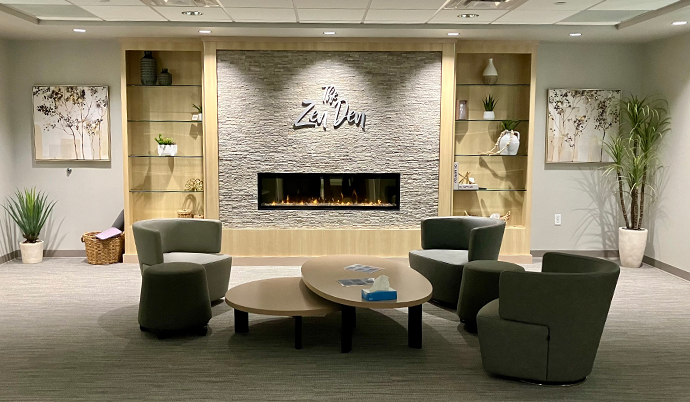
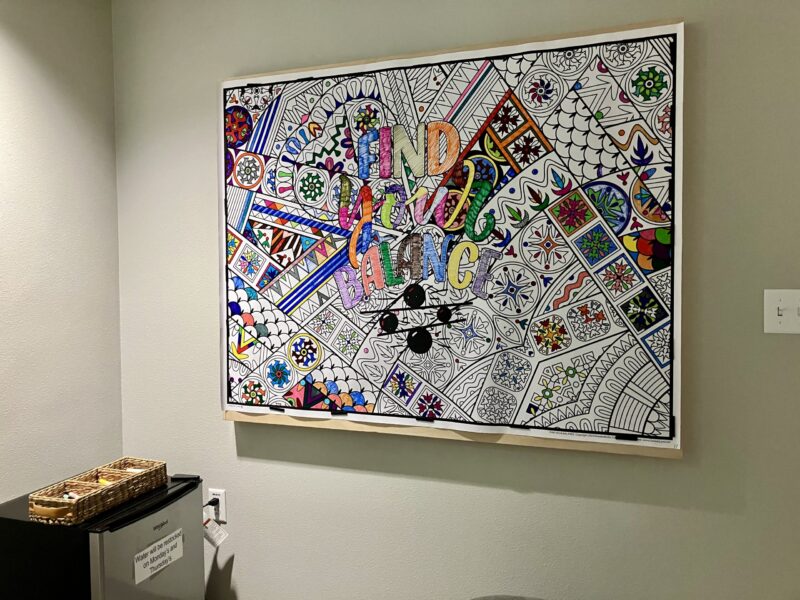
Absolutely. And one more thing, Erica, you reminded me when you talked about wellness, that’s another big initiative and a gap in what we were able to provide for our front-line workers. And they kept bringing the need on work-life integration and balance and needing a place to reset. And so we will be opening up before the new year our Zen Den, and that is an opportunity for our frontline workers to have a place for respite and to reset and rejuvenate. And so we’re really excited about that and that’s a testament to their voices coming to the table.

Erica DeBoer:

And I love the name Zen Den. I can almost smell the lavender. It’s amazing. I think it’s great. Tell me a little bit about the benefits of having your various councils and front-line representatives involved in that decision making.

Wendy Kopp:

Well, that’s quite an easy question. The benefit, it’s the patient. The patient is the one that benefits. When you think about our shared governance structure, and you look at our model, the patient is in the center of every decision that we make. And so when you think about where our shared governance, we call it our nursing senate, is that’s the next layer. And then all of our councils spoke out after that, if you think about it in a wheel fashion. And so it’s bi-directional. And so those councils report into the senate. The senate reports into the councils, and it’s just, I guess you wanna call it a beautiful marriage and how that works.

Erica DeBoer:

And it benefits so many more, not just our colleagues, but also the other people that are part of the collaborative team too. So that’s fantastic.

I wonder if we shift just a little bit to expertise and certification. I know I’m passionate about the role that certification plays in recognizing nursing expertise. How does it contribute to mentorship within the field?

Wendy Kopp:

Certification? Really, I mean, when you advance your knowledge and skills with certification, that mentorship just falls naturally because with certification you demonstrate that you have that advanced knowledge and skills. And so inherently that mentorship role just naturally or organically takes place.

Erica DeBoer:

I think that’s well said. What support does Sanford Health provide to nurses pursuing x certification and how does this support demonstrate a commitment to growth and advancement?

Wendy Kopp:

We definitely have that commitment to growth and advancement, and I think we’re really fortunate. Our learning and development center annually brings in, based on survey results, they bring in typical courses that are very, very popular or will be high users. So they bring those in, and those our nurses can take for free. Exam fees are covered, two attempts for an exam are covered, and then upon successful passing of that certification exam, there is also a bonus that goes along with it.

And so we feel that we do a great job not only initially supporting that, but then sustaining that we recognize our certification, our nurses that are certified annually, and it’s also additional support then for recertification.

Erica DeBoer:

It’s definitely something to be proud of. I know each of us as VPs of nursing and as a chief nursing officer, those are some of the things that I hold very close to heart because it’s really that expertise that’s really core to our commitment, not only to our patients, but to those around us to continue to learn and be that lifelong learner.

Wendy Kopp:

Absolutely.

Erica DeBoer:

Since we’re talking about certification, I wonder if you don’t have your own personal experience or a story of a nurse who benefited from the certification process and went on to become a mentor within the field.

Wendy Kopp:

I think of an example probably with certification process. As you recall, I mentioned the ICU nurse consult in a previous question. And so that particular nurse who brought it forward was certified and so based on advanced knowledge was able to kind of determine best practice. And so that was really a pretty cool moment to see that come to fruition based on that advanced knowledge.

And for myself, I can say for personally becoming certified in executive nursing practice, I want to be able to pay it forward and be able to continue mentoring our emerging leaders as well.

Erica DeBoer:

Yeah, and you do that extremely well, Wendy. When we shift to patient-centered practice, it’s really central to the focus. You’ve highlighted it already very well. How does Sanford Health ensure that all discussions, decisions and change revolve around optimizing patient care?

Wendy Kopp:

I think we could probably look at our differentiated practice model when we think of patient-centered care and the uniqueness that each of these specialties bring to the table. Erica, that was probably the easiest way to kind of summarize that.

Erica DeBoer:

Can you explain the role of evidence-based practice and how that’s important? Being at the forefront of all of our nursing endeavors?

Wendy Kopp:

I think having probably that problem solving approach and that decision making based on the evidence is really sort of ingrained in all of the work that we do. When we look at our professional practice model, research and evidence-based practice is a huge component of that. And so it’s really important to look at what are those influences, both internal and external, that influence our practice and affect our practice to really cause us to critically think about what changes should happen and then going to the evidence and research to help drive that change.

Erica DeBoer:

I think change is definitely a part of what all of us are trying to work on. And how do we do that with evidence-based practice in the forefront? I think you’ve got great examples of a really united and collaborative approach to your evidence-based practice group. It’s been amazing to see how it’s grown, not just in nursing, but also in some of your interdisciplinary teams through physical therapy and some of those last couple questions.

So when we think about the impact that happens through collaboration, how does fostering an open dialogue and knowledge exchange benefit nursing professionals, patients, our teams and the organization as a whole?

Wendy Kopp:

I know I keep going back to our professional practice model, but really interprofessional care and collaboration is another key component. And so when we think about our nursing senate, when we think about professional management, these are all councils and committees specific to Bismarck. Every one of those councils has an interprofessional or interprofessional members on there. We don’t make decisions in a silo. We collaborate and bring all of the entities to the table to really bring up the topics, the initiatives, the ideas, what are the opportunities, you know, how do we move forward again to make decisions that really will benefit not only the front-line workers, but also the patient.

Erica DeBoer:

I’m so excited that the team’s been able to celebrate their fourth Magnet designation. Speaking of collaboration, can you tell me how Magnet embeds that collaboration into that designation and that maturation over time?

Wendy Kopp:

Absolutely. And so I know we talk about Magnet being a nursing excellence award, and I always say, yes, it is. It is the foundation, but there is so much more to it. Not only one Magnet designation, but four designations is really a testament to the culture. We have been able to not only practice but sustain over the course of the years that we’ve been magnet designated. And so it’s the culture that really allows our teams to thrive. It’s all teams, our interdisciplinary teams, that culture again, where teams can have those conversations together, the good, the bad, and the ugly. And so again, just really hats off to all of the teams that allow great care to be given.

Erica DeBoer:

Absolutely. Something to be super proud of. That fourth designation in the MA maturation that you’ve seen, and I’d say even more importantly, you did that maturation, you did a lot of that work throughout the pandemic. And so important to recognize the challenges that came along with that.

Are there any particular innovations or practices that contributed to the remarkable achievement and how that’s influenced your organizational culture? You mentioned how important the culture is, how important the interdisciplinary team is. I’m just curious if there’s specific initiatives that help to drive that.

Wendy Kopp:

I don’t think I could probably list one initiative again, when you think about kind of the things that we focus on, it’s our quality, it’s our nurse, this nurse sensitive indicators. It’s really our patient experience and then it’s our nursing satisfaction. And so everything that we do touches each of those components in a very unique way. And so all of the exemplars have just have had a tremendous impact.

And we don’t do anything different the year that we go up for Magnet designation. We are that gold standard each and every day because of what we do and who we are. It’s not something we turn off and turn on just because we’re in our year or we’re up for re-designation. It’s really just who we are.

Erica DeBoer:

And it’s a magical culture that you’ve helped to create. Wendy, it’s been an absolute pleasure to speak with you today and share a little bit more about your shared governance structure as well as celebrate the Magnet journey with you. Anything else you’d add?

Wendy Kopp:

We want to reflect on Magnet. I think when patients come to Bismarck to receive care, they should know that they are going to receive some of the highest level of care in the nation. And again, we’re in with an elite group and we’re just extremely proud of who we are and what we’ve been able to accomplish as a rural health care organization.

Erica DeBoer:

I feel like Bismarck certainly emulates this in their daily practice in solving problems in the moment, no matter what might come your way. So congratulations and it’s great to have you.

Wendy Kopp:

Thanks, Erica. Thanks for having me.

Alan Helgeson:

You’ve been listening to “Reimagining Rural Health,” a podcast series brought to you by Sanford Health. Hear more episodes in this series or other Sanford Health series on Apple, Spotify, and news.sanfordhealth.org. For Sanford Health News, I’m Alan Helgeson, and thank you for listening.

Learn more about this topic

Get more episodes in this series

Four pillars of weight management, defined

Cassie Alvine (announcer):

This is the “Health and Wellness” podcast brought to you by Sanford Health. Our conversation today is about weight management options, including discussion on recent medications for weight loss. Our guest today is Dr. Jennifer Schriever with the Sanford Weight Management Center. Our host is Alan Helgeson with Sanford Health News.

Alan Helgeson (host):

We’re talking with Dr. Jennifer Schriever on the “Health and Wellness” podcast. Are there any statistics or things that you can share regarding BMI as we maybe start our podcast today?

Dr. Jennifer Schriever (guest):

Well, the history of BMI is, it’s a really old measurement based out of men in Belgium. So it’s not a perfect measurement, but it’s what the current standard is. So to come to our clinic, we generally require a BMI of 30 and above, or if you have a BMI with weight associated diseases, then we will consider those as well.

We are now starting to accept pediatric patients 12 and above, and they have different ways to qualify their BMI. It’s greater than or equal to the 95th percentile for pediatric or obesity or if overweight and have medical co-morbidities related to weight. Then their BMI is at the 95th, 85th to the 95th percentile for age.

Alan Helgeson (host):

Dr. Schriever, we’re hearing things like weight management versus weight loss management. Are those the same thing?

Dr. Jennifer Schriever:

They are different. Certainly, the goal of most of our patients as they come in is weight loss, but then we want to make sure it’s done in a healthy fashion and appropriately because we want to make sure you’re able to keep your weight off for the long term. And it’s not just about weight, it’s about how is your body composition? And if you have extra skeletal muscle, that’s going to play a factor in how much you weigh. So we want to make sure that you keep that skeletal muscle on board and have the appropriate body composition. So that is more weight management than weight loss.

Alan Helgeson (host):

You know, we hear so much about diets. I mean, we’re just programmed to talk about diets. We see commercials, the ads. Regardless of where you look at it, it’s all about diets. Body image. Do diets work?

Dr. Jennifer Schriever:

No, really because a diet tends to be something short term, and really that you’re not going to be successful unless you find something that can be long-term for you. Short-term weight loss doesn’t necessarily add up to long-term weight loss if you resume old habits. So, and a lot of diets are something that people don’t find sustainable and weight loss may not be in a healthy fashion.

To me it needs to be a lifestyle change that you can develop and continue and adapt to so that you have new habits and understanding that of how you lead your life leads to improved health versus just a short-term program where you can lose weight fairly quickly but then it doesn’t stay off because of maybe your metabolism changed. Or once you resume more routine diets that you’ve done previously, then you can easily gain the weight back.

Alan Helgeson (host):

So if I’ve done a diet in the past, I’ve lost this 20 pounds, you know, a fairly quick fashion, but then I’ll go back to my old ways and it sneaks back on. But not only that 20 pounds but it’s 25 pounds or maybe it’s 30 pounds. Why does that happen?

Dr. Jennifer Schriever:

Yeah. Often what is happening with rapid weight loss or large weight amounts of weight loss fairly quickly is we’re also losing skeletal muscle, and that holds the majority of our metabolism. So if we lose weight through dieting and aren’t aware and understand about how is the best way I can keep my skeletal muscle, then we lose skeletal muscle. Thus our metabolism declines.

And then as we resume old ways, or it can be just become more difficult to maintain that weight loss and easier to gain again because your metabolism has declined.

Alan Helgeson (host):

Dr. Schriever, let’s talk about specifically what weight management options does Sanford offer.

Dr. Jennifer Schriever:

A variety of weight management options. You can start with your primary physician and they can help refer you to a dietician or their health coach in the office to help you with some information on healthy eating and maybe meal planning for your family. Some primary physicians and other specialists are comfortable with weight loss medicines and providing some lifestyle guidance.

Obviously we have the Sanford Weight Management Center and then we have a nice comprehensive team with a dietician and we have connections to behavioral health that can help you with depression and anxiety and binge eating disorder or anything that affects how you feel about eating and the stress related to that or even body dysmorphia. We’ll prescribe medications according to what is safe for you and your health conditions as well as your medication list and physical activity guidance. And as I alluded to earlier, we can help monitor your body composition.

Another option is bariatric surgery. The guidelines are a little bit different than weight management. They now recommend surgery if you want to at a BMI of 35 and above, or above 30 with weight associated medical conditions. And maybe even surgery should be considered lower than that if someone has really made some significant efforts at weight loss.

The first steps: checking on what you should do or consider, you can certainly talk to your primary physician or one of your specialist physicians for recommendations and also check with your insurance and see what is covered. If you are interested in our program, certainly call or have your physician refer you. We will give you some guidance on how to check with your insurance, but you can also be self-referred or have your physician refer you bariatric surgery. You can have your physician refer you to a bariatric surgeon’s office here at Sanford.

You have two surgery options, I believe the sleeve gastrectomy and then gastric bypass. Often they will know, that office will know if your insurance covers it so that they can help save you the time if your insurance doesn’t cover bariatric surgery. And they also often have informational meetings that you can come and get informed in what that process is like.

Alan Helgeson (host):

What are some signs that a person may need weight management care?

Dr. Jennifer Schriever:

First of all, just if they want that in a comprehensive program. Think if you have multiple medical problems, then you might want someone more specialized and focused in with a training to help people with their weight management.

If you feel like you’ve worked on your weight and lifestyle without improvement in your health and are really frustrated and need a new plan, then we can help with that.

If you appreciate and would like ongoing, regular and frequent contact and support, then we’re a good program for you because that’s what we’re here for the duration, for life if you need it or if you’re just confused and not well informed about nutrition and what’s so important in lifestyle because that has been a difficult topic to learn over time. And there hasn’t always been great nutrition information out there. So, and that just keeps getting better. And our group is pretty dedicated to stay up with the latest and greatest.

Alan Helgeson:

I want to go back to something you mentioned when we first talked about this question. One of the things you mentioned is if you have multiple medical problems, could you maybe go into that? It seems like so many things we hear about, one of the things we hear is weight related of just about everything. Weight is tied into so many things. Could you maybe expand a little bit on that Dr. Schriever?

Dr. Jennifer Schriever:

Sure. Sometimes it’s even hard to think of something that is not weight related. You know, certainly diabetes and heart disease are weight related. A variety of cancers are related to weight. So we can reduce risk of cancer by improving one’s health. Mental health is tied to the disease of obesity. So depression or anxiety or eating disorders. High blood pressure, high cholesterol, if you have arthritis and problems with your knees or hips for example or even chronic back pain, it’s going to be related to the disease of obesity.

Alan Helgeson (host):

We were getting ready for the program today and you had mentioned there’s some calculation that losing a certain amount of weight and, and I can’t remember what that number is, but that if you lost such, it equates to another number of taking pressure off your knee.

Dr. Jennifer Schriever:

Yes. So for every pound of weight you lose, it takes four pounds off your knees. So you can see more rapid improvement in your knee pain just with even smaller amounts of weight loss because of the effect of gravity in addition to the weight.

Alan Helgeson (host):

Everybody has knee pain, right?

Dr. Jennifer Schriever:

A lot of people certainly. Or back pain.

Alan Helgeson (host):

Or back pain too. So everything is tied to, I mean so many things are tied to weight related issues. OK. We talked about maybe how to go about getting some help and maybe some of those signs. What does a person need to know about weight management?

Dr. Jennifer Schriever:

So the goal of weight management is to create a lifestyle that leads to improved health and body composition so that you reach a point that you’re comfortable with where you are. Those chronic diseases can improve with just as little as even five to 10% of weight loss. Cancer reduction risk I think is closer to 20% of weight loss. We use a body composition scale to help guide you too so that you understand and appreciate what is going on rather than just trying to watch the scale budge.

Alan Helgeson (host):

Can we talk a little bit about watching that scale? If it’s only about a number, how can you get people off that piece, Dr. Schriever?

Dr. Jennifer Schriever:

I think in our clinic it becomes easier because we do have a scale that helps to measure body composition. So we go over that each visit. It includes obviously the total weight but also what does your lean tissue weigh such as a total number for your bones, muscles and organs. It also has the dry lean mass. So that’s looking at what do your muscles and maybe bones weigh without any water content. So that reflects your muscle health and balance as well as just a number that reflects your skeletal muscle weight.

So we can help you monitor that because as you lose weight, we really only want you to lose less than 20% of your skeletal muscle compared to your total weight loss. There’s also a percent body fat, and we watch visceral fat – that’s the fatty tissue inside our trunk, around all the organs. So that’s different than subcutaneous, which is underneath our skin. The visceral fat causes inflammation and puts us at risk for all the diseases that can occur from organs in our belly like diabetes and heart disease. And then reducing that reduces all of our risk factors or reduces risk for the cancers that occur in those organs.

Alan Helgeson (host):

So we’re talking about what are some of the keys to healthy weight management. Let’s talk about what are some of the do’s and don’ts of weight management?

Dr. Jennifer Schriever:

Find a plan that is sustainable and stick to it. Don’t look at those fad diets or advertisements for supplements that just seem to be amazing because they probably aren’t. And I hate to see patients spend money on something that isn’t well studied for our program. It is most effective or if you follow our guidance then if you feel like you’re stuck and what we’re telling you isn’t working to come back and tell us what you’re doing and give us some details so we can help figure out how we need to adjust that.

Encourage patients never to be embarrassed to come back because life happens and interrupts everything and makes following your plan difficult. And we also strive for consistency, not perfection. So that’s important because we want to participate in different things in life. That might mean we’re eating something that we don’t consider as healthy as others, but that doesn’t mean you can’t enjoy it once in a while.

We focus a lot on tracking nutrition at some point. We don’t want that to be stressful, which it certainly can be for some people, but you’ll find the most success over time tracking to some extent or doing a check-in with yourself. And we at least start with having patients know the right amount of protein to get and working towards getting to that. And then as comfort level improves or understanding of nutrition improves, we can look at other ways to track nutrition.

Exercise is also very important. We do strive to help our patients find a way to do that that is comfortable for them because it can be very uncomfortable at first or they have joint problems that make exercise or knowing how to exercise difficult to understand. So we try to collect as many resources as possible to make that work for them.

And then just don’t give up. We’ll help you figure it out.

Alan Helgeson (host):

Let’s talk about some of those keys that are really core to healthy weight management. Could you cover some of those please?

Dr. Jennifer Schriever:

Sure. So there are, through the Obesity Medicine Association, four pillars that are integral and important to improving lifestyle and they all need to be included.

  1. So one of course is nutrition, and the main focus here is getting adequate protein and then creating a calorie deficit for what you need. But we’ll help you adjust to that and figure that out over time.
  2. The second pillar, highly important – actually they’re all important – is physical activity. So I always point out it says physical activity, not just exercise. So how much are you moving every day? And for heart health you need at least, or it’s recommended to get 5,000 steps a day or more and sit less than six hours. So that’s really important and that’s called neat non-exercise activity thermogenesis or some people will say time. So how much are you moving every day? And little bit by little bit even extra steps here and there are super helpful in managing your weight.
  3. The third pillar is behavior. We often have stress eating or emotional eating or binge eating that we find as we get new patients. I also often talk about how do you get through a social event and feel comfortable about it, go out to eat, go on vacation, and we can help you with some thoughts on how to do those things if you want to keep your health in mind. Now sometimes you might say, this is my time, I’m going to enjoy myself and that’s totally fine, but often it’s as simple as get some protein first, whether it’s there or on your way and then that’ll help fill you up so you don’t feel so hungry there.
  4. The final pillar after, so the first three were nutrition, then physical activity and behavior. Then the final pillar is medication. So all of those pillars are important to develop a lifestyle that works for you and medication should be included as long as you need them, as long as they aren’t causing any harm. And even in when you get to a maintenance phase or where you’re comfortable, they’re part of what we’re working on. And so as long as there’s no adverse effects then we continue with those to support you as long as you feel like you need them.

Alan Helgeson (host):

Do you talk to your patients about using the wearable technology and some different apps? Are those important within your clinic?

Dr. Jennifer Schriever:

I think they’re definitely valuable to the right person because it gives you an idea of where you’re at and if you can consider improvement. You know for some patients they don’t or aren’t able to move a lot. So then I say well then can you add an extra 50 to a hundred steps a day, depending on their capability? Or do we look at, can you increase by 250 to 500 steps on average? To make small goals that seem more obtainable. Then we all tend to think that 10,000 steps a day is what we need and if we think we need that, that doesn’t seem reachable. So I do encourage them, if they’re able to get one of those or to at least maybe carry your phone more often for a day. Because it does count your steps and then you at least know where you tend to be at.

Alan Helgeson (host):

Let’s switch topics here because this is really dominating so much of the category of weight management and weight loss. It’s the medications. Could you talk a little bit Dr. Shriver about these medications and how they work and why they’re getting so much attention?

Dr. Jennifer Schriever:

The generic name for Ozempic and Wegovy is semaglutide. And so Ozempic is the brand name used for diabetes and then Wegovy is the brand name used for weight management and the dosing is slightly different. Those are both a GLP-1 it’s called, which is a hormone that your small intestine makes and distributes once you have eaten.

So it triggers some insulin and blocks glucagon secretion, which means that your blood sugar level doesn’t peak as much and you get better blood sugar control. It also slows down your stomach from emptying so you feel full sooner and faster and also sends a signal to your brain to tell you you’re full and satisfied. So it can take away some of those cravings and food noise that people talk about.

Then Mounjaro, it is a GLP-1 medicine but it also has GIP in it and that’s another GI or gut hormone that can increase satiety. So it can help with full feeling but mainly acts by affecting a portion of the brain that makes you feel satisfied, that helps to decrease then your calorie intake. It also is affecting the insulin and the glucagon after you eat and is released into that response. It also can help kind of your fat distribution, encouraging fat deposition into your fatty tissue rather than your organs, which is where you really don’t want it.

Alan Helgeson (host):

Who is a candidate for these medications?

Dr. Jennifer Schriever:

The criteria for medications is the same as the criteria for our program. So anyone with a BMI of 30 and above or the BMI of 27 and higher with a weight associated condition.

Alan Helgeson (host):

But what is an ideal patient journey for these types of medications?

Dr. Jennifer Schriever:

Yeah, it’s kind of funny how a drug gets named. So the drug company goes to the FDA and says we’ve studied this medicine, here’s our evidence and this is a condition we studied and then they pick a brand name.

And then they go back after they’ve studied it and clarified that it can be used for weight management and then they rename it and then it’s called Wegovy and then that’s how the patents are created. But that’s also how insurance determines what they cover those medications for through that process. Which is why your insurance won’t cover Ozempic for weight loss.

So certainly we want to make sure as we screen patients that they qualify based on their BMI and health conditions or and also that they don’t have a contraindication – which sometimes the contraindications are listed but maybe not necessarily an absolute. But generally we don’t start patients on these medicines if they have a history of pancreatitis that we don’t necessarily know why. Although I think some studies show that that’s maybe not as concerning as we initially thought.

There’s a family history of a specific type of thyroid cancer that we wouldn’t recommend those medications for and that’s medullary thyroid cancer, which is not very common. I would also hesitate if a patient has known gastroparesis, which means their stomach already doesn’t empty very quickly and if the patient still wanted to, we’d have a significant discussion about how that’s going to go.

Alan Helgeson (host):

So we talked about the insurance thing. If someone’s insurance doesn’t cover this and they still wanted to pay for it out of pocket, could they do that?

Dr. Jennifer Schriever:

They certainly could. Generally mainly the ones that are FDA approved for obesity but it’s fairly expensive for a while. Maybe you could get it for $500 but I think lately it’s more like $800 a month and we’re still dealing with drug shortages so can be pretty hard to find at the moment.

Alan Helgeson (host):

At what point can we start identifying as something for long-term success with them?

Dr. Jennifer Schriever:

Well by the time a medicine like this has come to market, it’s been well studied and some of the evidence out there is as long as five years. The Ozempic has been out since 2016, not necessarily used and dose adjusted for weight management, for more for just diabetes. So then Saxenda, which is the daily injection liraglutide is also Victoza and that’s been out since 2012 I believe. So then we have some more longer term data in the general population but they’re studied well beyond that for several years prior to coming to market. Probably more like 10 to 20.

Alan Helgeson (host):

So it’s been out there a while.

Dr. Jennifer Schriever:

It has. So far we don’t know of any definite long-term risks of these medicines. I mean certainly there are rare complications which maybe we want to get into.

Alan Helgeson (host):

Yeah, let’s talk about some of those. That’s a good lead into those.

Dr. Jennifer Schriever:

Yeah, so some of the concerns initially and especially based on study is significant or can be significant nausea and constipation. I actually supply the patient with a prescription for something for nausea and caution them to definitely eat slower and drink slower because these are slowing your stomach from emptying and the effect of that can be fairly immediate or it can take several weeks into the dosing.

The latest on that gastric emptying or the stomach emptying slowing, seems to be out there where there are cases reported where they talk about their stomach being paralyzed. That was never necessarily found in the studies as the drug companies did prior to bring it to market. Certainly that condition can happen randomly, so I don’t know if that is a true association and, but it does slow your stomach from emptying. So that is a risk.

And if I have a patient at risk with diabetes for example, which they are at risk, I might ask them a lot of questions about how they feel around eating and if they have any symptoms that make me suspicious. So I have checked a few patients for that prior to prescribing it.

There’s a list of diabetic retinopathy, which is an eye complication that can lead to blindness for patients with diabetes. If their blood sugar is pretty stable, it’s not really a risk if you know these medicines can help their diabetes improve so then that can change their blood sugar levels quickly. But I don’t think that risk is as significant as worried but it certainly doesn’t hurt to contact their eye doctor about what they would recommend as far as maybe dose adjustment or what their blood sugars are doing or what is the status of their diabetic retinopathy.

The medications, you know, can cause pancreatitis. So we might hesitate depending on the cause of the pancreatitis. If it’s due to your gallbladder or some other concern, then the medications are still fine. If we aren’t really sure then we will have extra precaution about continuing those. It can raise heart rate typically only a few points and not an ongoing problem, or can make it feel be significant. But generally that often isn’t a reason that we have to stop it.

They’re the common, just like any medication, since these are injections, you can have a rash at your site or an allergic reaction. Low blood sugars are possible but not very common. Another common one, like in the media or social media is about kidney problems. Often if you’re going to have severe GI problems like nausea or vomiting or sometimes you end up with diarrhea and you aren’t able to stay hydrated, then you know that is a risk for having some stress on your kidneys.

So certainly on these medications especially you don’t think this is just a side effect that I can try to deal with at home, seek care sooner than later.

And then one thing, I don’t know if it’s still such a big deal out there, is that Ozempic face? Ozempic face. Yeah. Really anyone who has weight loss, you know they’re going to lose weight or fatty tissue in particular in a variety of places. So some people will lose more in their face and maybe look a little gaunt or quite a bit different than they used to. So I think that’s what that’s referring to. But that can happen with any weight loss method.

Alan Helgeson (host):

If you are taking these medications, are you on them for a long time or just till you maybe get to a point where you don’t need them anymore?

Dr. Jennifer Schriever:

I think that’s going to vary on the individual. Certainly it’s very important to incorporate all the lifestyle and the pillars that I talked about earlier.

So we have to focus on the nutrition and that certainly helps with satiety feeling. It’s important to focus on the exercise and strength training because we need to maintain that skeletal muscle health, which we also need the protein for.

Have we learned how to address our behaviors or know some techniques or improved with counseling around mental health concerns or binge eating. And how stressful has weight management been for you most of your life?

So for some patients they really do well with those lifestyle changes or a lot of them do, but it depends on, I think, their life experiences and the fear of that hunger returning, how long these medications are needed. Some have done very well having to suddenly stop them based on insurance changes, job changes, et cetera, that they’ve done well and at least maintained stability before they’ve come back to see me. And some certainly have a lot of anxiety of what’s going to happen when they go off. So it really should be a long-term medication that the patient and the doctor can work on a plan if they’re ever ready to go off. But it’s not that way for everyone.

Alan Helgeson (host):

In a quick summary here, a lot of things you would hear the media and some places would say this is the quick miracle drug of the moment. It’s getting its 15 minutes of fame. OK great, whatever, what isn’t this medication?

Dr. Jennifer Schriever:

Yeah, I think the unfortunate part about how it’s advertised, and maybe it’s just what we really hear from that message is how successful these medications are in the studies to help someone with weight loss. But it’s so imperative to do everything together because by themselves they may work to some extent but they’re not going to work for the long term if you aren’t keeping aware of what does my nutrition need to be and how do I support my muscle health and how do I exercise to keep my metabolism?

Because for some it is such a relief to not be hungry anymore and historically they might have lost weight just by eating a lot less or not eating, but that’s not going to work in the long run based on your metabolism and all sorts of things that change internally. So it’s still a comprehensive plan, but that’s a major tool to include. But it doesn’t mean it’s the only thing.

Alan Helgeson (host):

On social media, they’re talking about how these medications may have an unknown added effect that is spilling over into some other addictions. How it is maybe working to curb some other addictions?

Dr. Jennifer Schriever:

Yeah, so the details certainly aren’t fully known yet, but we do know that part of their effectiveness is how they not only send a message to the stomach from the GLP-1 standpoint, but both the GLP-1 and GIP effects are going up to your brain to tell you you’re full and satisfied. That seems to be triggering a portion of the brain that does help with addiction and compulsive behaviors by just taking away that desire to continue to do those sort of things.

And it seems to be having an effect on the dopamine pathway. And our dopamine chemistry is behind a lot of our addiction and cravings behaviors. So people, I even have patients who aren’t necessarily have an alcohol addiction but they just don’t crave that alcohol anymore or it’s helping them quit smoking and then, you know, certainly people do feel addicted to food sometimes and so it helps taking those cravings away. So that’s just such a benefit. Because as you think about those thoughts, they’re very stressful. Because you don’t want those thoughts, you might not want that food or to drink more alcohol, but yet that craving is there.

Alan Helgeson (host):

If you watch the various news reports, they’re making the miracle thing of the moment, but it’s just a thin slice of one of the many options. And there’s so many things that Sanford offers in helping somebody in a journey to finding a healthier way to live. And it’s a lifestyle thing, right?

Dr. Jennifer Schriever:

Certainly. And there are other medication options. Patients are often so disappointed to know that their insurance might not cover these medicines, and they’re so expensive to consider out-of-pocket.

But some of the cheaper medications we have patients very successful on that and they’re also incorporating of course, nutrition and lifestyle changes like exercise and the physical activity as well as any behavior things that need to be addressed. And so they do very good on medications and if weight management isn’t covered by insurance and you don’t have a contraindication to take some of the pills, patients are spending $25 a month out of pocket.

Alan Helgeson (host):

It’s nice to know that there are so many options available and that Sanford Health has really, really gotten behind helping people get healthy in so many ways. And the big takeaway, if you could give people one takeaway from this, what do you want them to do or want them to know?

Dr. Jennifer Schriever:

Wow. Big question. But I think what I really want people to know is that there is a healthy and sustainable way to help you with your weight loss. And it’s now available at Sanford and we do our best to meet everyone’s needs and it make an individual plan that works for them. And it is very frightening to come into a clinic and discuss your weight and just know that we are going to treat you kindly and without any bias and really aren’t going to judge because everybody has a different life journey.

Alan Helgeson (host):

Before we go, I want to mention that many of the services and care options mentioned during the conversation with Dr. Schriever are available at the Sanford Weight Management Center in Sioux Falls. If you’d like information on what options are available near you, call your provider, your clinic, or visit sanfordhealth.org.

Cassie Alvine (announcer):

This episode is part of the “Health and Wellness” series by Sanford Health. For additional podcast series by Sanford Health, find us on Apple, Spotify and news.sanfordhealth.org.

Learn more about this topic

Get more episodes in this series

Rural health care workforce must ‘skill up, scale up’

Alan Helgeson:

Reimagining Rural Health,” a podcast series brought to you by Sanford Health. In this series, we explore the challenges facing health care systems across the country from improving access to equitable care, building a sustainable workforce, and discovering innovative ways to deliver high-quality, low-cost services in rural and underserved populations. Each episode examines how Sanford Health and other health systems are advancing care for the unique communities they serve.

In this episode, Courtney Collen with Sanford Health News talks with Toni Thomas, chief experience officer and industry advisor, Microsoft. She joins an expert panel at the 2023 Summit on the Future of Rural Health Care with the topic: how can we work smarter, not harder?

Courtney Collen (Host):

I have Toni Thomas here in Sioux Falls from Cleveland, Ohio. Toni, welcome to Sioux Falls and welcome to the podcast.

Toni Thomas:

Thank you. It’s my second trip into Sioux Falls, and as I said at the welcome dinner last night, I have a crush on Sanford ever since coming here the first time and on Sioux Falls.

Courtney Collen (Host):

Well, we are happy to hear that, and we are even happier to have you here and grateful for your time. Toni, what are the top three opportunities you see when it comes to building a stronger rural health care workforce?

Toni Thomas:

Yeah, the first opportunity I think really lives inside the organization and making sure the organization is communicating out to the population that there is a need to address the workforce crisis, that there is one, and how that would impact them or their families in the future. So helping them understand the scope of the problem.

The other opportunity I think that exists with especially a health system like Sanford is the power to be able to help the rural population skill and scale up. So before we can get them into a pipeline where they can be formally educated in the health care professions or the helping professions, we need to take skilling out to the community and also integrate themselves into the public school system, the private school system, and certainly the secondary education system.

Courtney Collen (Host):

Your panel discussion answered the question, how can we work smarter, not harder? I want to throw that question in here as well, Toni. How do we work smarter?

Toni Thomas:

Yeah. So I’m going to take it back to the foundation of what it is I do every day. And that foundation is really around organizing your data and understanding the scope of the problem because we really, truly have to tear down or – my manager likes to say – unlearn what we know about our problems. And that’s a phrase that I’ve adopted. So to do that, we really need to have data that’s accessible and available and then to be able to analyze it, to understand the scope of the problem and how do we work together towards solving that problem?

Courtney Collen (Host):

Where have we made progress when it comes to health care workforce issues? Where does work remain? And how will this shape strategy and policy moving forward?

Toni Thomas:

Right. I really do think that it is a multidisciplinary collaborative effort, and it’s not lost on me that right at this very moment, we’re sitting in a room full of people that have joined together from health care, medicine, nursing, technology, public policy, and government to talk about really hard things and how to fix those things.

And I think the biggest thing that we can do coming out of today, it’s easy to talk, but then we have to take action. So that’s really important. And I’ve been involved in a lot of meetings over the years, summits and panels. But this one is unique. It’s small, but not too small, and it has powerful thought leaders that can lean into the problem.

Courtney Collen (Host):

If you could share one piece of advice with a new clinician or physician entering the workforce today, what would that be?

Toni Thomas:

Wow. That’s a really hard question. I would say that if you’re following your heart and you really want to be in a helping profession, don’t be daunted by the problems that the workforce is facing today. Because there are people, like people in this room, who are really trying to fix that.

There are people that care and that your family, your friends and your neighbors are going to be dependent on people who want to join the health care workforce and take care of the people in the communities where they live. I think that’s so important. It’s like, let’s just get back to the basics and understand that we’re trying to solve these problems and we need people.

Courtney Collen (Host):

That’s great advice. Thank you for that. What excites you most about the future of rural health care?

Toni Thomas:

Yeah. I talked a little bit earlier today about my moonshot and what is my, you know, vision for like health care of the future? And for me it’s really about understanding and knowing the people that are living in your communities and the populations that you’re serving, understanding what their struggles are, understanding how they want to receive health care, where they want to and when they need to receive health care. So just really understanding your populations and being able to increase the access to health care for them in that way.

Courtney Collen (Host):

Toni Thomas, thank you so much for your time and for being here for this event.

Toni Thomas:

Thank you so much for having me. It was a pleasure.

Alan Helgeson:

You’ve been listening to “Reimagining Rural Health,” a podcast series brought to you by Sanford Health. Hear more episodes in this series or other Sanford Health series on Apple, Spotify, and news.sanfordhealth.org.

Learn more about this topic

Get more episodes in this series

AMA president offers Rx for workforce resilience

Alan Helgeson:

Reimagining Rural Health,” a podcast series brought to you by Sanford Health. In this series, we explore the challenges facing health care systems across the country, from improving access to equitable care, building a sustainable workforce, and discovering innovative ways to deliver high-quality, low-cost services in rural and underserved populations. Each episode examines how Sanford Health and other health systems are advancing care for the unique communities they serve.

In this episode, Courtney Collen with Sanford Health News talks with Dr. Jesse Ehrenfeld, president of the American Medical Association. Dr. Ehrenfeld joins as a keynote speaker at the 2023 Summit on the Future of Rural Health Care with the topic solving physician burnout – a prescription for a more resilient workforce.

Courtney Collen (host):

Dr. Jesse Ehrenfeld is here with us in Sioux Falls. Thank you for taking the time today. Glad to have you.

Dr. Jesse Ehrenfeld:

Thanks for having me. Appreciate it.

Courtney Collen (host):

What are the top three opportunities you see when it comes to building a stronger rural health care workforce?

Dr. Jesse Ehrenfeld:

Well, you know, we need to address the issue of burnout, and there’s growing awareness of physician burnout and its implication for health care over the long haul, but also the factors driving it. The solution to the workforce crisis, physician burnout, is complex. But there’s bipartisan support to do it. And, you know, we need to apply pressure on lawmakers, on Congress, to make sure that we can shore up the physician workforce, but particularly in rural areas we have the opportunity to make it easier for international medical graduates to practice in rural communities and in the U.S.

And you know, we support the Conrad 30 Physician Access Reauthorization Act, which would make the J-1 visa waiver program easier, make these people who want to come and work in rural areas. There’s also opportunities particularly to rethink medical education. The AMA has made grants to UC Davis in California, Oregon Health and Sciences out in Portland to recruit medical students from rural and Indigenous communities, train them in those communities with the goal that they practice in those communities. And we’ve seen some really wonderful early success. We’re learning more about the power of solving these issues upstream by recruiting students from rural communities to come to medical schools. And I’m optimistic that we can do that.

You know, it’s certainly encouraging to me to see the kinds of things that are also happening to support resilience and physicians who need help. And unfortunately, there are a lot of barriers. There’s a lot of stigma when a physician in burnout needs a confidential place to go to getting that assistance. We’ve supported legislative maneuvers in a variety of states to make sure that there are confidential physician wellness programs that mean that someone, people have a place to turn to. And I will say South Dakota is a leader in this area. A law passed in 2021 that protects physician confidentiality when someone is seeking help for career fatigue or wellness. We need to scale that to other states and certainly we’re seeing some movement.

Courtney Collen (host):

Dr. Ehrenfeld, where have we made progress when it comes to health care workforce issues?

Dr. Jesse Ehrenfeld:

Well, we’ve made a lot of strides in just sort of addressing the fact that we don’t have the people we need and that we need to better support physicians working in the system. The problem is with the system; the problem’s not with the individual physician.

You know, we have our AMA joy medicine recognition program, which recognizes health systems, hospitals, medical groups for their exemplary work in supporting physician well-being. And that program provides a roadmap for leaders to implement policies, to implement programs that can support physician well-being. Seventy-two health systems including 35 first time recipients were recognized in 2023 through our program including Sanford Health, which we’re very excited about, very proud to elevate. Sanford Health was among the systems that got the gold recognition, the program’s highest honor, because you all have demonstrated across a number of distinct areas, a commitment to supporting the practice environment and making it easier for physicians to do their jobs.

Courtney Collen (host):

Where do you think work remains? How will this shape strategy and policy moving forward?

Dr. Jesse Ehrenfeld:

Well, certainly, I think there are a lot of opportunities to make sure that as people are overwhelmed working in the system that we’re in today, that people see that there’s a place that they can turn to that has their back. And certainly as the largest, most influential physician organization, we try to be there. We try to make sure that when we see these challenges, when it’s so easy to be discouraged, that physicians recognize that there is a voice. And you know, I get to travel all over the country as AMA president. I see the heartache. I see the burden.

But I’m optimistic because I’m optimistic when I see physicians stepping up day in and day out, in spite of all of the challenges. I see physicians who step up to counter disinformation. I see young physicians, trainees that I work with who have a bottomless sense of curiosity, a commitment to making a difference. And I’ve seen so much happening in the country that in spite of the political division, the challenges in the world to make sure that patients have access to the care that they need, I know we can get there.

Courtney Collen (host):

If you could share one piece of advice with a new clinician or physician entering the workforce today, what would that be?

Dr. Jesse Ehrenfeld:

You know, it would be to hang in there. In spite of everything that we are facing, I know that we can pull it together. I know when I walk into my hospital and I see patients – I’m an anesthesiologist – I see people putting on their scrubs, putting on their white coat that in spite of what seemed like immense obstacles that there is joy in the profession. And we just need to create those social connections. We need to make sure that people have the tools to do their jobs more efficiently. We need to pull the system inefficiencies out. And I’m optimistic that we can get there.

Courtney Collen (host):

Thank you. And lastly, on that kind of high note, what excites you most about the future of rural health care?

Dr. Jesse Ehrenfeld:

Well, I think technology’s a real game changer when it comes to caring for patients, particularly in rural communities and medically underserved areas. The AMA has been a huge supporter of telemedicine before the pandemic because we saw how vital it can be for patients who have limited mobility, who don’t have direct access to a physician’s care because of geography. And so we have a lot of tools, a lot of resources for practices to integrate these tools and these technologies into what they’re doing.

I’m really excited about what AI can bring. I think we need to make sure that we think about it as augmenting the capability of our clinicians, not replacing it. So that’s why the AMA likes the term augmented intelligence. But I think that there are a lot of opportunities to rely on technologies, re-engineer our workflows, and I’m optimistic about what that’s going to mean for our rural communities.

Courtney Collen (host):

Dr. Jesse Ehrenfeld, thank you so much for your time today.

Dr. Jesse Ehrenfeld:

Thanks for having me.

Alan Helgeson:

You’ve been listening to “Reimagining Rural Health,” a podcast series brought to you by Sanford Health. Hear more episodes in this series or other Sanford Health Series on Apple, Spotify, and news.sanfordhealth.org.

Learn more about this topic

Get more episodes in this series

Cancer patient rep has new title: Breast cancer survivor

Courtney Collen (Host):

Hello. Welcome to “One in Eight,” a new podcast series brought to you by Sanford Health. I’m your host, Courtney Collen with Sanford Health News. We are really looking forward to kicking off this series all about breast cancer awareness because – and we can’t stress this enough – one in eight women will be diagnosed with breast cancer during her lifetime.

Lynn Roemeling is a friendly, familiar face inside the Sanford Oncology Hematology and Infusion Clinic in Sioux Falls.

She is a patient access representative, which is a position she’s held with pride for 13 years.

Lynn Roemeling:

I’ll be checking in patients, checking out patients, making their next appointments. We also send e-referrals to the doctors that are on call when we’re up front.

So it’s a lot of fun. I love my job.

Courtney Collen (Host):

But in June of 2020, that job – and life outside of work – came to a pause.

Lynn Roemeling:

Well, I had a mammogram that showed up a little abnormal and so ended up getting a biopsy and found out I had breast cancer. It was a whirlwind after that.

Courtney Collen (Host):

Suddenly, Roemeling was the patient and started her care at the Edith Sanford Breast Center with a triple-negative diagnosis, a rare type of breast cancer.

Lynn Roemeling:

It’s a scary thing for anybody to get that diagnosis. To be perfectly honest with you, I was waiting for the day for it to come really, because my family is, has been full of cancer.

Courtney Collen (Host):

Her grandmother and sister both had breast cancer so she had a feeling it was a battle she would eventually fight too.

Lynn Roemeling:

It didn’t come as any big surprise to me. But still, when you hear that, it’s like, ‘oh my gosh,’ you know, what’s going to happen now, am I going to make it through this? How am I going to feel it? You know, you’re just, you’re overwhelmed with emotions at that point in time.

It’s scary. It’s very scary.

I had started treatment practically right away. Got done with treatment and had my double mastectomy. I had my nurse navigator, I have my oncologist, I have my surgeon, I have my plastic surgeon. I also went into a trial. They did ask me if I would be willing to go into a trial, which I gladly did, just because if it can help anyone else in the long run figure out, you know, if this is something good or not, I wanted to go ahead and do it.

My worst enemy was fatigue. It just totally drained me. There were a couple times when I finally had to quit working that they would have to take me out in a wheelchair. And that just killed me because I just, yeah. I didn’t want to sit at home and do nothing.

And I missed everybody. I missed my patients. So it was very, very scary. But I knew that I was in the best place to be, to go through this. And man, you can’t have better support than I did.

Courtney Collen (Host):

That support included a comprehensive care team of specialists to personalize her journey through treatment with their advanced training and technology, tailored care to her genetics and rare type of cancer.

Lynn Roemeling:

To know what I had was here just made it so much better. I mean, to have the doctors here with you and helping you through every minute. I can’t say enough about this place.

Courtney Collen (Host):

Beyond breast cancer, as she alluded to, her family knows cancer sadly too well. The disease took both of her parents many years ago. Her mom was diagnosed with ovarian cancer and her dad – pancreatic.

Today – her oldest son was diagnosed with prostate cancer, her youngest son – Hodgkin’s lymphoma – and her daughter passed away after fighting colon and liver cancer.

More than most, Lynn understands the value of life and knows she’s right where she needs to be.

Lynn Roemeling:

When I first interviewed at Sanford, I interviewed at three different places and this was the third place. And I interviewed all three in one day and I got here and it was just like, this is where I want to be. This is my job. So I was so thankful when they offered it to me. And now being on both sides, I mean, I knew kind of what cancer was like and so forth and so on because of my family history.

But until you go through it yourself, it’s not quite the same. You see what they go through. But until you do it, it’s not the same.

And so to come back and know or feel like I’m in the spot that I belong in and just greeting these people, I know everybody comments on my smile. Because I’m always smiling and I think that’s half of your battle is your attitude. You need to keep going. You need to keep fighting. You need to have that. And so I try to bring that to every person that comes here. Anybody that I don’t usually bring up that I’ve had it myself, unless it’s a person that is really down and scared. And then I try to mention just, you know, what I’ve been through what you’re going to be going through and it’s going to be OK.

We have a great team here and if anybody can get you through this, they can. They’re here for you every step of the way. I just can’t say enough that, you know, fight. Just fight.

You’ve got it. You do have this.

Courtney Collen (Host):

An attitude of gratitude – and encouragement – for each new patient facing a similar journey.

Lynn Roemeling:

You get patients who are mad at the world. Why me? Why is this happening? They’re mad and gruff … they’ve been dealt a blow and nobody wants to go through this. Our job is to try to get them through it as good as we can. So, if there’s anything we can do, you know, call, stop you and do what you have to. But we’ll be there. And just to, just to be able to, to do this again and be able to let people know, Hey, you know what, you’re in a good spot. It’s going to be okay. And I just am proud to be part of that.

I am so blessed. I was in the right place at the right time. I think it was meant to be. I, I just can’t thank everybody enough here, and I can’t, definitely can’t thank God enough because evidently he wanted me on this earth a little longer to do what I’m doing too. And I’m glad that I can do it.

Learn more

Meaningful work, social links are critical for health care

Alan Helgeson:

Reimagining Rural Health,” a podcast series brought to you by Sanford Health. In this series, we explore the challenges facing health care systems across the country from improving access to equitable care, building a sustainable workforce, and discovering innovative ways to deliver high-quality, low-cost services in rural and underserved populations. Each episode examines how Sanford Health and other health systems are advancing care for the unique communities they serve.

In this episode, Ann Nachtigal with Sanford Health News talks with Dr. Zeke Emanuel, oncologist, vice provost of Global Initiatives, Levy University professor, Perelman School of Medicine and the Wharton School, University of Pennsylvania. Dr. Emanuel joins as a keynote speaker at the 2023 Summit on the Future of Rural Health Care with the topic: Reinventing America’s health care workforce.

Ann Nachtigal (host):

Zeke Emanuel, thank you so much for joining us. We’re really excited to have this room of thought leaders here to talk about rural health care. First question for you is: What do you think are the three top opportunities when it comes to building a stronger workforce?

Dr. Zeke Emanuel:

Well, the most important thing is to make sure the workforce does meaningful work and are invested in their work and the mission that they’re doing.

One of our big problems in health care is that we have too much nonsense and paperwork that has no meaning, right? I mean, doctors go into medicine to take care of patients. Nurses go into medicine to take care of patients. Doing paperwork is not their primary goal. It really makes them sort of upset and depressed because they’re not doing the thing that they care about. And so I think figuring out how to make more high-value activities. The patient care, the patient connection is critical.

I’m an oncologist. The one of the reasons I went into oncology is it’s a critical moment for people in their lives. They’re making big, big life-changing decisions. They’ve just been hit by a truck. They’re exploring their values, what’s really important to them. You get close. That’s what’s meaningful in patient care. That’s why we went in to become doctors. And you know, if what you’re doing is filling out billing forms or filling out quality forms or just filling out forms and updating the EHR, that’s not meaningful. And so we have to figure out how to make it most meaningful for health care providers to actually do the thing that they came into the professions to do.

Ann Nachtigal (host):

You know, I did see that kind of goes to the article that you put in JAMA, co-authoring this article on reassessing the data on whether there actually was a physician shortage. And you talk to you know, what are some of those opportunities that we can look at? So I thought that was really interesting. Where do you think we’ve made progress when it comes to workforce issues?

Dr. Zeke Emanuel:

Well, during COVID, we’ve slipped, right? Unfortunately, we haven’t made a lot of progress because we’ve overworked our doctors. Initially there was a lot of praise for our health care professionals who were really going above and beyond but I think, you know, eventually you can only do that so long. You can sustain a sprint only so long. And then you need support.

And we’re seeing with, you know, strikes at Kaiser and other actions, unionization, that people are upset by the system. And I think one of the important things is: it’s really a system issue. We have to figure out, us leaders have to figure out how we can get back to doing what people care about.

I would say figuring out or thinking about the patient experience has been very, very important. And obviously the labor issues are very important to all leaders. So I’m hoping that as we look forward, we can, you know, how do we reduce our administrative burden? There’s a lot of things we can do. Yes, it’s a complicated situation with payers and providers and all the rest, but there are things we can do to reduce the administrative burden.

How can we actually get patients, you know, have our interactions so that whatever’s easiest for the patient works also for the doctors? Like, you know, we have yet to really fully integrate virtual care and can we make that work? Can we make home care work?

I also, I’m really excited about some possibilities regarding AI and using the phone to actually deliver therapeutic interventions. And I think that’s also going to make a huge difference when we can bring in, again, we have to look, I think, at technology as our friends not as our enemy. A lot of people worry that technology’s going to take over or going to eliminate our jobs. Well, I don’t think so. You know, the history of technology has allowed us to do more and augment what we do best.

Ann Nachtigal (host):

You know, you mentioned COVID-19 and how that was so hard. And I think really what’s come out of that, at least in terms for Sanford Health, and I think a lot of other health care organizations, is really focusing on the well-being of our caregivers. Right? And if, you know, we talk about patient experience, well, the caregiver has to be in a good space in order to deliver great care, right?

Dr. Zeke Emanuel:

Oh, absolutely. And so that’s a huge part of it. We know that if you have burned out doctors and nurses, you have more mistakes. You have people who are disengaged from actually providing care. It’s terrible caregiving. Right?

You know, my father was a pediatrician in Chicago when I was growing up. He used to work maddening hours, 75 a week. He would, you know, every other weekend he was on call, Mondays and Thursdays, he actually was in the office till 9:00 p.m. But he was totally happy, totally fulfilled. Why? Because he was making a difference to patients. And that, I mean, we have to remember the importance of that kind of meaning driving us.

Almost all of us, we’re happy in two, you know, happiness is critical. One is social connections bonding. And I think, again, this is an area that we could do more to think about, and having meaning in your life. Doing what you set out to do to make the world a better place. But I do think this issue of social connection. I didn’t emphasize it, but it’s probably useful to emphasize here.

One of the problems I think is, you know, we used to have doctors’ lounges at hospitals. I remember going in with my father and grabbing doughnuts in the doctor’s lounge and things. You know, talking to his peers and complaining of course about the administrators and the leadership. Swapping sports stories. That kind of bonding is really, really important. We know it’s important, but for a lot of reasons that has actually decreased in health care among the workers and increasing that social bonding, not through artificial things like happy hours, but regular things.

So when I look back at, you know, the time I was working like a dog, internship, in residency … what helped? Well, the midnight meal where all the residents would come together for half hour.

Ann Nachtigal (host):

Shared experiences.

Dr. Zeke Emanuel:

Exactly. Yes. Shared experiences. Yes. Moan about this. Talk about good things that were happening to you. Right. That social relationship, even if it wasn’t deep with all, each of those people is really, really important to your happiness and your sense of, you know, this is a group. You know? We know this from the military, right? I mean, what do people fight for while they fight for their buddies? And that buddy system actually has been used at some medical centers creating buddies.

Ann Nachtigal (host):

Nice.

Dr. Zeke Emanuel:

To actually bolster that social connection. So I think those are some of the things we need to think about as leaders of health care to help our workers.

Ann Nachtigal (host):

Yeah. And you talk a little bit about AI, right? And I know technology, there’s such great opportunity particular in rural America.

Dr. Zeke Emanuel:

Oh, it’s critical to rural health. Critical.

Ann Nachtigal (host):

Right. And we could really lead that way for if rural America can do it, everybody else can. Right. But the balance of using that technology, does that make us more disconnected? You just talked about the importance of social connections.

Dr. Zeke Emanuel:

So technology cannot be a substitute for the social connection. You still need to have the bond. You still need to know the patient and know what’s important to them. But over the course of treating a patient, you know, there are going to be times when it’s better to do it in the house. There are going to be times where, you know, sending someone to the patient is going to be better.

And once you know someone, once you have a relationship with someone, talking to them on the phone or talking to them over Zoom, that’s easy. That’s still bonding. I think that the issue is you do need a base of face-to-face in-person relationships? That is never going away from health care. No.

Ann Nachtigal (host):

Basic human connection. Yes. We are running out of time.

Dr. Zeke Emanuel:

Sorry, I’ve been long-winded. I apologize.

Ann Nachtigal (host):

No, you’ve been great. It’s super. I just want to end with one last question and that is really what excites you the most about the future of rural health care?

Dr. Zeke Emanuel:

What excites me the most? I think that this kind of summit is actually quite important. And what you said about we in rural health should be innovative.

Rural health has, let’s be honest, has always been a sort of afterthought. We’ve been focused on the big high-tech hospitals and major metropolitan areas. And it hasn’t been, well, they’re doing things in rural health or rural health is pioneering this issue. Like, how do we integrate all this technology so we can actually get to our patients who live 120 miles away and can’t come in every day for whatever it is, physical therapy.

I think the fact that rural health is asking the big questions and trying to use all the available tools we have, like technology, to actually address those issues is critical because if rural health can, you know, use the technology and for example, address the mental health crisis in America, that can be adapted in lots of other places.

And I think it’s not, you know, these problems aren’t unique to rural health, as we’ve learned. And so your rural health can be just as pioneering as the big behemoths in center city. And I speak of working at Penn with our behemoth academic health center, we can be innovative, but so can rural health and that I think is a very different place we’ve seen rural health compared to the last hundred years, honestly.

Ann Nachtigal (host):

Embrace being able to be nimble. Right?

Dr. Zeke Emanuel:

Well, nimble and also innovative, right? I mean, there’s no reason that innovation has to live only in New York, Boston, San Francisco.

Ann Nachtigal (host):

Yeah. Absolutely. Zeke Emanuel, thank you so much for joining us today at the Summit on the Future of Rural Health. We appreciate you.

Dr. Zeke Emanuel:

My honor. Thank you for the interview.

Alan Helgeson:

You’ve been listening to Reimagining Rural Health, a podcast series brought to you by Sanford Health. Hear more episodes in this series or other Sanford Health Series on Apple, Spotify, and news.sanfordhealth.org.

Learn more about this topic

Get more episodes in this series

Reasons you may not be enjoying sex

Dr. Laurie Landeen: I’m going to give you the number. I’m going to throw it out there. 42% of women at some time in their life have some issues with sexual functioning, whether it’s decreased libido, whether it’s inability to orgasm, whether it’s painful intercourse, you know, so you are not alone. That’s my message to women. You are not alone. You should not be ashamed. And please, if you come see us, we’re going to validate your concerns and, and let you realize that you know what? We just want you to have a life that is as full as you want it to be.

Courtney Collen (Host):

Hello and welcome to “Her Kind of Healthy,” a podcast series brought to you by Sanford Health. I’m your host, Courtney Collen with Sanford Health News. We want to start new conversations about age-old topics from fertility and pregnancy to postpartum managing stress, healthy living, and so much more. “Her Kind of Healthy” is here to bring you honest conversations about self-care, happiness, and your overall well-being with our Sanford Health experts.

In this episode, we are having a sex talk specifically about why you might not be enjoying your sex life. Well, if you’re someone who just doesn’t like sex or intimacy, I’m here to say that’s OK. But we’re going to take a deep dive into some of the reasons why you might not be enjoying it and how to overcome that.

If there is any physician at Sanford Health whose mission it is to ensure you have a healthy sex life, it’s OB/GYN Laurie Landeen, MD. Joining her for this conversation is Molly Kuehl, DNP, APRN, CNP. Both of them specialize in sexual health at Sanford Women’s, and we are so grateful to have you both for this conversation. Welcome.

Dr. Laurie Landeen:

Thank you.

Courtney Collen (Host):

Now, Dr. Landeen, I know you’re so passionate about this topic. Both of you are, really, and you’ve said before intimacy and sex are part of our natural well-being. And as women, we go through so many stages of life in our marriage, partnerships through parenting beyond. Is it normal to experience sort of an ebb and flow of intimacy and desire?

Dr. Laurie Landeen:

Absolutely. And you use the exact words I was going to use, ebb and flow. I mean, there’s no doubt that, you know, sexual well-being has a lot of things that help it and hinder it. You know, we have what we call the things that enhance and give us our acceleration. And we also have the things that put on the brakes. And actually that’s a great way, it’s out of a book that we actually recommend patients read.

And so I think that what women need to realize is, number one, our testosterone levels are one-tenth that of a man, even if we have normal testosterone levels. So, of course our drives are different. We can’t expect to be the same.

Number two, what causes us to have sexual desire? Certainly hormones. There is no doubt it is natural for a woman to feel more amorous with her partner during ovulation because her estrogen levels peak. It is very natural for a woman to have no sex drive after having a baby because her estrogen levels plummet. Stress plays a major role. Medications can play a major role.

And then on the other side of life, you know, having a cancer diagnosis, you know, just for instance, a breast cancer diagnosis, we remove your breasts. We take away your, you know, what I would call your self-esteem about your own sexual well-being. And then on top of that, we take away your estrogen. And, you know, it’s a surgical menopause. You know, when we stop your estrogen levels, it’s not like the, you know, you’re rolling down a hill, going through menopause. You’re jumping off of a cliff. So that can also do that.

And then just natural menopause. Again, you’re going to have changes that cause painful intercourse. A lot of the reasons why women say they have decreased libido is because they’re not enjoying sex and they’re not enjoying sex because they have some medical reason why it hurts to have sex.

Courtney Collen (Host):

Why are we having painful intercourse? Let’s talk through that, Molly.

Molly Kuehl:

There are a lot of reasons that women may have painful intercourse. Some of them are self-limiting, many are not. And anytime a woman is having painful intercourse, it’s really, it’s not normal, and they should seek medical care for that. And evaluation.

Some of the reasons, as Dr. Landeen already mentioned, could be hormonal. And that can happen again after having a baby. For instance, with low estrogen levels, there can be pain at the opening of the vagina and within the vagina after certain medical treatments like radiation to the pelvis. Even with colon cancer, some women receive kind of radiation to that area that may, you know, leak into the vagina, so to speak. And that can affect those tissues causing stiffening of the vaginal membranes, scarring of the vaginal tissue that causes loss of elasticity.

There can be, you know, lacerations with birthing that can cause scarring and pain. Some women who are, you know, elite athletes in high school, who are elite athletes in college, women who are marathon runners, things like that, they can have injuries in their pelvis, their lower extremities that alter their gait. And even those types of things can cause high tone in the pelvic floor. And women don’t realize it, but that is the, the base of our entire body. It holds all of our organs. And any alteration in that musculature can actually cause painful sex.

And things as simple as contact irritants can cause almost an allergic dermatitis type reaction at the opening of the vagina, recurrent yeast infections, recurrent bladder infections, something as simple as constipation can cause painful intercourse. So there is a whole, you know, gamut of reasons and they range from very simple to very, very complex.

And that’s our job as specialized clinicians, is to do a detailed evaluation, a detailed history, and to kind of tease those things out. You know, when did this first start occurring? Does it happen all the time? Is it a limited thing? Is it just with this partner or did its precede this partner, et cetera?

Courtney Collen (Host):

Dr. Landeen, do you see a lot of patients come in and may be embarrassed to express?

Dr. Laurie Landeen:

Absolutely. So I’m just, just before I came here, I had a sexual health consult. I usually save that as my last appointment in the morning. And then I have a special clinic that we will do just exclusively with sexual health patients, because number one, we want to give you time. You know, in general, you do a pap smear yearly exam, you know, 15 minutes, boom.

But with the patients that have these issues, half of it is just making them feel comfortable with us to even talk about these issues because we have shamed people. You know, society has made it a taboo.

I’m going to throw it out there: 42% of women at some time in their life have some issues with sexual functioning, whether it’s decreased libido, whether it’s inability to orgasm, whether it’s painful intercourse, you know, so you are not alone.

That’s my message to women: You are not alone. You should not be ashamed. And please, if you come see us, we’re going to validate your concerns and, and let you realize that you know what? We just want you to have a life that is as full as you want it to be.

Studies have shown that women who have a very fulfilling intimate life, they live longer, you know? Women who have painful intercourse may also have some urinary symptoms. This weekend I read an article and it was stated, “genitourinary syndrome of menopause is killing women.” I thought, what a great article. I was actually going to show it to Molly here, because people don’t realize that if you have vaginal irritation and you’re having recurrent urinary tract infections because the estrogen levels are low, it can also, people will maybe have painful intercourse. But you can also have some urinary symptoms that can lead to what’s called sepsis.

And that’s like a majority of women who are menopausal. It can lead to death. I mean, so there’s a lot of things that, you know, we dismiss because we don’t want to talk about it because we’re embarrassed.

Courtney Collen (Host):

And Molly, we know that having a healthy sexual relationship in our marriage or in our partnership is important. And, and having intimacy is important. If something is painful and maybe we’re seeking care or we’re going to seek care, hopefully after listening to this, it would encourage someone to seek care as to not continue having painful intercourse. But Molly, how do you keep your partner satisfied in the meantime? How can we be intimate when sex is painful?

Molly Kuehl:

So there are a lot of ways to be intimate without having penetrative intercourse. And I think number one, we want to encourage women to be open with their partner and to not continue to have penetrative intercourse if it is painful for them.

One of the worst things that women can do is to just grin and bear it, so to speak, because that’s just going to reinforce that cycle in their mind, the sexual response cycle, that pain, painful sex equals bad, you know, and their libido is going to continue to decline. They may actually build up some resentment against their partner. And if their partner doesn’t know that this is causing them pain, number one, how are they to understand this? But number two, if they do not openly and honestly communicate with them what they’re experiencing, they really have no fair chance at helping their partner solve this problem.

There are many other ways to satisfy a physically intimate relationship, and we can kind of help you come up with some of that. But you can, you know, use oral stimulation. We actually prescribe vibrators there, you know, digital stimulation, penetration, things like that. But ultimately there’s many ways.

Intimacy is about physical and emotional intimacy and being emotionally vulnerable with your partner. And one of those things is to openly and honestly communicate about when you are feeling pain. And we want to encourage women that it’s not embarrassing to be vulnerable with your partner. And this will only further expand, you know, the depths of your relationship.

We also encourage you to bring them to your appointments because a lot of the appointments are education-based, and the partners really seem to get a lot out of that by understanding that what we’re able to provide informationally at the appointments.

Courtney Collen (Host):

Where do we begin to seek care when it comes to painful intercourse or otherwise?

Dr. Laurie Landeen:

Well, one of the first things is, you know, certainly any of your primary physicians can refer you to our clinic, to our intimacy clinic that we have.

The other thing is we do telemedicine. You know, we can have the first visit. I don’t have to physically examine a patient at the first visit, and sometimes I don’t do that because I feel like I need to build that relationship with them because they’re vulnerable with us as well because of what they’ve gone through.

The other thing is, there is always an emotional and psychological component that we always want to make sure is OK. And, you know, some patients have had a history of sexual abuse, a history of rape. And although they love their current partner, they’re having a hard time disassociating lovemaking with the one they love, with a past experience where it was non-consensual and painful and caused trauma.

So you know, again, you don’t have to physically come in if you cannot and you’re far away, we would prefer it because I always feel like one-on-one close up. I like to see my patients. And, you know, we all know in this day and age of Zoom and everything, it’s taken away a little bit of the relationship piece, you know?

Courtney Collen (Host):

Let’s talk about sex after pregnancy. What can we expect during postpartum and how can we resume intimacy after baby?

Dr. Laurie Landeen:

There’s two main things that occur when you’re postpartum, your estrogen levels plummet and you have significant sleep deprivation. And this is even worse with breastfeeding moms and bottle-feeding moms. OK? But it can happen with both.

But two-thirds of relationships postpartum take a dive. Two out of three relationships. I don’t care how good they are, they take a dive during that first 12 months because you are forgetting to help each other with your own love language.

You know, so you are resentful that he even wants sex. He’s resentful because you’re watching the baby. And he hasn’t become the number one player on the team anymore. You know, and it’s not that he doesn’t love the baby, but the bottom line is, first of all, acknowledging it. That’s the biggest thing, is acknowledging that piece. And number two, doing what you can.

I say go on a date night. If you hopefully have, you know, grandparents are willing to watch the kid, maybe even overnight, you know, go to a hotel room where there is no interruption. You don’t hear a baby crying, you know? Get out the good old lubricant. And we’re a fan of natural products. Bring your olive oil, your coconut oil that you have at home. They are not harmful. They are natural.

Anytime that you, you know, use anything that’s over the counter, look at the label, it usually has a whole bunch of ingredients. And you don’t need that. If you look at olive oil, look at the label, it says olive oil. Right.

So again, there’s a lot of things you can do to maintain an adequate and maybe even enhanced intimate life, even in those situations where, you know, you just don’t feel it, feel it as much, and it’s understandable.

Molly Kuehl:

And I’ll say too, Courtney, you know, I am a little over two years out. My daughter still doesn’t sleep. She’s up multiple times a night. I do this for a living. And, you know, our sex life is not back to where it was pre-kids. And we work hard at it, you know, we really try. Mama’s touched out, at the end of the day. Mama’s tired. Baby only wants Mom in the middle of the night. She doesn’t want Dad. And again, the best thing you can do is just be open and honest.

And, you know, he still comes to me, you know, horny as ever asking for it, you know, five times a week. And he might only get it two times a week, and that’s how it is. But he understands that I am tired. I’m touched out. I still deeply love him. And, you know, it’s just not at the top of my priority list right now to be physically intimate when the kids need so much attention.

There’s great books out there. There’s great relationship resources out there that can help with a woman’s or a partner’s ability to communicate these types of things to their significant other.

Dr. Laurie Landeen:

I’m also going to say that even if you don’t have the desire, most women, once they get into the actual intimate time, they actually enjoy it and they get aroused. Yeah. So I basically tell women whether you have the urge or not in your mind, make an appointment.

Because studies show that if you can have intercourse twice a week with your partner, it’s also going to make the relationship better. You know, most women are going to still enjoy it while they’re in the moment.

Molly Kuehl:

That is true. Mama usually enjoys it once she’s in it.

Dr. Laurie Landeen:

(Laugh) Right. And so, you know, so again, realizing that this is the biggest thing, you know, you get a lot of conflict resolution when you become intimate. And that’s the biggest thing is, if there’s conflict in relationship, intimacy can really help it. And it may not be the end-all. You have to have, communication is the key, but intimacy is such an important part of relationships.

Courtney Collen (Host):

How often should we be intimate with our partners?

Dr. Laurie Landeen:

Studies have shown that having intercourse two to three times a week is what keeps us healthier. And we live longer. And I’m not telling you that you have to. I’m not talking penis in vagina either. You know, there’s other ways to be intimate.

We have what we call the five love languages. I encourage all women and men to read that, because for a lot of women, it’s not the physical touch. For men, it’s more physical touch than for women. For a lot of women, it’s affirmation, you know? I mean, there’s other things that you know, but if it sets you off, that’s going to make you want to have intercourse more. And if it’s physical touch, well, we as women, we need to understand if our significant other, that’s what’s important to them, then we need to answer to their love language also.

Courtney Collen (Host):

Thank you so much. And just to wrap things up here, both of you, how would you encourage women listening, no matter what stage of life they’re in at this point, that it doesn’t have to be painful. It doesn’t have to be not enjoyable for one person, that it can get better and there is help. What would you say to those listening?

Molly Kuehl:

I would say that, in this day and age, there are so many resources available. And they’re good research evidence-based, scientifically sound resources that we can help you with, we can direct you to.

If you feel hopeless, please do not. Please reach out and allow us to help you. If we can’t solve it for you, if we can’t answer your questions, we have a vast network of great clinicians that we can refer you to. But the amount of women that we have been able to help, the amount of partnerships that we’ve been able to help in just the couple years we’ve dedicated to this is amazing. And it’s been really rewarding work that Dr. Landeen and I have been able to do together.

Dr. Laurie Landeen:

This is a multidisciplinary thing that we do here. We have physical therapists involved. We have you know, our mental health therapists and triage specialists involved. We have couples therapists involved. We have, you know, primary care physicians because lots of times it’s not just a girl thing or a boy thing, it’s a we thing, you know? And so, you know, it may be, people don’t realize this, but a little bit of erectile dysfunction in a dry vagina that sets the stage. It’s like a synergism. So it might be that we need to help, you know, the male partner as well.

And although Molly and I don’t take care of the male partner, we have great resources to get them to be taken care of. Come see us. We want you to have the best fullest life that you can have. And there really is not a taboo. And, you know, we are open to hearing what you have to say and not feeling ashamed, not feeling judged.

Molly Kuehl:

We have fun together. We take it seriously, but we have fun and we try to make things as comfortable as possible. We always ask for consent before we do an exam. You know, we’ll never do anything that you are not personally comfortable with. We encourage you to bring your partner with. And we would love to meet you.

Courtney Collen (Host):

This is a topic that I just feel like isn’t discussed enough, and we are so grateful for your time and all that you do for Sanford patients. Your expertise. Dr. Landeen, Molly Kuehl, thank you so much for your time today.

Molly Kuehl:

Thanks, Courtney.

Courtney Collen (Host):

To learn more about Sanford Women’s or to make an appointment and find solutions to improve your sexual health, visit sanfordhealth.org. This was another episode of “Her Kind of Healthy,” a podcast series by Sanford Health. For Sanford Health News, I’m Courtney Collen.

Thanks for being here.

Learn more about this topic

Get more episodes in this series

Choosing the right birth control

Courtney Collen:

There’s a lot of options. (Laugh)

Dr. Amy Kelley:

Yeah, totally. There’s tons of options. And I didn’t even talk about condoms. I didn’t even talk about barrier methods, which is kind of the other group.

Courtney Collen (Host):

Hello and welcome to “Her kind of Healthy,” a health podcast series brought to you by Sanford Health. I’m your host, Courtney Collen, with Sanford Health News. We want start new conversations about age-old topics from fertility to managing stress, healthy living and so much more. “Her Kind of Healthy” is designed to bring you honest conversations about self-care, happiness, your overall well-being with our Sanford Health experts.

On this episode, we are talking about birth control, or contraception, the use of medication devices or procedures to prevent pregnancy. And there are so many different types. For a lot of us, it can be very overwhelming. Let’s bring in Dr. Amy Kelley, who is an OB/GYN at Sanford Health, and a specialist in pediatric and adolescent gynecology. If you ask me, she is the perfect person to have this conversation with. Dr. Kelly, welcome. Thanks for your time today.

Dr. Amy Kelley (Guest):

Thank you.

Courtney Collen:

So let’s start with the basics. We have a lot to get to. What exactly does birth control do physiologically in the body to prevent a pregnancy?

Dr. Amy Kelley:

It depends a little bit on what method you’re talking about, on how it prevents pregnancy. Things that are fairly common and have been around for a while, like birth control pills or the birth control patch, they work by kind of taking the job of the ovary away. So they basically give you a little bit of estrogen and a little bit of progesterone every day. And that makes you not ovulate. So it kind of takes the ovaries’ job and says you don’t have to do anything right now. And he kind of keeps your hormones basically very similar from day to day.

Courtney Collen:

So how would a young woman or women of any age know what birth control is right for them and where do they even begin?

Dr. Amy Kelley:

Well, there’s actually a few really good online resources to kind of do a little bit of looking around on your own. The one I like the most is called bedsider.org, and it’s an app as well. And I like that one because it’s not from a company. It’s actually run by a nonprofit. So you know, they’re not trying to sell you anything; they’re just trying to give you information.

But otherwise I would say going to your physician is a great place to start as well. What you do for contraception I think varies a lot depending on what stage you are in your life and what you need. Some people you know, are using contraception more because their periods are bothering them, especially in the teen years. And they may want something different than what they want maybe when they go to college and their life is busy and they have to worry more about the contraception or the pregnancy prevention part, maybe then and they also, maybe their life’s a little crazy because they’re in college and they can’t remember their pill anymore.

So I think that what you do varies a lot based on your personality and also what stage of your life you’re in.

Courtney Collen:

Now let’s talk through some of the options. Yeah, like explain some of the various types of contraceptives that are available.

Dr. Amy Kelley:

Yeah, so I kind of put things into different categories. So I put things into high maintenance and low maintenance categories because that’s kind of how I roll. I like low maintenance things.

The things in the low maintenance category are also a little bit more effective to prevent pregnancy. So that’s kind of a good category for people who are most concerned about that. It’s also a great category for people who need low maintenance options where you don’t have to think about them very often.

So the two big ones in that category are the implant that goes in your arm. And I actually have one right here. You’re probably going to be kind of hard to see it since I have just such a little screen, but it’s very small. It’s really, really tiny and it goes under the skin in your arm. And that works for about four years. And it is the most effective thing for contraception. It has a failure rate of a half a person in a thousand. So it’s like right up there with getting your tubes tied or doing something permanent.

The other one that’s very similar in effectiveness is IUDs. There’s a couple of different kinds of IUDs, but IUDs stand for intrauterine device and it’s a T-shaped device that goes in the uterus. They’re also quite small, so this is an example of one right here. They’re not very big.

Courtney Collen:

Wow. That is small.

Dr. Amy Kelley:

Yeah, they’re pretty small. And intrauterine devices come in a couple different flavors. There’s one that doesn’t have any hormones at all and that has copper in it. That works by causing some inflammation in the uterus. But it also works because copper makes sperm unable to penetrate eggs. So it actually prevents the process of fertilization. The copper IUD is good for 12 years. It’s good for a very long time. That one doesn’t really change your periods. It can make them a little heavier and more painful sometimes because it causes inflammation, but otherwise you have regular periods with it.

The two hormonal IUDs that are used the most often there’s one called Kyleena and there’s the Mirena. The generic of the Mirena is called the Liletta. And those work for five years and eight years. And hormonal IUDs have just a little bit of progesterone in them, so they make the lining of the uterus really, really thin. And some people actually don’t have periods with them because they just don’t have a lining to shed very often because it’s so thin.

So Kyleena is smaller. They’re the five year one and they’re made specifically and FDA-approved for people who haven’t had children. The Mirena and Liletta are just a tiny, tiny bit bigger and it’s good for eight years. And it’s specifically FDA-approved for people who have had children.

Now we have lots of studies that show that people, whether or not you’ve had a child, can use either one of these. But the company just hasn’t gotten FDA approval for both of them, for both kinds of people. But those are all very low maintenance options and they work really well for contraception.

The downside to the hormonal ones is that they can make your period kind of wacky. And that’s a little bit different for every person. For IUDs, a lot of people don’t have periods at all and if they do, they’re pretty light, maybe a little sporadic. For the one in your arm about one in three women don’t have any periods and then everyone else has periods and they can be kind of crazy and long, but not usually heavy or painful. But they can also just be spotting every couple of months. So it varies a lot. And that’s, those are probably the main side effects that we talk about when we talk about using those for people. But those are, those are our low maintenance options where you don’t even have to think about them. We put them in, you’re done.

Our kind of medium range options that I think are pretty low maintenance, but you have to remember more often, is Depo-Provera, a shot and you, every three months you have a little wiggle room. It’s every 10 to 13 weeks. And most people it stops their period actually. Because it’s also a bunch of progesterone. So that lining gets really thin. Depo is kind of in that medium range because you only have to remember it every three months. For some people that’s great and they remember, it’s good. Other people it’s easier to remember things every day than every three months. Everybody’s a little different. So that’s kind of a medium range option.

The most high maintenance options are the birth control pill, which you take every day. The patch which you change once a week and something called the birth control ring. There’s a couple of different kinds of the ring. And you change that once a month. So those are a little bit higher maintenance because you have to remember them more and you have to go to the pharmacy and you have to get refills on them and if you move or if you’re in college, you have to figure out how you’re going to get those refills. So those are just a little bit more like time consuming and you have to think about them a little more. Those are the only ones that keep your period really regular, too. And a lot of times they have really nice side effects. Most of them help with acne. A lot of them help with, if we feel kind of moody around our period, a lot of them help with that.

So those are pretty popular ones and they’ve been around for a long time too. Those have a much higher failure rate though. The failure rate for those is about 70 in 1,000 versus like two for IUDs and a thousand or a half a person for the one in your arm.

Courtney Collen:

There’s a lot of options.

Dr. Amy Kelley:

Totally. There’s tons of options. And I didn’t even talk about condoms. I didn’t even talk about barrier methods, which is kind of the other group. Condoms are also definitely contraception because they prevent sperm from getting to eggs. But they’re kind of the most high maintenance option really. Because they don’t work in your drawer or in your purse or in your truck. They only work if you use them every single time. But they are also the only method that helps protect you from things like gonorrhea and chlamydia. And so they’re a super important option, particularly in our state that’s really having a surge of different STI infections right now.

Courtney Collen:

And a great way to get the partner involved too. I mean it, you know.

Dr. Amy Kelley:

Absolutely.

Courtney Collen:

They’ve got to do their part.

Dr. Amy Kelley:

Yeah, I mean it is unfortunate that there aren’t very many options for males, right? At least not reversible options for males. There’s always been talk of getting reversible options for males but they just never seem to let come to fruition.

Courtney Collen:

What are some factors, Dr. Kelly, that might determine what is right for each patient? I mean does age come into play? Health history, sexual activity, maybe having had previous children? Talk through some of that.

Dr. Amy Kelley:

Yeah, absolutely. I think there’s a lot of factors that go into it. Certainly what you want after children sometimes is different than what you want before you have children, but I tend to – and everybody’s a little bit different so of course there’s lots of different factors – but I tend to try to talk to people about two big ones to try to pick what they want to do. And those two big ones would be what do you want your period to be like or what can you handle as far as your period goes and how important contraception is to you. And I try to stick with those two things because there’s just so many other factors too.

But the reason why I think those two play a big role is because these kinds of options vary a lot on how effective they are, and getting pregnant is a huge thing. Changes your whole life. And so you know how worried you are about that is a very big determining factor on what option you choose. And most of these affect your period.

Now, they usually affect your period in good ways with our high maintenance options like the pill, the patch, the ring – most people’s periods get shorter, they’re less crampy less and sometimes they’re a lot lighter as well. But you still have them every month.

There are ways to kind of skip and manipulate your period with them, but you have very regular periods and for some people that’s super important and that’s what they’re looking for. With our low maintenance options, you’re getting much better contraception, but you may have periods that are irregular and not as predictable. You might also not have a period at all. And sometimes that’s people’s goal is to not have a period maybe because they don’t like it. Like a lot of our autistic teenagers have – it’s a sensory thing that they don’t like or sometimes it’s because they’re super busy with a sport and they don’t want to deal with that period. Sometimes it’s because they miss school because it’s so painful or so heavy every time. And so we’re trying to have them have less periods.

There’s really good reasons to consider not having a period for some people. But if that’s their goal then I’m going to recommend different things than if they want regular periods or if they can handle a little bit of irregular bleeding. Sometimes that drives some people crazy. So I think knowing a little bit about how you’re going to feel is a good way to kind of figure out what might be a good option for you.

Courtney Collen:

Are there any risks that a patient should consider before choosing a birth control or any specific risks behind any of those types of birth controls?

Dr. Amy Kelley:

Yeah, so the ones that are high maintenance pills, the patch, the NuvaRing, and actually there’s more than just Nuva so I should just say the ring. But those three have estrogen in them. Estrogen does have the potential risk of blood clots. Which is, you know, a serious risk. It’s not a very common one. But there are some people who have medical conditions or who have certain genetic issues that make them too high risk to use estrogen. So there are some women who are not good candidates for those three options because they shouldn’t use estrogen.

The other ones have other risks. You know, certainly any medication has some risks. People can have things like stomach upset, headaches, nausea, but most of the time any of those types of side effects, you always have to compare them to what the alternative is too. So if the alternative is the potential to get pregnant, pregnancy has a lot of complications and side effects too. And so most birth control, if you’re comparing it to pregnancy, is much safer than pregnancy.

But there are some people who have some mood changes because with hormonal options or Depo is associated with weight gain in some people. And so those kind of side effects vary from person to person. But we always discuss that with people so that they know if they have them what to do and you know, if we think that they’re likely to have them or not.

Courtney Collen:

If an individual is planning to get pregnant but they’ve been on birth control for a period of time, be it the more high maintenance options, the pill or something more low maintenance like the ring or IUD. Is there a period of time that they would need to be off the birth control before successfully conceiving? And is it different based on the type of birth control? Can we talk through that for a moment?

Dr. Amy Kelley:

Yeah, you actually don’t have to wait at all. It’s a little bit of an urban myth that you have to wait a couple months when you go off of the pill or go off of really any birth control. I’ve had plenty of people who we pulled their IUD and they never even got a period they got pregnant instead. So it can happen rather rapidly. Almost all of our methods of birth control are once you take them out or once you stop taking them, your fertility comes back very quickly.

The exception to that is Depo-Provera, the shot. That can take six months to a year to wear off. So that isn’t a great option for people who think they’re wanting to have children soon because it can take a while to wear off. Now I’ve also had people who have gotten pregnant on it because Depo has a failure rate, so that’s not a universal truth, but it can take a while to wear off. The Nexplanon also can take a few months to wear off. But I’ve had people also get immediately pregnant with that. So it does vary a little from person to person. But yeah, that’s an urban myth that you have to wait. You can definitely start trying right away.

Courtney Collen:

Well thanks for clearing the air on that. I appreciate it. Now speaking of myths or misconceptions, are there any that you hear of about different birth controls? Either the types or things you’re seeing on social media? Any fear that you hear of? Talk about that.

Dr. Amy Kelley:

All the time. When you think about birth control is something that 90% of women take or use in their lifetime. Women make up more than 50%, you know, 50-52% of the population. It’s no wonder there’s all these myths because when so many people are using something like contraception, it’s very easy to blame contraception for lots of common things, whether it causes that or not.

One of the biggest concerns I get from parents a lot of times is: will this affect fertility in the future? There’s this myth that like you take the pill for 10 to 15 years and then when you go off of it, you can’t get pregnant anymore, or Depo or whatever it is that you’re on. And that really is very much an urban myth.

The biggest issue with fertility nowadays is actually age. So if you’re on the pill for 15 or 20 years, you’re trying to get pregnant in your thirties, maybe even your late thirties and it’s much harder to get pregnant as you get older. So I think that’s a common misperception and it really is just, it’s based on some other things. It’s not a crazy thing to think by any means. But I hear that a lot.

The other thing I hear a lot is that contraception, especially hormonal contraception, makes you gain weight or it makes you crazy. And there’s a kernel of truth to that as well because some people do gain weight with hormonal birth control and some people do think it affects their mood. But lots of other things in life do that to us too. You go to college, a lot of people gain the freshman 15. College is super stressful. People have a lot of anxiety when they’re at college, especially that first year. And so sometimes those things aren’t just from birth control, but it can be really hard to tell.

Regardless if you think your birth control is causing some of that, it’s not something that we hear very often. I would put it in the under 5% category. So if you look at all kinds of birth control, a small number of people might have those side effects. But really if that’s the case, switching to a different method usually will fix that. So it doesn’t mean you can’t have any kind of birth control if you have one that you don’t like or doesn’t work well for you. The one birth control that consistently is associated with weight gain in studies is Depo. And the average weight gain with Depo is five pounds. And about 10 to 20% of people gain weight with Depo. So, you know, if you think about that being the only one that consistently shows that, that’s kind of worst-case scenario. So really all the other ones are probably much better for most people.

Courtney Collen:

Yeah. Good to know the risks or side effects I guess before you go in.

Dr. Amy Kelley:

Yeah, absolutely. And we talk to people about those. I think that we’re very open with what people might potentially experience. On TikTok lately there’s been a lot of stuff about IUDs and how horrible they are. And so there’s quite a bit of fear around getting IUDs for some people too. And the interesting thing about IUDs is how much the experience varies from person to person. I do think that they can be uncomfortable and crampy. I myself have three IUDs and this is my third one. And I really don’t like getting them because they are kind of yucky to get, but it’s also like less than a minute. And you know, there are things we can do to make it better. There’s medicine we can give you beforehand if you’re anxious, there’s medicine we can give you that kind of helps the cervix be a little bit more open to putting an IUD in. And we even sometimes put people to sleep for IUD placements if they’re really anxious or if they have a history of trauma or for kiddos who maybe can’t cooperate with an exam like children or teens who have developmental delays and things like that.

But there are definitely things we can do to make it make it better. I had a teenager just the other day, 16, who did way better than I did with my last IUD insertion. So it does vary a lot from person to person. But most people can get through it.

Courtney Collen:

Yeah, good to know. Now how young is too young to start on a birth control and what to consider there because – and then you know, how old is too old to continue birth control? Can you talk to that?

Dr. Amy Kelley:

So really once you have your period, you could be on something for birth control.

Courtney Collen:

So as early as 11, 12 …

Dr. Amy Kelley:

You know, even nine, 10 because some young ladies do get their period as early as nine or 10, especially African American teens and Hispanic teens sometimes get theirs a little early. But there are some special considerations in young people. There’s the potential for a little bit of loss of height in that first year after you get your period. You can still grow a little bit. We don’t have great studies to prove that if you take estrogen that it makes you not grow as much. But there’s that concern. So sometimes we start out with things that don’t have estrogen in young ladies who just started their period.

But, if you’re having problems with your period or if contraception is needed, then it’s really as soon as you get your period, we can be helping you with that if it’s an issue. As far as how old you can be, it’s unlikely, but you can get pregnant all the way up until menopause. So I think it’s important for our perimenopausal women to understand that, you know, once you hit 40, it doesn’t mean you can’t get pregnant anymore. And so it’s important to still use contraception if you need it and it depends on what method you’re using.

As you get older, things with estrogen do start having a little bit more risk. But if you are someone who can still take estrogen, you can take it until menopause. You can take birth control pills until menopause. If you have a reason why we think estrogen’s not a good idea, you develop hypertension or you know you’ve had a blood clot or something, then there are other methods. There are those methods that don’t have estrogen that you can use.

Courtney Collen:

Different factors. Let’s talk through some of those that might affect the success or effectiveness of any method of birth control.

Dr. Amy Kelley:

Yeah, so there are some medications that do affect birth control and how effective it is for contraception. So it’s really mostly our estrogen containing birth control methods. So the pill, the patch, the ring that are affected by other medications. So some of those medications can include seizure medications and antibiotics.

But there’s actually only a couple of antibiotics that really affect contraception. And they’re actually antibiotics for tuberculosis. So one of them is called Rifampin. So most of your antibiotics you’re going to get for like an ear infection or strep throat or sinusitis or a yeast infection is not going to impact your contraception method, even if it is a pill, a patch or a ring. But again, there are some medications and those would be the two big ones that are common would be a couple, a handful of antibiotics and anti-seizure medications.

Courtney Collen:

How long should a patient be on any specific birth control before they might be able to switch or something’s not working out? Or are there some that are riskier to be on for a long period of time?

Dr. Amy Kelley:

The vast majority of them, it’s fine to be on for a long period of time. There is kind of this myth about Depo that you can only be on it for two years because there is a slight risk of some bone loss with Depo-Provera, however, that bone loss is not associated with broken bones or hip fractures, risk factors, anything like that. And in fact with Depo for two years you lose a little bit of bone and then it stabilizes.

So if you’ve already been on it for two years, there’s actually no really good reason to quit unless you just don’t like it or don’t want to use it anymore. And the amount of bone you lose is about the same as you would if you had a baby and then breastfed for a year because you lose some bone and some calcium from those things as well. So we don’t really consider it to be a risk that would make us not want to do it in most people.

Courtney Collen:

What are some questions that maybe a young woman and her mom or her parents or a woman and her partner should ask their OB/GYN or their provider during the appointment when they’re discussing these different options? And/or any questions that you get that you would suggest listeners consider before beginning a method?

Dr. Amy Kelley:

Yeah, I think it’s really important to be honest with the person that you’re seeing with your provider. And you know, that can be hard in front of parents specifically sometimes, like if you really need contraception, but maybe your parents aren’t aware of the fact that you need contraception. I always think it’s better to have parents involved in these conversations, but you know, it is OK to talk to your provider alone if you feel like that is appropriate and you need to in fact, most providers I think do talk to teenagers alone for at least a little bit.

We do need parental permission in South Dakota to give adolescents any medication. And that does include contraception. There are some ways around that, but in general that is required. So it, it can be a little bit of a little bit of walking a tightrope sometimes in my shoes when you’re trying to like not out a teenager that might be sexually active, but also make sure they’re getting what they need. And I feel like that’s a conversation between the parent and teenager.

My goal as provider is to be a person that can give someone information and make sure they have the information they need to make good choices for themselves. But I think that being honest is important because you want to be honest about are you at risk for sexually transmitted infections so that we can talk to you about condom use if that’s an important piece of this. And do you need contraception or really are we just trying to get your period better? Like what is your main concern and reason for contraception? I think that those are things that are really important is just being honest.

You also want to make sure that we know and are aware of all the other medicines that you’re taking to make sure that we don’t have any interactions. And also to make sure that what we’re giving you is safe and that you don’t have these risk factors that would make us not want to give you estrogen. But I think that really, there are no dumb questions. I think that if you have concerns or you’ve heard rumors about birth control and you are worried about something specifically, just ask us. I mean, that’s what we’re here for.

Courtney Collen:

Yeah. And we’re so thankful to have you and other physicians and providers and a whole care team to be there when we’re considering these big decisions. Dr. Kelley, thank you so much for your insight on this topic and all that you do for patients at Sanford Health. I appreciate you.

Dr. Amy Kelley:

Thanks so much. It was great to be here.

Courtney Collen:

Thank you.

Learn more about this topic

Get more episodes in this series

What does it mean to future-proof our workforce?

Alan Helgeson:

“Reimagining Rural Health,” a podcast series brought to you by Sanford Health. In this series, we explore the challenges facing health care systems across the country from improving access to equitable care, building a sustainable workforce, and discovering innovative ways to deliver high-quality, low-cost services in rural and underserved populations. Each episode examines how Sanford Health and other health systems are advancing care for the unique communities they serve.

In this episode, Courtney Collen with Sanford Health News talks with Dr. Tommy Ibrahim, former president and CEO of Bassett Healthcare Network. Dr. Ibrahim joins as a keynote speaker at the 2023 Summit on the Future of Rural Health Care with the topic future-proofing our workforce – what we can learn from each other about preparing for the next generation of care?

Courtney Collen (host):

I am joined by Dr. Tommy Ibrahim. He is here in Sioux Falls from New York. Welcome.

Dr. Tommy Ibrahim:

Thanks for having me.

Courtney Collen (host):

We’re happy to have you. What are the top three opportunities you see when it comes to building a stronger rural health care workforce?

Dr. Tommy Ibrahim:

You know, I think first and foremost, we really need to take a heart-in approach and listen to our people. There’s a lot of change and dynamic sort of paradigm shifts that are happening now in the industry. I would even argue that there are some permanent shifts happening around workforce and our ability to sustain – successful workforce models in the future are going to be contingent on how we could re-engage our workforce and our people.

Our people know exactly what they’re looking for. They know what they want. They know what works, what doesn’t work. And I think as leaders, it really is incumbent on us to be there to listen empathetically and to begin to customize solutions that meet their needs first and foremost.

Courtney Collen (host):

Where have we made progress when it comes to health care workforce issues? Where does work remain? How will this shape strategy and policy moving forward?

Dr. Tommy Ibrahim:

I think we’ve seen a lot of momentum catalyzed throughout and after the pandemic. I just sort of reflect on virtual care, for example. I remember having conversations with my medical staff just prior to the pandemic about how impossible virtual care models were going to be implemented. And, you know, in the height of the pandemic and the initial surges, we saw a 10,000% increase in the number of virtual visits that manifested across the organization.

So that essentially happened all overnight. So the initial impossibilities became truly magnified potential that we now continue to enjoy across the entire spectrum of the health care industry. Obviously those levels have not been sustained, but we’re certainly doing much better today than we were prior to the pandemic.

Courtney Collen (host):

Thank you for the insight.

Dr. Tommy Ibrahim:

Yeah.

Courtney Collen (host):

If you could share one piece of advice with a new clinician or physician entering the workforce today, what would that be?

Dr. Tommy Ibrahim:

You know, I think it’s really important and sort of maybe a really obvious thing to say, but the consumer and the patient is going to be absolutely essential. I still believe that we are in a provider-centric health care system, and I think we need to rapidly shift the focus to the consumer to meet the desires, the needs, the wants of our patients to put team-based care around our patients and to support all of their care needs holistically.

More from Sanford Health News

Load More

Courtney Collen (host):

What excites you the most about the future of rural health care?

Dr. Tommy Ibrahim:

You know, I really love the focus on rural health care right now. I think it’s more than just rhetoric. I think there are true interests and sincere focus points across the entire segment. And our lawmakers are saying all the right things. I think our leaders are certainly mobilized and activated to advance our priorities. And I think we just need to be resilient and diligent. And despite all of the challenges that we view and see as leaders today in health care, I think it’s a really exciting time in general to be in this moment, I think, and to have this great responsibility to be able to shape the future of health care.

Courtney Collen (host):

Well, we appreciate your time and all that you do.

Dr. Tommy Ibrahim:

Thank you so much for having me.

Alan Helgeson:

You’ve been listening to “Reimagining Rural Health,” a podcast series brought to you by Sanford Health. Hear more episodes in this series or other Sanford Health series on Apple, Spotify, and news.sanfordhealth.org.

Learn more about this topic

Get more episodes in this series

Solving worker shortages in nursing homes

Alan Helgeson:

Reimagining Rural Health,” a podcast series brought to you by Sanford Health. In this series, we explore the challenges facing health care systems across the country from improving access to equitable care, building a sustainable workforce, and discovering innovative ways to deliver high-quality, low-cost services in rural and underserved populations. Each episode examines how Sanford Health and other health systems are advancing care for the unique communities they serve.

In this episode, Ann Nachtigal with Sanford Health News talks with Mark Parkinson, president and CEO of the American Health Care Association and the National Center for Assisted Living. Mr. Parkinson joins an expert panel at the 2023 Summit on the Future of Rural Health Care with the topic “sync or swim,” aligning workforce solutions to support care across the continuum.

Ann Nachtigal (host):

Mark Parkinson, welcome. Thank you for joining us here at the Summit on the Future of Rural Health care.

Mark Parkinson:

Glad to. Excited for the day.

Ann Nachtigal (host):

Yeah, I think it’s going to be just so fun to have this incredible group of thought leaders here to talk about the future of rural health care. Such an important topic. We are here, of course, to talk about that and I want to know, what is the current environment in the long-term and post-acute care providers? What are they operating in right now?

Mark Parkinson:

Well, long term, I’m optimistic and I want to make sure that comes through, but in the short term, we’ve got some real challenges. The short-term challenges are that we’re still recovering from COVID. I mean, obviously COVID was a once-in-a-hundred year, hopefully once-in-a-thousand year type experience. And even now, three years out from the vaccine we’re still in the recovery phase. And it’s really a twofold issue for operators.

The first is census. Census has come back pretty well, but not completely back. The bigger problem is what we’re talking about most of the day today, which is workforce. We saw a massive decrease in the number of people that were working in nursing homes and long-term care facilities across the country. And it has slowly recovered, but it has got a long way to go.

When we look at the data, you know, we started out with 1.5 million people working in nursing homes at the start of the pandemic. We lost 250,000 of them that left our sector. We’re still 150,000 short. Which, to put that in perspective, that’s about 10 workers a building. So it’s a big deal. And it makes it very hard.

Ann Nachtigal (host):

So the staffing mandate, obviously that’s a huge topic right now. And I know that you’ve published an op-ed in The Hill back in March talking about you know, let’s not leave some really practical solutions on the table. Let’s talk about how we can you know – that’s not the solution, to have a mandate when we can’t even find the workers. So let’s talk a little bit about that. What’s that environment like? What are your expectations for how that comes out?

Mark Parkinson:

Well, the staffing mandate was clearly put together by people that do not understand rural America, do not understand the staffing challenges that we have, particularly in rural buildings. And it is basically a death sentence to nursing homes that are in rural areas.

Because when you look at the data, there are virtually no buildings in the rural part of the country that meet the staffing requirement. We are then mandated to meet a requirement where the workers aren’t available. And if we don’t meet the requirement, it’s not like we just get like a negative notation or a slap on the wrist. They can shut us down.

And so, we’re taking this extremely seriously. We need folks to contact members of Congress and say, “Hey, just don’t let the administration do this.” It’s very, very worrisome. Now, I have faith in our system, you know. I’ve been involved in public policy for almost 50 years now, and I think that we’ll get some improvements in this policy. We’ll eventually get it right. But it is an enormous threat.

Ann Nachtigal (host):

Let’s talk about, we’re here to talk about workforce solutions. What about trying to, like you said, we’re down a lot of people, right? In the long-term care, post-acute care environment, how do we attract, retain those good workers going forward? What are some of those strategies to find that?

Mark Parkinson:

Well, as a Kansan and a person that still has a farm in western Kansas, I’m pretty bullish about just rural life in general. You know, one of the things that happened with the pandemic is that all of a sudden, companies across the country started saying you can live and you can work where you want to. And we’re going to let you make your choice on where you want to live and work.

And what we’ve seen over the last three years is we’ve seen an increasing number of people that said, I don’t want to live in a big city. I’d like to live, you know, where I grew up or out in the country, or where the pace is, there’s no traffic. There’s not the craziness of the big towns.

And so you look at the data and for the last several years, there have been large parts of rural America that have actually had an increase in population. Now, I don’t know if that’s going to continue. We’ll find out in time. But I’m hopeful that it will. And I just think stabilizing the population in rural America will be very, very helpful to all these workforce challenges.

On top of that, what excites me are conferences like this. I mean, we’ve got some of the best thought leaders in the world, you know, with Sanford and with other rural health care organizations that are just super committed, not just to providing great health care, which is extremely important, but to preserving the way of life that people in rural America have. I mean, the listeners that live in the rural parts of the country know what I mean.

There’s a real mantra, sometimes unspoken, that we’re not going to lose this for future generations. We’re going to figure out a way to make this work. And just, you know, the excitement that you can feel already this morning, it’s just a part of that.

Ann Nachtigal (host):

It is really exciting. And, you know, rural America, we could be the leaders, right? I mean, I think that’s what the people that are here today are here to try to find those solutions and lead the way for the rest of America. Right? And it almost seems like in an earlier interview I did, we talked about that we can be more nimble.

Mark Parkinson:

Yeah, absolutely.

Ann Nachtigal (host):

And innovative.

Mark Parkinson:

Yeah. You just don’t have the bureaucracies that these super large organizations have. And the passion and the commitment to the community is not something that you see typically in an urban area. So I think there are a lot of challenges, but there are also a lot of things that rural America has going for it.

But the other thing that we’re going to have to figure out, and this is across the whole health care spectrum, but it’s certainly true in rural parts of the country, we’re going to have to figure out how to take care of people with less workers.

You know, you look at the demographics and for the whole country, we have a tremendous aging of the population going on. We’re going to have a lot more people that need hospitals, that need long-term care facilities. And we have a diminishing number of younger people, that the fertility rate is dropping, the number of young people coming along is less than we’ve had in the past.

So we’re going to have to be very innovative. We’re going to have to use technology. We’re going to have to actually go the opposite of the minimum staffing requirement where we figure out how to take care of people with less folks. And that’s the real challenge of the next 20 or 30 years.

Ann Nachtigal (host):

Innovate, right? Yeah. Forced to innovate. Look outside the box.

So we have a wide range of speakers here today. Why is that kind of broad perspective of continuum care so important when we’re talking about this field?

Mark Parkinson:

Well, I think we really learned in the 1980s, 1990s, before electronic medical records really became the standard in health care, we learned that having operators siloed in their own areas just did not work.

And so we would often see patients come into nursing homes that had several doctors that were getting prescriptions from multiple physicians. The physicians didn’t know what the others were giving and it just wasn’t working for the patient. By integrating care so that everybody is part of the team to improve the health care of one particular patient, it’s really improved care.

It’s also made care less expensive because there’s not the overlap and inefficiency. So Sanford, you know, bringing everybody together is a terrific thing. And I think that this integrated health care is something that we’ll see more and more in the future.

Ann Nachtigal (host):

Last question. Try to keep these fairly short for our listeners and know there’s lots more to talk about. But what excites you the most about the future of rural health care? Is it that we are convening groups like this? What is it?

Mark Parkinson:

You know, I’m getting towards my retirement and one of the things that’s exciting to me is to see really great young leaders coming into the space. I was able to spend some time with the Sanford leadership team and that’s pretty reflective of across the country.

You see younger people that are super smart, you know, really want to do the right thing, mission driven. I think we’re seeing a new generation of leadership and to me that’s very exciting.

Ann Nachtigal (host):

That is exciting. Mark Parkinson, thank you so much for joining us here at the Summit on the Future of Rural Health.

Mark Parkinson:

It’s been great to spend time with you.

Alan Helgeson:

You’ve been listening to “Reimagining Rural Health,” a podcast series brought to you by Sanford Health. Hear more episodes in this series or other Sanford Health series on Apple, Spotify, and news.sanfordhealth.org.

Learn more about this topic

Get more episodes in this series

PCOS can affect your fertility and more

Courtney Collen (Host):

Hello and welcome to “Her Kind of Healthy,” a health podcast series brought to you by Sanford Women’s. I’m your host, Courtney Collen, with Sanford Health News. We want to start new conversations about age-old topics from fertility to managing stress, healthy living, and so much more.

“Her Kind of Healthy” is designed to bring you honest conversations about self-care, happiness, and your overall well-being with our Sanford Health experts.

On this episode, we are talking about polycystic ovary syndrome, or more commonly referred to as PCOS. And joining me for this conversation is Dr. Keith Hansen, who is a specialist in fertility and reproductive medicine at the Sanford Fertility and Reproductive Medicine Clinic in Sioux Falls. Dr. Hansen, welcome. Thanks for joining me.

Dr. Keith Hansen:

Thank you, Courtney. I appreciate it.

Courtney Collen (Host):

Well, let’s dive right in. Polycystic ovary syndrome: What is it? Tell me about some of the warning signs symptoms, how it’s diagnosed.

Dr. Keith Hansen:

Well, polycystic ovary syndrome is the most common metabolic endocrine abnormality in women. And it does have a number of different presenting symptoms that can occur. One of them is it can cause infertility because a lot of these gals are either only ovulating once in a while or not ovulating at all. And of course, if you don’t make an egg, then you can’t get pregnant.

Other symptoms that they can have include irregular periods or no periods, primarily because they’re not ovulating or only ovulating once in a while. They can also have very heavy periods because the endometrial lining gets so thick that it can cause heavy bleeding. Then if it goes on long enough, they can even get what’s called the endometrial hyperplasia in the lining of the uterus and that can even develop into endometrial cancer. So we have to be aware of this and treat these patients early so that hopefully that doesn’t present.

They can also come in with symptoms like what we call hirsutism, which is where they have excess hair growth on their face, like a mustache and beard, hair on their chest, hair on their abdomen. And if it gets really severe, they can even have what’s called virializing symptoms, which is like balding in a male pattern and other type, increased muscle mass, lowering of their voice and those kind of things. But that usually is in the more severe cases of polycystic ovary syndrome.

These patients are also at higher risk of other metabolic abnormalities. One thing is diabetes is also very common in these individuals. Increased weight and obesity can be an issue. And also they can have problems like sleep apnea and a number of other later-in-life conditions like heart disease and other cardiovascular abnormalities because of things like lipid abnormalities and glucose intolerance.

So it’s a wide spectrum of abnormalities that these patients can present with and it also depends on what stage of their life is as to what their primary symptom will be.

Courtney Collen (Host):

Let’s talk about how it’s diagnosed. How would you diagnose a woman with PCOS?

Dr. Keith Hansen:

That’s a great question. Polycystic ovary syndrome, PCOS, is diagnosed by a number of different factors. And the way we diagnose the disease has evolved over time. The most, some of the more recent studies are put forward, or the most recent diagnostic criteria are put forth by the Rotterdam criteria, or they had a consensus and came up with criteria. There are other ones, but these are basically that the patient has to have two out of three things and no what are called the endocrine mimics or diseases that can mimic polycystic ovary syndrome.

The two out of the three things is she has to have either irregular or no periods, because of the fact that she’s not ovulating a lot or she’s not ovulating at all; she has to have some evidence of elevated androgens, be that increased blood tests that show elevated testosterone or other androgens, or clinical evidence like a mustache and beard and chest hair and more male pattern increased hair growth; or polycystic appearing ovaries on ultrasound. But she only has to have two out of the three of those things. OK.

And then we have to rule out other endocrine diseases that can mimic that, such as late-onset congenital adrenal hyperplasia, where the adrenal gland is abnormal and it mimics polycystic ovary syndrome, but the treatment for it is totally different. We’ve got to rule out other conditions like hyperprolactinemia thyroid dysfunction and other endocrine and other endocrine type of diseases that can mimic polycystic ovary syndrome.

Courtney Collen (Host):

Are certain women at a higher risk for PCOS?

Dr. Keith Hansen:

Yeah, there are women that are at higher risk. And first, just so you’re aware, there are really two major categories of polycystic ovaries. There’s the obese polycystic ovary syndrome and then there’s the thin polycystic ovary syndrome. So just because a woman is thin doesn’t mean she can’t have polycystic ovary syndrome. And yeah, there are in a family, when there’s a family history of things like diabetes, women where their mothers and their grandmothers had polycystic ovary syndrome it’s thought that the male equivalent may be diabetes and male pattern balding may be a sign of the male kind of polycystic ovary syndrome.

Other things that are known to do it are if a girl has early onset of puberty, that can be a sign that she may later develop polycystic ovary syndrome and such.

Courtney Collen (Host):

As a specialist in fertility and reproductive medicine, let’s talk about pregnancy and PCOS. How does this diagnosis affect a woman’s fertility?

Dr. Keith Hansen:

It definitely can affect her fertility because, you know, before she’ll be able to get pregnant, she has to make an egg. Women who have polycystic ovary syndrome usually will not ovulate or will have a decreased frequency of ovulation, meaning that they have less chances of getting pregnant. So what we try to do in reproductive endocrinology is try to improve their ability to ovulate so that hopefully they’ll ovulate more and be able to get pregnant.

And there are a number of ways we can do that. One of the ways is to try to help through diet and exercise. If the person is overweight, sometimes by losing weight, even 3 to 5% of their body mass, they can actually improve their ability to ovulate, or they may even start ovulating on their own. So that can be very helpful.

One of the other big areas are drugs to try to help them ovulate. Like letrozole, which is an aromatase inhibitor. It basically decreases the amount of estrogen that’s made, or clomiphene citrate, which is what’s called a selective estrogen receptor modulator, which kind of tricks the body into thinking estrogen levels are lower so then they make more hormones to stimulate ovulation. The letrozole is the one that has really been – recently there was a large study showing that it works better than clomiphene citrate in women with polycystic ovary syndrome.

So a lot of times we try to treat them with letrozole to try to get them to ovulate and, and then we watch them closely. The biggest risk with letrozole is there’s about a 1 in 10 risk of having a multiple baby, like a twin or even more, ovarian cysts, which can be very uncomfortable, but it means it’s working because the cyst is, means that she’s developing follicles.

Courtney Collen (Host):

And does that go away eventually?

Dr. Keith Hansen:

Oh yeah. They’ll resolve, but they’re kind of there forever, not temporarily.

Courtney Collen (Host):

But it’s working.

Dr. Keith Hansen:

But it’s working, just doesn’t feel very good. And then it can cause things like hot flashes and they sweats and mood swings and some fool is making their hormones go crazy. Yeah, and then, hopefully once we get them ovulating, that can help them to get pregnant usually.

In the old days, we used to always say in women with polycystic ovaries, we’d say, let’s get you ovulating for six months or six cycles, and then if you’re not pregnant, then we’ll do a sperm count.

Well, in women with polycystic ovaries, we can get like 80-to-90% of them to ovulate with letrozole or with other method, other oral medications. But if the group that doesn’t get pregnant, that group, the most common reason for them not to be pregnant is something wrong with a guy. And so now we’ve pretty much changed where we now just say, look, why don’t you get a sperm count right up front to make sure there’s not something wrong with the male side of this too. It saves some time too. You don’t want to have somebody go on medicine for six months and then find out there’s no sperm.

And then if letrozole or CME don’t work, there are a number of other options. Like there’s shots, we can do human menopausal genotropin shots. The problem with those, though, is they have a very high rate of multiple babies. It’s like 30 to 40% of time, and that’s how you can get like quads and septs. And so we try to avoid that one if we can.

There’s also the option of in vitro fertilization. There’s also, sometimes what we’ll do is if we put the patient on birth control pills and just shut her ovary down for a little bit and let everything, all the hormone levels kind of get back down to normal, then stop it, then many times they’ll start ovulating on their own. Or will respond better to the medications. Probably better to say, respond better to their medications. Then if that doesn’t work, there’s a number of other combinations of medications we can do to try to help them.

And then finally, there’s even surgical options. We can go in and do what’s called an ovarian drilling, which basically the ovary, all the eggs are on the outside and the stroma is on the inside. And the stroma is what makes all the hormones the androgens, which then go out to the eggs, which then make estrogen. Well, one of the problems with polycystic ovaries is they make a lot of androgens. And so theca cells inside the ovary are just cranking out the androgens a lot. So if you can somehow lower those levels, like with a birth control pill or with surgery, get rid of some of those theca cells, then the androgens will drop and then the ovaries will be more responsive to therapy.

In fact, the very first studies that were done in polycystic ovaries back in like 1930 or 1940s by Dr. Stein Leventhal at Rush University, they actually had eight women with classical polycystic ovary syndrome. They wanted to study the ovary. So they went in and did a big incision, took a big chunk out of the ovary, and then went and looked at it under the microscope. Well, they sewed the ovary up and sewed the gal up. And lo and behold, all eight of these women who had never had a period for a long time started to have regular periods and every single one of them got pregnant.

And so it became what’s called an ovarian wedge resection, where we go and take out a big chunk of that internal part. But of course, you have to sacrifice some of the eggs, and then a lot of those gals will start to ovulate.

Then Clomid came along probably in the fifties. Yeah, exactly. In the fifties. And it kind of replaced the ovarian wedge resection. But it still can be very helpful in women who don’t respond to medications. And now we don’t do the big wedge resection anymore. We go in and we have a catheter, a little insulated needle, and we put the needle tip into the ovarian stroma and fulgurate the inside or, you know, burn the inside, fulgurate it, and it destroys part of the stroma. So, it’s kind of like taking it out, but not actually having to take it out. And then a lot of those gals will start to either ovulate on their own or will respond a lot better to medications and such. So there are a lot of different options available.

Courtney Collen (Host):

The options that you have and the advancements in medicine, just hearing some of these things – amazing. Incredible. What is it like to be able to provide this type of care to help of course, women or families grow?

Dr. Keith Hansen:

Oh, it’s wonderful. It’s very helpful. It’s very nice to be able to help people achieve what they want. Their dream, a little baby to keep them awake at night.

(Laugh)

Courtney Collen (Host):

Yes. Once a woman is pregnant, but she is living with PCOS, are there any complications or risks to her or baby moving forward?

Dr. Keith Hansen:

One of the big concerns is does she have diabetes or is she at higher risk of developing gestational diabetes later on in pregnancy? And so they want to monitor her very closely for that. So there are some other data showing possibly earlier deliveries in some of the gals with polycystic ovary syndrome. So we do like them to be very monitored very closely by their OB/GYN during pregnancy and watch and make sure that they hopefully don’t get any of those complications.

Courtney Collen (Host):

Yeah, that was my next question, what the care journey looks like. A woman comes in, you help her hopefully achieve pregnancy or at least get to ovulation and go from there. Do they stay with you in the clinic through pregnancy or can they go back to their OB/GYN, continue that care seeing you when needed? Talk about what that looks like.

Dr. Keith Hansen:

Yeah, we usually, once they’re pregnant, we like to send them on to see their regular obstetrician so they can be observed very closely and watch throughout the pregnancy and get through their prenatal care.

Courtney Collen (Host):

Would that be considered high risk if they were, if they came in with PCOS?

Dr. Keith Hansen:

No, it just makes it just sort of like alerts the OB to watch for things like diabetes and other potential issues.

Courtney Collen (Host):

Any other concerns for women who are diagnosed with PCOS or what it might lead to? Any other issues it might cause?

Dr. Keith Hansen:

Well, just a couple things. It’s really hard to diagnose it during adolescence and actually menopause. And the reason is because a lot of the symptoms of polycystic ovary syndrome are similar to the symptoms of puberty and the symptoms of menopause. And so, like irregular periods, they’re common at both ends of the spectrum. Acne is often a sign of androgens. Well, in teenagehood you know, acne is a real common finding. And so it’s really difficult to make the diagnosis at that point.

Now the nice thing about menopause is usually you have that history before of what their periods were like before they started. Puberty is a lot harder. In fact, they suggest that you don’t make the diagnosis of polycystic ovary syndrome until she’s a little bit older. Some people argue maybe even into the 20s before you say that it’s actually polycystic ovary syndrome.

But did you say she’s at risk for developing it later in life? There are some new guidelines coming out that say, you know, we had talked about making the diagnosis based on irregular periods, elevated androgens or hirsutism, elevated androgens and polycystic appear ovaries on ultrasound. They actually now are also saying that if we, there’s a level called AMH or anti-malarial hormone, which is a blood test that reflects how many eggs are in or how many follicles are in the ovary. And when that’s elevated, that’s often a sign of polycystic ovaries. But they’ve now adapted that for inclusion in the criteria where we can now use that as making the diagnosis of PCOS. We don’t have to rely on the ultrasound so much.

In terms of diagnosis, of course, the hard part is what does this do for women after they go through, had their kids, and they’re starting to approach menopause? Well one of the things we worry about is the hirsutism, getting a mustache and beard and hair growth. So, one of the big questions is, can you suppress the ovaries? And the answer is yes.

One of the ways we can suppress the ovary is the birth control pill. Now, of course, you don’t want to give that to somebody if they’re at high risk, but it does work really nicely at keeping those theca cells not producing a lot of androgens. And there are other options, but there are things we want to do to help out with those cosmetic issues because those are not a lot of fun.

The other one is we worry about developing diabetes. In fact, the new recommendation is that women with polycystic ovaries should probably get a glucose tolerance test every two to three years. And not just the hemoglobin A1C or a fasting sugar, but a full blown glucose tolerance because it can diagnose glucose intolerance a lot easier and better. It’s more sensitive for diagnosing that than a fasting sugar or a hemoglobin A1C. Also lipid panels, because they can, once again, insulin resistance increases the risk of lipid abnormalities.

High blood pressure is something we want to keep a watch on and make sure that they keep that under control. We also worry about developing endometrial hyperplasia and cancer. We don’t want them to get endometrial cancer. And so we want to make sure that they’re either ovulating on their own or getting some form of progesterone to prevent the development of endometrial hyperplasia or cancer. And there’s a number of ways we can give progesterone.

The other thing is, we can’t forget about sleep apnea. There are studies showing that women that have polycystic ovary syndrome see a higher risk of sleep abnormalities, specifically sleep apnea. And new recommendations are that if a woman feels like she is tired during the day, unless she has a baby at home, snores, ever woke up gasping for air or had any issues that might suggest sleep apnea, that you get a sleep study. So, yeah. So there are a lot of things that we want to monitor for sure throughout the life cycle.

Courtney Collen (Host):

Is there a connection, Dr. Hansen, between PCOS and insulin resistance?

Dr. Keith Hansen:

Well, there definitely is a connection between polycystic ovary syndrome and insulin resistance. In fact, it’s hard to know though – is it the chicken or the egg? Is it part of the process that results in the polycystic ovary syndrome or is it a result of the polycystic ovary syndrome? But we do know that they’re both interconnected. In fact, we know that that’s probably why they’re at higher risk of developing glucose intolerance and later in life, getting diabetes mellitus.

In fact, a lot of these gals will come in and will have other signs of insulin resistance. Like they’ll have what’s called acanthosis nigricans, which is darkening of their skin around the base of their neck or under their arms or in their inner thighs and then skin tags. Then elevated androgens are a result of the insulin resistance. So they’re kind of all tied together. And that’s why, you know, weight loss through diet and exercise and such can actually improve the way the ovary works is because it improves insulin sensitivity.

Courtney Collen (Host):

What do you recommend to patients as far as lifestyle, diet? You about diabetes being a concern later, potentially cancer. Are there lifestyle or diet changes that you recommend for women who are in your care?

Dr. Keith Hansen:

Well, you know, the healthy lifestyle is a really good idea. I mean, diet and exercise are very helpful for everybody who’s trying to get pregnant. We do like the gals to make sure they’re taking a vitamin with folic acid because that’s been shown to lower the risk of neural tube defects, which is amazing. And then also, a lot of people will go on their supplements, like myo-inositol is thought to be very helpful at improving insulin resistance and improving how people feel that have polycystic ovary syndrome.

Another one that has some data is cinnamon. People say that cinnamon actually can be very beneficial. And then one of the things that’s kind of hard is whether or not to use metformin. You know, it wasn’t that long ago, like maybe 10 years ago, where if you had polycystic ovaries, we automatically started you on metformin because it improves insulin resistance. And so, we got everybody on it, but it does have some side effects, primarily GI you know, like urgency to have diarrheal stools and nausea and vomiting and those kind of things. At one point we were giving pretty much anybody with PCOS, we’d give them metformin, then it kind of went back to say, well just give it to them if the person has diabetes or glucose intolerance. And that makes sense too.

And then if it also, now it’s kind of swinging back a little more that it might be beneficial for women to help them ovulate because there are some women with polycystic ovaries that if you give them metformin, they’ll actually start ovulating better and they can get pregnant because it improves their insulin resistance and improves their hormonal profile. It’s not as good as Clomid, not as good as Letrozole, but it does have a lower risk of multiple babies.

Courtney Collen (Host):

Does PCOS ever go away?

Dr. Keith Hansen:

Well, that’s a fascinating question, and the answer is no. The PCOS though, you know, is kind of one of those diseases as a woman ages, her ovaries may start actually ovulating on their own. So what’ll happen is she won’t ovulate when she’s in her 20s and maybe 30, 35, and then all of a sudden she’ll start having regular periods and be able to get pregnant because she’s finally ovulating. So as the ovaries start to kind of tune down, they’ll start to work a little better. So that’s one thing that does change.

But one of the hard parts is, you know, even if you go in and like, let’s say if a gal said, I’m tired of this PCOS, I’m going to have my ovaries taken out. She still has all the other problems, though. She still has the insulin resistance, she still has a higher rate of glucose intolerance, lipid abnormalities, high blood pressure and risks going forward. Then on top of it, she has the risk of having her ovaries taken out at a young age, which increases the risk of cardiovascular events. And we really don’t like to take the ovaries out of somebody until they’re, you know, in their 60s because of the risks that are associated with that.

And so, most people do not argue to take the ovaries out in somebody with polycystic ovaries syndrome. So it’s kind of one of those conditions where it’s more of a total body metabolic endocrine imbalance. So you can’t remove it and it doesn’t seem to get totally better over time. Wish it did.

Courtney Collen (Host):

Let’s say, Dr. Hansen, a woman is listening or a loved one of a woman who might be showing symptoms or have concerns that a lot of this sounds very familiar, at least some of those early warning signs we talked about. What might she do? How does that care journey begin and who does she talk to? Who does she reach out to?

Dr. Keith Hansen:

That’s a great question. I think one of the first persons they could talk to is their family medicine physician or their OB/GYN, whoever they’re seeing. And then, they evaluate them and start the journey. And then if they have any issues, of course they can always send them on to us. Or when they’re, you know, want to get pregnant and they want it to us to help them, we can do that. But that’s probably the first person to talk to.

Courtney Collen (Host):

Good start. How can we support a friend or loved one who might be diagnosed with PCOS? And specifically because we are at the fertility and reproductive medicine clinic, you know, if they’re trying to get pregnant we want to be able to support our friends or loved ones who are on that journey, that fertility journey. What would you recommend that we do? Or what can we do for them to show our support?

Dr. Keith Hansen:

Being supportive of the individual and helping them realizing that they have this endocrine condition and have to go through a lot of different types of therapies possibly, I think that can all be very helpful. You know, lending an ear so that they can chat with you and discuss their options and stuff if they want. The biggest thing is polycystic ovary syndrome is a very common endocrine metabolic abnormality, affecting a large number of women. And it can have some very devastating effects upon their reproductive and endocrine and their metabolic condition.

However, there are a lot of things they can do to help keep it under control, both when they’re trying to get pregnant and when they’re not trying to get pregnant. I think one really important issue that I forgot to mention earlier, when a person with PCOS is not trying to get pregnant, they still need to be treated. They should not, you know, say, oh, well I’ll ignore it. All I want to do is get pregnant. And then I don’t mind not have their baby and then say, “oh, I don’t mind having a period once every year.”

Because then if they don’t, they could go on to develop endometrial hyperplasia cancer. Some of these gals can have terribly heavy periods to the point where we have to give them blood transfusions and do emergency surgeries. They want to be treated. Sure. And some of the treatments that are good for, while you’re like, let’s say you’ve had your baby and you want to wait a year or two, which is a good idea to let your body build back up, you know, then the birth control pills are very good. They’ll keep everything kind of suppressed for us, and probably make it easier to get the woman to ovulate afterwards and prevent endometrial hyperplasia, cancer, and then there’s other progesterone agents that can also prevent the endometrial hyperplasia, but they don’t suppress the ovaries as well as the birth control pills do. Don’t ignore it, diet and exercise.

Courtney Collen (Host):

Dr. Keith Hansen, thank you so much for your time and all of your insight and expertise on polycystic ovary syndrome and all that you do here at the Sanford Fertility and Reproductive Medicine Clinic. Thank you.

Dr. Keith Hansen:

Thank you, Courtney.

Learn more about this topic

Get more episodes in this series