
Podcasts Archive - Page 8 of 12 - Sanford Health News

Research screenings give rare disease families hope

Alan Helgeson: Hello, and welcome to the “Reimagining Rural Health” podcast series, brought to you by Sanford Health. In this series, we explore the challenges facing health care systems across the country from improving access to equitable care, building a sustainable workforce, and discovering innovative ways to deliver high-quality, low-cost services in rural and underserved populations. Each episode examines how Sanford Health and other health systems are advancing care for the unique communities they serve.

Today’s topic is a conversation on medical research and a potential breakthrough in screening for a rare disease. Our guest is Dr. Jill Weimer with Sanford Research. Our host is Simon Floss with Sanford Health News.

Simon Floss (host): We’re talking to Dr. Jill Weimer, who heads up the Weimer Lab at Sanford Research in Sioux Falls, South Dakota, about a potential breakthrough in screening for a rare disease. Dr. Weimer, thanks for being here.

Dr. Jill Weimer (guest): Thanks for having me.

Host: So, you are one busy person. Can you explain a little bit about, you head up a lab and then you’re also in Philadelphia quite often?

Dr. Jill Weimer: Yes. So I’ve been at Sanford Research for 13 years. I started my research program here right as Dave Pearce was launching the Children’s Health Research Center, which has kind of evolved over time to really have a heavy focus on rare diseases. Initially my research team was very basic in our biology. We were understanding how the brain develops and how when you have mutations in specific genes that can lead to rare pediatric diseases.

Over the course of the next five to seven years through some funding from the NIH and from several private foundations, we expanded our work to really focus on drug development. Specifically, early on, we were looking at how we could actually correct those defective genes using technologies like gene therapies.

And so our group helped in collaboration with a team at Nationwide Children’s Hospital to develop gene therapies for two rare lysosomal storage disorders called CLN3 and CLN6 Batten disease. Those programs then were taken on or taken over by a Philly-based pharmaceutical company called Amicus Therapeutics. And at the time, in early 2019, they asked me to come over and head their science division. But I really love my time at Sanford and my research team that I had built here, and I wasn’t willing to leave that. So, I actually negotiated to do both jobs. So, now I split my time between running the lab here at Sanford still, but also heading the science division at Amicus in Philadelphia.

Host: Do you have time for any hobbies?

Dr. Jill Weimer: Oh, well, I think I structure my spare time a lot of times around my passion. So I spend a lot of time, a lot of my free time working with the foundations that we support and that we work with for Batten disease specifically. But I do enjoy gardening and reading and hiking and being outside and scuba diving, so it’s crammed in there. Tightly.

Host: (Laugh) Okay, let’s get to what we’re going to be talking about here today. First, what is Batten disease?

Dr. Jill Weimer: Yep. So, Batten disease is actually a family of rare lysosomal storage disorders. So the lysosome in your cell, think of it as sort of like the recycling center. So it takes proteins that need to be turned over or broken down like a recycling center would, and breaks those down into amino acids so they can be reused by the cell to build new proteins.

In lysosomal storage disorders, the lysosome is dysfunctional. It doesn’t break that material down, so it accumulates and you get storage material that then can impact the cells. In Batten disease, there’s actually 13 different genes or 13 proteins that can lead to different forms of Batten disease. And how those differ really is around the age of onset – so anywhere from infantile to late infantile to juvenile to adult onset of the disease. But also sort of the order of the phenotype, how the disease presents can vary depending on which form of that disease the patient has.

Host: Talk about maybe the severity of Batten disease?

Dr. Jill Weimer: Yep. A lot of the work in our lab has focused on the, in the late infantile form. So just to give you a typical progression of a kid with a late infantile form: They usually are born relatively healthy. Around the age of 2 to 3, they start to have motor problems; they might present with seizures. Over the course of the next few years, their motor ability deteriorates their language ability deteriorates. They’re not meeting those cognitive milestones that a 3-, 4-, 5-year-old would make. When they’re hitting kindergarten, their seizures progress. They become wheelchair bound. In many cases, they will go blind and usually they succumb to their disease around the age of 10 to 12.

And there are no cures for any form of Batten disease right now. For one of the forms of late infantile CLN2, there’s an enzyme replacement on the market that’s approved, and as I mentioned in clinical development, a number of different gene replacement or gene therapies that are being tested.

Host: So, I understand we’re going to be talking a little bit about CLN1 and CLN3. Can you explain what those are and what the differences are?

Dr. Jill Weimer: Yep. So CLN1 is actually the classical infantile form. So that’s the most severe form of the disease. And it’s caused by a mutation in the CLN1 gene. CLN3 is the classical juvenile form. And so, the kids with CLN3 usually don’t have a disease onset until they’re about between 4 and 6. And their symptoms usually start with visual decline. So they could actually have visual deficits that persist for one to two years before they have any of those other symptoms.

We’ve worked on gene therapy programs for CLN3 and actually our lab now works on I would say drug development, non-gene therapy. Our Sanford team really focused on identifying small molecules that would have more of an impact across multiple forms about disease. So we actually work on CLN1, CLN2, CLN3, CLN6, and CLN8, all in parallel.

Host: Oh, wow. So, there’s not one that you’re studying more than the other, or would you say it is CLN3?

Dr. Jill Weimer: Yeah, I would actually say because of the tools that we have in hand, a bulk of our work over the last few years have been centered around CLN3 and CLN6, and maybe a little bit more on CLN8. But we’ve developed a number of tools that really take us all the way from the basic bench work, to the clinical work, and then also building translational tools in between.

Host: So, some terms that are critical for your line of work, and the average listener might not know exactly what these are talking about biomarkers and genetic mutations. So, what are biomarkers and within those, what are you looking for, and what are genetic mutations?

Dr. Jill Weimer: Yeah, so biomarkers are actually something that we originally started looking at as a way to kind of identify or diagnose the disease to track its progression. So, in our lab we work with mouse models. We’ve also developed a number of pig models for Batten disease. And really the way that we track the disease is to collect the brain from that animal, look at the pathology, but we also run what I call like our mouse Olympics. Like we have a battery of behavioral tests that we’ll put those mice through to look and see do they have vision deficits? Do they have behavioral deficits, motor deficits that correspond to disease? So that then when we treat them with the drug, we can see how they actually respond. Do we stop the progression of coordination deficits, right? Are they able to run better with the drug?

But in human patients, you can track those things, but they’re, as I mentioned, with C3 Batten disease, it may be very protracted. And so, as I mentioned, they may start to have visual decline, but they, you may not see motor changes for two or three years. So, imagine now running a clinical trial in patients, you’ve given them a drug and now you have to just sit and wait and see for two to three to four years, is this drug effective because it takes that long for the disease to start to progress.

So, what biomarkers allow you to do is collect information from let’s say a biofluid, like a blood sample, urine sample, even a cheek scraping, central spinal fluids, your CSF. It could also be things like imaging, brain imaging. MRI can be used as biomarkers. And these are things that are more readily available, that you can collect from the patient multiple times over a year, and use them to track disease.

And so historically, none of these biomarkers exist for Batten disease. So, it really, when you enter into a clinical trial and you’re testing a drug, it means it’s going to take years for you to have an answer. Is this working? So, what our lab has done is use those mouse and pig models that we’ve developed to identify novel biomarkers that we can identify in the animal models from blood samples. And so, the approach that I always said is, I think a lot of times when people look for a marker of disease, they’re looking for a needle in a haystack. And sometimes seeing that needle in that haystack is really difficult, but in the age of AI and big data, why not look at the whole haystack? So, our approach has been, let’s take as much information as we can. We’ll build these algorithms that then use that information to condense that, to create a biomarker scoring system.

So, we’ve done this with a number of our mouse models looking at neuroimaging and gait analysis, movement, motor movement to come up with a scoring system. We’ve also used blood samples to then start looking at the biofluids to see if we can mine those to look for changes in the, in different things that are expressed in blood and then use that information to develop better biomarkers that then can be used in the clinic. So we’ve taken that information now and validated some of these in CLN3 patient samples.

So, really the next step be then to develop a qualified assay that can be run in a diagnostic lab, that then the patients in clinical trials or Batten disease patients as they’re diagnosed, would send these samples into that lab. They would read those and give them, here’s where you are in your disease progression, and now if you’ve received a drug in a clinical trial, is it correcting the progression of that disease?

Host: I was literally just about to ask, what comes next for this process? So, you already answered my question.

Dr. Jill Weimer: And the other, the cool thing is too, that some of the biomarkers that we’ve discovered after a drug is approved, now you need to actually find a way to identify these patients. So, many of us are familiar with newborn screening of disease. In order, in most states to be added to the newborn screening panel, there has to be a drug that patients could receive to treat that disease, right? So they don’t want to necessarily do newborn screening and tell you, your kid is going to develop X disease, but there’s nothing we can do at this point. And so, really like the newborn screening panel is for diseases that we have treatments that we could get patients on right away. So the next step, usually after a drug is developed for one of these rare diseases is to then start working on a newborn screening panel. That can take years.

So, in the instance of CLN2, when I said there was an enzyme replacement therapy, that hit the market about seven years ago, and most states still do not have a newborn screening panel for CLN2, right? So, it takes usually about a decade behind when a drug is approved to get it on the newborn screening panel. And part of that is developing an assay that could be used to detect that. So, the nice thing about these biomarkers that we’ve discovered, we think that they actually could also be used for newborn screening. So, we’re kind of ahead of the game before we even have a treatment. We would actually have some of those tools lined up that would actually expedite getting these drugs to patients as quickly as possible.

Host: Yeah. Man, this is fascinating. Why is this so important?

Dr. Jill Weimer: I think for me it is giving these families hope. Rare diseases are so infrequent. And some of these diseases, for instance, CLN8, there’s probably less than 10 patients in the United States that have this disease. CLN1, two and three are a little bit more prevalent. And so, those are about one in 12,000 to one in 20,000 patients in the United States.

But the other forms of Batten disease we work on are one in 200 to 300,000 patients. Right? So when you think about Alzheimer’s, there are many people in the United States, scientists, clinicians, working on treatments for Alzheimer’s, understanding like how this is impacting the brain. But for some of these rare diseases, there are, like for CLN6, for many years I was the only person in the United States working on this disease, right?

So, it gives these families hope that there is somebody that cares about them, that there’s somebody fighting for them, that there’s potential, maybe not in their child’s lifetime, but in like, if we keep working, that we will get to cures, we will get to treatments that will help these kids.

Host: Yeah. And just to put it into context even though it’s a rare disease, there are, it’s, I assume many, many people affected by the Batten disease or variations of it. Yes. How, off the top of your head, do you have any numbers of how many people that might be?

Dr. Jill Weimer: Yeah, there’s probably 500-plus patients living in the United States with all the forms collectively of Batten disease. Like I mentioned, CLN1, two and three are the more prevalent forms. And so those are the ones that people would be more familiar with. But it doesn’t make those other forms any less important.

Host: Lastly like I just said, it’s a rare disease and Sanford Health, whether people know this or not, is a huge player in studying rare diseases in this realm. Can you talk about the CoRDs registry and how involved we are in researching rare diseases?

Dr. Jill Weimer: Absolutely. So, the CoRDs registry is really a way to help us identify those rare disease patients. So essentially, initially it was set up as a registry where different foundations, or even it’s disease agnostic, but they have foundation partners where a patient can go in and enter their information on the back end. Scientists, researchers, clinicians can access that registry to be able to identify patients, do research, ask questions, connect with those patients. Say a clinical trial becomes available. It’s a way to reach out to reach out to those patients.

But I would point out that CoRDs is instrumental to what we do in rare diseases at Sanford, but it’s only a small fraction of the rare disease work that we do. So, when we really started recruiting scientists into that original children’s health research center 13 years ago, we were fortunate that we started recruiting a number of scientists that actually work on rare diseases.

So, I would say about 15 of the 30-plus labs that we have at Sanford Research work on some different rare disease. So, we really have become this like hub. CoRDs is sort of the part of the infrastructure that we’ve built to be able to do that.

But we built other things too, in place. So, we have like a drug screening facility and a translational sciences facility. So, say a scientist here is working on Friedreich’s ataxia and they want to be able to get skin samples to make a cell line from a patient with particular mutations. CoRDs can help them identify those patients, consent them under an IRB to collect that, that skin biopsy, to then bring it into our translational science core to build those cell lines that they can then study for basic biology or drug screening, or a number of different things that they might need to do with their work.

Host: Wow. This is just so fascinating and it’s no surprise we ran out of time. We’ve got to go (laugh). So, Dr. Weimer, thanks again so much for being here, but more importantly, everything that you do.

Dr. Jill Weimer: Absolutely. Thanks for having me.

Alan Helgeson: You’ve been listening to “Reimagining Rural Health,” a podcast series brought to you by Sanford Health. Hear more episodes in this series or other Sanford Health series on Apple, Spotify, and news.sanford health.org. For Sanford Health News, I’m Alan Helgeson, and thank you for listening.

Learn more

Get more episodes in this series

Flexible work and well-being in rural health care

Matt Holsen (host):

Hello and welcome to the “Reimagining Rural Health” podcast series brought to you by Sanford Health. In this series, we explore the challenges facing health care systems across the country from improving access to equitable care, building a sustainable workforce, and discovering innovative ways to deliver high quality, low-cost services in rural and underserved populations. Each episode examines how Sanford Health and other health systems are advancing care for the unique communities they serve.

Today’s topic is a conversation around workforce challenges and solutions. Our guest is Ashley Wenger-Slaba, vice president of employee experience at Sanford Health. Our moderator is Ann Nachtigal, director of Sanford Health News.

Ann Nachtigal (moderator):

Hello everyone and welcome to the “Reimagining Rural Health” podcast. We are talking today about workforce challenges and solutions. And joining me today, our guest is Ashley Wenger-Slaba. She is vice president of employee experience here at Sanford Health. Ashley, welcome. Thanks for joining us today.

Ashley Wenger-Slaba (guest):

Thank you, Ann. It’s great to be here.

Ann Nachtigal (moderator):

So vice president of employee experience, that sounds like a big job. Can you explain a little bit about what that role entails?

Ashley Wenger-Slaba (guest):

It’s a really great job ‘cause we get to focus on one of our most important things here at Sanford, which is our people, one of our greatest resources. And I get to lead our employee experience team as well as our DE&I team, and employee and labor relations as part of that.

Ann Nachtigal (moderator):

Wow, that’s great. And as you say, really the people are at the crux of every organization and I think when we talk employee experience that really has changed. Work has changed for so many people across the country. Right. And really what led that was the COVID-19 pandemic and specifically we saw in health care how those challenges really were heightened, which led to some staffing shortages, increased health care worker burnout and other hurdles that really still persist. So, but really similarly that gave us some opportunities to really innovate and think differently about the way we do our work. Can you talk about that?

Ashley Wenger-Slaba (guest):

Yes. One of the main ways it provided an opportunity for us was when Covid came, we sent people home, right. In droves as quickly as we could ‘cause safety was the number one priority. And I think it thrust us into this idea of working flexibly that we maybe had not adopted as much as an organization. It’s also just not as common in the health care industry.

Seeing the success of that and our ability to work differently led us to adopt a working flexibly policy and toolkit that we formalized this past year. And as a result of that, have been able to really expand our flexible work arrangements, not just for our nonclinical staff, but for our clinical staff as well, which has been a real opportunity for us to recruit and retain a different, different populations of employees.

Ann Nachtigal (moderator):

Sure, absolutely. And that is really unique that it’s in the clinical space, right. I would think that’s a huge draw for attraction and retention. Do you see this as really the wave of the future of HR?

Ashley Wenger-Slaba (guest):

I do think we’re gonna have to think differently about talent and meeting employees where they’re at. You know, I think the job market has changed significantly. People have options and with remote work, especially being in the Midwest, we are competing against a whole nationwide of employers. And so being able to provide opportunities for employees to work in a way that works with the rest of their life is really important.

Ann Nachtigal (moderator):

What do you think are the greatest opportunities in attracting and retaining that top talent?

Ashley Wenger-Slaba (guest):

Two of the main areas where we’ve seen populations that this has really appealed to. One has been our employees that are not just caregivers at work but caregivers at home. So whether that be for young children or an aging parent, having that flexibility to play those other important roles out of work.

And then I think the other big group has been with our more senior nursing staff, really looking at ways and areas outside of nursing ways that we can maybe have phased retirement and kind of offboarding ramps for people that want to slow down but don’t want to stop working altogether.

Ann Nachtigal (moderator):

Yeah, that’s great. What do you think similarly, what are some of the biggest challenges? And you mentioned this a little earlier, but do you think that the rural footprint that we are in here, does that help or hinder?

Ashley Wenger-Slaba (guest):

It depends on the role, whether it helps or hinders, you know, I think it’s a distinguishing factor and creates a different mission and vision for us, which can be an attraction factor for people. We also, our base largely in the Midwest and so sometimes people wanna stay there if they’ve got family and friends and this is home.

But I do think it is sometimes there’s a stigma that goes along with that that maybe does not attract folks from outside the Midwest until they come and visit or meet people from the Midwest.

Ann Nachtigal (moderator):

We’re seeing that too, right? (Laugh) Yes, yes. People are like, oh it’s nice here in South Dakota. Yes. Would you say that kind of that ultimate goal is to be the employer of choice in all of our markets? And if so, I would imagine that would really take a concerted effort to be that employer of choice.

Ashley Wenger-Slaba (guest):

That absolutely is our goal. We can’t do any of the work we do to serve patients and residents without having, you know, top-notch employees who feel like their job is incredibly important and feel like they’re valued for what they do. But what’s tricky about that and it is definitely challenging is that what each employee wants and needs is slightly different as well as what each different market within Sanford needs. So we have to make sure we provide tailored options for everybody.

Ann Nachtigal (moderator):

Let’s talk about some specific examples of really some innovative ways that Sanford Health is engaging its workforce to be that employer of choice. We’ve talked about the work flexible policy, anything else? Can you give us kind of some examples? And I know that you have them ‘cause I’ve heard you talk a little bit about those in the past.

Ashley Wenger-Slaba (guest):

A few different changes that we’ve made this past year in response to our employee engagement survey is that we’ve revamped our benefits offerings. So in this new year in 2023, we are offering for the first time a paid caregiver leave and fertility treatment benefits for employees, which when you look at Sanford’s demographics from an employee perspective, we have a largely female childbearing year population. And so that’s been an incredibly loud that we’ve heard and that we’re answering.

One other area that comes to mind is just a focus we’ve been putting on psychological safety. We hear on our survey results again that there is a power dynamic that exists in health care and all industries, whether it’s physician to nurse or leader to employee and really trying to make sure that everybody feels like they are empowered to speak up, whether it’s about co-worker concern, a safety concern with the patient, whatever the issue is.

Ann Nachtigal (moderator):

You bet. And we see that in Sanford Health marketing. I know the SAFE initiative is system-wide, but we have a weekly huddle and people talk about those stories and lift them up so that they know that they’re able to speak up. And I think that’s wonderful and we’ve really seen some success specifically in marketing, but obviously that would be system-wide as well.

So you talk a little bit about, you know, listening to what our employees need, but I would assume that data helps inform our decisions too. And you mentioned the employee engage engagement survey that was last done in December of ‘22 and we did ask employees a number of questions about how they feel about their work, you know, how engaged they are, et cetera. And those responses really did tell a success story, didn’t they? Can you tell us a little bit about that?

Ashley Wenger-Slaba (guest):

Yes, we were very happy with our results from the survey this year. Again, I think because employees are starting to see that we are listening and then not just listening but responding with actions and initiatives to respond to their, that we’re seeing some positive survey results, we’ve been able to increase our ENPS score, which is kind of your overall satisfaction. Are you likely to recommend Sanford as a place to work?

And then we are also seeing increases in our inclusiveness score as well as employees meaningful work score, which is wonderful. We want people to feel like there’s purpose in their work and they believe in the mission and vision of Sanford.

Ann Nachtigal (moderator):

I have a couple of numbers that came out of that. So in, in relation to those, the net promoter score for mental well-being, we ranked 13 points above the industry benchmark in that latest survey, which is amazing. Also, Sanford Health ranks in the top 25% among peers in the health care industry for that meaningful work, and inclusiveness is a strength.

Ashley Wenger-Slaba (guest):

There is a huge component of health equity and just the impact on health outcomes for our patients that come to see us and just how much better their outcomes are if they are asked questions in a welcoming way. If doctors are trained on unique differences of differing identities that may influence how they show up in the doctor’s office and that they can respond to what they might need differently.

Ann Nachtigal (moderator):

And I know we’re doing a lot in terms of employee well-being. Can you talk a little bit about that?

Ashley Wenger-Slaba (guest):

Certainly. Our focus on employee well-being has really been about, I think first destigmatizing the need to ask for help. But we know that especially within health care, employees have been through a lot through COVID and we see a lot of burnout. So really equipping leaders and co-workers to have the resources and skills to be able to identify employees in need and connect them with resources, whether it be through our Employee Assistance Program where we have both in the moment support for employees that’s unlimited or free sessions to go visit a private counselor in person, as well as just weaving well-being tips into everyday activities that employees do.

So we’ve been weaving well-being into weekly emails, into huddle topics that we do as part of our SAFE initiative, into questions that leaders can ask as part of their regular employee rounding, just because we think it’s that important. And we know, I was reading something this morning that next to your spouse, your immediate leader has the greatest impact of anything else in your life on your well-being. And so when you think about that as a leader, that is very convicting in terms of how important it is, how you engage with your staff. And so having a leader that you know cares about you is incredibly important.

Ann Nachtigal (moderator):

Oh, absolutely. I can speak from both sides of that, right? Being a leader of people, I think bring the humanity to work, right? Everybody has their lives outside of work and that’s important. And so just bring that humanity and also just understanding how important it is to have that supportive boss, which is wonderful. Another couple of examples you gave earlier: Can you talk about the IT team and what has happened in terms of success with them and it really was kind of born out of that COVID pandemic and the craziness there?

Ashley Wenger-Slaba (guest):

Yes. Our IT team was great enough to be one of our pilot groups when we were working on our working flexibly policy in rollout. And that team had a great success rate. They were able to have a 29% adoption of flexible work arrangements within their department. And it’s one of our larger corp service departments here at Sanford.

And I, what I think is the silver lining, not only have they received really positive feedback from their employees who feel like this is an added benefit, a reason they’re gonna stay with Sanford, promote it to others, but they’ve actually felt that from a business continuity perspective, because Sanford is a 24/7 operation as a health system, they can provide a better continuum of care to their clinical partners because they’re here and they have people that are working in early and a late shift because it works for their personal lives.

Ann Nachtigal (moderator):

That’s a wonderful story. I think it’s great that, you know, despite what went on with COVID, right, that we persevered and we found these solutions that we might not have looked at earlier. And so it’s just a wonderful success story for Sanford Health.

Wrapping it up here, and I know we have lots more we can talk about, and we’ll continue this conversation ‘cause it’s very important. Can we just end with talking about what have we learned about what works and what doesn’t in terms of employee engagement and how does that shape the strategy moving forward?

Ashley Wenger-Slaba (guest):

I would say the thing we’ve learned most importantly that doesn’t work is just, you know, me and my team sitting in a room and trying to decide what the next best strategy or initiative is. What really works is listening to our employees periodically, and right now we’re doing that twice a year to get their feedback.

Taking that to heart and watching trends and reading comments and themeing those comments so that we can have our initiatives and programming respond to what our employees are telling us they need. That’s a bit of a moving target, but we wanna be responsive to employees and we want them to know that what they’re telling us matters.

Ann Nachtigal (moderator):

Seems so simple, but I don’t think it’s, it isn’t always that simple. Right. Well, really appreciate you joining us today, Ashley. It was a great conversation and we will do more in the future.

Ashley Wenger-Slaba (guest):

Sounds great. Thank you.

Matt Holsen (host):

Thanks again. You’ve been listening to “Reimagining Rural Health,” a podcast series brought to you by Sanford Health. Hear more episodes in this series or other Sanford Health series on Apple, Spotify, and news.sanfordhealth.org. For Sanford Health News, I’m Matt Holsen, and thank you for listening.

Learn More:

Get more episodes in this series

Seasonal affective disorder intensifies mood

Courtney Collen (host): Hello and welcome to “Her Kind of Healthy,” a health podcast series brought to you by Sanford Women’s. I’m your host, Courtney Collen with Sanford Health News. We want to start new conversations about age-old topics from fertility and postpartum depression to managing stress, healthy living, and so much more. “Her Kind of Healthy” is designed to bring you honest conversations about self-care, happiness, your overall well-being with our Sanford Health experts.

Listen now: “Her Kind of Healthy” podcast series

In this episode, we are focusing on seasonal affective disorder (SAD): what it is, how it affects us women, and what we need to know. I have the privilege of welcoming two guests for this conversation. I have Wendy Vetter, D.O., who is an internal medicine physician in Sioux Falls working to help patients understand how nutrition, mental and spiritual factors impact physical health. And I also have Karla Salem, a certified social worker who specializes in women’s mental health. Thank you both for joining me.

Karla Salem (guest): Thank you.

Dr. Wendy Vetter (guest): Thank you.

Courtney Collen: Dr. Vetter, I’ll start with you. Can you define seasonal affective disorder and explain how common it really is?

Dr. Wendy Vetter: Seasonal affective disorder is a variation on depression and it’s unique in that it seems to coincide with the fall and winter months and its onset and it also resolves typically with the coming of spring and summer.

Courtney Collen: How common is seasonal affective disorder around here?

Dr. Wendy Vetter: So, because we are in the Midwest and we have shorter daytime hours in the winter we have a large amount of seasonal affective disorder, probably way underdiagnosed.

Karla Salem: And then the other part of it is there’s kind of a continuum for some people. They don’t have specifically seasonal affective disorder, but they’re very affected by the shorter days because of the brain chemistry issues that sunlight impacts serotonin levels and so when the days are shorter, serotonin levels decrease, which is kind of like serotonin is like the volume of your mood. So moods that would be just kind of stable and normal normally where are all of a sudden a little louder, like anger is a little more intense, sadness is a little bit more intense. So people can kind of feel that impact even without the official diagnosis of seasonal affective disorder.

Courtney Collen: So what is physiologically happening in the brain, you talk about serotonin levels, when someone might be showing signs or symptoms potentially leading to a diagnosis of seasonal affective disorder?

Karla Salem: Well, serotonin is your, like I said, your control over your mood. It’s next to norepinephrine in your brain, which controls your thinking. So that’s your anxiety neurotransmitter. And the two really work very closely, hand in hand. So serotonin is, should be more buoyant and it becomes less buoyant when it’s not exposed to sunlight. But it is a genetically predisposed. So you’re born with your brain chemistry. So that’s kind of the underlying or the initial kind of indication that if you have a history of depression, then you might be more impacted by the winter the seasonal affective disorder, the extra symptoms that come with it. But our brains and our guts are also interconnected and then it’s interconnected with sleep. Because serotonin creates melatonin which makes our sustained. And then, so in the shorter days, sleep can either be more or less so you also have that sleep deprivation.

Dr. Wendy Vetter: Yeah. I was going mention the melatonin component as well in relation to circadian rhythms. Yeah. And I think that’s part of what we understand about seasonal affective disorder.

Courtney Collen: We talk about what’s happening on the inside of our brain but let’s speak to the signs and symptoms. You talk about someone might be predisposed to seasonal affective disorder if they’re potentially struggling with mental health or have history of depression. What are the signs and symptoms that we should be looking for?

Karla Salem: People will have the typical signs of depression, which would be, you know, more lethargy, lack of energy maybe more hopeless thoughts. With seasonal affective disorder, there’s some additional, like you tend to want to hibernate, not get out of bed. There’s the carbohydrates or the diet issue. Have you seen that with your patients?

Dr. Wendy Vetter: Yeah. There’s a craving for carbohydrates.

Karla Salem: It’s maybe more intense symptoms or it’s just people just will report, “I just don’t feel like myself. I’m screaming at my kids and I don’t normally do that and I don’t want to exercise. I normally exercise, but I don’t feel like it.” So, it’s like you take some of the things that they use for normal coping and don’t have them anymore because they don’t have the energy to do it.

Dr. Wendy Vetter: And that seasonal affective disorder is a little bit more slanted in symptoms. They’re consistent with that fatigue, low energy, but sleeping more, weight gain and increased appetite. Whereas depression can sometimes go either way where there are problems with insomnia or sleeping too much. There can be problems with loss of appetite or increased appetite, but we see more of the hibernation, I think is a good word to describe the phenotype.

Karla Salem: So with every mood or anxiety, you always have three issues: you have the biological, you have the social, and then you have the psychological. So oftentimes people are coming off of Christmas, they might have seen family, not seen family, they’re still going through kind of sadness about maybe losses and, and they have no winter trip planned. So that also will impact people’s mood beyond just seasonal affective disorder.

Dr. Wendy Vetter: The key with making it a true diagnosis is that all of those impact symptoms impact your functioning like Karla was saying. So your social functioning, your biologic function and then of course memory and your work.

Karla Salem: So every part of you gets kind of impacted. It kind of feels like a mess sometimes, people report.

Courtney Collen: So at what point is it time to seek help and, and at Sanford Health, where do you start?

Dr. Wendy Vetter: I would be biased to say you can start with your primary care doctor.

Karla Salem: I was going to say the same thing!

Courtney Collen: Well, good thing we have both of you here.

Dr. Wendy Vetter: Yeah, absolutely. And then we’re very fortunate to have lots of options available to treat. I think sometimes just identifying it, naming it and getting it out in the open is a relief for people. So just simply having somebody to talk to about it and empathize. And then we have medications that can help with treatment and again, we have embedded our therapists and IHT (integrated health therapists) in our clinics to help with talking through what they can do for themselves.

Courtney Collen: Let’s expand on the treatment and what that patient journey might look like and what, you know, as a therapist, as a social worker, Karla, and an expert in your field, what you bring to the table and how collaboration works to benefit the patient.

Karla Salem: Oftentimes people will want to go the route of medication. So, one of the things that can happen in therapy is kind of monitor how that’s going and kind of explain what it does for folks. The other, another really good behavioral technique is light therapy. It’s often used that it can restore what you’re losing because of the wintertime to your serotonin. And it’s real affordable. Used to be like light boxes you had to rent because they were so expensive. Now you can jump on Amazon and get one for $60. And so that used throughout the wintertime or when the days start getting shorter can also help in restoration. And then people just like, like Dr. Vetter said, normalizing the situation. Just making sure people understand because they’ll be thinking, thinking, thinking. And they’ll come in and say, ‘I think I’m crazy’ and no, this is a very normal way that, that people get during the wintertime and explanation and then ideas on how to get out of bed and go take a walk or go outside even though it’s really cold out to get some of those behavioral kinds of techniques to help.

Courtney Collen: How might we support friends or loved ones who may be impacted by seasonal affective disorder?

Karla Salem: Well, one of the ways is just to understand and to listen. A lot of times people don’t want to talk about that with friends and loved one because they think that brings them down or, or they’re a burden. And so just to be open, if you notice something different, somebody’s kind of off. It doesn’t hurt to just ask, you know, ‘what’s going on? Is there something I can do to help?’ And just to be a listening ear oftentimes is very supportive.

Dr. Wendy Vetter: I would say if you are concerned about someone or if someone comes to you saying, ‘I’ve been feeling down or blue’ entering a conversation with curiosity, and I use that same phrasing with my staff in-clinic too. Just don’t make judgment. Just be open, patient curious and they’ll come to you with what they need in their time.

Karla Salem: You really encourage people to go to your medical doctor because those are usually people that patient trusts and so that’s something, you know, they tell them all sorts of things. And then can help guide them in a way. So that can also be a place where friends and family can guide a patient to go to talk to their doctor.

Learn more: How to support someone struggling with their mental health

Courtney Collen: Yeah, wonderful to have that support. Relative to that, we know winter can be a tough time of year, and if we don’t like the cold, we tend to spend a lot of time indoors. So what tips or advice do you have to combat any additional stress this time of year?

Dr. Wendy Vetter: There are lots of things I could say about that. I think like Karla was mentioning winter vacation or just even thinking about and planning forward to something in the future, whether or not it’s a trip. So setting a goal making sure we’re focusing on getting adequate sleep and in particular with seasonal affective disorder, having a very routine going to bedtime and getting out of bedtime can be helpful for maintaining, I guess, normal mood and energy and focusing on diet and, and physical activity or exercise definitely increases our endorphins and that improves our mood.

Karla Salem: And beyond, you want make sure, just like Dr. Vetter was saying, that your foundation is as solid as can be. The main eating and drinking water and sleeping and such and other ideas you can have is just to again, have some focus, have some directions, maybe some personal challenges during January: see how many books you can read or you can see how many steps you can walk like walking up your steps at your building or somewhere else. And just challenge yourself to those kinds of things. Those personal challenges. Also, you know, the planning, that’s such a great idea. I mean, even starting to plan your garden, starting to plant some seeds and have a little greenhouse ready to go. Any of those things that distract you from, from any kind of doldrums and charges you into the future just a little bit. Things that you can look forward to.

Courtney Collen: Always good to plan ahead, especially thinking about those warmer months and those sunnier days. Is there anything else that I might not have asked you that you wanted to discuss on this topic of seasonal affective disorder and what women need to know about this?

Dr. Wendy Vetter: My high points would be it’s really common, don’t keep it to yourself and it will get better.

Karla Salem: Excellent notes to end on.

Courtney Collen: Agree. Karla Salem, Dr. Wendy Vetter, thank you so much for your time and your expertise in all that you do here at Sanford Health. Thank you.

Dr. Wendy Vetter: Thanks.

Karla Salem: Thank you.

Courtney Collen: I’m Courtney Collen. Have a great day.

Learn more about this topic

Get more episodes in this series

Servant leaders make a difference in daily practice

Alan Helgeson (Host): Hello, and welcome to the “Reimagining Rural Health” podcast series, brought to you by Sanford Health. In this series, we explore the challenges facing health care systems across the country from improving access to equitable care, building a sustainable workforce, and discovering innovative ways to deliver high quality, low-cost services in rural and underserved populations. Each episode examines how Sanford Health and other health systems are advancing care for the unique communities they serve.

Today’s topic is a conversation around servant leadership and the difference it makes in the daily practice. For clinicians, our guest is Dr. Craig Uthe, family medicine physician, and Sanford Health enterprise director of clinician professionalism. Our moderator is Dr. Luis Garcia, president of Sanford Clinic.

Dr. Luis Garcia (Moderator): Thanks for joining us today, Dr. Craig Uthe, with an exciting topic, which is servant leadership. And I was just prior to starting this recording, I was having a conversation with Craig about how the last couple of years have been interesting to say the least for clinicians and how we just feel beaten down and devalued, and yet we have the most honorable profession, right? Where we get to use our talents and our gifts to help people in their greatest needs. And we need to continue to show up unlike restaurants and malls that they can close shops or cut down tables. You know, we have a commitment to our patients and we need to continue to show up. And I think our clinicians have done that and have excelled at doing that despite the circumstances. And a lot of that during the pandemic and the post-pandemic era has been leadership. Craig, you and I have had conversations numerous times about one thing is to have a title, and another thing is to have is to be a leader, right? Well, and to be a servant leader.

Dr. Craig Uthe (Guest): Yes. Being a medical doctor, MD, DO, nurse practitioner, PA, that is a title, that’s a formal leadership title. We are looked to as leaders whether we want to or not, and there’s responsibility that goes, goes with that. And when I ask people, why did you decide to become a health care professional? Always in that answer somewhere is, well, I want to help people. Seems like a, you know, very simple answer, but it is, gets to the core of why we go into medicine. And sometimes it’s not easy to remember that if you get beat down through a pandemic or if you’re up all night or through the rigors of being a physician, it’s not always easy to be in that job and to have that title.

Dr. Luis Garcia: You ask people a question, why do you become a physician? That’s a great introductory question for a great conversation. Let me ask you the same question. Why do you choose to become a physician?

Dr. Craig Uthe: Thanks for asking me. Again, it’s that proverbial, I really wanted to help people. I grew up in Sioux Falls, South Dakota. I went to Augustana College at the time, now Augustana University. I was a camp counselor in high school, in college. I worked at a YMCA camp in high school. And I remember they had the triangle of the body, mind and spirit. And I loved that analogy of the human. And so I wanted to go into profession that would take care of the body, mind, and the spirit.

I grew up in a Christian background. I’m a faith-based person, so the spirit is important to me in a person’s health. And I got to the last two years of college Augustana, but it’s called a four-one-four curriculum. So you have two semesters, and in the middle of that you take one course.

And so in my junior year of college, I shadowed a second-year family practice resident doing community medicine in Sioux Falls in the area. Went down to Keystone Addiction Treatment Center, saw my first delivery of a baby, worked in the clinic, loved it. Senior year I shadowed the three hospital chaplains at the time, Sioux Valley Hospital, now Sanford. And I loved them both.

And I said, you know what? I’m gonna apply to med school once, if I get in, I’m meant to be a physician, and if I don’t, I’m probably gonna go into some kind of a ministry. And my father, my uncle both said, well, Craig, and we think you could probably practice, you could probably minister to people as a physician easier than you could practice medicine as a clergyman. I thought, OK, I agree with that. And I got into med school and the rest is history.

Dr. Luis Garcia: Well, the rest is history. But that history is I think, full of successes and full of achievements, and more importantly, Craig, full of influence. I think that if I were to count the many, many people that you have touched and that you have helped get in a better place, I don’t know that I could. There’s so many of them. And in the medical community, you are recognized and respected.

Talk to me a little bit about that transition. You get into medical school, you become a family doctor, but yet you discover that you have other gifts that some of us wish we could have, you know, which is, once again, of leading, influencing, helping people outside of the clinical work.

Dr. Craig Uthe: Well, I like to remind each other as physicians that it’s a privilege to be a physician. Did I earn the right, I achieved things by getting into med school. You’ve achieved something. I talked to first year medical students, they say, congratulations on getting here. You have achieved something. But never forget what a privilege it is to have the opportunity to have the influence. I love that word influence. I’ve heard that term used as the definition of leadership. There’s a leadership guru named John Maxwell, and he says, leadership is measured by influence, nothing more, nothing less. And it’s that influence that’s the key to being a physician, having that influence.

Dr. Luis Garcia: So sometime in your development, your own individual personal development, you figure out that you’re being influential. Talk to me about that. Young Craig Uthe graduating from medical school and discovering, wow, not only can I be a great clinician and take care of however many patients, but I’m actually, I have other skills that I’m discovering and that I really would love to continue executing.

Dr. Craig Uthe: I realized early on in my career, I’m not sure where it was that intellect is not the only thing that’s needed in medicine. I remember for some reason I was probably about, I was a fourth-year med student and a female OB/GYN physician at Sanford, I looked at her and I thought, how does she know all that stuff? She was probably 40 years old at the time. Everything – how does she know that? Am I ever gonna get to that point and go 10, 15 years later? There was a moment I just caught myself speaking to someone. I can’t remember it was a patient, or if it was like the colleague. I thought to myself, oh my goodness, I have this knowledge base now. We all get that just through the learning.

We’re all forever learners. As physicians, we have altruism, we care about people, we all possess that intellectual curiosity. We love science, we love learning. We’re forever learners. And I remember just thinking, oh my goodness, that intellect is so important. It’s not optional, it’s required, but there’s so much more required. I had Dr. Mary Nettleman, dean of the medical school recently, she asked me one time, Craig, we’d love to bring you on board on our team, and we wanna graduate great physicians at the University of South Dakota. And I said, Mary, I love that. I just have one question. What’s your definition of great physician? And her response to me was, why don’t you go out and find out?

And I’m still looking when I ask groups, and I’ve asked people having breakfast that are retired at Hy-Vee, I’ve asked middle school classrooms, I’ve asked medical people, I’ve asked non-medical people what makes a great physician? And there’s some very similar patterns to the answers. And it’s, well, I want somebody that listens. Compassion, caring, have integrity, good listener, honest, forthright, you know, it goes on and on. And then finally somebody says, knowledge, competency, technical skills. Rarely is competency in the top three statements that people respond.

Dr. Luis Garcia: Isn’t that interesting? But yet you ask our medical professionals, how do we define ourselves? And most of the times it’ll be about achievement. Yes, it’ll be about title, it’ll be about letters behind your name. It’ll be about competencies. Right? But yet, regardless of the specialty, regardless of the condition, patients say, what I love about my physician is that he or she listens to me.

Dr. Craig Uthe: Yes.

Dr. Luis Garcia: That he or she looks at me in the eye. It just humanizes our profession doesn’t it?

Dr. Craig Uthe: There’s the saying, nobody cares what you know until they know that you care. And that’s so true. Even to the point of medical litigation. Evidence shows that physicians, that they get sued. No physician’s perfect; there’s always gonna be the chance of making a mistake. People are forgiving. If their physician cares for them and they’re doing the best they can do, it’s unlikely they will be sued by the patient. The physicians that get sued are those that are seen to be uncaring, detached, and not showing interest in the patient.

Dr. Luis Garcia: You know, it’s interesting you say that. When I teach surgical residents, I always tell them, you know, when you have a complication is not the time to look the other way. It is time to get the closest to your patient, not because of fear of getting sued or not, it’s just the right thing to do. Right?

I mean, absolutely it’s our responsibility, but to that point, the clinicians that are sued are the ones that turn their head out their head away. Right? You know, Craig, you’re talking a little bit about influence and about being a leader and about creating a difference for patients and what matters and what doesn’t matter to patient or a member of the community as we define the great physician. But what about a great colleague and a great role model? Do you think you can apply those same concepts?

Dr. Craig Uthe: Oh, absolutely. You know, servant leadership – I, for me, the definition of servant leadership is, first servant is we’re in a service industry, medicine, my job is to serve others. So it’s not about me. I don’t care what job you’re in. I don’t care what line of work a person does. We are self, each people, I mean, we’re very concerned about ourselves and we should be. But when it comes to being a physician, the privilege we have is people put their lives in our hands and we have a responsibility and an obligation in that then to do what’s best for them. My job is not to be liked, although I want patients to like me. My job is to develop the respect, the trust that’s involved in that type of work. And that just takes time and it takes giving. How do you give of yourself in that situation?

And from a very pragmatic standpoint, in the patient room, I developed a very, very simple internal guide that helped me. And I’d say, OK, does this person need an invitation from me? Do they need to be encouraged or do I need to challenge them in their health right now? If I’m telling them what to do, I’m losing. Because nobody likes to be told what to do. They like to discover what they want to do and then own it and do it. And that’s the leadership part of the definition. It’s again, it’s having influence. That’s how you measure it. Well, how do I influence someone? Well, I do it by showing that I care about them and I want them to be successful. I want them to achieve the things that they want in their life. Sounds so simple. Yet, it is so difficult to carry out.

Dr. Luis Garcia: That’s one of the reasons why you were such a respected, or you are such a respected family doctor. Right. But now leadership inside the medical community. Right? We as physicians don’t like to accept that we need help. We don’t like to accept that we can be vulnerable, that we can be human beings. So as a leader, colleague of other younger partners or even older partners that could be struggling, tell me about that. How do you navigate a relationship where there might be egos involved, where inherently we don’t accept weakness as physicians? We don’t like to get help because we’re used to help people not to be helped. So navigate me through those.

Dr. Craig Uthe: Let’s start with our strengths. Again, I’ll meet with medical students, I’ll meet with physicians, and I’ll say, I know a few things about you. Number one is you’re intelligent. Well, be, again, be thankful for that. Be grateful. Not everybody has the mental capacity to be a physician. You do. And, accept that for what that is. OK?

I also know that you’re probably very competitive. Perseverance is probably required as much as intelligence to be able to get to med school and then get through med school. So I love, love your perseverance.

Also, there’s a good chance you’re quite perfectionistic and you’re quite competitive. And the problem with perfectionism and competition is the person who might be the one you’re the hardest on is the person that looks at you in the mirror in the morning. So what makes you really good is also what could make you very vulnerable.

And so that’s where self-care trumps everything. If you can’t take care of yourself, you’re not gonna be able to sustain care for others. And so the irony and the twist of servant leadership is you can only serve others if you take care of yourself first. So some people get into the servant line and end up getting trampled over, become a doormat. That’s very unhealthy. And again, when we deal with individuals, we will find that that does happen. And it’s because of the perfectionistic, it’s the competition. But again, it’s that person that sees them in the mirror in the morning, and I say, that person that’s talking to you in the morning, when you look in them in the mirror, you need to kick them out of the house. You wouldn’t let anybody do that to you or to anybody you love. So why does it happen to yourself?

Why do you let that happen? And I find that is very helpful for people. It’s kind of sometimes I’ll even see somebody relax their shoulders in a sense of, oh my goodness, I never thought of that before. I’m harder on myself than anybody else. And just that realization – I’m not perfect, I don’t need to be perfect – is a huge awareness that can be very helpful for, well, not just for physicians. That’s what patients too would find, that patients would have that same type of experience and trying to help them to understand that, do the best you can. That’s all you can do is to give your best.

Dr. Luis Garcia: Yeah. And, God, did the last couple of years showed us that, right? That we come with a high level of intellect and a high degree of commitment. And yet there’s a day that comes where we don’t know what are we facing, right? And we don’t have all the answers. And I always say that what initially came as a clinical dilemma became very fast a people’s problem. A people’s challenge, yes. Of how you navigate patients, clinicians, nurses, society, politicians, you name it, through a very, very uncertain times. And how that influential servant leadership really, really served its purpose.

Servant leadership, right? Some people might look at it like, well, is the guy that does everything for me? And I can be, I can treat that person as a doormat. You mentioned the word doormat and that’s not what servant leadership is. So clarify that for me.

Dr. Craig Uthe: Well, servant leadership, first and foremost, is being grounded in who you are and knowing what you stand for, why you’re living the life you live. What do you value in your life? What are your non-negotiables? We need to know who we are first to in order to be able to take care of someone else. And so that’s that foundation. That’s the roots that everybody needs to have. And then I call the emotional part of our lives, the mid-brain, that’s kind of the pleasure centers of our brain, the dopaminergic centers of our brain. We tend to behave in ways that are more on that emotional side. And we don’t bring our thought process to the prefrontal cortex, reason it out. We often make decisions just by your emotions. And so it’s so important as physicians to know what you stand for because our job is to give, give, give, give.

And that’s not always easy to do. And so I’ll catch myself with patients at home with my family, and I have to sit down and think, OK, I have this, this knowledge base, I have this awareness of what illness is, what’s important in people’s lives, what’s really truly important. And unfortunately, the world wants to tell us you deserve this, you deserve that. And they tend to be things that are maybe not healthy for us. And so it’s, OK, I gotta bring this back. And what really is important to a person in their life? What really is that? How can I help them see that so they can live their life in a very intentional way? And do it in a way that you’re serving others, that it’s not about me.

Dr. Luis Garcia: You bring a very interesting point and is, as a leader, servant leader, you are here to help people. You’re here to who get the best out of them. You want your best people at your, at their best and, and get the best out of them. That’s a good leader, right?

But you also talk about boundaries and you also talk about moments in which perhaps the answer is not what the other party is expecting to get. Help me understand how Craig, you, with the best experience that you have in leadership, how do you navigate those instances where the other person needs to hear bad news or needs to hear not what they want to hear, but yet you need to empower them to change?

Dr. Craig Uthe: Well, that’s where our professionalism needs to come out. And our experience, I think, needs to play into this. I do a lot of work with addiction. I do a lot of work with pain, and it’s very difficult to eliminate pain and suffering in a person’s life. That’s what we wanna do. But how can I also reach out to them and help them accept that and live with that in that type of setting? That’s a very difficult walk to walk because I may be misinterpreted as the physician in that kind of setting. Yet that news needs to be heard. How can I help you live with pain that is not treatable? How can I help you get through grief when there’s a loss of something in your health, whatever it might be, or a loved one. And I find that to be sometimes a difficult conversation because I don’t want to be disliked and I don’t want to be misinterpreted.

So how do I walk that difficult journey with them? That’s not an easy one to do. I find what I’ve experienced is if you have compassion and you really care about them, the patient senses that and you hope they come to an understanding and to an agreement and will learn about that. Sometimes it’s effective, sometimes it’s not. That’s the difficult journey I find that we have in medicine and some of those uncertainties that we have. And that just happens to be the patient population I see right now working in a chronic pain clinic. And so that’s such a different setting than a family practice clinic where it’s mostly to feel good. People tell you how wonderful you are and it’s easier cuz you’re talking about diabetes, hypertension, things like that. It’s been a great experience to be involved in the addiction world because it contrasts the other practice I had so much. It gives me clarity into that, boy, this isn’t about me feeling good, it’s about the patient understanding. They’re going through a difficult journey and I wanna walk that with them being honest, saying, I don’t necessarily have an answer.

Dr. Luis Garcia: So how do you take that home, Craig? And this is very interesting. How do you take that home? Because based on our definition of success, when you do not, and this is when I saying our definition, it’s our internal definition that we always have to be perfect. That we always have to solve a problem. That we – so as a physician or as a leader, how do you cope with that circumstance where there’s only so much you can do, you cannot solve the problem and not taking it as a personal failure, as a professional failure?

Dr. Craig Uthe: I’ll answer from the personal standpoint is again, my upbringing was very faith-based. And so for me, from the perspective of Christianity, I live in this world, not of this world. I believe that there’s something much greater after we live this life than we have right now. So that’s the perspective I come in. I mean, this life is preparing me for something greater than that. So I just, I have hope. Hope is my number one core value.

Now my job is not necessarily to take my own feelings and my own beliefs and push it on someone else. That’s not what I wanna do. But I take great comfort in the hope that I have in that. And that’s, I always, I think, have had this sense of hope. I call it the Holy Spirit inside of a person, whatever religions call that spirit filled piece that I wanna portray that in the work that I do.

So even though this world is tough, I want that to be lived as full as it can be. Not meaning it’s gonna always be happy, but I want it to be fulfilling. So I want that patient to live that life as full as they can. That’s why walking that journey with patients who have a terminal diagnosis of cancer, I didn’t want to give them this sort of happy optimism that is not real. I wanted to find out where they put all their marbles, you know, what was most important to them in their world? Is it their family? Is it a faith? And then I wanted to take what they feel is most valuable to them and nurture that. And you can find hope.

Two of the great privileges I had in my 25 years of my regular family practice was getting to deliver a thousand babies. I got a chance to do that. I delivered a baby of a baby, you know, Elton John’s Circle of Life song, whatever you wanna say.

But I also had the privilege of being present in the death at the moment of death of about a dozen patients. And that is a real special experience. I will never forget those moments. Those were privileges. And I found them to be not despairing. I found them to be very intimate. And in that very rewarding both for the patient and for me to be able to experience that with families.

Dr. Luis Garcia: I think you brought topics of clinical relevance, topics of spirituality, topics of leadership, and I think that reflects how complex and positively complex your life has been. Talk to me a little bit about the work that you are doing right now inside Sanford for leadership and how are you interacting with the new generations?

And I gotta say Craig has been instrumental for us in Sanford to develop and implement the professional practice support program, which is a program that helps our clinicians at any stage of their career that need any kind of leadership help or if they’re dealing with challenges to bring really people like Craig and a team that he has developed of internal coaches. And then you have also a phenomenal program that – thank you for inviting me to participate – which is medical students that are looking into that aspect of leadership that you can develop. But a lot of that comes inherently with the individual, right? So talk to me about that.

Dr. Craig Uthe: Well, I think it comes back to that question that Mary Nettleman asked me years ago. “As you know, Craig, we wanna make great physicians, well we want great physicians at Sanford.” And when I left my family practice panel five years ago, that was a difficult thing to do. I had my kindergarten teacher, you know, some, you know, cousins, things like that, that we’re no longer gonna be under my care. And I do, I really wanna give that up to do something else.

Well, when somebody sees something in you, I always wanna listen to that. You know, maybe there’s, maybe it’s time for me to do a change again if I’m gonna be a servant leader. It’s not about Craig Uthe feeling good about patients, telling him how great he is. It’s about doing something that’s gonna make people better. And so what a great quote unquote new patient population than having physicians, med students, you know, all these talented, gifted, caring people.

What I love best about medicine, Luis, hands down is we all have that seed of altruism in our profession. There has not been one person I haven’t worked with in Sanford who doesn’t genuinely say I’m in medicine because I care about people, don’t care. And I look for that seed. I just, I look for that and I try to, if physicians are burned out, they may have lost that focus. And I try to help find that first. Cause that’s burnout. To me, the definition of burnout is when you lost your meaning of why you went into medicine. And I get that once in a while, I’ll get a, I’ll get a stare look when we go to do coach, I’m going time out, no coaching. Let’s get you some help. I don’t think you’re well. Let’s get you well. And once you’re well, then we’ll do the coaching.

And once coaching, I think coaching is going to become a very popular thing in the future. It’s already kind of a craze, I guess right now is what I would call it. But there is some definite value that can be had in that. I always think of the professional tennis players, the Williams sisters, Nadal and Federer, those guys, they all have coaches. And they’re the best in the world. So why would I not want a coach to help me along?

And we could call it a mentor, we can call an advisor, we can call it a coach, whoever it is. But to have that collegial support for each other. When you can have that psychological safety that Sanford offered a resource that, hey, this is about you and your well-being, this is confidential between you and your coach. To create that psychologically safe space is incredibly valuable because now you get colleagues one on one being able to, to really, really be authentic, vulnerable. And that’s where real growth begins in being that great physician.

Dr. Luis Garcia: You talk about an internal coaching program that our physicians, that you have developed to the point of becoming coaches. Yes. And now they’re helping other peers. Help me understand. Why does it have to be a clinician? Why not somebody from the car industry that comes in and coach?

Dr. Craig Uthe: Right. Well, there, there’s something that, there’s value in having been in the same shoes as the other person. I’ve had the same experiences. So working with medical students, working with residents, and working with physicians, when you are one of them, you have a bond. There is a bond. We have Luis, because you and I are physicians. It’s something that has value in it and it gives us an insight into that.

Again, it has to do with influence. Well, who’s gonna be, who’s gonna be one that’s gonna influence you? It’s gonna be someone that’s walked through the same doors that you have, has had the same experience as you have had maybe in different ways, but we can relate and then take it to the Sanford organization to be able to go through the same cultural experiences in the same organization. That gives you an additional insight that’s very helpful.

I believe honesty is absolutely imperative there. And I’ll say, you know, if there’s things you don’t like about the organization, let me know. If they’re the things that you like about the organization, let us know. Because we wanna take those themes that we hear from everybody to make the organization better. And so there’s internal coaching. There’s external coaching. I think they both can be valuable.

The internal coaching program we have at Sanford, I like because we have identified people who are interested in becoming coaches, people that have a skill set in being coaches. And then we’ve just found a couple of tools that we have found very valuable. One being the Hogan assessment, which is a personality assessment. It’s a tool that helps us identify our own strengths and our own challenges. And by actually being able to walk through that with a person who is certified in assessment coaching, we’ve found that has been very valuable for those who have participated in that program.

Dr. Luis Garcia: I’ve had the opportunity to talk to a couple of your coaches or the members of your coaching team, and they speak not only about the influence that they’re having on others and helping them find their best, but how that interaction fulfills them and allows them to grow as well. Not only as coaches, but as individuals.

Dr. Craig Uthe: One of the things I love about being a physician is the title of physician. One of the things I abhor about being a physician is the title of physician. At the end of the day, I’m still Craig Uthe. And taking that title off actually provides some freedoms for me. And so when you get into that coaching, you talk person to person as well as physician to physician. I have found that to be extremely valuable. Being able to say, OK, who is that person along with that physician? And that just provides another dimension that leads to building strength and stamina, I find. And so I always talk to my co-coach and say, I just hope that the person I’m coaching learns as much as I do today because I’m learning something every single time I have a coaching session.

Dr. Luis Garcia: So what’s the most difficult person to coach?

Dr. Craig Uthe: That’s a great question. The most difficult person to coach is a person who has a different value system than yours. Because it’s not my job to push my values onto someone. And so I have to be very aware if this person has a value that’s opposite of what I value. My job is not to push my values onto someone. My job is to help somebody be successful in what they’re trying to achieve. And so that’s very important. And so the most difficult person to coach then is that person where I have to be very, very self-conscious to not be bringing my own personal values into that work.

Dr. Luis Garcia: And not necessarily means that the success would be less. Is that just you as a coach need to be aware of that difference? Absolutely. You know, you mentioned a few people that have been influential in your life and in your own journey, but who is the person that has influenced Craig Uthe the most, to get Craig Uthe to be who you are right now?

Dr. Craig Uthe: Oh, I, you know, I, I probably have five, six or seven different individuals I could say. There’s a book written by the title of Soul Survivor, S-O-U-L survivor, Philip Yncey wrote it, Y-N-C-E-Y. And he took 13 people of influence in his life and they included people that he had not met, like Martin Luther King Jr. And Leo Tolstoy I believe. But then there was also people that he had met and walked alongside. So like C. Everett Koop was a surgeon general at one time. He had met him, he hung out with him. Is that book actually as a text for different programs? There is a theologian by the name of Charles Swindoll, he’s on the radio. Chuck Swindoll. I was a third-year med student and I would say I was struggling at that time, probably the nadir of my medical career was as a third-year med student.

I was single. I was out in the Black Hills in the wintertime. And I remember listening to Chuck Swindoll on the radio at night. He was a pastor and just had a radio show. And I just found that to be very comforting and inspiring for me. So I’ve actually met him. He is, he lives down in Texas since I went to service one time.

My father has been a great influence. My mother’s been a great influence. I just lost my high school basketball coach, just passed away last week. And so he, I think, gosh, what a great mentor. High school music teacher was a great influence for me. And, and just, I’m always having people influence me all the time. I’m always just watching people’s characteristics. You know, Dr. Luis Garcia, what do I love about Dr. Luis Garcia?

Dr. Luis Garcia: No, don’t, don’t say that. <Laugh> Make, I’m sure that list is short, so don’t.

Dr. Craig Uthe: But again, there are those traits, you know, again, it’s –

Dr. Luis Garcia: No, I understand.

Dr. Craig Uthe: It’s the core values that I have that I’ve seen in other people. And again, there are a number of people, and I could have named another 5, 7, 8, 10 people that have an influence on my life. Some who I’ve met and some of whom I have not met.

Dr. Luis Garcia: So, so let me flip the question. OK. Who has been a person that you go like, I do not want to be like that person and don’t gimme names. Give me characteristics of – yeah, you know, who is that person? I go like, I will never be like that person.

Dr. Craig Uthe: Yeah. And I wish I could. There were physicians in my residency that I remember thinking when I’d call him at two o’clock in the morning or I needed their assistance or I reached out, or I just would see them demonstrating either narcissistic behaviors that were very self-indulging or were derailing in an anger mode that was very destructive. And I remember finding myself saying, oh, I’m just, if they only knew how disappointed I was in them, they wouldn’t do that. Maybe <laugh>.

And so as this disappointment of somebody who I respected from a quality standpoint, but when it came to them being real people and caring for others, I was just disappointed. I thought, you don’t realize you’re actually influencing me as much as someone does from a positive way on just how not to be. I thank that person for that.

Now I’ve never, I never told them that I would be critical in some ways, in some kind of a specific faculty person. I’d be critical in, in the, in the evaluation form that I had. But seeing that kind of behavior when she was just so destructive and so harmful, I just call it being disappointed, you know, a person of that kind of authority and influence. It’s just so sad to see that have that negative influence on me at least.

Dr. Luis Garcia: So a good person, yeah, could have a bad influence or a positive influence and then develop personality traits based on that influence. So you teach medical students all the time, Craig, and I’m not talking about medicine. You teach them leadership. Yes. You teach them how to be productive citizens in this world. What do you tell young developing leaders about what you should be, what you should not be?

Dr. Craig Uthe: When it comes to medical students, residents, I always still start with what do you believe in? You know, so why did you go into medicine and what are your values? OK, know what they are, know what they are. That’s what you stand firm on. And then name ’em. Is it compassion? Is it humility? Is it kindness? Is it authenticity? Is it accountability? And then actually ask yourself, what does that literally look like? What does that look like? If you were to see it and say, you know what, that person is accountable. I love accountability, I wanna hang out with accountability. And then use that as your model. Now, the intelligence, the knowledge, the technical skills, they will come. Why are you here in med school? Yeah.

Now you’re gonna spend 80, 90% of your, 95% of your focus on the knowledge piece. I get it. It’s a requirement. It’s not an option. But always keep within your eyesight, within your vision, within your peripheral vision, all the emotional intelligence pieces, because that is the piece that will define the quality of your work as a physician. It’s all those other things, and you’ll get a chance to see it. So just know what you believe in.

And if kindness is your top core value of yours and you see kindness, look at it, study it, what does that look like? Cuz then once you see that, you will start doing that yourself. And for me, what is the epitome of well-being is when somebody comes up to you and says, wow, Dr. Garcia, you are the kindest person I know. And if that’s your number one core value, kindness, you’re going, that was just a grand slam home run I just hit. That’s what I live for. I’m not gonna tell people that, but that’s my goals. I wanna live that in a serving fashion to live those values. So I really search for that. You just have to know what your core is. And then, and everybody’s core is different. And I’ll get that, “Well, what do you think?” And I go, well, it’s not what I think. It’s what you think that makes all the difference.

Dr. Luis Garcia: And I think just in the last couple of minutes, you pretty much described what servant leadership is about and why are you so good at that? Craig, any closing thoughts? This has been a phenomenal conversation, Craig, and thank you for, you know, sharing your insight and your values. Well, thank you and your values and your knowledge and, but any closing thoughts?

Dr. Craig Uthe: Self-care is still the most important thing in being a servant leader. You have to take care of yourself in that and in that journey, maybe the most difficult thing to do, and to me define servant leadership, is when you can in your life, get to a point where you can provide forgiveness to others. We didn’t really talk about forgiveness, but it starts with self-care and it ends with being able to forgive others for things that maybe seem unforgivable.

Sometimes coaching gets to that point in a journey. And I do find that in any kind of a leadership course that I kind of evaluate, I always look for a piece on forgiveness because it is one of the more complicated, more difficult things as human beings to really address and to really walk through and in a mature fashion, be able to deal with that. So I’ll end it with that. Start with self-care and with forgiveness.

Dr. Luis Garcia: Well, Craig, once again you know, every time I sit down and have a conversation with you about life and about leadership, I always come out enriched. And it is a privilege for me to spend time with you. And you mentioned about, you mentioned something about people influencing your life that perhaps you have met or you have not met. And I gotta tell you, those that know you and have met you, agree with me, that their life automatically gets enriched. And if you are listening this podcast and you have not met Craig Uthe, I wish that you could because your life would be equally enriched. Craig. It’s a privilege and an honor. Thank you very much.

Dr. Craig Uthe: Well, thank you. You’re very kind, Luis. Thanks.

Alan Helgeson: You’ve been listening to “Reimagining Rural Health,” a podcast series brought to you by Sanford Health. Hear more episodes in this series or other Sanford Health series on Apple, Spotify, and news.sanfordhealth.org. For Sanford Health News, I’m Alan Helgeson and thank you for listening.

Learn more

Get more episodes in this series
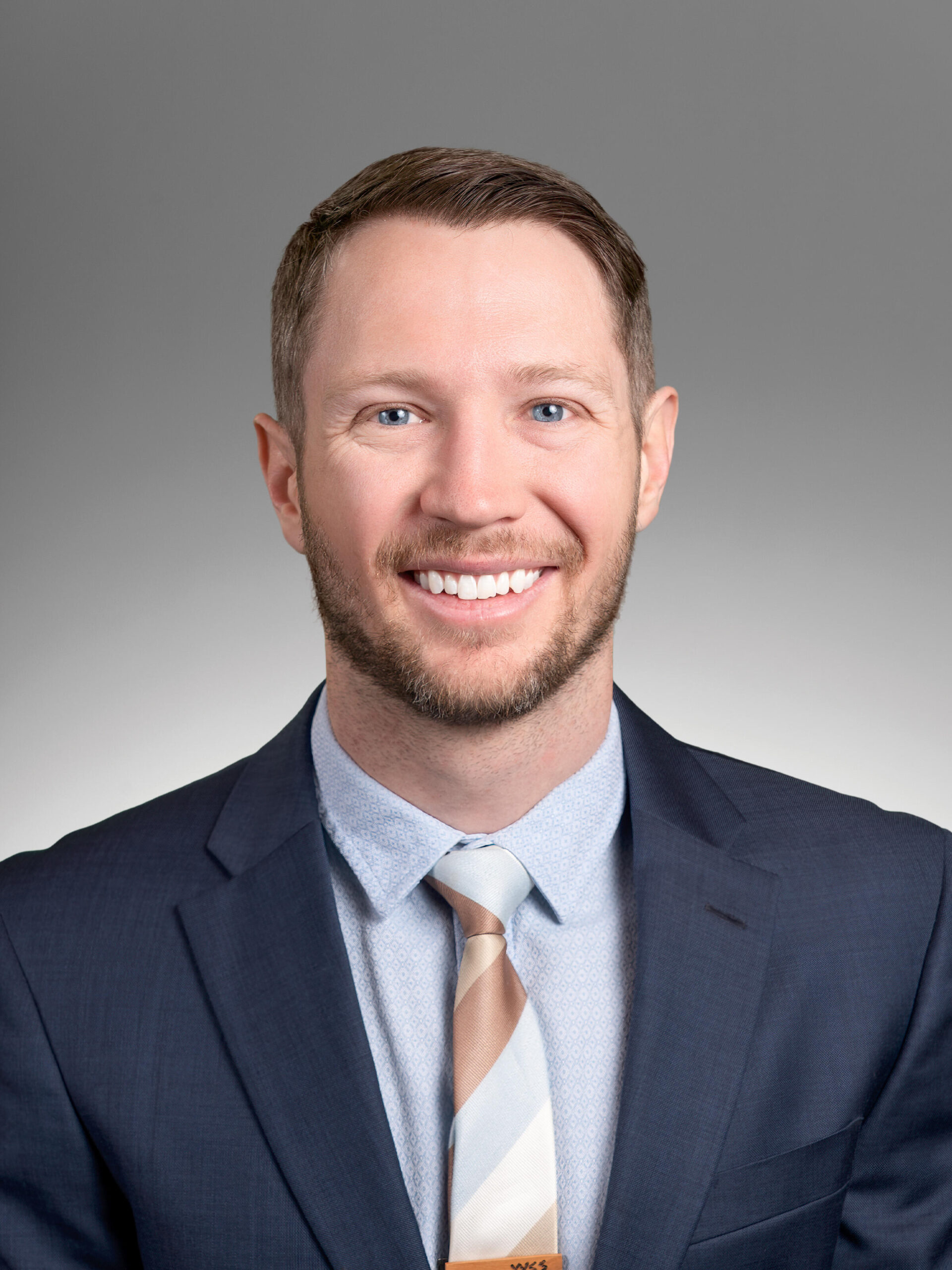
Digital health literacy for patients and providers

Alan Helgeson (Host):

Hello, and welcome to the “Reimagining Rural Health” podcast series, brought to you by Sanford Health. In this series, we explore the challenges facing health care systems across the country from improving access to equitable care, building a sustainable workforce, and discovering innovative ways to deliver high quality, low-cost services in rural and underserved populations. Each episode examines how Sanford Health and other health systems are advancing care for the unique communities they serve.

Today’s topic is a conversation around the importance of digital literacy in health care. Our guests are Brad Reimer, Sanford Health Chief Information Officer, and Jared Antczak, Sanford Health Chief Digital Officer.

Brad Reimer: Just to kind of kick off, the question we always get asked is, why does Sanford need both a CIO and a CDO?

You know, and at Sanford, I guess I recognize that, you know, the health care industry is going through a ton of change, and there’s a lot of areas that are just really kind of transforming as a whole. And for the size and scope that Sanford is, it just appears to me that we need a full-time job for like my team that is keeping the train on the tracks, really focused on the operations and services and projects and all those types of things for the people that are in our care stream today. And we definitely don’t want to distract from that.

And that’s where, in my mind, the focus on the transformation, the reimagine, where we’re going, really is another full-time job. Because there’s a lot of stuff that health care is maybe a little behind on that your teams are able to kind of bring to the table and focus on with the level of energy and with the level of attention that it needs. So in my mind, that’s why we both need kind of these dual roles and these separate roles. So one doesn’t kind of over-index more than it should on the other.

So would love to hear your perspective on kind of how you’re, how you’re feeling about it now that you’re in the seat for a while. And I’ve really enjoyed working with you. So I, I’m curious on what your thoughts are.

Jared Antczak: You know, it’s a really great question, and it’s one that I get asked a lot. How does a system work that has a Chief Digital Officer and a Chief Information officer? And, you know, I’ve had an opportunity to work with a number of different health systems, and each one is organized a little bit differently in this regard. And, you know, maybe that’s an OK thing. You know, every system is a little bit different, but I think one of the big challenges that every health system, you know, really has is determining where to focus their time and attention and their resources when everything seems so important.

And one of the things I’ve really appreciated about Sanford Health, having both the CIO and a CDO, is how it allows us to the point that you just made earlier, to have sufficient resources and attention spent on the things that matter across the technology ecosystem.

You know, it really mitigates the risk of over-indexing on one end of the spectrum at the expense of the other. And so the way that we’ve defined digital and it, I think, is really important to that: So digital encompasses the front end of technology, the part of technology that people interact with, and IT really encompasses the backend part of technology, the interfaces, the databases, the things that work behind the scenes. And so our roles as Chief Digital Officer and Chief Information Officer really complement each other. And, you know, it requires us to be very tightly aligned, but at the same time to be able to have a distinct area of focus.

And so, you know, as Chief Digital Officer, you know, I view a lot of the outcomes that I’m focused on as concepts like engagement and usability and experience. And as Chief Information Officer, a lot of the outcomes you’re really focused on is around security and scalability and reliability of our infrastructure. Both are really critical and interdependent for success, but, you know, really allow us to shift from technology being a cost center to really being a value enabler for the organization.

Brad Reimer: Yeah, I’ve heard, you know, when I’m just talking with people at different conferences or whatever they are, they kind of question, so are these competitive roles? And the way that we framed ’em up here, they’re really not. They really are complementary. And it’s really been fun to kind of see how our teams are starting to work together in a new way. And it really is something that, that truly can be synergistic, and really excited about that.

So, as you’ve been, I know you’ve been at a couple of conferences in different speaking engagements here lately. One was Modern Healthcare and you talked a little bit about the future of digital health. And specifically with that rural lens. What were some of the key takeaways you had from that conference and some of those key messages you were hoping that people would hear from you?

Jared Antczak: The Modern Healthcare Leadership Symposium was really a great conference attended by several different executive leaders from various different health care organizations. And at that conference, I had the honor of joining a panel that was entitled Smart Digital Health Investments, Reshaping and Reimagining Healthcare Delivery, along with David Lubarsky, who’s the CEO of UC Davis Health, moderated by Jeff Terry, who is the CEO of GE Clinical Command Centers.

You know, every time I attend a forum like this, I’m reminded that every health care system is on a similar journey. And, you know, some are further along in some areas and further behind in others, but we’re all somewhere on the path and there’s so much that we can learn from each other. One of the concepts that I spoke about at this particular conference was the difference between digitization and digital transformation. Yeah, right. Both are really big buzzwords that you hear a lot about in the industry, but sometimes people get confused and think that they really just mean the same thing, but they use those terms interchangeably. But from my perspective, there are some really significant differences between the two.

Digitization, from my perspective, really takes existing processes and workflows and essentially digitizes them or lifts and shifts those into a new tool. In many respects, I would say the rush to implement EMRs (electronic medical records) over the past 10 to 15 years really was primarily a digitization event. We took the existing workflows and processes that our clinicians did every day, either in a different tool or on paper, and we digitized it into a new tool.

Brad Reimer: Just replicated it.

Jared Antczak: Yep. Yep. Digital transformation, on the other hand, really addresses the people, the process and the technology holistically and really fundamentally transforms the business and care delivery model. It doesn’t just superimpose technology on top of, you know, existing labor-intensive processes, but really transforms the who, the what and the how to create greater efficiencies, you know, improve productivity and enhance health care experience.

I think it’s really interesting, you know, a study from McKenzie a few years ago showed that over a 15-year time span health care delivery accounted for 9% of US economic growth, but a whopping 29% of net new jobs created during that same period. Yeah. So, you know, in other words, as health care demand increased, we as an industry hired more people and threw more bodies at it and deployed more technology when our productivity actually declined. Well, why is that?

And you know, as you look over the last decade or so, the primary technology that we’ve deployed in health care has been the HER (electronic health record). And I think it’s important to note that the EHR isn’t necessarily designed to improve productivity. It’s designed to document ever increasingly complex requirements for regulatory and billing. And it really serves that purpose well. But the result has been that we’ve implemented a lot of technology and we’ve invested a lot of technology, but we haven’t recognized a whole lot of productivity gains.

So again, we did a whole lot of digitization, but not a whole lot of digital transformation. And that isn’t to say that digital transformation is easy. There’s a lot of culture change that comes with it. But we’d really like to hear some of your insights as well.

Brad, you know, I know you attended recently the, the Becker’s Health IT conference where you spoke on three different panels. I’d love to compare notes and better understand what are some of the key themes that you discussed with other experts in our industry? What did you think sets us apart as we think about our approach when it comes to technology?

Brad Reimer: We had some really good discussions at Becker’s and there were a few themes that kind of seemed to always be the undertone of each of those panels. One of ’em is just around the pressures of the health care industry is under.

I think it’s, you know, everybody that’s in the industry or is watching the industry knows that staffing’s a really, really big challenge. And it’s not just for nurses and caregivers, it’s across the IT spectrum. It’s across the data spectrum. HR, you name it, everybody is really under a lot of stress just from being able to have enough trained people in the right places to be able to care for our patients and take our business forward in the way that it needs to.

And then, you know, the financial pressures, and that’s part of it is when you don’t have the staffing in house, you’re having to pay more for contractors and temp staff and those types of things. Yeah. And that, along with supply chain challenges, the inflation, just some of the global unrest. There’s a lot of things that are influencing and impacting kind of the slim margins that health care already has.

And at the same time, we’re trying to figure out how do we invest more in digital? So we’re getting pressure from the expense side, but we also know that we’ve got this transformation that needs to happen. And that’s not free to do. So finding that right balance is tricky. And I think that every health system is trying to figure out right now is how do we make sure that we do pay attention to the financial situation that everybody is in, but not stop investing in what the future is.

We also talked a lot about and what I’m kind of terming is the modern data health care ecosystem. And there’s, I think, a growing acknowledgement that data systems, just like you said, have really been focused around the EMR the last 10, 15 years. And it has been an appropriate center of gravity for a lot of those solutions and the way that we think about things.

But the tide definitely is shifting and we’re seeing so much more data created outside the EMR that we’ve gotta figure out what are we gonna do with it? Cuz not all of it belongs back in the EMR. Some of it does, and some of it is truly patient record type things, especially if they’re, if it’s data that’s used in assessing a patient’s condition or in providing some type of a treatment, we do need to make sure that that’s back in part of the medical record, but not all of it. Not every heartbeat that your watch is monitoring needs to flow back into the EMR.

And when you think about the proliferation of wearables and wellness wearables and the remote patient monitoring devices that we’re gonna provision and send out to patients to take home with them, all of that data, we’ve gotta figure out what the value is and where we should put it, and then how we should leverage it. So there definitely needs to be a new model, and hopefully it is somewhat standardized across the industry of how we do that.

And one of the challenges that everybody kind of acknowledged is we’ve got a lot of investment with venture capital and those types of things in the health care IT right now. And a lot of ’em are focused on this digital transformation and the new patient journey and new patient experience, but they’re all these little siloed applications, right? And they all have their own data model, and they all have their own way of communicating or not communicating with the EMR.

And we’re gonna have to synthesize that. We’re gonna have to figure out how is that gonna work from a real-time transaction standpoint, how is it going to, from an analytics standpoint, how does it eventually feed into AI and those types of things. So I think the advancement of what we need to do with our data systems is paramount as we kind of think about the upcoming years.

And then I try to, when I know you do this as well, try to really kind of put that rural lens on just everything that’s happening with health care. And in Sanford, you know, 80% of our patients are really in that rural footprint. For other health systems it’s kind of the 80-20. There may be 80% urban, 20% rural. And if we’re able to find ways to implement best practices and we really understand the patient behaviors and those types of things for rural, we can actually set those and allow those best practices and those ways of doing care differently for health systems that aren’t necessarily focused on that as their primary constituency. So I do think that there’s a lot of opportunity for us to really be, not necessarily trendsetters, but really raise the tide for a lot of the nation that has rural health.

Jared Antczak: I love that. Couldn’t agree more.

Brad Reimer: So as you think about rural health and you think about digitization, what are some of the biggest things that you think are gonna be game changers?

Jared Antczak: Digital in rural, the digital landscape is constantly evolving. You know, new technologies emerge all the time. Consumer or patient preferences and expectations are constantly changing based on, you know, the interactions they have with other, you know, sophisticated digital experiences in their day-to-day lives. Caregivers’ workflow – caregiver workflows evolve the macroeconomic conditions that you just talked about exert pressure in different ways, right? And so, you know, I think for a lot of those reasons, you know, I always try to resist the temptation to propose you know, a big long three or a five year roadmap for our digital strategy.

Instead, we need to embrace, you know, an agile culture that really allows us to be nimble, responsive, and iterate quickly on the things that bring value into people’s lives. So that said, you know, when I consider I think some of the greatest opportunities in, you know, this next wave of digital solutions, I think there are many sources of inspiration all around us that can help us envision what the Sanford Health digital consumer experience could look like.

So, for example, I imagine a health experience that makes finding care just as easy as finding a product on Amazon and making a purchase or preparing for your visit. As simple as, and as intuitive as booking a ride with Uber, you know, managing my care as personalized as my Netflix profile that prompts me with, you know, recommendations for something to watch based on my interests and my viewing history.

So, you know, in order for that to happen though, these solutions, I think to your point earlier, need to be easily integrated into our core platforms and solutions. We can’t just have a bunch of standalone point solutions and expect it to be a good experience. There are way too many point solutions out there in the marketplace today. I’m reminded back in 2009 when Apple coined the phrase, there’s an app for that, right? And, and at the time that was really a good thing, but nowadays, nobody wants to download yet another app, right? Consumers want those frictionless, seamless, personalized digital experiences that meet their needs at every step of the journey. Not a bunch of fragmented point solutions that only solve bits and pieces along the way. So I think integration is really key to making that whole digital front door concept come to life that we’re all striving for.

Brad Reimer: Yeah. I’ve got way too much clutter on my phone. I’m deleting apps <laugh>, it’s like crazier right now. Yeah.

Jared Antczak: So Brad, there’s a lot of discussion in the industry around digital literacy, you know. What areas is Sanford investing in to help the adoption and the effectiveness of different solutions?

Brad Reimer: My view is that society as a whole is fairly literate with digital experiences and tools. It’s really in most parts of people’s lives other than health care. And it just hasn’t permeated health care in the same way. So I really look at the digital literacy piece kind of from two lenses. One is from the perspective of our patients and our communities, so those that we serve. And then we also have the digital adoption and digital literacy for our caregivers and our employees.

And there’s two different ways I think that we really need to kinda look at how we’re approaching that for patients. Data privacy’s always gonna be a concern, and I think it’s something they’re used to dealing with, like in their life around banking and those types of things. Health care brings a little bit different sensitivity to the privacy of my data. And I do think that that is something that may not be quite the barrier it would’ve been five years ago, but it is still something that is top of people’s minds.

We need to make sure that part of that literacy is their trust in the app or the solution that they’re using to make sure that their personal privacy is taken care of.

Aside from that, I think our patients and our communities aren’t only ready. They’re asking for more digital health care, like you said with Amazon. They’re using it in all other parts of their life, and they’re looking for that very similar experience. And I think as an industry, we do still have some settling in to do on are we going to provide too many apps and there’s gonna be clutter and there’s gonna be almost app fatigue, and we could over-index on just providing way too much technology rather than really having that empathy focused. Patient empathy is the center of how we’re designing these things, because not every moment that matters for a patient should be done digitally.

When you start looking at digital literacy from a, from a caregiver standpoint, we need to be able to make sure that we can differentiate those points that matter and approach them differently. So I’ve kind of compared it to, you know, fast food versus a home cooked meal. You know, there’s a lot of times where a very quick light touch routine and transactional experience is what you want. And it’s probably more efficient, it’s probably less expensive, it’s a lot more convenient, and there’s a lot of transactions that probably should be done that way. It’s your sore throat, it’s your skin rashes, those types of things.

But when you’re dealing with something that’s more serious, more personal, more life-changing in, it’s, it’s sensitive, the stakes are a little bit higher, you’re looking for a little bit more of a sit down home cook type meal situation, in my mind. You wanna be able to sit across the table from somebody, put some real meaty conversations on the table, and make sure that you can understand ’em and dive deep into ’em. And those are the situations that as a health care organization, we should be able to leverage digital tools to augment and help that situation. But it still needs to be a personal relationship built encounter with that patient. So part of the literacy is making sure that we’ve got the right focus on that.

Jared Antczak: I’ve always said that digital, the digital experience in health care can’t just be another lane in the highway. It has to complement and interweave. You know, patients need both, and we need to make it as seamless as possible.

Brad Reimer: The other thing that we’re thinking about with digital literacy was around the caregiver, specifically around AI or artificial intelligence. It’s a term that’s overused, and it’s a term that’s a lot of times misunderstood or underappreciated. So we’ve started to put some efforts towards demystifying AI for our caregivers. And what that looks like is helping them understand truly what is AI and what isn’t it.

When we talk about algorithms and models that have been trained within that AI situation, they should know how was the model trained? What data was used to train that model? Were the patients used in training that model representative of the patient sitting in front of me today or not? And so there’s a lot of things that are maybe a little intimidating for those that don’t understand the technical components. We need to get them comfortable asking the questions because it does make a difference in terms of how they’re thinking about incorporating AI into their care experience for their patients and making sure that it’s a good thing.

So we also talk about website manners versus bedside manners. And, you know, you hear a lot about that in the industry. It’s not something that we’ve came up with, but there definitely is, as we do more and more virtual visits, and especially as we’ve seen the adoption of virtual visits for behavioral health and those types of services, again, that patient empathy and being able to read body language and have a different type of experience through a video rather than in person. We do need to raise our game on that and make sure that we’re understanding some of the differences and some of the advantages it brings and some of the disadvantages that it brings and make sure that we’re bridging that gap.

Jared Antczak: I love that. I mean, the way that health care is delivered nowadays is very different. Technology is such a big part of every interaction. And so being able to empower our workforce and our clinicians with that website manner, I think is a really great concept.

Brad Reimer: So as you’ve been thinking about, you know, the opportunities in rural America and how we connect to our patients, what are the things that excite you the most?

Jared Antczak: I go back to a lot of, you know, the question that I just asked you around digital literacy, right? And I think that it’s so important to understand our patients, our consumers, and, you know, the needs that they have in their lives, and what their preferences and expectations are.

You know, building a new digital app or a website does no good for someone who doesn’t have the ability to use it. So, you know, that’s, it is just another example of a solution looking for a problem. So really starting with our patients and taking a very consumer first, patient first kind of approach to understanding the people in our communities and what their needs and their underserved needs are, I think is absolutely critical. So, you know, as the largest rural health system in the United States, we do have some unique challenges and opportunities that we need to address in order to make health care more accessible, equitable and affordable, you know, for everyone that we serve.

And, you know, digital literacy is just one component of a bigger category that we’ll call digital equity. And recent studies have suggested that digital equity is a social determinant of health, but it looks at things like digital literacy or, you know, how comfortable and confident are people downloading, registering, and navigating a digital experience, right?

But it also looks at things like internet access. Do people have access to broadband either through Wi-Fi or through a cellular signal? It looks at things like device availability. Do they have access to smartphones and tablets or laptops with cameras so that they can engage in a virtual care kind of experience? And so as we look at all of those different components, you know, that helps us to kind of hone in on how do we remove some of the physical, social and intellectual obstacles in people’s lives that would limit their ability to receive really equitable access to world-class care that Sanford Health can provide, especially in some of these rural communities.

You know, that said, as we’ve done some of our research and talked to our actual patients, we have learned some things. You know, going back to I think your earlier comment, many of our consumers in rural areas do in fact have similar expectations as our consumers in more urban areas.

You know, as an example, we found that more of our patients would prefer to schedule an appointment for a checkup online than to call and talk to somebody to schedule their appointment. We know that throughout the U.S. over 85% of the population has access to a smartphone. And so your earlier comment about the same people that use Sanford Health, even in our rural communities, are the folks who are ordering products from Amazon and who are engaging in other digital experiences on a regular basis – I think rings very true.

You know, we’re still learning more and more about the consumers in our communities and, you know, we’ll use those learnings to best inform how we might be able to serve them best. I think one of the most exciting prospects to me though, is the ability to leverage digital and virtual care tools to reach our consumers wherever they are, so that they can have access to care when, where, and how they want it.

So for our rural patients, that means, you know, not having to drive for hours in harsh winter weather, taking time off of school or work, or finding reliable child care or transportation just to be able to see their doctor. How might we be able to use some of these tools to make health care easier for them?

Brad Reimer: So can you talk a little bit about, you know, obviously the patient is the center of our focus, but a key component of that is the interactions that the caregivers are gonna have with those patients and their experience. And we all hear about the level of fatigue that there is right now within the industry with those caregivers. Can you talk a little bit about the type of experience changes that we could give to those providers? How do we get their buy-in into changing some of their behavior to leverage those tools and making sure that we can help reduce some of the burnout and the fatigue rather than adding to it?

Jared Antczak: Yeah, I appreciate that because I think it’s important to note that our digital strategy focuses on our caregivers and consumers alike. It’s just as important to serve our caregivers as it is to focus on our patients when we talk about how do we leverage technology in meaningful ways to remove friction in people’s lives and to create a good experience.

You know, throughout my career, I’ve heard sometimes this notion that if we do something that improves the patient experience, it must come at the expense of the clinician or vice versa. And I don’t think that that’s true. I believe that that’s a logical fallacy. I think there’s plenty of opportunities to really leverage technology and digital tools to benefit both the patient and the clinician simultaneously.

When I think of the caregiver or the clinician experience, I think of the ability for digital tools to really assist, augment, and automate tasks. You know, the three A’s that can really support our workforce. Caregivers enjoy their work more when they’re free to operate at the top of their license or at the top of their skillset. So, you know, to your question, getting buy-in from providers and clinicians means bringing them to the table from the very beginning and really understanding their needs and preferences, just like our consumers. And, and that really helps to ensure that we aren’t wasting our limited and valuable resources building the wrong things.

I think it’s important to note too, that, you know, sometimes I’ve seen organizations kind of get caught in the trap of focusing on the number of features that they’re able to develop, and the feature becomes the goal. Our measurement of success shouldn’t be necessarily the number of features we create, but really the outcomes that we achieve. So there’s sometimes a false premise that a good digital experience is all about, you know, the volume or the quantity of features, but they’re just really a means to an end.

You know, the goal is really the results and the outcomes that the features actually enable. We need to challenge the notion sometimes that, you know, we’ve always done it this way, and so we always have to do it that way and really ask ourselves why we sometimes make health care overly complex and complicated. In health care, we’re incredibly risk averse, and I think for good reason, right? If Amazon messes up your order, you might have a delay in receiving your product, or you might have a few extra dollars charged to your account that can ultimately be refunded. But if we make a mistake in health care, the results can be disastrous. Right? Right. Yeah. We’re dealing with people’s lives. Stakes are much different. Stakes are very high, right? So there’s very low tolerance for risk and for mistakes.

But that said, I think what we’ve essentially done is we’ve built a lot of our clinical and operational workflows around the exceptions rather than the rules because we’re so risk averse.

Yeah. And what I mean by that is we design our processes and our policies around those edge cases, but we apply those processes universally. So we might ask every patient at every encounter questions that only apply to a select few. And in some cases we build processes around a hypothetical situation that’s never even been experienced. But then we wonder why we have so much waste, inefficiency and diminished productivity in some of our processes. So I think that there’s a huge opportunity to create, you know, some smart logic and rules that can help us catch those edge cases and we can mitigate them, but at the same time, really design our processes around the majority of people that we serve. And that can help us to become, I think, a lot more productive and really alleviate a lot of the manual lift and burnout that our workforce, unfortunately, experiences at times.

I think of the best digital experiences are the ones that are the most simple. I think some of the best results often come from a removing things that don’t add value. You know, one of my favorite quotes from Steve Jobs, you know, the founder of Apple was when he said, I’m actually as proud of the things we haven’t done as the things that we have done. Innovation is saying no to a thousand things. So again, when I talk about digital transformation, addressing the people process and the technology holistically, you know, this is really what I mean, how do we simplify it and create a good experience.

Brad Reimer: Yeah. And focus on the right stuff.

Jared Antczak: All right, Brad, so this last question is for you. Sanford has provided more than 600,000 virtual consults with patients over the last decade. What have we learned about what works and what doesn’t?

Brad Reimer: So, one of the statistics that our vice president over virtual care gave me a couple months ago that just always sticks my mind, is that those 600,000 virtual consults that we have done has saved our patients over 20 million miles. And that’s just – that’s just astounding. That’s incredible. And you put, you know, like a mileage rate on that, you think about the gas at that cost, you know, even if it’s a, you know, a dollar per mile that’s $20 million back in the pockets of our patients. In my mind, that’s meaningful, especially for some of the areas that we serve that have some of the highest poverty levels, you know, across the U.S., those dollars make a difference. And it really is impacting the cost of health care, and I don’t think we can look away from that.

And that’s not considering, like you said, the time away from work people are having to take, typically it’s not just one person taking, you know, the drive and maybe the car ride’s not gonna be comfortable for ’em, depending on what their condition is. You know, in this neck of the woods we’re talking about winter roads and those types of things.

So there’s a lot of other benefits that we’re realizing that I think we kind of take for granted. And we’re still used to in rural America, you know, not thinking twice about driving an hour or two to get to a store, whatever it is that we want to get to. But if we can minimize that for this population, it really can be impactful. And then you start talking about, I think, more of the future with devices at home, hospital, at home being able to more proactively interact with patients to keep them healthy rather than just dealing with them when they are sick.

The future of virtual care, in my mind, is really, really positive. It has a lot of potential. And I think that the way we treat and the way we care for our patients and our communities over the next five years is gonna look much, much different than we have today. And it should be able to be better and it will be better.

The other part of it is part of those 600,000 visits have been more provider-to-provider. It’s been from maybe an ER that has a particular specialty physician in it to a rural critical access hospital. Maybe it’s for burn or for stroke, or for something that you want a specialist, but that specialist may not be in the most rural parts of the of the area. And we’ve had really, really good success. And I know that that’s a common model across a lot of health systems, but it’s particularly important around keeping health care close to these rural communities. And that’s what’s helped sustain some of these critical access hospitals in being able to financially be stable through COVID and through these other areas. They need that specialty care.

It is much better for the patients to be able to be treated close to their home and not have to jump in an ambulance and go for an hour. And it’s really impactful for the for the care and well-being of our patients. And really excited to see how that continues to expand over the next few years as well.

Jared Antczak: So, a lot of really exciting work. I appreciate the conversation, the dialogue. This has been fun. I’ve learned a lot from you and look forward to continuing to work together to serve our clinicians and our caregivers and our consumers and our communities. I think the future is very bright for Sanford Health.

Alan Helgeson (Host): You’ve been listening to “Reimagining Rural Health,” a podcast series brought to you by Sanford Health. Hear more episodes in this series or other Sanford Health series on Apple, Spotify, and news.sanfordhealth.org. For Sanford Health News, I’m Alan Helgeson, and thank you for listening.

Learn more

Get more episodes in this series

Well-being at work: What doctors do for self-care

Alan Helgeson (host):

Hello, and welcome to the “Reimagining Rural Health” podcast series, brought to you by Sanford Health. In this series, we explore the challenges facing health care systems across the country from improving access to equitable care, building sustainable workforce, and discovering innovative ways to deliver high quality, low cost services in rural and underserved populations. Each episode examines how Sanford Health and other health systems are advancing care for the unique communities they serve.

Today’s topic focuses on caregivers in the medical community and the importance of well-being in order to provide the best care to those in need. Our guests are Dr. Brian Gatheridge, psychologist with Sanford Health Detroit Lakes Clinic, and Dr. Heather Spies, OB/GYN, and physician director of clinician experience and well-being. Our moderator is Dr. Luis Garcia, president of Sanford Clinics.

Dr. Luis Garcia (moderator):

I’m very grateful to be joined today by Dr. Heather Spies and Dr. Brian Gatheridge. Heather, Brian, thank you for being here today. And, you both are champions of this kind of work and you both are leaders in these type of topics. And I have a question to both of you. Tell us a little bit about yourself, your personal background, your journey, and how did you get involved and passionate about clinician well-being?

Dr. Heather Spies (guest):

Well, thank you for having us here, and I have the privilege of working with both of you in this work, and so I know that we all care a lot about it, so I think this will be a fun conversation to have today together. I started in OB/GYN 20 years ago now, actually, if you think about residency, and then have been 16 years at Sanford practicing OB/GYN. And, most recently in the physician director role for the enterprise for clinician experience and well-being.

Just really feel fortunate to have this opportunity to serve in this role. It’s a new role and it’s been identified as a need because, just to really make sure that as clinicians we’re looking out for each other and making sure as an organization that we’re providing resources and that sort of thing, which we’re gonna talk more about today.

Um, but as far as my journey, I think I’ve always had a passion for well-being, although I think part of the reason I love talking about it and focusing on it is because I never practiced what I preached for a very, very long time. Still probably don’t do it as well as I should, but I think that’s where we all kind of fall somewhere on a spectrum of our well-being, our intentions of looking out for ourselves or looking out for well-being, and it needing to be more of a priority for all of us. So I think just continuing on that journey throughout my whole life is fun to be a part of this work.

Dr. Luis Garcia:

Well, thank you, Heather, and we appreciate what you’re doing and your new role. And you’re right. I mean, as clinicians, we often forget about our own well-being, so thank you for sharing that with us. What about you Brian?

Dr. Brian Gatheridge (guest):

Yeah, I would just say thanks again for the opportunity to participate in what is a very important conversation. So myself I guess I could say I’ve always had a bit of an interest in human behavior, you know, as well as emotional and cognitive processes, you know, how people interact in their environment and with others. In school, I was primarily interested in sports and hanging out, but for whatever reason, psychology was always something that was interesting to me. I also grew up in a really rural area, and I saw how you know, people struggled with mental health and how folks didn’t really understand mental health problems people were experiencing. There certainly was not an encouragement to discuss those problems or acknowledge them, and there really was not help available. And so I always felt like there was a bit of a calling for me that I felt to get into that field, to serve in so far as, you know, clinician wellness.

Like many of us who serve, I’m a clinician who cares about the people that I work with. And as I entered into the field of health care, I began to learn more about, you know, the unique pressures that, you know, clinicians face and the impact that our work has on our health. And sadly, again, that stigma that often prevents people from seeking care. And so, I guess over time, you could say I became increasingly motivated to serve in a way that could hopefully improve the health and welfare of my fellow health care providers. And again, really work to reduce that stigma that still keeps people from acknowledging that there is a concern and seeking care. So again, it’s a privilege to be here and to serve.

Dr. Luis Garcia:

Well, Brian, thank you. And I want to thank you personally for answering to that calling because you do phenomenal work and you’re a great asset to our organization. And, you know, you’re talking about the stigma. And Heather, I’d like to ask you a question about that. As a clinician, why do you feel that’s so important to talk about that stigma about well-being? And what’s your perspective on that?

Dr. Heather Spies:

This is really important for us as clinicians to focus on because we’re all working and living in very stressful environments. Medicine’s always been stressful, but even more recently, I think we’re all acknowledging that not only at work, but just everywhere in our communities and our culture and politics, everything is a little bit more intense and stressful lately. So no matter your specialty or your location, many of us are feeling more and more a sense of feeling devalued – maybe the culture, the public perception of health care has had so many changes lately.

I think all clinicians have invested so much time, energy, really sacrificed relationships sometimes just to be clinicians and to be that person that people trust. You know, traditionally we are the people that everyone looked to and trusted and valued, and the way that that’s happening now is being challenged more and more recently.

So as we dedicate ourselves to knowing the latest clinical information and trying to do the best we can for patients. The media sometimes challenges what a clinician says, and that makes it really hard for us to keep going, I think harder lately than it was in the past where we could always just say that we were the experts in things. And so I think it’s important that we talk about this because we’re all feeling fatigued and we’re all feeling burnt out at times, and what can we do to help with that?

Dr. Luis Garcia:

Thank you, Heather. And it’s just one more challenge for clinicians, right? As if medicine was not difficult enough right? Now, deal with all that devalue part that you’re talking about. Brian, you know, Heather touched a little bit into concepts like burnout, compassion fatigue, but maybe folks, maybe do not know exactly what those term terms mean. From your standpoint, can you define for us, the meaning of these terms? And maybe describe how can we recognize signs of burnout and fatigue on either in ourselves or others?

Dr. Brian Gatheridge:

Yeah, that’s a really important question Dr. Garcia. You know, we hear those terms a lot, but I’m always surprised by the folks who really don’t understand what those terms mean and whether or not they may be experiencing those concerns themselves.

So, you know, compassion fatigue and burnout are two types of stresses that can bring about, you know, psychological, physical, and emotional impacts. If we think about burnout, you know, specifically, it’s important to recognize that it’s not necessarily a psychological disorder. You know, I think the World Health Organization designates it as a syndrome which is a measure of chronic distress that we might feel at times if we’re talking about burnout specifically. Christine Maslow, Dr. Christine Maslow is a psychologist, researcher who’s really studied burnout for decades. And her research has concluded that burnout is characterized by three factors.

So one is emotional exhaustion. So these are folks who are just feeling depleted. They may be irritable, they might be down, and they just can’t seem to recharge. You know, a lot of us can feel pretty heavily, heavy or emotionally depleted at the end of the day, but we go home and we engage our family, or we exercise and we come back the next day and we’re ready to do our work again. And we feel like we have the emotional energy to do that. Folks who are burned out have a hard time recharging.

Depersonalization is the second component of the syndrome, and that’s this cynical or detached approach people may feel to caring for patients. This is where folks, you know, we start to see people as, you know, they’re presenting problem as opposed to, you know, the human that they are.

And then the last is a loss of personal accomplishment, and this is often the last symptom to develop where we just don’t feel like our work has any value or meaning anymore. And we know that, you know, burnout is bad for physicians and clinicians.

You know, it’s really proven, by increased rates of anxiety, depression, and chemical use rates, not to mention suicide, which is a significant problem within the field of health care burnout. It’s also bad for patients because we know that it’s associated with lower quality of care, lower patient satisfaction, higher turnover rates for clinicians, and increased chances of medical errors. Some research has shown that between 40 to 61% of physicians are burned out and additional research shows that about up to 60% of psychologists struggle with burnout. So it, it’s a very significant concern.

Those are things that people need to look for. Compassion fatigue is a little bit different in that it’s a bit more acute. Burnout is often caused by a number of work-related stressors, where compassion fatigue is pretty much directly related to exposure to the stressful and traumatic things that we’re exposed to within the field of health care. It has a much more rapid onset. It can also be a lot of the signs that you see are very consistent with what we’d see with post-traumatic stress disorder – you know, psychological distress, muscle tension, nightmares, cognitive shifts. Again, it’s much, there’s much more of a rapid onset and it really is impacted by helping others. There’s much more of a quicker recovery time than for burnout if we manage it early. So, again, there’s a lot of similarities between these two things but also some pretty profound differences as well.

Dr. Luis Garcia:

Brian, thanks for educating us on that. I mean, I’m gonna be honest. I personally didn’t know the difference, so thank you for that and those are striking statistics, right? The ones that you just shared with us. You know, Heather, Brian talked a little bit about the multifactorial etiology of this. So from your perspective, what things in medicine do you think have contributed to burnout or clinicians struggling to achieve that sense of well-being?

Dr. Heather Spies:

I think that we all know, from the very beginning of our training, we go into medicine and we’re really excited about it. You know, studies have shown that medical students actually have really low burnout. They’re energetic. They are ready to go and excited about things.

And then as we progress through training and residency, the number of us that begin to show symptoms of burnout or compassion fatigue really start to increase at an alarming rate actually. And then as we get into practice. And so I think it’s the time that we invest, the money that we invest. A lot of times, we enter our practices in quite a bit of financial debt, and we feel like we don’t have any other choice other than to do the work that we signed up to do 10, 20, 30 years into our practices.

So that’s one big factor I think that’s contributing. I think to organizational factors, I think sometimes the cultures get stuck kind of in that traditional way. And luckily we’re seeing that culture change and evolve across you know, Sanford and the country luckily to just really say, you know, we don’t have to have things the way that they’ve traditionally been.

We need to be looking out for each other as human beings and as people that need rest, and people that need to take turns and maybe not work for 36 hours straight all the time that, you know, we did in our training.

So I think too, it’s really been in our nature as clinicians to always put other people first. We always, I mean, that’s why we went into medicine. That’s just by nature what most of us are like. And so, you know, traditionally that really contributes, you know, over time, especially, you might do fine for a while, but over time, when you always put others first in every scenario, it’s going to take its toll. And so we’re seeing that definitely with our clinicians.

Dr. Luis Garcia:

Yeah. Not to count the expectations that we need to be perfect, right? And you know, a medical error can have significant consequences. Unlike any other job or industry and all that stress contributes to all that. So thank you for that answer, Heather.

You know, Brian, I think that we all are very aware of how all these stressors and all these factors have been heavily pronounced in the last couple of years. And I think the last couple of years can be easily be defined as full adversity. And from your perspective talk to us a little bit about the power of facing adversity and the relationship to personal growth.

Dr. Brian Gatheridge:

I guess what I would challenge all of our listeners to really pause and think about a time where you experienced adversity in your life. Think about an experience that you know, you didn’t enjoy or that was particularly challenging at the time that you faced it. And then I want you to reflect upon how that experience shaped your life in a positive direction.

You know, most of us are at the point in life where we can reflect upon experiences that at the time were quite challenging, or we didn’t appreciate for what it was. But looking back now, we may not change that because it did have a powerful effect on our life in a positive manner. And what we know is that, you know, for all of us adversity is an OK thing to experience in life. In fact, psychological research shows us that folks who have experienced adverse life events report higher overall levels of satisfaction in their life.

They’re more resilient, and people report fewer symptoms of trauma. They report overall levels of impairment and overall lower levels of emotional distress when compared to individuals with very little or no lifetime adversity. So again, lifetime adversity shapes us in a very positive direction. And, you know, hopefully, we’re all going to see that, through the last couple of years, certainly we’ve all experienced adversity. And on some level, even now, you may be able to look back and reflect upon how life has changed for the better as a result of the pandemic.

For some of us, we maybe haven’t seen that yet. And that observation will only materialize down the road. But this idea of, you know, growing from adverse experiences is also related to this concept of post-traumatic growth, which is another area of psychology, which describes the positive psychological changes that take place as a result of struggling with a highly challenging or stressful life circumstance.

Post-traumatic growth involves, you know, these psychological shifts in thinking and relating to the world and the self that contribute to a personal process of change that’s really deeply meaningful. This is when like the old normal is no longer an option.

And there’s five domains of psychological, post-traumatic growth that have been identified. And the first is, you know, people often experience a development of deeper relationships with others. The second domain that we often see is that people are open to new possibilities in life. This is related to identifying one’s overall purpose and meaning in life, what’s most important to them. The third domain is a greater sense of personal strength and ability. We have a greater idea of that. And the fourth is a stronger sense of spirituality, which is important in people’s life. And the fifth domain that we see as a result of post-traumatic growth are improvements in our overall appreciation for life. And so, again, we’ve all been through pretty tough times, you know, particularly over the past couple of years. But with time, hopefully we’ll see positive changes in our life as a result of this adversity that we’ve faced.

Dr. Luis Garcia:

Well, thanks for sharing that with us. That’s really profound Brian, and the appreciation of life and what we have in life, right? And I think that whether it is at home or at work, these last two years have really unified us as a workforce. And the way that we cared for each other in times of real adversity was just fascinating to watch. I’m highly appreciative for that.

Heather, I think that this conversation is showing us that it’s not a matter of if, but when you or I or anybody else could go through a difficult time, and most of the times very likely you could overcome that adversity alone, maybe without even sharing it with somebody, but there are times in which you’re gonna need help, right? And there are times where you need to accept that help. Can you talk to us a little bit about the wellness initiatives that we are putting in place in Sanford and how do we preserve that well-being at work?

Dr. Heather Spies:

Yeah, absolutely. I’d love to share. I think, you know, looking back on my personal journey that we kind of started with, you know, I think there’s always gonna be a gap in your well-being, but it’s whether you recognize it yourself or if you have the good fortune of a colleague or a friend, maybe saying something, you know, “Hey, I’ve noticed that maybe you’re not doing OK.” And so if you look at the – we have a wheel of well-being that we utilize through our Vital WorkLife resources that are available to all our clinicians at Sanford.

And the Vital WorkLife wheel of well-being has six dimensions. So it’s got your relational, your emotional, your physical, professional, spiritual, and financial well-being components. And I think at any given time, no human being can feel like or say that they’re optimally well in all those areas. It’s just not possible.

And it’s normal. I mean, we’re gonna sacrifice a little bit in one area to focus on one at different phases or seasons of our life. Like when I, when I had young kids, I would, I sacrificed some of my physical workouts some days because I would’ve rather, you know, taken the time to read a story to my kids at night because I had been at work longer that day or whatever. And so that’s OK, you know.

But I think overall we have to encourage people to pause and be just periodically checking in on those six different areas and saying, “Where, what area have I really let lag and is that affecting how I am doing overall?” And sometimes we see that. And so some of the resources that we have available to support those things are everything from counseling both internally, with our CAPS program here at Sanford, where we have counselors that we provide free of cost to all of our clinicians, that they can meet with and talk with.

So whether it’s emotional things or, you know, at work or personal relationship stressors, whatever it might be. So just to kind of get that relationship with the counselor started and see what else the needs might be that we can help provide resources for. We also have external counseling, so if somebody would prefer to have it be a little bit more external so that they don’t have, you know, a potential overlap of that colleague they can do it through our Vital WorkLife resource as well.

And just to go back a little bit, if they do want the internal coaching, we can do it across network too. So, say you do want it within Sanford, but maybe not the person that’s down the hall from you. We can connect our colleagues with people in another area of Sanford.

But everything from, you know, back to that wheel of well-being, everything from financial, you know, so say you just really need to meet with someone because you are feeling stuck and you just have this vision of, “I have no choice but to do this for 20 years. I can’t even see two less patients a day or anything because you just feel such a pressure.” We can provide you a meeting with a financial advisor to say, “OK, no, let’s pause and actually look at this.” I just had a colleague recently who, when she actually met with her financial advisor, she had no idea how much she had in her retirement fund, or how much, you know, what her long-term plan was. And it was actually really refreshing and freeing to her to just, you know, have that meeting and take a moment to look at that. So I think just awareness and knowing where you’re at is helpful to a lot of people.

And then physical, I mean, of course we can help with resources for our wellness programs, so all those kind of things.

And then if it’s relationships that we’re looking for I think that we have so many opportunities in Sanford to pair clinicians up with others. So we have a mentor program. We are now automatically pairing every new clinician with a mentor when they start but we’re also able to, if someone mid-career would really like us to help do that through our clinician experience office, we can help pair those people because really it comes down to relationships. And if you know that someone is listening to you and understands what you’re going through, because they’re also a clinician, maybe even in the same specialty or kind of in the same type of situation it just really does well for our well-being.

So those are a few of the things we have. I could probably talk for an hour on all different resources, but bottom line is, if you are looking for anything, all of our clinicians can contact their clinician experience specialist in their region, and we can lead you to hopefully what you need.

Dr. Luis Garcia:

Thank you for that, Heather, and I think that we have been very proactive at expanding those resources across the enterprise. And to your point, any need for our clinicians should be channeled through that Office of Clinician Experience. We have multiple resources available for them. Thank you for sharing some of them.

You know, Heather, you talk about that wheel of well-being and prioritizing some of these aspects of the wheel. Question for both of you, and I’ll start with you, Heather, again, what is one thing that you personally prioritize and why?

Dr. Heather Spies:

One thing that I’ve gotten much better at doing is my schedule. So I don’t know exactly which wheel that would fall into, but probably all of them, because what I do every Sunday is I intentionally, this is kind of, you know, embarrassing to admit, but I still write it out on a calendar. So I have my Outlook calendar, but I write out on paper – what does my week look like? And if I’m looking at my Outlook calendar and I see absolutely no white space on there, I go through and say, OK, can I move a meeting? Can I you know, move a kid’s appointment that isn’t, you know, urgent? Because if I don’t find time to at least go for a walk or do something like that, have 30 minutes to myself, I really can tell the difference, especially if I’m gonna be on call that week or I just have a really busy week.

It’s almost a necessity that I have some fresh air. So I write that in and then I see too, like, where can I delegate things? What can I ask my husband to do? What can I ask, you know, my 15-year-old to do and things like that. And so, that’s changed completely over the seasons in my life.

I look back to being new in practice and having two little kids, and I did this terribly. And if I could go back and maybe just do this one simple thing of spending literally 10 minutes on a Sunday mapping that out, I would realize that on Tuesday I’m going to be drowning, and I need help that day and just reach out to somebody or cross something off or cancel something but I never did that. I just kind of kept my head above water each day until I, you know, fell over. So that’s the one thing that is making me feel more well at this season in my life than I used to be.

Dr. Luis Garcia:

And it’s amazing how, if you’re not on your A game, how that impacts your family and your patience. Right? Let me share with you something. And, one time I asked my son, how do I make you feel when I’m not on my A game? And his answer was, “You make me feel scared.” And I can tell you that was not easy to hear. Right? You know, when you’re making one of your loved ones feel scared because of your actions that strikes your chord. So, thank you for sharing that Heather. What about you, Brian? How do you prioritize wellness in your life?

Dr. Brian Gatheridge:

That was a great statement that you made there Luis and I appreciate you sharing that story. You know, for me, the thing that resonates the most with me when I think about this question is at one point I learned not to confuse selfishness with healthy self-interest. And we know that many of us who work in health care feel like if we’re not there for others all the time, then we’re somehow acting in a selfish manner. And for me I’m constantly, I guess, checking in with myself to be aware of my stress signals and how I am feeling. As a parent, I guarantee you, my children have also, you know, experienced me at my worst. And, you know that’s something that we want to work to prevent as much as we can.

For me, I’m active in making sure that I participate in activities that ultimately promote wellness in my life. I can just tell you that to be healthy, I exercise quite a bit, and when I can, I am outdoors engaged in all kinds of different activities depending upon the season. And if I can do that with family and friends present, I’m all the better for it. I mean, those types of activities that are physical and outdoors are those that ultimately rejuvenate me and help provide me with the energy I need to be the best clinician and leader that I possibly can be.

Dr. Luis Garcia:

Appreciate that, Brian. And that’s so meaningful in impact of relationships, right? At all levels. So thank you for sharing that. I have one last question for both of you, and maybe Brian, I’ll start with you. What is your call to actions for those that are listening right now, our colleagues, our Sanford family members that are taking the time to listen to this podcast? What would you tell them? What’s your call to action?

Dr. Brian Gatheridge:

My ultimate call to action, and again, I just, I’m so proud of our organization and proud of the leaders within our organization who have made wellness a priority, who understand the importance of this, who understand that you can’t separate the mind and the body, and we need to take care of each other. And so I think if there’s one call to action, I would say is talk to each other. I mean, the research is pretty clear that within a culture, if we want to change the paradigm, if we want to reduce the stigma associated with acknowledging that we’re struggling and promoting people taking steps to get help, we need to acknowledge and share our struggles. We need to share our mistakes. We need to, you know, oftentimes people feel like, you know, they’re the only one feeling overwhelmed or in doubt or unsure but you’re not alone.

And it’s so empowering when we can speak up. You know, one of the wisest people that I’ve ever met shared three simple words with me, who, which will always stick with me. And it’s “never worry alone.” And so again, it’s just that message that if you’re struggling speak up. Don’t be too, don’t be afraid to acknowledge that you might be struggling. Let others know.

And if you’re not the one that’s necessarily struggling, don’t be afraid to lean in and check in with those colleagues of yours who you might observe to be struggling. Oftentimes we’re reluctant to ask because we don’t want to impose or we’re worried about the response that we may get. But if we don’t ask the question, we miss the opportunity to potentially improve the welfare of one of our close colleagues. And so those would be the things that I would encourage for now.

Dr. Luis Garcia:

Well said, Brian. Thank you. Heather?

Dr. Heather Spies:

Yeah, I think my call to action is simple as well. I love everything Brian said. I think the biggest thing is, you know, making sure we’re giving each other grace. Assume good. You know sometimes we tell ourselves a story that is not reality. You know, we assume someone is, you know, trying to make us work harder than them, this, that, whatever. And I think if we just assume good, that we’re all in this together, we all have the same intentions of caring well for our patients and doing a good job, and if we assume that it just makes the day go better and we end up treating each other so much better.

It’s OK not to be OK. We say that a lot, and I think we need to make sure to keep reminding ourselves that. So if you’re having a day where you’re not OK, like Brian said, reach out to somebody and ask for help who, you know, write down who is your one or two go-to people at work that you trust that you can just say, “Hey, I need you to you know, encourage me a little bit right now.”

And, you know, I’ll tell you, they’ll be happy to. I know if someone reaches out to say that to me, it actually lifts me up then, because I feel happy that they trusted me that they said something, and then I walk away thinking, OK, you know, now next time I need something, I might just ask them too. And I’m sure they’ll return the favor. So doing that for each other.

I think too, just taking one day at a time, be intentional about each day. Sometimes, like I said, when I look at my week, I don’t know how I’m gonna fit it all in. But then you break it down and you do one day at a time, and you just pause and make sure you’re intentional about spending some real time listening to your kids or listening to your spouse. I don’t think we talked about that much on this podcast, but spouses sometimes really get the brunt of things from their physician partner and I think we just need to make sure we are intentional each day. Just take one day at a time and focus on relationships, work, personal, all of those things.

Dr. Luis Garcia:

Well, thank you, Heather. I’ll tell you, Brian, Heather, it has been a pleasure for me to sit down with you today. Thank you very much for your time in this podcast. But more importantly, thank you very much for everything that you’re doing around this topic for our clinicians every day. And to our clinicians that are listening, I mean, what better way to conclude what we just heard? Never worry alone and always assume good. Please remember that we need you. Sanford is the greatest organization because of you. Our patients deserve your talent. And we, and you deserve our support, and we will continue to work on your behalf on this topic of well-being. So thank you for listening.

Alan Helgeson (host):

You’ve been listening to “Reimagining Rural Health,” a podcast series brought to you by Sanford Health. Hear more episodes in this series or other Sanford Health series on Apple, Spotify, and news.sanfordhealth.org. For Sanford Health News, I’m Alan Helgeson, and thank you for listening.

Learn more:

Get more episodes in this series

‘Disruptors’ find ways to innovate in health care

Alan Helgeson (Host):

Hello, and welcome to the “Reimagining Rural Health” podcast series, brought to you by Sanford Health. In this series, we explore the challenges facing health care systems across the country, from improving access to equitable care, building a sustainable workforce, and discovering innovative ways to deliver high-quality, low-cost services in rural and underserved populations. Each episode examines how Sanford Health and other health systems are advancing care for the unique communities they serve.

Today’s topic is on health care disruptors and centered around access for rural and underserved populations. And where does big data fit into this? Our guest is Dr. David Newman, endocrinologist with Sanford Southpointe Clinic in Fargo. Our moderator is Dr. Luis Garcia, president of Sanford Clinics.

Dr. Luis Garcia (Moderator):

Hey, Dave, I have a question for you just to get started. You know, for those of you that don’t know, Dave and I, we actually played soccer together, and one of the things that you should know is that Dave is not only a great soccer player, but he’s actually a great coach. So Dave, what does it mean to have an influence on young children and be able to lead them and to be a role model for them?

Dr. David Newman (Guest):

Oh, it’s phenomenal. You know, I learned so much from the kids every day. It’s been a huge transformation too. So over the past, like seven to eight years I’ve been in coaching, I’ve got to see all these kids grow. I’ve got to see them have fun. I’ve got to see them get better than me. That was like a huge thing. So a couple days ago I was playing with my son in the backyard, and he’s better than I am, and it happened a lot sooner than I thought it was going to. So that probably means that I’m just not as good as I thought I was. Or maybe he’s better than I thought he was.

Dr. Luis Garcia:

Or maybe you’ll have a star in the MLS that you don’t know yet. But, hey, you know, Dave, I think that, the same growth that you have seen in your children and your teams is the same growth that Sanford as an organization has seen on you. I follow your trajectory and it’s nothing but impressive and the way that you have contributed to our organization in so many ways is so meaningful that I would like to just ask you to share some of that trajectory and what has gotten to where you’re at right now.

Dr. David Newman:

Oh, thanks for your kind words, Luis. So I’ve always been kind of a computer nerd. So before I went into to medicine, I thought that, you know, computers are the way, the future. That’s how we get better. Even before I came to Sanford, I was involved in electronic medical records when I was at Hennepin County. And it wasn’t because I liked them, but as I thought it was because I thought they could get better. I don’t think anybody really likes the EMR, to be honest, but there’s some of us that think that it’s such a pain in the butt that there’s gotta be ways to make it better. So when I came to Sanford, I was kind of thrust into a leadership role with the EMR. I’m also a practicing endocrinologist. I specialize in andrology. I do full clinic.

I do full call, so people see me around the weekends all the time. I’m actually on call right now as we’re doing this. Where I’ve really been interested though, is where efficiency and quality intersect. And I really think that comes down to how we use the EMR, how we leverage the EMR. And one of the big pet peeves I have is that technology is trying to drive health care when I really think it needs to be clinician driven, that I want to be asking ourselves every single day, “How can we fix the EMR? How can we make things better?” And it shouldn’t be the other way around that clinicians should be really be driving change at Sanford.

Dr. Luis Garcia:

Yeah, that, those are great thoughts, and I agree with you, Dave – I think that it should be the clinicians that are leading the change and not the other way around. But, you know, I think that one of the constant, or maybe the biggest constant in medicine is change. And as clinicians, we adapt fairly well to change, but then there’s disruption, right? Which, if you think about it is, could be a very positive or a very negative format of change. So in your career, you have experienced both disruption and change, but from your perspective, what is different today?

Dr. David Newman:

Oh, man. So that’s a super good question. So, I like the term innovation better than change, to be honest. So what I think of innovation is doing the same things that we’re doing now. We’re just doing them better. At some point we transition to doing new things. And then what disruption really is, is doing new things that make those old things obsolete. You know, a good example is like the Netflix Blockbuster thing. So, you know, I’m a child of the ‘80s and ‘90s and I used to love going to Blockbuster. So you’d show up and you’re like, you had all these rows of movies and you would just impulse rent something, and it was awesome. You, I mean, I should have invested at that point. I thought it was gonna be great. And then all of a sudden Netflix comes along and people are like, Oh, I mean, you can get DVDs through the mail.

It takes a while. It’s kind of cool, but I don’t know, we’ll see. I’m gonna keep going to Blockbuster. All of a sudden it’s like, Oh man, this is pretty cool. Like, they allow you to stream what’s streaming. I can watch something on-demand at my house, and then at some point, everybody was able to stream. It wasn’t just for the people that had money to do it, it wasn’t for just people that had a high internet broadband access. At some point everybody could stream and it disrupted everything. So now everything is streaming.

And that’s really what I think disruption is gonna be. And in health care it’s the same way. At some point we stopped using prescription pads; at some point, you know, we stopped writing notes on paper. These are things that we’ve gotta be ready for going forward.

Dr. Luis Garcia:

Yeah, those are great examples Dave, and, so, you know, talking about innovation or disruption, however you want to frame it, I think that if we’re totally honest in medicine, we have been slow at adapting to innovation and the pace of change lately. So one of the things that comes to mind is what are the nontraditional disruptors in medicine doing right now? And if you think about it, we always think about reimbursement, about the insurance companies, payers, quality and the traditional things that keep us awake.

But now you need to start thinking about the nontraditional aspects that are coming into our backyard, like Amazon, Microsoft, Apple, even Walgreens. We saw what happened throughout the COVID situation where, you know, the big pharma companies and the Walgreens of the world really got into the distributing and giving vaccines. So are they a true threat or do you think it’s just a factor of this technology development that we have had in the last decade?

Dr. David Newman:

Man, I think it depends on who you think they’re a threat to. Like, are they a threat to the way that we’ve been doing things? Absolutely. And should they be a threat? Yeah. I think the way that we get better is by some of these nontraditional disruptors on their competition because they’ve got good ideas. Like we should be looking at them, watching them to see what works the same way that they should be watching us. You know, some of those companies are amazing. So Amazon, if you haven’t been following Amazon, so like Alexa, Alexa’s HIPAA compliant, so you can say, Hey, Alexa, schedule me a, you know, a appointment with cardiology and Alexa can do that. You know, they’ve got pill pack. They’re kind of redefining how patients get their medications. They’re doing some really cool stuff, man.

Yeah, you brought up Amazon or Google and Apple too. So Google, they’re doing things a little differently. So they are looking at health care algorithms. So we have all this data, we’ve got structured data, which is in, you know, Epic in the fields that we type in. We’ve got unstructured data, we’ve got all these progress notes that, man, nobody probably reads them except for Google. What they’re trying to do is figure out how to leverage all this data to make things better, to develop algorithms to make our lives better and our patients’ lives better.

Dr. Luis Garcia:

Yeah. Those are great perspectives, Dave, and I gotta tell you, I’ve heard people saying, Oh, you know, we don’t have to worry about them because they’ll never have a hospital where they can see patients. So they will never have a clinic where Dave Newman and has to interact with Amazon to see a patient. But from your perspective, what do you think they’re truly, really trying to achieve by knocking on our backyard?

Dr. David Newman:

I, I mean, so the optimist in me wants to think that they’re trying to make things better. They’re trying to, you know, mimic retail. A lot of these companies started in retail to try to make health care access easier to patients, less confusing and less costly. They’re hopefully, hopefully gonna be decreasing costs for their insurance plans. So, like CVS partner with Aetna, one of their big things was to try to decrease patients going to the ER. Cuz we all know that patients go to ER for stupid reasons. Instead of doing that, go to their minute clinics and take care of the things they can there. I think they really wanna stay relevant too, that I think if you look at a lot of the biggest companies over the past 25 years, they’ve seen how big of a deal health care is. They’ve seen how big of a mess it is.

And for them to stay financially relevant and just relevant with the times health care is a big target for them. It’s also super exciting, right? So, you know, medicine has typically been like an altruistic thing to go into, like you’re actually helping people. And for them, some of them think that, you know what? Like, this is us, this can be my legacy that, I can, like, for example, Apple, some of their executives have said they want their legacy to be a health care company. So they’ve developed their apps, they’ve got their Apple Watch that can kind of function like an EKG machine. There’s a lot of things that can be very exciting in health care.

Dr. Luis Garcia:

But to those points, Dave, because I think we touched on a lot of interesting things, but to those points, what do you think is their port of entry? Are they gonna target our patients? Are they going to target our physicians, health care systems? What, what do you think is their strategy?

Dr. David Newman:

Oh, boy. So, I mean, I don’t think that they know their strategy at this point, exactly. So I think that the patient is the easiest thing to target. There are a lot of disruptors out there now that all they wanna do is get to the patients online to do telemedicine, that they feel like that is going to be the next big wave of the future because so much time and money is wasted by clinic space. I don’t see a lot of them directing their efforts towards providers at this point, mainly because it’s so hard because of the geographical limitations for that. I really think their port of entry is gonna be patients for now.

Dr. Luis Garcia:

You know, that’s quite interesting, Dave, because as physicians we’ve always said that the most important and the, and the strongest interaction is between a physician or an APP or a clinician and a patient, right? So are you saying that they’re starting to get the upper hand – if so, how and why?

Dr. David Newman:

Oh man. So I definitely think they have the upper hand with their marketing approach, mainly because they’ve got, you know, years and years of data and they know how to do this. So if you walk into a Target, if you walk into a Walgreens, they know exactly how to market their shelves and their product to you. As health care systems, we’ve mainly focused in on health care, on keeping people healthy, on, you know, operations, on prescribing medications. We haven’t been super great at marketing.

You know, health care is super complicated. Do we need to do everything that we are doing in the office? Does all the health care maintenance need to be done face-to-face? Do patients care about that? Or do they really wanna talk about what’s on their agenda? So a good example of this is, you know, health care maintenance. Would we be able to have a, you know, an army of providers, whether that’s MDs or nurse practitioners or PA’s manage a list of people that need their colonoscopy, and would it be more satisfying for a patient to come in and talk about their congestive heart failure or their fatigue as opposed to talking about when they need their colonoscopy?

Dr. Luis Garcia:

Yeah, no question. Those are great points. Given the thoughts that you just shared, what do you feel should be our position, our approach? Should we ignore these disruptors? Do we, should we engage with them? Should we compete with them? What do you think that as an organization like Sanford, we should be doing in relation to these nontraditional disruptors?

Dr. David Newman:

So I think my thoughts are very much mirrored by lots of the CEOs of health care organizations. I was at some sort of meeting at one point, and the Mayo Clinic CEO, his quote was something like, retreating from innovation is not an option at this point, really, we have to be innovative or we will die as a health care organization, that there’s so many things that are moving towards big data. I think the really interesting point that you brought up is the engage and compete. And those are definitely not exclusive. So the big question that we’ve gotta answer is, when we engage and when we compete, we are big enough at Sanford that there are certain things that we can do ourselves. I think a good example of that is like our quality dashboard. We’ve got a lot of really good work that we’re doing for quality that we don’t need someone else to build for us.

We’ve got this great donation for a virtual hospital, and we’re gonna be able to build our own protocols and really help a lot of people through that, where we’re not gonna need a lot of help from the outside as far as competing. Those are the things that we can do with engaging. There are certain things that we are still not big enough with, so we need to cooperate with the outside.

It’s, you know, health care is a global game, and we are not going to say that we can do everything ourselves. A good example of that is like with Epic. So, we have a good relationship with Epic where we can help make the EMR as dynamic as possible, but we’re not gonna kid ourselves and say that we can do it better than them because that’s all they do, right? So that’s a good example of how we just utilize their software.

We’ve partnered with Livongo, which is like a diabetes technology firm that can do things that we can’t do. So they can contact patients, they can coach patients, and they’ve got a team of, you know, educators that we just don’t have. And we’re being very innovative in that to try to make things better.

Dr. Luis Garcia:

You know, I think those are very strong points and great examples of what engaging could bring, not only just the benefits to us as an organization, but to our patients. So, you know, what would be, what do you think would be the consequences of not taking this route of engagement? What would happen if we choose to isolate ourselves?

Dr. David Newman:

Boy, I don’t think that it’s a really good option. I think it’s actually a super bad option, not keeping up with technology. I think that one of the things that needs to happen is we just need, as providers, we need to realize that we’re not as good as we think we are unless we leverage the available technology. You know, I think of, for me, this was very, very close to my heart as a couple years ago. They started having things like the artificial pancreas, which is a like a box that you wear, an insulin pump on your belt that has a sensor that monitors your glucose levels. And at first I was like, I don’t know about this. Like, is it really better than I’m gonna be changing insulin levels and monitoring glucose levels, and the algorithms are a lot better than I am?

There’s been patients that I’ve been following for like 10 years that I’ve never been able to control, that the computer’s better than I am. And that was really a wake-up call that really for me and my patients to get better. We have to leverage that technology. We have to engage with the companies. We have to say what’s out there and we have to present it to our patients.

One thing that in the Dakotas and in our footprint, we have really, really good relationship with patients and they want to talk to somebody about this technology before they go through with it. They wanna talk to someone trusted about this. It’s like the COVID vaccine. Our rates of vaccination are a lot better after they’ve talked with somebody that they trust. And we can be that intermediary between our patients and technology by, you know, standing behind it to improve our patients’ and our lives.

Dr. Luis Garcia:

I’ll tell you Dave, this is just fascinating. I remember when I was in medical school, it was either type one or type two diabetes, and now I don’t even know, I can memorize the many types of diabetes that you have. And now you’re talking about an artificial pancreas. So talking about evolution and technology, this is just fascinating. Hey, Dave, it’s been an honor to do this. And let me just ask you one last question. I know that you’re busy and you’re on call, but I appreciate your time. What keeps Dave Newman awake at night?

Dr. David Newman:

You know, my kids are old enough, they don’t. But from like a health care standpoint, it is my own ego and like how comfortable I am at this stage of life, standing in the way of improving my patients, or I think the whole health care system in general, like the whole condition. So is there something that I could be doing better than I’m not? I think that there’s gonna be a ton of stuff where us as providers, we get scared.

You know, we like having our jobs. We like being the one in charge. And, for example, like is there a piece of software that can read a chest CT better than the radiologist? Is there a piece of software that can be a better endocrinologist than me? These are things that we need to be aware of and that we need to be partnering with just to improve things. And in the long run, they improve not only our lives, but our patient’s life.

Are these nontraditional health care disruptors doing things better than us? You know, I think that we do things pretty well, but we could do things better. That is, are there people out there that we should be learning from that we’re not learning from?

Dr. Luis Garcia:

You know Dave, I can only think about the years in which you and I were in medical school and in residency and the tremendous amount of progress and the tremendous amount of technology that we’ve been able to witness and change. And it’s just, I can’t imagine how fascinating it is for the new generations to think about what the next 20 and 25 years will bring. And definitely it is an honor to belong to an organization that would allow us to witness that progress. And Dave, I could not have thought of anybody better to talk about this topic than you, a well respected individual and professional. It’s an honor for me to be here. Thank you. And thank you to all the listeners for your time in sharing this podcast with us.

Dr. David Newman:

Yeah, pleasure’s mine, Luis.

Alan Helgeson (Host):

You’ve been listening to “Reimagining Rural Health,” a podcast series brought to you by Sanford Health. Hear more episodes in this series or other Sanford Health series on Apple, Spotify, and news.sanfordhealth.org. For Sanford Health News, I’m Alan Helgeson, and thank you for listening.

Learn more

Get more episodes in this series

Concussions treated quickly can recover quickly

Courtney Collen (Host):

Hello and welcome. You’re listening to the Health and Wellness Podcast by Sanford Health. I’m your host Courtney Collen with Sanford Health News. This series begins new conversations and continues the important ones all designed to keep you well physically and mentally.

In this episode, we are talking all about concussions. We know fall sports are underway, more athletes are taking the field, which can often lead to more injuries. It’s really a good conversation to have year-round because the reality is anyone can suffer a concussion.

Dr. Josefine Combs is a Sanford Health neuropsychologist and expert in concussion care. She specializes in the assessment, the management and treatment of concussions and people of all ages, and athletes at any level of sports participation. Dr. Combs also treats non-athletes who suffer a head injury from work, a home or vehicle accident. And I want to welcome Dr. Combs to the podcast.

Thanks for being here.

Dr. Josefine Combs:

Thanks for having me.

Courtney Collen (Host):

So to start, sort of a two part question. Dr. Combs, how do you define a concussion, and then what physiologically happens in the brain during that time?

Dr. Josefine Combs:

Yeah. Concussions are considered mild traumatic brain injuries. Just because the word mild is in there does not mean they can’t be unpleasant for the individual that suffers one. Typically they’ll result in temporary symptoms and cognition as well as physiological symptoms and even emotional symptoms. So very common symptoms are headaches, feelings of dizziness or unbalance. And often also accompanied by cognitive symptoms that would feel like brain fog or having trouble with memory or concentration. And then the emotional symptoms often encompass kind of like an increased emotionality, feeling a little uneasy, or having emotions switch more rapidly or feeling more intensely overall.

Courtney Collen (Host):

Is there a certain part of the head that feels the impact, that determines what kind of concussion? Is it anywhere on the head?

Dr. Josefine Combs:

Location does not matter as much as one would think because our brain operates as a whole. So it does not matter if I’m getting hit on the left side because it does not mean that that’s where my headache will be.

Actually, concussions do not require a direct blow to the head. If enough force is generated, it could be anywhere to the body. Like for example, in a car accident, if I’m jolted around enough, I don’t actually have to hit my head to experience or to suffer a concussion. And the injury itself is rooted in our anatomy, and that’s also why anybody could get one and it’s not just confined to sports.

Basically what happens is our brain sits in our skull and there’s a little bit of fluid around it, which is a good thing. We all have that. We need that. But when we take a big hit even to the body somewhere, if the force is big enough, the brain can move inside the skull. And when that happens inside the brain, our tiny, tiny cells called neurons, we have lots of those, and that’s a really good thing.

But with that shaking motion, those neurons, those cells can get stretched out and when they become stretched, they can become essentially leaky. And the inside of the cell can get out, and the outside of the cell can get in. And there’s things in places where they normally aren’t and that’s where a lot of those symptoms are coming from. For example, the headaches and stuff like that. And then our brain has to kind of do some extra work to put everything back in place.

The good news is that the stretching is not permanent. It’s a temporary process. Those cells do come back into their original shape and then our brain kind of has to do some extra tidy up or cleanup work, if you will. And that’s why concussion can take some time to heal. Depending on how much stuff is out of place, that will determine how quickly someone can bounce back. The average concussion can range anywhere from two weeks to six months, really. For youth athletes, it’s typically around three weeks.

Courtney Collen (Host):

You talked a little bit earlier about symptoms. Can you expand upon the symptoms that a patient might feel or experience when suffering a concussion?

Dr. Josefine Combs:

Absolutely. So we have essentially three big categories. We have cognitive symptoms, we have physiological symptoms, and we have emotional symptoms.

So physiological symptoms are typically the best known. That’s kind of the signs that people think about when they hear concussion. That’s that headache, feelings of dizziness or being unbalanced. Like sometimes it’s accompanied with nausea or even vomiting. Those are the classic physical symptoms there. Or also people that struggle with vision after concussion, like their eyes aren’t working together as well, which then makes the headaches even worse.

The cognitive symptoms are typically clustered around memory difficulties, trouble with concentration, feeling kind of like the brain is slower than it normally would be, like a brain fog type of sensation.

And then emotional symptoms can range. So it kind of depends on the individual a little bit, but a lot of people feel uneasy or a little bit anxious just because the injury can make us feel less like ourself and that can be a very weird sensation. Some people also feel their emotions more intensely or are just more emotional in general. Like, you’re watching TV, everything’s fine. Now a sappy commercial comes on and all of a sudden I feel like crying when I was fine a second ago. Those are very, very normal sensations that just aren’t that well known.

Courtney Collen (Host):

Let’s talk through the different grades or severities of a concussion.

Dr. Josefine Combs:

Yeah. So in the past, there were several different grading scales, but we have actually moved away from that just because the scientific community could not really agree on a very good scale to use universally. So that has actually gone away. There’s still the Glasgow Coma Scale that gets used in the emergency room, but that’s not just for concussion.

So typically when we now talk about severity or grading scales, a lot of people still classify as mild, moderate, severe, but we have moved away from a number system just because it does not match very well and concussions are a very individual injury, so it’s not a one fits all type of situation. I and my staff in clinic, we always joke if you’ve seen one concussion, you’ve seen one concussion because they can be vastly different. There’s a big spectrum. So, in terms of grades, we kind of think of them as mild, moderate, severe.

We do classify them in a profile model. The most common profiles are vestibular, ocular headache/migraine, anxiety/mood. And then there’s also modifiers, for example, neck and sleep that will significantly impact how the injury presents itself and how the individual feels.

Courtney Collen (Host):

So what are some of the warning signs now that someone may have suffered a concussion? Be it that mild, moderate, severe, maybe break down what those warning signs look like or how you determine which one it is?

Dr. Josefine Combs:

Absolutely. One of the interesting things about concussions is that symptoms don’t have to be present immediately. So the process I described earlier where the brain gets shaken and things kind of get knocked around or out of order, whatever we wanna call it, that is not a floodgate type of process. It is more of like a trickling motion, and therefore it can actually happen that concussion symptoms don’t show themselves until like 24 or 48 hours later.

So we often see that, for example, Friday night football, a kid takes a really big hit and then thinks they’re OK over the weekend. They’re kind of lounging around, not doing a whole lot, feeling pretty good. But then by Monday, when we have to go back to school and use the cognitive skills, really make our brain work, all of a sudden they feel really, really terrible and don’t look so good. So, there is a big spectrum.

Good things to look out for any type of symptom that does not feel normal. So if an athlete or any individual takes a hit, whatever kind, and they don’t feel right, if they have a headache, if they feel off balance – often people also describe light sensitivity, sensitivity to sound. A lot of people get very nauseated. Some people will vomit. That can also be a sign. So anything if we don’t feel right after, and then the physiological symptoms that we had talked about.

Red flags to look out for that would warrant immediate medical attention, like emergency room type of stuff, would be things like altered levels of consciousness. So if they are unconscious for a prolonged period of time, like longer than, you know, I mean people can black out for a couple of seconds, that is not too concerning in the moment. Obviously we still want them to get evaluated, but prolonged loss of consciousness definitely is a reason to seek care, uncontrollable vomiting, any gross neurological changes, and then also rapid deterioration. So if they seem OK at first, but then just get worse and worse and worse and worse, that’s also a sign that we definitely want to seek immediate care.

Courtney Collen (Host):

So really important just to know your body and understand what feels right so when something doesn’t feel right, we can identify that?

Dr. Josefine Combs:

Yeah.

Courtney Collen (Host):

And especially for athletes, young athletes.

Dr. Josefine Combs:

Absolutely. And the culture within the sport is also incredibly important. Like, we have long moved away from that sentiment of like, Oh, you get your bell rung, so just go walk it off. Right? Shake it off. Yeah, it will be fine.

We definitely want to take it seriously, especially because like we talked about, symptoms don’t always present full force right away. Right. So in order to protect the athlete from further damage and even worse injury, we always want to remove them from play immediately. So one of our little memory tricks that we use is the, the saying, “when in doubt, sit out.” So sure we teach that to our athletes. It’s better to get evaluated and checked out by the athletic trainer that is covering the game or maybe the team physician, whoever’s available, a trained medical professional just to make sure it’s better to miss a little bit of the game and be safe than to just try to power through and then pay for it. Very costly.

Research has shown that continued play after an injury can actually prolong recovery. So there’s a study that has shown that athletes that were removed after injury immediately bounce back pretty quickly, kind of that two- to three-week frame that we talked about earlier. And individuals that continue to play five to 10 more minutes actually tagged on several weeks to their recovery. And then individuals that played 10 to 15 minutes more, or more, for whatever reason – I didn’t want to lose my spot – whatever, you know, they tried to justify internally. A lot of them took months and months to recover it.

Courtney Collen (Host):

Wow.

Dr. Josefine Combs:

So it does make a really big difference. And once we kind of provide that education people kind of reconsider, especially coaching staff has been great and got on board because, you know, it matters if I get my athlete back in a week or two or if they’re out for the rest of the season. So education is incredibly important and we place a great value at that in, at Sanford and try to do outreach and have those things available. We also offer baseline testing for youth athletes to help them be better prepared for the seasons in case they do suffer a concussion. Hopefully they do not, but if that helps in the specialty treatment that we can provide here at Sanford.

Courtney Collen (Host):

Let’s say an athlete or any individual suffers a concussion, what do you recommend happens next? Do they seek care? What does that look like? Where do they go?

Dr. Josefine Combs:

Great question. Where here at Sanford are very blessed that we can offer very specialty care with a multidisciplinary approach. A lot of people seek care through their primary care first or go to acute care or the ED, which is appropriate if they, if it makes them feel safer. I do like to point out that it is very OK if the treating provider does not order imaging, a lot of people share their concern that they didn’t get a CT or an MRI. A lot of times that is not necessary and they’re not doing them a disservice by not completing that. We really only want imaging to rule out structural changes because the concussion itself is not going to show up on that. So it is very OK, if you go to the emergency room or acute care for yourself or your athlete and they do not complete imaging, that is not inappropriate and very OK.

Once they seek care, if your primary care provider or your pediatrician feels comfortable managing the concussion, they absolutely can. Typically our recommendation is that if symptoms do not improve by that second week mark, a specialty referral might be appropriate or advisable. I personally like my athletes to come see me within the first week of the injury just because that helps us kind of set the tone, make sure we can speed up their recovery by setting them up for success with the right recommendations. But it’s not that if they see their pediatrician first and don’t see us till like two or three weeks in that they’re losing a ton of time. But that’s kind of the typical timeline. People seek their you know, normal provider first and if that does not improve or get better, then they typically place a referral to specialty care.

Courtney Collen (Host):

So say someone gets a referral to you for their concussion of any severity, walk through what some of the treatment might look like and what happens next once they come to see you for an appointment.

Dr. Josefine Combs:

Yeah. So when they come to see me in clinic, they need to bring a little bit of time because as a specialty clinic, our appointments are longer than the average doctor visit. Typically the way it is set up, we will spend the first hour engaging in neuropsychological testing to get a good understanding of where their functioning is at from an emotional, cognitive and physiological standpoint. So we will do a computerized assessment that kind of screens for the major cognitive domains, reaction time, processing speed memory and visual recognition, stuff like that.

We also do a balance assessment to see how they function there. We also have questionnaires looking for any emotional distress or signs and symptoms. And then after that hour of testing, we spend typically another hour on going over results, talking about recommendations and then discussing the treatment plan together.

So depending on what the individual presents with, we tailor the treatment approach to them because as we talked about earlier, this injury does have quite a big spectrum. A very frequent treatment approach includes vestibular physical therapy. This system is a part of our brain that is basically responsible for like movement motion integration. Like it basically is the part that tells us where we are, where our body is in space. I always joke that it’s our internal GPS, if you will. Sure.

And when we take a big hit that our internal GPS basically gets notched of the rails and then kind of limps along. It doesn’t go offline where we don’t know where we are anymore and fall over often. But does not process at the level it does before. So that’s when people get dizzy or feel very uncomfortable in busy places, those physical things.

And there is physical therapy that we can provide to help retrain that system. And we have a specialty trained physical therapist that I work with very closely. I mentioned vision difficulties earlier. We also have a specialty trained therapist that is an occupational therapist that will then help the individual – whether it’s an athlete or a worker or from a car accident – help retrain the brain to kind of utilize things and put everything back where it came from and use those cells like it did before the injury.

We also collaborate with speech therapy, which can help with memory trouble. And then we also have a wonderful integrated health therapist that can help us for people that struggle with the emotional piece just to kind of provide as much support as we can. We also collaborate with neurology, pain management and rehabilitation services. And so we’re really trying to tailor as much as we can to the individual to set them up for the best success and the quickest recovery we can, because it certainly doesn’t feel good. Sure.

One thing a lot of people always struggle with is that their environment does not understand the injury. They don’t understand what they’re going through because when we suffer a concussion, we certainly look normal, but we don’t feel it and that can create quite a bit of struggle for individuals.

Courtney Collen (Host):

Yeah, I can imagine. Are there any long term effects of a concussion? We talked about earlier, you know, when in doubt sit it out, and the longer that you wait to play again, you know maybe the shorter the timeline of that concussion’s effects. But what about long-term effects?

Dr. Josefine Combs:

Yeah, so generally speaking, concussions are very treatable. So they’re not the boogeyman and if treated appropriately, they are very, I don’t want to say OK to have, but they’re not the end of the world if treated appropriately. We definitely want to take them very seriously because when they are not taken seriously and not healed appropriately, then yes, they can definitely create trouble down the road. But as long as an individual gets back to their pre-injury baseline, whether it is through treatment or the brain kind of takes care of things on its own, if it’s not that severe, it does not predispose us to more concussions.

Obviously contact sports have a much higher risk than non-contact sports, but you know, there’s assumed risk with a lot of activities. It’s definitely not something where we would want to set a record. Like we always tell our athletes, don’t try to get more concussions. But there are also many individuals that had several and they’re very OK. So as long as it is treated appropriately, the chances of long term difficulties or long term trouble are very, very slim.

Courtney Collen (Host):

So get care right away essentially.

Dr. Josefine Combs:

Yeah. Better safe than sorry.

Courtney Collen (Host):

Absolutely. You mentioned earlier part of the treatment process, “IHT” or integrated health therapists. Is depression a concern long term or even short term? You talked about maybe emotional counseling. Talk about what you see.

Dr. Josefine Combs:

So, mental health is always very important because without mental health, physical health is very hard to enjoy and have. They go hand in hand. And the thing with concussion is, it typically does not create something that was not there before. But it certainly can exacerbate things. So especially for individuals, let’s say struggled with anxiety before the injury, they are going to feel their anxiety symptoms a lot more while they’re healing. Similar things for depression.

The thing that I would like to add that to that is that the concussion itself does not cause depression, but the aftermath certainly could. So what I mean by that is, for example, we talked about athletes a lot. So if I have an athlete that has an injury that removes them for several weeks, if not months, whether it’s, you know, they didn’t know to come out right away, or they just were unlucky and ended up with a moderate to severe concussion.

A lot of times what we see is that when they’re removed from daily life, they get taken out of school, they do not see their friends at practice anymore, they basically are just told to rest and wait, that can certainly take a really big toll on their mental health. And we do see depressive symptoms kind of creep in because especially for youth athletes, that is their social environment. School is where they see their friends. Practice is where they get to hang out outside of perhaps meetups or play dates. But generally speaking, that’s a huge part of their social world. Not to mention, a lot of times kids play their sport because they love it, they enjoy it very much. So not only can they not do the thing they love, but now they also don’t get to see their friends, they’re bored, they don’t feel good. So that often takes a really big toll on mental health and especially for individuals that were anxious or struggled with depression prior, that can certainly make things a lot worse.

That is another reason why treatment-wise, we’ve seen a huge shift in the field. Initially, people always thought about, you know, just rest, go lay in a dark room, don’t do anything, it will get better. Well, we’ve learned through a lot of research that rest is not always best. It’s actually a good idea to try to do as much normal stuff as we can. So one of my first priorities if I work with a student athlete is to get them back into school, even if they don’t do all their assignments or, you know, stay the whole day. Anything beats nothing. We want to provide them with as much of their normal as we can.

That being said, obviously we need to protect them and prevent the injury from being worsened. So we’re going to remove them from any kind of contact play. But physical activity, especially cardiovascular in nature, is not a bad idea. So after day one or two, we strongly encourage our patients to actually go for a walk, move around, try to do some normal stuff. A lot of kids are also very ecstatic when they learn that they don’t have to avoid screens completely. So we just kind of teach them how to use it appropriately to manage their symptom better. Yeah. But this whole idea of, you know, isolate, laying in a dark room is actually very detrimental for the injury and we don’t want that.

Courtney Collen (Host):

This has been fascinating, Dr. Combs. Let me wrap it up with this question here. Will you talk about some of the resources and opportunities for patients that set your team of specialists apart when it comes to diagnosing, managing, treating a concussion and providing that efficient and targeted care? Essentially, what sets Sanford apart when it comes to concussion treatment and care?

Dr. Josefine Combs:

We here at Sanford are very fortunate to have a specialty set up. So we have an actual designated concussion clinic that sees concussion patients of all ages of all types of backgrounds. And like you mentioned earlier, it does not matter if it’s a sport injury or a car accident or a work incident or even, you know, a project at home gone wrong. So we are able to accommodate almost anything. And the fortunate setup here at Sanford is that we can provide that multidisciplinary approach with specialty trained providers.

A lot of times concussions during your medical education did get covered, but often rather briefly, and it can be a very complex injury. So having specialty care where you know you can go if things don’t get better after that initial timeframe, and then being able to receive tailored and targeted care that is really matched with what you are experiencing and what you’re struggling with, not only helps the individuals feel better more quickly, but also helps them to kind of go through this with a little bit more ease. And I definitely consider myself very fortunate that we have such an amazing team here that is very passionate about not only the care of our patients, but also trying to advance the field and continue to work with research and always wanting to learn more about this injury so we can continue to provide the best care for our patients.

Courtney Collen (Host):

Concussions can be a really scary situation. I mean, the head is not something that I want to mess with. So I can understand how important it is to understand the signs, the symptoms, the warning signs, the red flags, and then get into a specialist.

Dr. Josefine Combs:

What I always like to highlight is that it is a very treatable injury. We definitely want to take it seriously because as we’ve seen in recent news, it can go badly. It is a very real thing, like I mentioned earlier. Just because people can’t see it doesn’t mean it’s not happening. It can be a very weird experience because it kind of, sort of tucks the rug out from under you.

If I have an ortho injury, let’s say, you know, my ankle, I’m less mobile, I can’t do that part of my day, but I can still watch a movie and enjoy it. I can have a conversation, I can study, I can learn. Versus with a concussion, it can creep into essentially every aspect of my life. Whether it’s my thoughts, my emotions, my sleep, my daily activities, my social and my recreational things. So it is a very, very different beast.

Clinic wise, with most insurances, we do not require a referral. There are some few exceptions but generally speaking, they don’t need a referral. We can always see self-referred patients as well. It is very OK to come to us directly. You don’t have to stop with your primary care or pediatrician first. Even in cases where we might not be the most appropriate, we always work very hard to get the patient connected to where they need to go.

Courtney Collen (Host):

Dr. Combs, a neuropsychologist and specialist in concussion care here at Sanford Health. Thank you so much for this insight and all that you do here at Sanford.

Dr. Josefine Combs:

Thank you.

Courtney Collen (Host):

And this was another episode of the Health and Wellness Podcast by Sanford Health. I’m Courtney Collen. Thanks for being here.

Learn more about this topic

Get more episodes in this series

The transition from postpartum to parenting

Courtney Collen (Host): Hello and welcome to “Her Kind of Healthy,” a health podcast series brought to you by Sanford Women’s. I’m your host, Courtney Collen with Sanford Health News. We want to start new conversations about age-old topics from fertility and postpartum depression to managing stress, healthy living and so much more. Her Kind of Healthy is designed to bring you honest conversations about self-care, happiness and your overall wellbeing with our Sanford Health experts.

In this episode, we are focusing on that special transition from postpartum to parenting. To help guide us along, I have two Sanford Health experts: Dr. Elizabeth Miller, who is a Sanford Women’s specialist in obstetrics and gynecology, as well as Dr. Jennifer Haggar, who specializes in pediatrics. Dr. Miller, Dr. Haggar. Welcome.

Dr. Miller and Dr. Haggar: Thanks for having us.

Courtney Collen (Host): Thanks for being here.

Before we dive into the main topic, I want to level set real quick. When we’re talking about that time period after baby, after delivery, we call that postpartum. What is postpartum?

Dr. Elizabeth Miller: I think that’s a good question because I think postpartum can refer to a few different periods. Postpartum can be immediately after delivery and the care that mom is getting at that time, but it can also be the care that mom needs and the transition her body goes through up to the first year after delivery.

Host: Yeah. Talk about what is happening in the body after you give birth.

Dr. Elizabeth Miller: It is one of the biggest transitions that the body ever goes through. There’s a huge change in hormones, right after delivery. Some of the biggest things that happen is that the uterus has to go from a much larger size, to a much smaller size by contracting down and controlling any extra bleeding after delivery, milk starts to come in. There’s just so much that the body goes through.

Host: And emotionally. This is an important time for mom and baby to really bond beyond just in utero. Talk about how important this time is and how special it is for parents and baby.

Dr. Elizabeth Miller: Yes, this bonding time is so important. I think it’s also important to recognize that some of these emotions can be even more heightened. And mood changes are really, really important to recognize and consider in this transition. It’s not uncommon with these hormonal changes and sleep deprivation, everything else that is going on, that there can be some postpartum blues, depression, anxiety, and we want to make sure that we’re supporting moms through that time. There’s also the really exciting bonding that happens during this time.

Here at Sanford, we really support skin-to-skin after delivery for mom and baby. If baby is doing well, comes out with good color, is crying, we want to get baby to mom as soon as possible, especially for that first golden hour of life. This is so important for temperature regulation for baby, for helping the milk come in. And that is one of the first things that we can do to support mom and baby.

Mom will then be seen by her delivering provider, the OB/GYN team, midwife, or family medicine team in the postpartum suites and make sure that she’s doing well from a bleeding perspective, feeding perspective, that all of her needs are being met. And then we traditionally see patients at a six-week postpartum visit. That being said, if mom has any extra needs, like needs a blood pressure check, needs an incision check, we can see them at one week or two weeks.

And then nationally, we’re really trying to advocate for postpartum care to be covered through the first year of life. And we recognize that it’s not just a six-week visit, you’re done and everything is fine. We can just move on from this whole pregnancy thing. Postpartum care really needs to extend further. The body is not done going through all the changes of pregnancy and postpartum at six weeks. This is especially true for our breastfeeding moms who are going to need continued support during this time but also to be checking on things like mood, making sure that pelvic floor health is being taken seriously. I just think that checking in once can be really hard. So we encourage our patients to come and see us more frequently as needed. So stay tuned as we’re working on that.

Host: Can you walk us through one of those postpartum checkups? What does that care look like for mom?

Dr. Elizabeth Miller: When mom comes in, the first thing that we ask about is how is she doing and how is baby doing. We do a mood assessment to screen for things like depression and anxiety. We ask about bleeding. We ask about feeding plans. And if there’s any difficulty with feeding, whether breastfeeding, pumping or working on bottle feeding, we talk about bleeding and see if that has started to normalize in those first six weeks.

We also review contraception plans. We want moms to feel very comfortable with their family planning and interpregnancy intervals. And so we talk extensively about options for that. And then we also update any routine wellness care that we need. Mom might be due for a Pap smear, for example. And then we set up the expectation for when we’re going to see mom next. We really want to see mom annually, but sooner if needed.

Host: Good to know. What other postpartum services are available for patients?

Dr. Elizabeth Miller: I think that we’re going to talk about lactation services in more detail, but just from a gynecologic perspective, there is a lot that happens to the body during the birth process. And pelvic floor health is really important. We have specially trained pelvic floor physical therapists who can help right after delivery. We usually start that about six weeks or after to help kind of build up and strengthen those muscles and start the repair process. And I think that most women could benefit from that. There is also a really cool service that is a return to running program for moms who have delivered and they use the alter G system to help moms be able to return to their training and running afterwards.

Host: Great to know, let’s switch gears here and talk about baby and bring in Dr. Haggar for this conversation. When baby is born, what happens next?

Dr. Jennifer Haggar: Well, I could hug Dr. Miller for delivering a healthy baby and putting them to mom’s chest because that’s the absolute best way for baby to begin their life. From bonding, from feeding and from connectedness here in the hospital, shortly after birth, baby’s going to be assessed by one of our very skilled nurses and then by their physician after that.

So, a pediatrician or family practice doctor will look baby over from head to toe and also just kind of dig and dive through pregnancy history through ultrasounds. Is there anything that came up during pregnancy that may impact baby’s health? Do we need to do additional screening or evaluation to just make sure baby’s starting out life on a really healthy path and track?

Baby is seen daily here in the hospital. And then we see babies really quickly after they leave the hospital. Typically, we’re seeing babies one, two or three days after hospital discharge, because so much changes in those first few days and it can be so completely overwhelming as a parent. And so we’re there to kind of help and support through all of that.

Host: What do some of those first appointments in the first week look like in the clinic?

Dr. Jennifer Haggar: I really encourage families to come in with a little bit of their own ideas and agenda because if they have anything they’re wondering about or worrying about, we’re going to address that first and foremost, because they usually come with the best questions and know what they need to know better than I do. After that, we’re going to go through how’s feeding, how is sleeping? How is pooping? How is peeing? How’s baby doing at all the things they have to do?

Baby will be looked over, head to toe. There’s a lot of physiologic changes for baby as they go from relying on the placenta to their own lungs and heart. And so we’re going to make sure that transition’s going well. And then we’re also there to assess mom’s mental health at each of those immediate visits. All the way up until six months of age, we’re going to assess moms, any postpartum depression, any postpartum anxiety. And a lot of times then I’m reaching out to her care provider to make sure that she’s getting the care she needs. Because we see them quite frequently in those first few months and can be a resource to help with that transition as well.

Host: So you talked about feeding being one of those things that you really care for new baby and mom of course. Talk about Sanford’s lactation and breastfeeding support for mom and baby.

Dr. Jennifer Haggar: From a lactation and breastfeeding support, one of the first things is just having families set their goals prior to delivery. What are they hoping for with feeding and making sure they have good information and resources on how to get set up for success. And then after delivery, we have fantastic support for them.

Our lactation specialists are here in the hospital and they’re going to meet with every family who hopes to breastfeed and just make sure that those first few days are going as well as possible. We’re going to assess things in the office and then we also have outpatient lactation support. So, they go in, they can have baby weight, they can feed and weigh baby again. And when you’re at awake for the fifth time and not sure if your baby’s getting anything and you can go in and see that they just drank two ounces, it just changes your whole perspective or if it’s not going as well and they’re fantastic at helping troubleshoot what might be the challenge and how we can overcome it.

Courtney Collen: Sure. Wonderful. Now we did talk about postpartum depression. How common is postpartum depression?

Dr. Elizabeth Miller: I think it’s really important to recognize that postpartum depression is much more common than I think people think. And that we talk about and it’s something that I bring up during our prenatal visits, especially to have the patient’s partner on board to also start looking for and screening for any of these changes at home. Some of the signs that we can see are that people are having trouble sleeping, they’re not finding as much joy in things that usually made them happy. They might not be concentrating as well, or they might feel guilty, worthless. You can have changes in your appetite and you can also just have depressed thoughts or thoughts about harming themselves or someone else like the baby.

Dr. Jennifer Haggar: That’s a fantastic description. And postpartum anxiety is probably just as common. And it’s hard not to worry. You get this precious human that you’re now in charge of taking care of and then, oh, don’t worry. But it’s really a question of, is it normal worries? And you, can you kind of think through and process through them or are those worries just running around and around in your head and it’s so hard to shut them off that you can’t sleep or that you can’t concentrate? Are they really the dominant thing that’s in your head? And even when you’re trying, you can’t shut those things off.

Host: Well, thank you for that information. It’s really good insight. And maybe talk about how important that collaboration is between the two of you. I mean, you’re not in the same clinic all the time, but you work together for mom and baby to make sure everyone’s healthy and cared for. Talk about that a little bit.

Dr. Jennifer Haggar: Healthy mom is going to help promote a healthy baby. And so one of the best things I can do, if I’m noticing any concerns, is make sure that I’m encouraging mom to take care of herself. Because you do put so much energy and effort into caring for a baby that you can kind of put yourself on the back burner. But that means sometimes in my clinic we’re taking mom’s blood pressure and sending it over or we’re reaching out and saying, Hey, this depression or anxiety screener looked abnormal. So I think it is important that your care team is a team because the health of mom affects baby and the health of baby affects mom.

Dr. Elizabeth Miller: I just love Dr. Haggar’s point that she’s seeing these patients more frequently, her patients more frequently in clinic. And so if there’s anything that’s picked up about mom and then she lets us know, that just makes our job much easier and we can connect with mom right away. And I just wanted to point out too: a lot of women are concerned about the stigma of mood changes after delivery, about postpartum depression or postpartum anxiety. And I just hope that we can really normalize that conversation and let them know that we have really good resources available. It’s not always about an antidepressant medication. It might be meeting with one of our integrative health therapists. Medication might be needed. It might just be checking in more frequently, but we want to make sure that everyone is getting the help that they need.

Host: Well, thank you for sharing that. When we talk about this transition from postpartum to parenting, do you have any tips for staying well, staying healthy? We, you know, what are some tips that you have?

Dr. Jennifer Haggar: Boundaries.

Just for the family, knowing that this is a time that they will be exhausted, that mom needs to heal. I can’t think of another time where you go through a medical change like delivery and you’re not told to rest. And so moms go through this big change, whether it’s a C-section or vaginal delivery and then they go home and we tell them, you have to wake up every two to three hours and feed baby. That’s exhausting. And so knowing that your primary goal is to care for yourself and care for your baby and eat and shower and maybe go for a walk. The other stuff can wait. And just not putting too much on your plate when really you have this fantastic and joyful, hopefully joyful time. So boundaries, that’s my one word.

Dr. Elizabeth Miller: I think that’s excellent advice.

Host: Dr. Haggar, Dr. Miller, thank you so much for your insight and expertise in this area. I think it’s such a special transition and it’s so great to have both of your insights. Thanks to both of you.

Dr. Miller and Dr. Haggar: Thank you! Thanks for having us.

Host: I’m Courtney Collen. Thanks for being here.

Learn more about this topic

Get more episodes in this series

Virtual care options help reach more rural patients

Alan Helgeson (Host): Hello and welcome to the Reimagining Rural Health podcast series, brought to you by Sanford Health. In this series, we explore the challenges facing health care systems across the country. From improving access to equitable care, building a sustainable workforce, and discovering innovative ways to deliver high-quality, low-cost services in rural and underserved populations. Each episode examines how Sanford Health and other health systems are advancing care for the unique communities they serve. Today’s topic is on virtual care. Our guest is Brad Schipper, Sanford Health President of Virtual Care. Our moderator is Dr. Luis Garcia, President of Sanford Clinics.

Dr. Luis Garcia (Moderator): Well, Brad, how are you doing today? Great to have you here.

Brad Schipper (Guest): Well, thanks for inviting me. I’m doing well.

Dr. Luis Garcia: And thanks for joining us for this podcast. I’m excited to discuss this topic. And I, if it’s OK with you, I’ll just get to the meat of the questions. Brad, Sanford Health recently announced a $350 million virtual care initiative, and that included breaking ground of a virtual care center. So can you tell me a little bit about this virtual initiative and what does it mean for Sanford and, and why a building for a virtual initiative?

Brad Schipper: Yeah, you bet. Well, first of all, we’re so very fortunate for the generosity of Denny Sanford. And $350 million will absolutely help us reimagine how we deliver care for rural and underserved areas. And also areas in inner cities or more on reservations or everywhere. Frankly, the reason for the building is really multifaceted.

We need some sort of flagship command center to help drive all the activities that we do within virtual health care. And that doesn’t imply that all virtual care will only be done from this building. We’re doing it across our entire footprint. We’re doing it across the U.S. We’re doing it across internationally as well, as you’re aware. But the building helps to house a lot of the technological advancements in that backbone and infrastructure for the future of what we’ll be doing.

It also, importantly, houses our educational institute where we’ll train our future caregivers and our innovation center, where we’ll be able to vet out some of the new technologies. So no surprise to you as a practicing provider yourself, some of this still has to be done in person face-to-face. So we’ll have physicians and clinicians going there in person to provide care. Some will do it from their home, but we still do need that building for the backbone and for the education, the infrastructure. And, and frankly, we’ve been very successful in most of our markets that we’re out of space. So we do need additional space for that reason as well.

Dr. Luis Garcia: Yeah, thank you for that. I, I think for that clarification, Brad, and I think you used the word reimagine. How do we do this? And clearly these are not new activities for our clinicians and for our patients. We have been using some of these technologies in Sanford for, for quite a bit of time. But what do you feel are the greatest opportunities with this new reimagining or this new injection of resources to these strategies?

Brad Schipper: Well, there are multiple opportunities, but I do appreciate you pointing out the fact that we’ve been in virtual health care for a long time. We’ve already saved patients 20 million miles of travel, and we’ve had dedicated clinicians and physicians and administration folks, and information technology professionals that have just been extraordinary in doing this work. So first I want to point out that we’ve done incredible work, and it isn’t that we’re just starting.

There’s been people that have been very dedicated to this, the teams of individuals and what we really owe the ability to do this initiative to is those folks who have been doing all this work because they have proven that we have what it takes to be able to really transform health care as it relates to the greatest opportunities.

There are so many – a couple I’d point out is in the inpatient world, for example, if you’re in a small outlying facility and you have a stroke and you need to connect with some additional specialists, you’re able to do that virtually so that if you are a provider in one of those areas, or if you are a patient, going to those ERs distance is still a factor, but it’s a lot less of a factor because you’re connecting virtually with specialists that can help some of your treatment in your care.

If you can stay locally, where 40-some percent of our transfers do stay locally now because of virtual care, which is pretty great for the community and for the person and the care providers and the families. And if you do have to be transferred, then we have a better line of sight to what’s going on and what you need for care when you get to the new facility.

On the outpatient setting, there’s numerous examples, whether it be respiratory therapists out of Aberdeen helping the entire health system, or if it’s Dr. Jim Wallace and his team that’s helping with pediatric asthma around the whole enterprise. Fargo has people that are helping right now with gastroenterology. We have people in Bismarck which are helping with nephrology. So we have providers across our entire footprint that are providing services and allowing a patient to stay at home or to not have to take off work or to travel so many distances.

Or imagine if you’re a nursing home resident and you’re getting bundled up in the cold weather and a nursing home van to go see a physician, you can do that now virtually, and we make sure that it’s the right care at the right place at the right time. So there’s just so many opportunities now and, and it’s endless as it relates to the future. I think we’re just touching on things that can be done as it relates to the technology and the care processes that we have.

Dr. Luis Garcia: Brad, first of all, thank you for giving credit to those that have been pioneers in the use of these technologies. And, and just like the examples that you outlined, I mean, I heard about an example where a lady had to drive three hours for a routine prenatal care, and I think what we don’t take into account is what does it mean for a mother of two or three to have to pay day care and pay for gas and lose a whole day and not go to work just for a prenatal visit. You know, that can be done virtually. So I think those are some of those little things that sometimes we lose sight of.

But you know, to that point, these things have made Sanford the most-trusted health care system in our regions, in all the region regions that we served, said by our populations, by our communities, and a lot of that trust comes from the relationships between patients and physicians or clinicians, nurses, caregivers. Some believe that that relationship cannot be developed unless you are in a face to face or an in-person setting. What will it mean for our patients to have these options and still be able to develop these relationships?

Brad Schipper: Well, that’s the key, right? There’s nothing more sacred than somebody who entrusts their most important asset, which is their health or their life, or the life or the health of a loved one with us. So the key thing that we’re trying to do with virtual health care is making sure that we keep that important bond between the patient and the caregiver.

And that’s through education of how the technology works, through research to make sure that what we’re doing is safe and it’s effective. Because ultimately, as you know, what caregivers want to do is they want to satisfy a need. They want to try to heal and provide comfort and help for an individual. And what an individual wants is they want to be able to trust in that recommended plan of care or an ability to try to get to a state of health of whatever that may be.

So we do work with all of our providers, we work with our patients, and we try to educate on both sides what makes sense. Some things will not make sense for virtual care, but many things will. And there are multiple ways that we can build relationships like we used to do face to face via the use of our technology. But the one thing we’re not gonna take away is the personal nature of that interaction. We need to make sure that that’s still front and center for what we’re trying to accomplish.

Dr. Luis Garcia: Yeah, I appreciate that. And, and I think you highlight the importance that it, that this has for patients, but also for our clinicians, right? And the importance of that relationship. So what do you think this means for our physicians, nurses, and what kind of satisfaction does interacting with patients in this way brings to them?

Brad Schipper: Yeah. What we hope it means, and what we’re hearing that it does mean is it allows our providers of the care the same benefits, frankly, as the consumers of the care. Meaning it’s not overly efficient and it can be cumbersome and challenging for a provider to be on the road for three to four hours to see some patients or to be away from their family or to experience some burnout from the challenges of our geography.

So hopefully through the use of some of our intelligence built into some of our platforms that we have here and our technologies, it allows them to work smarter and not harder. It allows them to maybe stay off the road so that rather than driving in a car three to four to five hours or in a plane, they have an opportunity to do some other work or to see additional patients that are in need.

So we’re really trying to set this up in a way that can benefit our caregivers, just like it benefits those who receive our care. And those are just a couple of the examples of where this can really help for that type of care.

Dr. Luis Garcia: Thank you once again for recognizing that, Brad, because I think that it’s very clear that we’re clinicians continuing to be fully committed to our patients, and at times our own clinicians are also driving or transporting themselves long distances to provide that care. And this would certainly be an accommodating factor for them. So thanks, thanks for recognizing and pointing that out.

Brad Schipper: The other thing I’d point out, like I had done earlier, and like you’ve, so, like you’ve pointed out, is the providers have done so much as well. So I would hate for anybody to misinterpret to think, Wow, now we’re gonna try to be really convenient and patient-centric. We have been convenient, we have been patient-centric, but we’re trying to do it different, right?

We’re reimagining that, but there’s nothing more patient-centric than a provider who works a long day, gets in a plane, works even a longer day, drives in a car, gets back, does their charts, tries to have a professional and a personal life at the same time. So, you know, I would hate for anybody to lose sight of that. We use words like we want to be more patient centric, or resident centric, and by no means would I ever want somebody to misinterpret that people haven’t done what’s right. It’s just a way to do that maybe a little bit differently.

Dr. Luis Garcia: I appreciate that thought, Brad. You know, Brad, if we look at some statistics, national statistics we know that about 20% of Americans live in rural areas and pretty much all our footprint is rural by definition, but yet fewer than 10% of physicians practice in rural communities. So how do you feel that these virtual strategies and this virtual care center will support our own strategy to develop our own? You know, we rely a lot on developing our own workforce and our own physicians to satisfy that shortage and that need. So how do you feel this center will support that educational piece?

Brad Schipper: No different than in our personal lives, right? We want a sense of community, we want a sense of belonging, we want support. What I think the virtual initiative can help do for our caregivers and our physicians and other providers, is they don’t have to feel like they’re on an island of one anymore. They’re connected to a huge network of other caregivers and providers within our footprint in a real time way and in a meaningful way.

It can get very lonely if you’re a subspecialty of one or a family medicine physician, for example, of one or a nurse practitioner of one. This can take away some of that feeling. But, as importantly, it can provide some of that depth and breadth that can help them to feel comfortable and to be able to go to a site where they can have partners maybe a little bit differently, maybe their virtual partners, but it’s different than it was even five, 10 years ago when how that may feel.

So I think that can help us to recruit to some of these areas. I think by investing in the education and training to make people comfortable with the technology and to help our people and allow them to innovate some of this new technology and software and hardware and wearables and everything else, I think it’s super exciting for people to be part of something so different and so special. I know it was for me, that’s why I came back. Really, this is a once in a lifetime, a once in a career opportunity to really do something differently.

And I think that’s why we had such a successful summit, to be honest. We had people that came here that it wasn’t just out of self-interest, our self-promotion, it was truly because they saw that we have the potential to do something very different.

Dr. Luis Garcia: You know, Brad, you talk about moments of loneliness and moments of uncertainty, and I think the pandemic in the last couple of years brought enough of those moments to all of us, and it was just fascinating to see to the point that you’re making how our clinicians market to market or location to location collaborated virtually to really define the treatment of a disease that we had very little knowledge about. And, we all became students and teachers and researchers in a heartbeat. And the use of technology certainly facilitated all of that. So the pandemic accelerated a lot of this and the conversations have been elevated. How is Sanford right now training our existing providers to interact more with our patients virtually?

Brad Schipper: Sure. We’re doing that today as it relates to some of our medical residencies, our fellowships, or working with our medical schools and our universities. So, that’s occurring today as it relates to the things we’re doing in the future. That’s what we’re going to do a lot more of with the virtual care center.

And it can be done virtually as well as in that center, but we will be training the future generations on, on how to utilize our technology and the best practices of that so that people are comfortable, you know, we call it website manner, and it seems intuitive, but it’s not always intuitive.

How you experience that care on the other end of the video is different than face to face. So how you’re talking to somebody, if you’re multitasking, how you’re using the monitors, et cetera, are important to that, that sacred relationship that we can have. So that’s things we continue to work on, and it’s what we learned through the pandemic that, you know, you have some, some lessons learned and, and we did an extraordinarily good job, and most things were, were a great success. The silver lining was, it really pushed forward virtual health care. But one thing we did learn is you can’t just assume everybody’s comfortable using all this technology, whether they’re receiving the care or providing the care.

Dr. Luis Garcia: So to that point, you know, I mean, I talk to my 14 year old about technology and they embrace it like that, right? <Laugh> But you get an old fart like me <laugh>, and … they say, eh, I don’t know if I believe what you’re saying. So, you know, what do you tell those providers, clinicians, nurses who are hesitant about this virtual care?

Brad Schipper: Yeah, so I think the main thing, and it’s not a sell and it’s not a tell, the main thing is we are going to research and make sure that we are driven by outcomes of what’s best for the patient or the resident. And when that happens, people buy in really fast.

This isn’t about a quick return on investment or this isn’t about the new gimmick or the flashy thing. This is truly about impacting the lives of the people that we serve. And when you do that, people get a lot of buy in and they understand. And then when you parlay that with innovation and with education and with data and research it just makes it a lot easier. And, the reality of it is, although like you, my two daughters are much more advanced in the comfort level with all the new technologies, our market research is suggesting that people, regardless of age group, are starting to embrace technology in ways different than they ever did, somewhat facilitated by the pandemic.

And my bad joke I used just today in a meeting frankly, was normally I want to know the confidence intervals and what’s the margin of error. But the reality of it is, I had a sample size one, and it’s my father, he now has a smartphone and he asked about virtual care. So the world has changed.

Dr. Luis Garcia: <Laugh>. That’s, I agree with you. I communicate with my 82-year-old mother through WhatsApp. So that’s really cool. We talk a little bit about the processes and about the strategy, but let’s talk a little bit about the structure of this virtual care initiative and clinics. I heard that that we’re gonna have a concept of satellite clinics in, in very rural areas to provide care using virtual technology. Can you speak a little bit about what’s the purpose of that?

Brad Schipper: Yeah, this is super exciting. We’re trying to figure out is there a way to provide care in a community that otherwise does not have it, or a community that may lose it? We have a lot of interest in that.

So we’re trying to look around our entire footprint to see if there are places without a hospital, without a clinic, without a lab, without a pharmacy that somebody now has to travel for care. And if there is, are we able to provide a clinic staffed with maybe an RN or a nurse practitioner that can do some lab work in the clinic, some imaging work, maybe some pharmacy work, and connect virtually with multiple care providers to try to keep that care as close to home as possible?

So supplementing maybe just off your smartphone, this is yet another way to keep that care close. So we’re actively right now working with certain communities and economic development areas and other things to see where we could pilot these to see what ultimately may make sense.

And, we have right now interest across our entire footprint. I don’t have anything to share today of where the first one may or may not be, but we are excited about this concept to see what that means, what it looks like and what it could ultimately look like down the road.

But just imagine again, if you’re a person in a small community, there’s no health care, you work late, you can’t access anything. Maybe you do it via your smartphone. Maybe now you can go to one of these virtual clinics and you don’t have to take a couple days off work and drive into the city. And I think we underestimate, right, the stress of even just driving into some of our bigger cities if you’re not used to that from some of our rural environments. So that’s what we’re trying to work on and ultimately help the outcomes of the folks in those communities, because sometimes they do at a greater rate, bypass some of the preventative screenings and services because it’s just not convenient for ’em.

So maybe there’s an opportunity to do some of that as well. And, and we’re excited about trying to pilot some of these concepts and we just haven’t quite identified where it’s going to be yet. But, it’s gonna be fun. We got the right system to do it. We’re a provider with physicians. We have bricks and mortar of hospitals, clinics and nursing homes. We have a health plan that provides insurance. We have a research arm that looks at how we’re doing. And I think partnering all that integrated system, the integrated system pieces we have with, with some of these satellite clinics could truly prove to be revolutionary in what happens in some of our underserved areas down the road.

Dr. Luis Garcia: You know, and I appreciate the thoughtful concept of those satellite clinics, but, you know, Brad, I hear that as of 2021, an estimated 135,000 people, it’s equivalent to one in six South Dakotans, for example, and similar, you know, similar ratio in North Dakota, do not have adequate broadband access. So how do you navigate those challenges when you’re trying to bring services, much needed services to very rural communities, but there are external factors that do not depend specifically on Sanford?

Brad Schipper: Yeah, it, it is absolutely a challenge, and that’s why we’re trying to look at some public and private partnerships to be able to bring some of those solutions to those communities. We do believe as we invest in those communities, it will spur other investments in those communities, which can help with broadband. But without a public private partnership and, and working with multiple stakeholders, it will be difficult. At worst case, maybe we can put it in one of these satellite clinics, for example, that has greater connectivity than otherwise people would have within their homes. But ultimately we want to try to deliver it so that they have the, the connectivity that, that we, we all appreciate in more urban areas.

Dr. Luis Garcia: That makes sense. And I think that it’s also a reflection of what Sanford has been historically, right? It’s about relationships, it’s about partnerships and the tide rises for everybody. So I appreciate that comment.

You talk a little bit about your relationship with research, with our health plan, with innovation, and it is my understanding that the virtual care center will also house some research on innovation projects. Can you talk to me a little bit about that?

Brad Schipper: Our vision for the innovation center is really a place where people can think about what needs to be done. They can create what needs to be done, they can pilot and test in a safe environment. Does that ultimately achieve what we are trying to accomplish?

So we have those spaces within this facility that are designed. In addition to that, we will have different vendors or different startups that can have space within the facility to try to come in and try to provide solutions for what we’re struggling to accomplish. And some of these startups, as you know, may be in their garage, so they really don’t have space. Other ones don’t need the space, but, but we’re truly trying to have a space where we can look at software, hardware, and other technological advancements to make sure that we can do absolutely what’s the most convenient and world class for all of our patients.

So that’s part of this. And then it’s partnered with our education center and it’s partnered with our care delivery side. And that’s really the differentiator here. There’s a lot of people getting into this space, but very few are as intentional as we are with combining innovation and research with our education and with our care delivery and doing it as broadly as we are from birth to death. We’re not just gonna pick out one specialty or our one item. We’re trying to do it across all of our service lines and all of our age groups. And it does help that we can do that one because of, we’re an integrated health system and two because of Denny’s generosity, but we’re gonna do it anyway cuz it’s the right thing to do, and we’re gonna be here for life. We’re not gonna jump into this and jump out of this. This is what we do.

Dr. Luis Garcia: Yeah. I appreciate your thoughts very much. Brad and I tell you that, that reflects a lot of the nature of Sanford too. Sanford has been my only employer. And sometimes somebody asks me, How, how would you define Sanford? And I just say, We just hate this status quo, <laugh>, we just don’t like it. Correct. You know, and I think that that defines part of our nature.

And tapping a little bit on that, you know, even though we’re talking about these virtual initiatives, we have done more than 600,000 virtual care consults and visits over the last few years. And as innovators and as leaders in an industry, you know, there’s things that go bad and there’s things that go well. Can you share with us some of those things that have been learning opportunities for us where something just didn’t go as well as we expected, or that we could have done it differently?

Brad Schipper: Sure. I think one of the bigger learnings, and it’s part of having the educational institute in such a laser focus on that is, is we probably at times have underestimated the amount of ramp up or training or education it takes to provide some of these services virtually, whether it be for the patient to try to access these services or whether it be for the care providers to deliver these services. So I can’t say that there’s any one service that we went, Wow, we really shouldn’t have done that. But there were some services where I think if we just spent a little more time on the front end, and had the luxury of that, now the pandemic didn’t afford us all that luxury as we know. But everything we provided, fortunately, we feel was safe and effective, but we think we could even make it a better experience for the consumer of the service or the provider of the service with additional education.

The other thing that gets a little tricky in this, and one of the things that we learned is that, you know, payers and others, insurers treat virtual differently. And it’s really kind of tricky to figure out, well, who’s gonna cover this? Well, only if it’s in your home. Nope. Only if it’s in the clinic. Nope. Only if it’s for this level of service. Only if you’re this age. And those things get really, really kind of complicated to figure out. So we’re doing a lot of advocacy there with data and research to see what makes sense.

And again, we’re really fortunate that we have a health plan, so we sit side by side with a health insurer, us, that we can talk and say what makes sense. And ultimately what we’re going to do is what makes sense. This is, again, not gonna just be driven on all those payer provider discussions that I just said, but we’ll need to be cognizant of them so that we’re aware of how that all works. But if it makes sense at Sanford, we have a history of just doing it.

Dr. Luis Garcia: That speaks loudly about the commitment that we have with our communities, right? And the purpose of our mission where we’re gonna give you or provide care to you, and we’ll just figure out how do we get reimbursed or all those collaterals. So I think that speaks loudly about our commitment.

What does success look like for this center Brad? And this is gonna be my last question, I promise you.

Brad Schipper: <laugh> All right. I think a lot of people would say success is that we open the building on time and we get that built. And a lot of people would say, we maybe have an advancement in a technology that nobody has. And a lot of people may say that, you know, we have great patient or resident satisfaction, or we help some of our recruitment. Those are all incredible measures of success that we would want to celebrate and recognize. For me, it’s more simplistic than that. Did we ultimately improve the health and well-being in the human condition of those that we’re interacting with? We have an amazing privilege and amazing obligation and a challenge to care for those who are in need. So ultimately, if that doesn’t change or we don’t move the needle on that, I will not say that we have been successful in this arena despite the other things.

It’s the ultimate way that we’ll know if we’re successful, but we’re gonna have micro successes along the way. But I think you and I would both agree that those are exciting to celebrate, but if we can really improve the human condition, that’s a game changer.

Dr. Luis Garcia: That’s well said, Brad, and I said it was gonna be my last question, but I lied. This is my last question, <laugh>. OK. You’re a very accomplished professional. You’ve seen a lot of things in your life. What excites you personally about this opportunity?

Brad Schipper: Well, personally, I think it’s rare that you can have an opportunity to have such a global impact on health care that we have. And personally, I believe in it. Professionally, I believe in it. Health care is ripe for change and we need to change. And I just couldn’t be more excited to help be part of a team that has done so much work already and will do so much more work and have the opportunity to, to truly shape health care. And I, I, I just can’t overstate that enough. I mean, that gets me up and gets me excited every single morning that, like I said earlier, I do believe it’s a once in a lifetime and a once in a career opportunity. And I’m just fired up for it. It’s incredible.

Dr. Luis Garcia: I agree with you, Brad, and thank you. It is incredible. And let me just offer, if you allow me my gratitude to the leaders in Sanford that had this vision, and certainly to have the vision to include you in this project because you are the right person for that. So thank you, thank you for joining us on that journey.

My deep gratitude to our benefactors specifically Denny Sanford, who is making this possible, my most sincere gratitude to our clinicians. We have been talking about the tremendous amount of work that they execute every day. And this is just one more way in which they will satisfy that commitment.

And certainly the deepest of the gratitudes to our patients for considering us the most trusted system and continue to come back to us in their times of greatest need. And you’ve said it, you said it, it is a privilege, but at the same time, it’s an obligation and we love the privilege and we embrace that obligation. And this is just one more example in which Sanford will succeed. So thank you very much for joining me today.

Brad Schipper: Thank you so much for your time your kind words and your questions.

Alan Helgeson (Host): You’ve been listening to Reimagining Rural Health, a podcast series brought to you by Sanford Health. Hear more episodes in this series or other Sanford Health series on Apple, Spotify, and news.sanfordhealth.org. For Sanford Health News, I’m Alan Helgeson, and thank you for listening.

Get more episodes in this series

Choosing a hospital for labor and delivery

Courtney Collen (Host): Hello and welcome to Her Kind of Healthy, a health podcast series brought to you by Sanford Women’s. I’m your host, Courtney Collen with Sanford Health News. We want to start new conversations about age-old topics from fertility and postpartum depression to managing stress, healthy living and so much more. Her Kind of Healthy is designed to bring you honest conversations about self-care, happiness and your overall wellbeing with our Sanford Health Experts.

In this episode, we are focusing on what to look for when choosing where to have your baby. It’s a really special conversation. I have Elizabeth Miller, M.D., joining me now. She is a Sanford Women’s specialist in obstetrics and gynecology, and I want to welcome Dr. Miller to the podcast. Welcome!

Dr. Elizabeth Miller: Thank you, Courtney, for having me. This is such an important topic, and I think people get really excited because this is one of the first big decisions that they’re making as parents.

Host: Yeah, let’s talk about that for a moment. How special is this time? And some big decisions to make for a new mom or parents-to-be.

Listen: Health and Wellness by Sanford Health

Dr. Elizabeth Miller: Absolutely. This is a very exciting time. They’re thinking about who’s going to be taking care of them throughout their pregnancy, where they’re going to deliver, who’s going to take care of their baby afterwards and all of the care that they’re going to receive during that time. So, I see pregnant patients even from a preconception visit when they’re thinking about getting pregnant and all of the things that go into that. And then I see women throughout their entire prenatal journey. I deliver babies here in the hospital and I also see them for their postpartum care.

Host: How much do you love what you do?

Dr. Elizabeth Miller: It’s a pretty special job. I don’t think that a lot of people can say that they’re a part of that.

Host: Yeah, let’s dive right in. What should patients or parents look for in a facility or hospital system when selecting their birthplace?

Dr. Elizabeth Miller: It’s really important to look for a place that’s going to provide safe evidence-based care and also a place that can support women in the decisions that they want through the whole birthing process.

Host: Let’s talk through some of those things that Sanford offers. First, who is here to provide that care?

Dr. Elizabeth Miller: So patients here have a decision to make about the provider they would like to see during their prenatal care and for delivery. We have a group of OB/GYN physicians, and we work really closely with midwives that are part of our group too. And then there are also family medicine doctors who will do deliveries.

Host: Can we talk quickly about the difference between an OB/GYN and a midwife?

Dr. Elizabeth Miller: Yes. So an OB/GYN is a physician who has completed medical school and a residency specific in OB/GYN training. All our midwives who are with our group are certified nurse midwives, which means that they have extra training and are advanced practitioners before they get their midwife training. So they have a very high level of care with a nursing background as well.

Host: What are some of those important things women should consider when planning the birth process?

Dr. Elizabeth Miller: One thing that I think is really important for women to consider is what type of birth they would like to have and here at Sanford, we can support women, whether they want a low intervention birth all the way to, if they need a C-section delivery for any reason. So what a low intervention birth could look like is different ways that we can support women who might not want to use things for pain medication who might want to labor in the tub, be able to move around during labor. And we have water birth suites which is kind of unique in this area. And some of our midwives do water births, but even if patients aren’t interested in a water birth, they can still labor in the tub and water can be very therapeutic, especially in the early labor process.

We then have wireless monitors. So while women are in the early phases of labor, or even later on, we can still watch mom and baby and they can move around freely.

So traditionally all of our fetal monitoring would have to be connected to a wall and you would have maybe three or four feet to be able to move around with these wires and you’re always getting kind of hooked up in them as you’re trying to move around. And if people want to try different positions beyond the birthing ball, we can support that with these wireless monitors. They can also go in the tub, which is pretty incredible.

Host: Yes, amazing. But women don’t have to have a low intervention birth, right?

Dr. Elizabeth Miller: Absolutely. Women don’t have to have a low intervention birth. We have women who really want their epidural and we have great anesthesiologists who can help provide excellent pain relief during labor with epidurals.

We also have other options for pain management here at the hospital with IV pain medications, nitrous oxide, which is gas that you can breathe in during contractions to help take away some of that pain during contractions and women can choose any of those options while they’re here having a safe delivery.

So we are watching mom and baby, we have nurses who are trained to be looking for anything that would be outside of the norm with that so that we can intervene or help at any point. And that’s the other really important thing when looking for a hospital: it’s great to have all this support for low intervention, but you also want a place that has a safety net for anything that goes wrong.

So one important thing that we offer here at Sanford are VBAC deliveries, which stands for a vaginal birth after cesarean. So this is for moms who have had a C-section before, and usually it is one or two prior C-sections and there’s, you know, other criteria that makes in the candidate for this or not. But for women who are interested in trying for a vaginal delivery after a C-section. And this is a little bit unique because there are increased risks associated with that. And so we perform continuous monitoring of mom and baby throughout the process. And we have anesthesia and OB available at any time if there was an emergency.

So, frequently, we will see people who are referred to our clinic to discuss TOLAC, which is trial of labor after C-section for patients who are wanting to try for a VBAC delivery. And we meet with them in clinic, we talk about why they had the C-section in the first place, what things make them a good candidate for trying for a vaginal delivery and how we support them through that process.

We also talk to women if we think that it would be safer for them to have a repeat C-section and talk about the risks and benefits of both. Not all hospitals are able to provide a VBAC for patients, but this can be really important, especially if patients want the vaginal birth experience or if they’re planning on having a lot of other pregnancies to be able to have a vaginal birth and then set them up for other vaginal deliveries in the future is really important.

I like to share with my patients that I’m a VBAC mom and I had my VBAC here at Sanford with my son, and it was such a great experience. And I knew that I was in good hands. And if anything were to change during the labor process, I knew that my team would be ready to step in and help my son.

Host: How old is your son now?

Dr. Elizabeth Miller: He’s 15 months old.

Host: Oh, congratulations!

Dr. Elizabeth Miller: Thank you.

Host: When do women start to make those decisions as part of what their labor and delivery might look like?

Dr. Elizabeth Miller: I highly encourage patients to talk with their OB provider, who is giving their prenatal care, about their options during the prenatal visits. The OB provider is the one who knows the patient the best. And usually patients will fill out a birth preference or birth wish sheet for us so that we know some of the things that they’re looking for and then we can talk about those in more detail with them.

Host: Talk about the importance of having pediatricians rounding in the hospital labor and delivery units to check on baby and maybe perform procedures that might be needed.

Dr. Elizabeth Miller: Sure. So the pediatricians that come to see the babies are getting to know their newest patients and they get to know them from the very beginning. And they can identify if there are any extra needs that the babies have and start to address those right away in the hospital. They can also help the parents kind of understand some of those early cares if there’s any procedures that are needed such as a circumcision that that’s desired, those can be performed at that time too.

Host: It sounds like a pretty seamless transition from prenatal care or care with an OB GYN to a new baby. And now it’s time for baby’s care journey to begin.

Dr. Elizabeth Miller: Yeah. That’s our goal.

Host: That care will continue between mom and her OB/GYN. Is that right?

Dr. Elizabeth Miller: We still see our patients in the hospital for their postpartum cares and also for their postpartum visits too.

Host: We expand more on that transition from postpartum to parenting and add additional expertise and insights from Dr. Jennifer Haggar as Sanford Health pediatrician, joining Dr. Miller in another episode of this podcast series as well.

Dr. Miller, what types of pregnancy parenting newborn education options are there here at Sanford? And, and why is it important to have those options available?

Dr. Elizabeth Miller: We’ve already talked about this being a really exciting time. It is also such a huge transition. You are preparing to take home a baby and learning about the actual care of the infant, but there’s also so much learning that goes into the birthing process. And I feel like if patients take the time to do some of these classes, they’re going to feel more comfortable and more confident with that. Here in our clinic, we have birth navigators who are nurses that are specifically trained in OB care and helping women kind of through the prenatal process and connecting them in with classes. They also give tours of our labor and delivery.

And I think this is a really important opportunity for patients to take advantage of because when you can see where you’re going to be giving birth, I feel like that takes away a lot of the unknown and can make you feel a little bit better when you’re able to visualize them.

The classes that we have are all available on the Mom2Be website. And there are online courses and in-person courses, and then also a combo of the two. So they really try and work with people’s schedules to make this an easy thing to do. There’s a Birthing with Confidence course that has both online and in-person parts. And they talk about things like positioning during labor, massage from your partner, different comfort me measures, how to relax and how to support people in labor.

There is also an Understanding Birth online course, and they share birth stories and go through what is labor because a lot of people don’t really understand that. And that’s understandable that they don’t know if they haven’t been through this before.

There’s a WebEx course called Birth Basics. They teach people what the signs are for labor, how to time your contractions at home, when to call or when to come in for evaluation. And when I see patients in clinic, that’s one of their biggest concerns. When do I come into the hospital? And how do I know if I’m in labor? So that’s a great course to kind of go over those basics and also reiterate that patients can just call us with any questions or concerns. And they don’t have to make that decision to come in, in a vacuum. We will help them with that process.

One thing that’s kind of unique here is that we have a Spinning Babies parent course, and this really works with optimal positioning and using balance, gravity and movement throughout labor to help babies kind of come down the right way in the birth canal and to ease the birthing process. And that’s a really fun class.

And then for patients that are looking for extra support and relaxation during labor, our midwives teach a hypnobirthing (now Hypnobabies) course. This is a longer course that does have some practice that they need to do outside of the course, too, to get the full experience. But it uses guided imagery, visualization, and breathing to help during labor.

One of the most underutilized visits is what I consider a preconception counseling visit. And this is for patients who are considering pregnancy and they can come and talk with us about ways to optimize pregnancy, optimize fertility, starting a prenatal vitamin. We talk about any labs that are needed beforehand. And it’s a really great way for them to get to know what type of care we provide during pregnancy then, and answer some really important questions that people have about that. So I encourage anyone who’s considering pregnancy to schedule a visit with us. We love to chat with people even before pregnancy to go over all this stuff.

Host: A lot of questions I’m sure women have before the process. There’s so much great information. Dr. Miller, thank you for giving us an overview. It’s a lot to think about. How important is planning for the unexpected and what are some of those options at Sanford?

Dr. Elizabeth Miller: This is one of the things that I like to talk to my patients about during their prenatal visits, because birth can be unpredictable. Our favorite thing is when we can have a healthy vaginal delivery for mom and baby, but there are times when things change, and our plans change and you want to be in a place that can change those plans quickly and support mom and baby.

When something happens during birth, minutes count for delivery.

So here at Sanford, we have OB/GYN doctors in house 24/7. We have anesthesia here 24/7, and we have operating rooms that are right in our labor and delivery suite. So that we don’t have to move down a floor or across the hospital to deliver baby. We can just go right across the hallway to deliver baby quickly.

The other important thing is we have an excellent NICU team. So they come to any of our deliveries for preterm babies when we are expecting babies are going to need extra care, and they also come to our C-section deliveries and they are there to provide extra support if needed. They can also come immediately after delivery if there’s anything that we notice with baby, where baby is going to need extra care.

Last night, I was on night call on labor and delivery. And I knew that I was going to be doing this podcast in the morning.

So I went straight to the source and surveyed a couple of our night labor and delivery nurses. And these are an awesome crew of people. They are so great at taking care of their patients. They provide a lot of one-on-one support during labor. And I said, why would you recommend for someone to come and deliver at Sanford?

And the biggest things that they were emphasizing were our support of lower, low intervention births. They talked extensively about using water, using water births, and also their support of different positions and movements during pregnancy. And again, I want to emphasize the wireless monitoring that we have available for patients and they were saying that that makes their job so much easier too, because they have the confidence that they still know what’s going on with mom and baby, but people can move around. People can walk around and that’s awesome.

The other thing that they talked about was how quickly our team assembles when needed if there is any type of emergency, whether with a vaginal delivery or with a C-section delivery, we are ready. We practice this with drills. We have excellent communication as a team and we are set to help take care of mom and baby.

Host: It sounds like the care journey is really tailored to each woman. It could be as hands on or hands off right here in the hospital. Dr. Miller, thank you so much for your insight and expertise in this space and all that you do here at Sanford.

Dr. Elizabeth Miller: Thank you, Courtney.

Host: Before we go, I want to mention that many of the services and care options mentioned during my conversation with Dr. Miller are available at the Sanford USD Medical Center in Sioux Falls. For information or to find what options are available near you, call your provider, clinic or visit sanfordhealth.org.

I’m Courtney Collen. Thanks for being here.

Learn more about this topic

Get more episodes in this series

Mammogram callbacks: Should you be worried?

Ariana Mount (Host): Hello, and welcome to One in Eight, a podcast series brought to you by the experts at Sanford Health. I’m Ariana Mount with Sanford Health News. One in Eight is a podcast geared toward increasing breast cancer awareness as one in eight women will be diagnosed in their lifetime.

Today we’re discussing mammography and the topic of callbacks. What does it mean? And what should someone know when this happens? To explain these important questions is Dr. Chris Johansen, a radiologist specializing in breast conditions and breast cancer. Dr. Johansen is part of the physician team at Edith Sanford Breast Center. Dr. Johansen, welcome and thank you for being with us.

Dr. Chris Johansen: Thank you so much for having me today.

Ariana Mount (Host): So first things first, what is a diagnostic mammogram?

Dr. Chris Johansen: Well, we do diagnostic mammograms for lots of reasons. The most common is when someone has a screening mammogram that isn’t completely normal. Now that doesn’t mean that person has cancer, but it does mean that we need some more information to make a determination. Other reasons for a diagnostic mammogram include a physical finding such as a lump, nipple discharge, perhaps pain or anything that concerns your clinician. Other very specialized situations can also end up in a diagnostic mammogram like a history of cancer or an abnormal study say six to 12 months ago that needed another mammogram performed to figure out if there was anything important going on.

Ariana Mount (Host): If I get a diagnostic mammogram, should I immediately be worried?

Dr. Chris Johansen: Absolutely not. You know, diagnostic mammograms, again, are performed for many different reasons. And one really important thing to remember is that needing a diagnostic mammogram, including in the setting of a screening mammogram that was interpreted as BI-RAD 0, which is what got you to a diagnostic mammogram. It does not mean that you have cancer. It just means we need more information, and we need to take some more pictures and maybe even do a different kind of test called an ultrasound to get that information.

Ariana Mount (Host): How many people get these callbacks for a diagnostic mammogram?

Dr. Chris Johansen: In general, the rate of callbacks on a screening mammogram varies from around 3 or 4%, up to about 10%, with many of the factors that influence precisely the callback rate being based on the demographics of the population. The most important one that the person can control is getting an annual mammogram. If you get mammograms less than once a year, your chance of being called back for a diagnostic evaluation goes up. If you’re getting a regular screening mammogram, your chance of getting a diagnostic callback goes down.

Ariana Mount (Host): I want back up a little bit. You kind of just touched on it, but these callbacks come from a normal screening mammogram, is that correct?

Dr. Chris Johansen: They come from a screening mammogram or a typical screening scenario. If the screening mammogram is interpreted by the physician to not be completely normal, again, not meaning that you have cancer, that’s why we would ask someone to return for further imaging.

Ariana Mount (Host): So when should women start scheduling those routine mammograms?

Dr. Chris Johansen: For the majority of women, age 40 is the perfect age to start screening mammograms. There are exceptions. If you have a first-degree relative who had breast cancer at an early age or if you have some genetic syndromes – in situations like that, you can talk with your family provider, family practice provider, and see if you fit into those categories. But for the vast majority of women, age 40.

Ariana Mount (Host): And how often should women be getting them?

Dr. Chris Johansen: The best timeframe to get a mammogram is once a year. That’s also what tends to be reimbursed by insurance. So most women can get a screening mammogram with no copay once a year. That’s also a good period of time to look for cancer because it’s long enough for there to be meaningful change if the person has an abnormality, but it’s not so long that you start missing opportunities to act on any findings.

Ariana Mount (Host): And you guys screen men as well for breast cancer. Is that right?

Dr. Chris Johansen: We actually don’t screen men, but we do diagnostic workups on men. The rate of breast cancer in men is about 1% of what women’s rate of breast cancer is because men have breast tissue, but only about 1% of the amount of breast tissue that women have on average. So if you have a symptom as a man, you’ll talk to your doctor and it’s very likely they’ll send you for a diagnostic evaluation. But if you’re asymptomatic, other than very rare exceptions, we won’t do a screening mammogram.

Ariana Mount (Host): For someone who’s never had a mammogram, can you explain what the process is or what they can expect when they come in?

Dr. Chris Johansen: Sure. For a screening mammogram, you would come to a mammography office, like the Edith Sanford Breast Center. You would check in with some of our folks out at the front desk and shortly thereafter, they would call you back. And a technologist would perform four images, two of each breast.

The images are painless. They do involve light compression on the breast, and they need to be very carefully positioned, so as to see all the breast tissue and cover the entire area that we want to evaluate. You’ll want to not wear deodorant that day. Many deodorants actually have metal in them, and we can see that on the mammogram and that causes an artifact, which can be in some cases, confused with cancer. So we would ask people not to use deodorant. The actual test itself takes only a few minutes, and for a screening mammogram at the end of the test, you’re free to go. We’ll contact you either with a letter or through your My Chart app to let you know what the results are.

For a diagnostic mammogram, the process takes a little longer because you’ll get the results the same day. You’ll check in, and a technologist will take your pictures. Once that’s done, they’ll be immediately reviewed by one of the fellowship-trained breast imagers at Edith Sanford or at your breast center. And at that point, a determination will be made either that everything is normal or that we need to do an ultrasound. Pending the results of the ultrasound, you’ll talk with the doctor, and either be scheduled to have a biopsy or be told that everything is fine and return to annual screening mammography.

Ariana Mount (Host): That annual screening. Why is it so important?

Dr. Chris Johansen: Breast cancer is the most common cancer that women get. Particularly if women don’t smoke, overwhelmingly breast cancer is the most common cancer. Breast cancer is also highly treatable when it’s caught early. Small breast cancers, early breast cancers, like those detected on a screening mammogram, as opposed to a cancer that’s grown large enough to actually be palpable or felt by a patient or clinician has a cure rate, very close to a hundred percent. And that’s without using chemotherapy.

Most women that are treated for very small or early breast cancers will never even spend a night in the hospital. The only way to fall into that category, if you have a breast cancer is to have it detected with a screening mammogram. Unfortunately, larger or later-stage cancers, those rules don’t apply. Oftentimes we’ll have to use chemotherapy, you may be hospitalized, surgeries tend to be more invasive and the whole process is more unpleasant and more expensive.

Ariana Mount (Host): So when we talk about just how important those annual screenings are, is there anything women should be doing in between those annual screenings? I hear “self exam” a lot.

Dr. Chris Johansen: Right. You know, if you’re getting an annual screening mammogram, you’re already getting enormous benefit. Some people will do self-breast exams on a regular basis, even as commonly as once a month, although there is some research that shows if you’re getting a screening mammogram done in an accredited center, they’re finding cancer so early, that the chances of you having a cancer that develops to the level where it’s palpable between a screening mammogram is incredibly small. There’s no problem with doing self-examination, but if you’re getting an annual mammogram, it probably adds little if any benefit. You’ll also likely have a breast exam when you see your regular clinical provider once a year.

Ariana Mount (Host): Another term we hear a lot is breast awareness. Can you explain the difference between that and a self-exam?

Dr. Chris Johansen: You know, breast health is actually, it’s complicated. There’s more to it than simply feeling for lumps. People can have things like discharge, they can have pain or other symptoms, and there’s a lot to breast health that doesn’t specifically pertain to cancer. Some people can have breast pain and it can be really severe. And there are things that they can work on with their clinician to make sure that if they have pain, it doesn’t keep them from living the life they want to live or doing the things they want to do.

So really for breast awareness, even though we, of course, focus on breast cancer because it’s horrible, and we want to make sure that that’s always at the forefront of our minds, there’s a lot of other aspects to breast health that can be important for women in improving their day-to-day living.

Ariana Mount (Host): For a lot of women, it may be time for them to get a mammogram whether they just turned 40 and it’s their first one, or they’re over 40 and their last was more than a year ago, or if they’ve just simply never been screened. For someone who fits in one of those categories, who is putting off getting screened, what’s your advice to them? Or why is it important that they go ahead and schedule it?

Dr. Chris Johansen: For lots of people there’s apprehension about going in to get any medical test. You don’t know if it’s going to be painful. The results can be anxiety producing. The thing I would tell them is you’ll have a great experience really, which is hard to think about that. Most people don’t think about their mammogram as a great experience, but especially here, our technologists are amazing. They’ve all been through screening. They all know exactly what the experience is like. And they’ll go out of their way to make sure that everything is explained thoroughly.

At the end of it, you’ll be really happy that you did it. It’s like many things in life that are good for your health. You just have to take that plunge and go ahead. And in this case, call and schedule the appointment. And once you do it, you’ll feel really good and happy that you did.

Ariana Mount (Host): So for those listening who are ready to schedule a mammogram, where do they start?

Dr. Chris Johansen: So the first and most important thing to think about is, do I meet the criteria for a mammogram? You want to be female, over the age of 40 and not have had a mammogram within the last 12 months. If you fall into those criteria, call your regular doctor, they’ll be an invaluable source of information and guiding you to a quality center that will do a good exam and let you know about the results in a timely fashion. They’ll also be a center that can help you if you do need any more imaging to complete that imaging locally and in a timely fashion.

After you talk with your clinician, they’ll likely direct you to a center like the Edith Sanford Breast Center, where you can call and schedule an appointment. Oftentimes screening mammograms only take a few minutes. So it’s very likely that you’ll be scheduled soon and can come in for your appointment.

Ariana Mount (Host): Is there anything else you would like people to know about mammogram callbacks, diagnostic mammograms?

Dr. Chris Johansen: The most important thing I can say about being called back from a screening mammogram is even though your first instinct may be to feel anxiety or even to panic a little, know that most likely you don’t have anything wrong, you don’t have cancer, but we want to make sure. In the unlikely event that you do need any further workup or even a biopsy, or even if you’re found to have cancer, if it’s found on a screening mammogram, it’s likely to be a very early cancer and you’re in a great spot. You’re very, very likely to be treated and cured and again, never spend the night in the hospital or have to undergo chemotherapy. Screening-found breast cancers are typically treated highly, effectively and efficiently. So you’re in a good spot.

Ariana Mount (Host): Dr. Chris Johansen, very valuable information. Thank you for your time today.

Dr. Chris Johansen: Thank you so much for having me. I really appreciate it.

Ariana Mount (Host): One in Eight is a podcast series and one of several from Sanford Health covering a variety of topics and featuring Sanford Health experts. Find Sanford Health podcasts on Apple, Spotify and news.sanfordhealth.org. For Sanford Health News, I’m Ariana Mount, and thanks for listening.

Sanford fertility expert helps same-sex couples

Courtney Collen (host):

Hi there. Welcome to our “Health and Wellness” podcast by Sanford Health. I’m your host, Courtney Collen with Sanford Health News. Well, this series starts new conversations and continues the important ones, all designed to keep you well, physically and mentally, featuring our Sanford Health experts. We’re so glad you’re here. In this episode, we’re talking about the fertility journey for same-sex couples. And to do that, we have board certified reproductive endocrinologist, Dr. Keith Hansen at the Sanford Fertility and Reproductive Medicine Clinic in Sioux falls, South Dakota. Dr. Hansen, welcome. Thank you for being here.

Dr. Keith Hansen:

Well, thank you, Courtney. Appreciate it.

Courtney Collen (host):

Sanford Health provides some pretty high quality, compassionate fertility reproductive medicine care that is appropriate for all patients who come in right with various needs and concerns, no matter their sex or sexual orientation.

Dr. Keith Hansen:

That’s very right. We take care of, you know, any couples that are having difficulties conceiving or carrying a pregnancy. We’re happy to evaluate them and help them on our journey to hopefully to have a baby.

Courtney Collen (host):

Are you seeing same-sex couples in this clinic who are looking to grow their family?

Dr. Keith Hansen:

Yes. We see really any couples that want to have a baby or are trying to increase the number of babies they have, you know, whether they’re same sex, opposite sexes, you know, we will see those and help them to hopefully conceive and have a baby.

Courtney Collen (host):

For two men or two women that journey to parenthood looks a little different because they’re missing at least one essential piece to that puzzle. So Dr. Hansen, let’s talk through some of the hurdles that they might face.

Dr. Keith Hansen:

Basically they have the same hurdles as anyone else with a similar type of issues, but they do have some unique hurdles also, in terms of trying to help a couple who are trying to have a baby, no matter who or what their sex or sexual identity is, there are a number of factors that we try to help them with. You know, first of all, we always evaluate a couple to try to determine, you know, to make sure that there’s no underlying disease that could complicate a pregnancy or complicate an issue for a little baby and try to fix that before they get pregnant. So one of the issues we always do is we like to make sure that the couple, that the person who’s gonna be carrying the pregnancy, is taking a vitamin with folic acid, because that’s been trying to reduce the risk of neural tube defects by 70 to 90%. We also like to make sure that their thyroid is functioning normal. And then we check labs that may have an impact upon pregnancy, which could be very important and lowering the risk of the pregnancy and hopefully helping them to conceive and carry a natural pregnancy to term. We also like to do an in depth, you know, history, looking at their past medical history, surgical history, looking at their family history to determine are they risk of any sort of genetic illnesses that might be passed on to the infant?

Courtney Collen (host):

How can Sanford Health help same-sex couples conceive? I know the patient journey obviously looks different from males to females. So let’s start with females.

Dr. Keith Hansen:

In same-sex, female couples where there’s no male, well, they have to use a donor sperm, you know, or the possibility of donor embryos, but usually it’s a factor of donor sperm where what happens is you have to go to an to a cryo bank, which there’s multiple cryo banks throughout the country they look on. And in the old days we used to have piles and piles of books that people had to go through and this was for any couple with severe male factor infertility. And what we would do is they would go through the books, find a donor that met the criteria that they wanted, select the donor, and they’d ship the sperm here. Now it’s all online. So they can actually go online, look up the donor that they would like to pick, select, and then pick that donor and have the cryo preserved sperm sent here where we can keep it cryo preserved and then when ready to be used, we can do intrauterine insemination, hopefully that’s how they could conceive.

It’s important, I think, to realize that males who give, you know, that cryo preserved sperm is very carefully evaluated before releasing it for use. First of all, the males that donate it, undergo a thorough history and physical examination, including family history. And a lot of them have screening to make sure that they don’t have any underlying genetic illness such as that they’re not carriers of a disease like cystic fibrosis or spinal muscular atrophy, or one of these other devastating genetic illnesses.

When the couple goes online, they can actually find that information out about that individual and then decide to, you know, like if the only donor they can find is a male who carries cystic fibrosis, then we can go back and make sure that we screen the person who’s given the eggs, the wife, or we can screen her to determine are her, you know, does she carry that same genetic mutation or not? And if she does, then they, we have to sit down and talk about that and their options that are available, including at that point in vitro fertilization, with biopsying the embryo and making sure it’s normal before we put it back.

So in same-sex, female couples, once they picked out the donor, they ship it up here. The easiest way for them to get pregnant is to do in insemination. And so what we do is if the woman has regular periods, what she’ll do is ovulation predictor kits. When it turns positive, she’ll give us a call. And like, if it was positive today, which is Friday, we’d have her come in tomorrow on Saturday, thaw out one vial of sperm and inject it up inside the uterus. And then we’d have her come back on Sunday and do the exact same thing. In San Francisco, they did this large study where they compared single insemination versus dual inseminations and they had a higher pregnancy rate with dual insemination when you’re using frozen sperm. So we really like to do that.

If that doesn’t work, you know, like if let’s say they’re not pregnant after three to four cycles, then at that point, we usually start to look at things like, are her fallopian tubes open? We’ll do a hysterosalpingogram to make sure the tubes are open. How do her ovaries look? Is there any evidence of like premature menopause or anything like that? So usually for couples who have severe male factor or same-sex female couples, usually we try to help them to conceive with, intrauterine insemination to give them the best chance of having a successful pregnancy.

If that doesn’t work, then we can do further testing and we can move on to other therapies. One of the things we do offer, you know, like, we’ll talk with them about if there’s a factor, like let’s say if one of the gals that’s planning to carry the pregnancy, if she’s had a history of like a ruptured appendix, then we’ll do an HSG before they do the IUI to make sure that the tubes are open before we pursue that. Or if we have a couple that say, look before we invest any money in donors sperm, we wanna make sure those tubes are open and the ovaries are working good. Then we’ll test those before they proceed. But a lot of people like to try before they do any further testing and that’s fine.

Courtney Collen (host):

Now what about male couples?

Dr. Keith Hansen:

Their journey is a little bit more difficult mainly because we have to get an egg. And then we also have to have someone carry the pregnancy. So there’s really two factors involved there.

In the past, the only way we could get eggs would be to have a woman, you know, undergo the same like ovulation test to see if she was ovulating and then do intrauterine insemination with one of, with a person’s sperm that was gonna father the pregnancy. And that was what’s called traditional surrogacy where you would just take, and then she would get pregnant and carry the baby to term.

Nowadays, with in vitro fertilization, most people have turned to donor eggs and a gestational carrier, and they don’t have to be the same person. For donor eggs, in the past, the way we would do it is we would have, the couple would find a donor who’s willing to go through the stimulation. We’d stimulate ovaries, take the eggs out, fertilize it with the sperm, and then put the embryo up inside her uterus or a different, or a gestational carrier’s uterus. It doesn’t have to be the same person.

Nowadays though, they actually have donor banks for eggs, just like they do for sperm. And actually a couple can go online, look up the donor, you know, find a donor that’s consistent with what they want, they pay for it. And of course they ship the eggs up to us. We thaw out the eggs and then we can fertilize them. Or the other option is we can take the sperm and ship it down to them and then they can fertilize it and ship the embryos up here. And there’s different reasons for doing it both ways.

And then once we have the embryo, we can place it into a gestational carrier which is, you know, is a little more complicated mainly because the person has to go through so much when they, you know, we have to see the gestational carrier, do a history, physical examination, testing based on what’s going on. And then we have to, you know, prepare her uterus and put the embryo back up inside her uterus.

There is, you know, testing that’s required also, you know, for both people who use donor sperm and people who use donor eggs. And it’s the same. I mean, they have to go through, you know, a battery of tests to make sure that there’s no potential infectious diseases that could be spread. We usually require the American Society of Reproductive Medicine has come out with guidelines, like for gestational cures, they have to go through extensive screening with psychological consultation. You always want to check with your insurance company and make sure they cover pregnancies that conceive from that method.

Courtney Collen (host):

Are there any additional support services that the clinic offers alongside the fertility treatment? Be it, you know, emotional support, financial support to … kind of talk through some of that.

Dr. Keith Hansen:

That’s a great question. We do. We offer pretty much the same services to all of our couples. I mean, we do suggest, you know, a counselor. They can be very beneficial and help with some of the stressful situations because a lot of time it’s kind of like being on a roller coaster, you know. First of all, the hormones go up you know, and then they come crashing down and that can be kind of like a roller coaster of emotions. On top of those of the hormones, acupuncture has been trying to improve blood flow of the uterus. And I don’t know why, but a lot of gals tell me it’s very, very relaxing, even though, you know, they’re sticking needles in you. So I don’t know how that’d be relaxing, but they swear to God it is. And then it also, one of the kind of sad things is a lot of times insurance does not cover infertility. And so, you know, it is a lot of it is up front, which is, you know, I wish we could get more support for it and stuff, because we’re just trying to help them have a baby.

Courtney Collen (host):

If a patient or a couple listening, doesn’t live near a Sanford Health fertility clinic like this one with our reproductive endocrinologists, where do you suggest they begin? If they’re looking to grow their family?

Dr. Keith Hansen:

Well, that does make it difficult, especially in you know, a rural area where people can be a long distance away from a clinic that actually offers these services. And so a lot of times, you know, nowadays with telemedicine, we can actually connect with people over a long distance. We can do a lot of the discussion and work out a lot of the details and then really have minimized the number of times they have to travel to like Sioux Falls or to Fargo. Yeah. Or one of the other facilities where they do this and then have them come in and do the actual procedures here because we really don’t have the option of doing it in other places, but we can reduce the number of times they have to travel nowadays and try to minimize it and maximize their chances of getting pregnant.

Courtney Collen (host):

That’s always a win.

Dr. Keith Hansen:

It is.

Courtney Collen (host):

If couples listening are shopping around for fertility clinics, what would you want them to know about the care experience that they can expect here at Sanford?

Dr. Keith Hansen:

One of the nice things about Sanford is we do offer our care to really, to any couple that wants to expand their family or have their first baby. And we try really hard to offer compassionate care to these couples to hopefully achieve their dream, which is to not sleep well for at least two years.

Courtney Collen (host):

<Laugh> More than that.

Dr. Keith Hansen:

Yeah. It’s actually, I’d say 18 years, but it even goes beyond that, believe it or not. Well, we are here to help couples to conceive and achieve their dream. And we have, you know, a really dedicated staff from the front office all the way, you know, through to our nursing staff, the doctors, everybody is dedicated to trying to help couples achieve their dreams of having a successful, healthy baby and a healthy mom.

Courtney Collen (host):

Or dad.

Dr. Keith Hansen:

Or dads. Yeah. Moms or dads at the conclusion of their visits and, help them achieve that. The other thing is, is both Dr. Von Wald and I are board certified in reproductive endocrinology and continue to maintain certification. We try to stay up on all the newest and latest technology to try to achieve the best outcomes for our patients.

It’s a long, complicated journey, but you know, it’s a very – for us, it’s a very rewarding experience. And for the couples, it helps, you know, to really, to achieve their dreams of having a lot, you know, having more children and increase or having their first child. And it’s very rewarding in terms of that. And we try very hard to be compassionate and try to help them to achieve that dream you know, as fast as we can, of course it takes a while, but we try, you know, we’re very open to all those couples and try to help them through this many times complex and highly technological process that in the past was not highly technological at all and you know, sometimes there can be little bumps in the road or sometimes big mountains in the road, but we can hopefully help them to get around those, those mountains and achieve their dream.

Courtney Collen (host):

Yeah. Well, appreciate all that you do to help in that process to be a part of couple’s journey from the beginning, guiding them through the process and then ultimately helping them hopefully welcome a new baby. What is that like for you?

Dr. Keith Hansen:

Oh, it’s, it’s really rewarding to be able to help couples to achieve their ultimate dream of having a baby. And just so they don’t bring ’em back. There’s, there’s no returns, you know, especially if you have more than one, <laugh> no return, especially when they get to be teenagers.

Courtney Collen (host):

No returns. For sure.

Dr. Keith Hansen:

Yeah. None. <laugh>

Courtney Collen (host):

Well, Dr. Hanson, thank you so much for your expertise. When we talk about couples going through fertility treatments and hopefully having a baby appreciate all of your time and thank you for all that you do.

Dr. Keith Hansen:

Oh, you’re welcome. Thank you so much, Courtney. It’s great to chat with you and hopefully we can help more couples out there to achieve their dream.

Courtney Collen (host):

This was another episode of the “Health and Wellness” podcast by Sanford Health. I’m Courtney Collen. Thanks for being here. We’ll see you soon.

Learn more about this topic

Get more episodes in this series

Renowned thought leader visits Sanford Health

Courtney Collen, Sanford Health News:

Welcome to this episode of our Innovations podcast series by Sanford Health. Dr. Eric Topol is a renowned American cardiologist, scientist and author. He is the founder, director and professor of molecular medicine at Scripps Research, and he is senior consultant at the division of cardiovascular diseases at Scripps Clinic in Southern California. Dr. Topol oversees a multimillion dollar grant on precision medicine, and he’s the principal investigator for an NIH grant, focusing on innovation and career training in medicine. Our moderator for this episode is Dr. Luis Garcia.

Dr. Luis Garcia (Host):

Thank you, Dr. Topol. I’m going to tell you, there are people that wait all their lives to have an opportunity like the one I’m having right now and they never get it. So I’m blessed and honored to be here today.

You know, you have been one of the most influential physicians in our industry, excellent clinician involving drug development, device development, molecular medicine research, one of the top 10 cited scientists in the world, three books. You advise the UK government on their national health system and all those accolades that I could take the hour that we have here to talk on that.

But I want, because we want to hear from you, but one of the things that I want to tell you is that what I have learned from you today is that besides all that you are a great human, you have great character and you have a great integrity. That’s what I learned today. So that leads me to my first question. Who is Eric Topol?

Dr. Eric Topol:

Well, first, let me say, how kind are you to say these things and I’m very appreciative and humbled. I try to reckon with this question, I’ve never had it before. Who am I, you know. But basically, you know, I as you might expect I have a wife now, 43 years as of yesterday. I have two great kids and three grandchildren, and then there’s what I do at work, which tends to get overemphasized. But as you say, I identify as a physician and as a person who’s trying to improve medicine. I’ve been working out for a long time. And sometimes many days I feel like I haven’t gotten very far, but I won’t keep, I won’t stop. I’ll just keep working until I can’t anymore.

Dr. Luis Garcia (Host):

Well, thank you. And I think the product of your efforts are, it is very tangible for us. I mean, it’s very notable and we appreciate that. You know, you, you mentioned family as a first description of you, and I know you’re a family man. Who was Eric Topol as a child, you know, as you’re growing up? Tell us about your family and your dreams about becoming somebody influential.

Dr. Eric Topol:

Yeah, well I didn’t come from medical family. My mother was a schoolteacher, my father, an accountant. And I really didn’t know that medicine was going to be in the cards until actually in college at University of Virginia. I worked at night shift just trying to make ends meet.

And I happened to be in the night shift as a respiratory technician. And those were the days where, you know, these were very primitive ventilators compared to what we had now, but I saw people in the intensive care unit, almost like a Lazarus, you know, resurrection, I thought they were to die and then they were, they would make it. And I said, “Wow, this is – this medicine thing is amazing.”

So that basically pushed me from what I was planning to do in life to become a physician. But I never really had aspired to be, you know, a leading-edge type force. It was more as a natural pushing hard on things that I believed in or worked hard to try to advocate.

Dr. Luis Garcia (Host):

And you know, a lot of young physicians-to-be, or a lot of children perhaps find themselves or will find themselves in a situation like yours, where you get the opportunities to seize an opportunity and you do it, and then you become really influential.

What would you tell those children right now that are the future of our country and of our world? What message would you tell them of encouragement of why is it important to get an education? Why is it important to take advantage of those opportunities and capitalize on them?

Dr. Eric Topol:

Well, I think the idea that is a limitless, what you can do, if you are really driven to what you’re passionate about that, you know, everyone has the talent and it’s the real matter of applying it, too. It doesn’t have to be kinds of things that I’ve worked on, or you’ve worked on, Luis, but many other people don’t ever find their niche in life. They don’t find the matchup of where they have something to offer. And that’s, I think unfortunate. That alignment of what you can do, that’s special and help people and make a difference.

You know, we’re lucky when we find those, but there’s too many people that have that latent or not-so-latent capability, that’s extraordinary, but they don’t really come to that realization or sometimes they do, but it’s, you know, much later in their life. So the sooner you can find what you are excited about, what you think may be a talent to nurture a particular quality that is burning inside you, go for it.

Of course, it doesn’t happen by accident. It’s not something that’s a natural gift. It means work. You have to really work at it, as well. So it’s a pairing of finding that kind inclination quality and then really going after it.

Dr. Luis Garcia (Host):

I appreciate that that insight, Dr. Topol. Yes, I’ve got to tell you, I feel so lucky that I’m in the medical field and that I love what I do. Right. Oftentimes we find somebody doing a job just because it is a job and not because it is a passion, right? So, realizing what your passion is and executing on it with hard work … I appreciate those comments.

When I talk to great leaders in this world, oftentimes they can identify a moment of uncertainty on their lives in which they had to make a decision. And that decision put you in a much different spot than you would have been if you would’ve taken the other side of the road. Did that ever happen to you?

Dr. Eric Topol:

Oh, actually several times. I live in uncertainties really. But the one I can recall, particularly since we’re talking about a kind of career path, I was at UC-San Francisco in my medical training. And I actually was planning to be a diabetologist because my father had type 1 diabetes and had gone blind by age 49 and I wanted to dedicate my life towards that. And in fact that was one of the reasons I picked UC-San Francisco. They had a first-rate diabetes division.

Anyway, my wife said when I was doing rotations and intersecting with cardiology said, “That’s what you’re really excited about. Can’t you tell?” And so she was the first one to note that I wasn’t at all excited about what I had purported to be. She helped sway me towards cardiology and that was a big, important decision where I was certain, but I was basically realigned with her support and insight.

Dr. Luis Garcia (Host):

Let me change up a little bit, the topic here, Dr. Topol. Sanford Health, we say that we aspire to be the premier rural health care system in the nation. We’re driven by the values that I’ve heard you reinforce and talk so much like restoring humanity in medicine, being about the patient, not being about compensation or reimbursement and really finding again the value and the art of being a physician and taking care of people in need. You articulate that very eloquently in your books. Do you want to share your thoughts about that?

Dr. Eric Topol:

Well, because I’m older, I’ve seen medicine change over the many decades and unfortunately it’s mostly for the bad. That is the emphasis on the patient-doctor relationship has been lost in most respects and the business of medicine has become the center so that term patient-centric is really useless compared to what is the reality.

Especially, as I got older, and naturally I became more frequently a patient and realized even from firsthand experience how this attrition has become so extraordinary. And that is, I think, ignited me to try to get us back and find all the other people that are willing to work together towards getting medicine back to where it was, which was that precious relationship that you had with your doctor, which was the person who had your back, the person who you should trust and whenever you talk, there was an attentiveness, there was just a real presence and you could relate your deepest concerns. Whereas now, of course, that is a rarity.

So I hope that in the future, that’s our biggest deficit right now that I think accounts for why there’s a global crisis of burnout and such severe depression among clinicians. And we can do this, we can get it back. I’m confident of that, but it isn’t going to be without a lot of effort and without solidarity in the medical community.

Dr. Luis Garcia (Host):

Well, one of the things Dr. Topol that I got out of your books was obviously the physician and clinician perspective is very important in patient care. But what about the patient perspective? And to your point that somehow, that art of medicine has been lost for the wrong incentives and oftentimes as physicians will say, “Well, my patients love me and I provide the best care in the world.” And interestingly, in one of your books, you bring the “word cloud” concept. Can you talk to us a little bit about that?

Dr. Eric Topol:

Yeah. I think the perception that our patients, “my patients love me” may be a little off because while there may be some physicians who truly have that, most don’t, and we saw that the word cloud you mentioned is from one leading medical center.

What are the two words that you think of from right coming out from your visit? And the words were not pretty you know, hurried and rushed and unconcerned and just devoid of the humanistic qualities that we need to exude. And that I think is the real problem.

That used to be the case that there was a love. It was bilateral. I mean, there were a lot of patients I just adore. I mean, no question about it. But the time that we have is so compromised that we don’t even have time to listen to a patient no less to do a proper exam and cultivate a relationship.

What I’m excited about with Sanford is that you could be the leader and pioneer reestablishing the care of the patient is about caring for the patient because there isn’t a health system in the United States that exudes that, or is the exemplar. And you can do that here.

Dr. Luis Garcia (Host):

Dr. Topol, thanks for pointing that out to us. And let me be honest with you. As I mentioned earlier in the podcast we’re driven by values. And during the pandemic, we took a special interest on learning how what our patients thinking of us as a health care system, and turns out that we are the most trusted health care system in our regions. And people understand by default that we have the greatest talent, but it is about that trust and it is about that relationship that that really makes the difference.

And the last couple of years have been so difficult for clinicians and health care providers. Right now, they feel that they’re devalued and the sense of being devalued comes precisely from what you’re seeing from their patients, perhaps not trusting their opinion, not trusting their insight because of all the myriad and amount of information that we get from untrusted sources. What are your thoughts about that?

Dr. Eric Topol:

Well, the bigger picture is there is more blurring of truth and lies and, you know, facts and fabrications than ever before and we have done as a country, little to ante up with the forces that are making this, that are consciously trying to blur and, you know, all the fake stuff.

And we have to work hard to get that trust back. And it’s across the board. I mean, all the revered institutions, including medicine has suffered from this. But we have a very strong anti-science faction in this country, more so than most other industrialized parts of the world. And we haven’t done anything really to cope with it, to counter it and take control and unfortunately it’s just gotten worse through the pandemic.

In this time of crisis, this would’ve been ideal time to really work against it. And in fact, knowing it was going to be an issue you could tell early on. But you know, it’s never too late. And I think that because there’s so much unreliable source of information for people because people get their punitive facts and news that often is questionable through so many varied sources. We have to have a central source that is known to be trusted that everyone can rely upon and that’s going to take effort. And we have no such thing, no such force at this point.

Dr. Luis Garcia (Host):

And I don’t want to miss the opportunity to speak about two instances in which your determination in which your adherence to science really have made a difference. And I have to ask you about your participation in COVID, that’s one thing and your participation with the UK government, with the United Kingdom government. But let me just ask you, how does it feel to get called on your personal phone by somebody telling you we want you to come and redefine the national health care system for the United Kingdom? That must be a super honor. How does that feel?

Dr. Eric Topol:

Well, yeah, it was kinda interesting that it happens, you know, from another country, rather than in your own country at the time. I was actually, I was thrilled to get that call and invitation. I didn’t know exactly what I was getting myself into, that I would go and have these, you know, 50 different people assigned to this for this review to help me. And it was obviously a big part, not just planning the national health service, but how well it would be received by the public, how would it be seen as a political, you know, football sort of thing? And so, it was a fascinating learning experience for me and made a lot of, you know, new friends from it.

But, you know, these days in the pandemic, it’s been gratifying because now there are people in our own government that are making contact and, you know, asking for input and it’s great to have a voice to have a chance to weigh in. I think that when you have at least a way, a channel, what you, you know, sometimes in the bubble that our government sits, they don’t really have enough insight about what is the problem out there. I think right now you know, the chance has increased throughout the pandemic of being able to give some, at least thoughts. Sometimes you could consider it advice and it’s fun for me.

Dr. Luis Garcia (Host):

And it’s just amazing. You shared a story with us earlier of how once again, your determination and your input really influenced the release of the vaccine and all the research that what’s going on behind the COVID vaccine. Do you want to share some thoughts about that?

Dr. Eric Topol:

Well, it’s interesting. I never realized the power of social media for me, at least, until I exercised it during the course of the pandemic. It started with the vaccine trials were, we knew they were ongoing, but the companies Pfizer, Moderna, J and J, AstraZeneca, and none of them would release their protocols, like they had something to hide.

So I basically started tweeting at these companies, “When are you going to release your protocol?” And finally, I got them, or whatever that happened, and one did it, you know, and then they all did it because they were all basically you know, undressed about this issue. And once you saw the protocols, then you started to see, “Oh my gosh, there’s a chance that these trials could be stopped early, really early before we knew the truth.”

And then of course there was a concern that the FDA was being subverted. And then the company’s interest was to get the vaccine. So you basically had alignment of the current administration that subverted the FDA and the companies all wanted to get the vaccines approved and get hundreds of millions of doses out there sold as quickly as possible but they didn’t have a plan to do it right.

So by social media, basically exposing the protocols and making them public and also for the research community to see, that was basically the ticket to, we cannot let this happen. If these trials stop after 30 patient events, and we are going to start giving vaccines to billions of people, something is going to be off here.

I think the extraordinary part of this knowing the protocols, being able to have precise readout that if this were to happen as the companies wanted, and as the administration wanted, we could be looking at premature dissemination of vaccines that were not proven, and this could be not knowing the results, but this could be a real setting for mistrust and also a backfire. I mean, we could have really good vaccines, but without validation, we could really see trouble. So, fortunately this got all fixed in the nick of time in October of 2020.

And we were very lucky. We had vaccines that had 95% efficacy, at least against the original strain. And we had it done right. The trials were finished and in just a mid-November, you know, we started to see the results. The companies acted properly and everything kind of fell into place. And we’re lucky about that. It could have gone a whole different route and whatever accusations people have made about “it was rushed.” They don’t have any idea about what rushed could have meant.

Dr. Luis Garcia (Host):

You know, on behalf of so many patients that needed, there’s so many patients that needed that. And there’s so many people that needed your leadership. Thank you for standing up for the right thing. So we appreciate that.

You know, Dr. Topol, in your books, you talk a lot about the future of medicine and how will augmented intelligence, machine learning and all that would influence medical care in the future? Where do you see medicine in 5, 10, 15 years down the road?

Dr. Eric Topol:

Well, one thing I’ll preface that by is that, every time I try to think where it’s going to be an X number of years, it’s multiplied by about three or four times – if not more. It doesn’t move like it should. And this is another flagrant example is that if we were to embrace AI (artificial intelligence) and go after it, in terms of doing the proper vital validation work, we could get there faster. But we’re not. We’re more – the medical community, more afraid of it than they are seeing the extraordinary potential.

But over time, we will see keyboard liberation. We will see reestablishment of really good communication during encounters between patients and clinicians. We will ultimately see remote patient care with much less use of hospitals than we do today. That will take longer, of course, because we have all sorts of reasons in this country to rely on hospitals that we shouldn’t be as much.

At any rate, there will be more changes ahead or at least opportunities for change. Whether we in the United States will adopt them as compared to other countries that are better poised because of their health systems –  that remains to be seen. But this is the most exciting time for medicine rather than certainly the last couple decades where we’ve seen degradation. This is the potential for an extraordinary turning point if we work at it.

Dr. Luis Garcia (Host):

Yeah. I love that last sentence, Dr. Topol. At Sanford, this is reassuring because we are investing a lot on the virtual aspect and the digital aspect for patient care for the right reasons. I’m going back to your comment of “this is exciting, and medicine is still beautiful, medicine is still good.”

We have so many people that have left the workforce and they might decide to come back or not, or so many people that are considering getting into the workforce of health care, but they’re hesitating because of what the last two years had done.

This is my last question: what would you tell those kids that are considering getting into medicine? Why should they get into our field and what is so precious about it that it should be their calling?

Dr. Eric Topol:

Well, there isn’t any question that the best is yet to come. I mean, we’ve hit a bottom that will only can get better now. But moreover there’s no profession that is more exciting, more rewarding than medicine.

The fact that you can truly care for another person for the most important part of their existence, their health, and you can help promote that. And you can have the trust of that person for a lifetime. I mean, there’s nothing like this. There’s no other profession like this. We are privileged to be part of it.

I think once we start to get this turning point established where the humanity is brought back in, it won’t happen. Like a light switch it’ll happen in phases. There will be a surge of interest to be part of this like never before.

Dr. Luis Garcia (Host):

I started my conversation with you highlighting what a great human being and leader you are and to all our listeners, I think they will agree with me that after the thoughts that you shared with us, that is exactly who you are. Thank you for everything you have done until now. I hope that you live until you are 200 years old, so we can continue to have your leadership and if not somehow, with the future of polygenics, and everything that we can clone you. So, but thank you for being here with us.

Dr. Eric Topol:

Thank you. You’re much too kind, but I really appreciate the chance to speak with you today.

Courtney Collen:

And our thanks to Dr. Eric Topol for his time. Find and hear more Sanford Health podcast series and episodes by clicking the link in the show notes, Sanford Health podcasts are also available on Apple, Spotify, or wherever you listen. For Sanford Health News, I’m Courtney Collen. Thanks for being here.

COVID and the important connection to heart health

Alan Helgeson (host): Hello and welcome. You’re listening to the Health and Wellness podcast brought to you by Sanford Health. I’m your host Alan Helgeson with Sanford Health News. Our conversation today is about COVID-19 and the long-term effects on the heart. Our guest today is Dr. Tom Stys with Sanford Heart. Dr. Stys, as we get started today, why don’t you give us a little bit about your role and your background with Sanford Health?

Dr. Tom Stys: I believe it’s almost 20 years since I started at Sanford Health. It was my first job, in fact, after coming out of fellowship training in New York when I remember we came out with my wife, from New York, Long Island. And we came out to South Dakota for the first time ever in January. We did go ahead visit some small towns, USA, South Dakota middle of January, went blowing snow and …

Alan Helgeson (host): Knew you needed a coat.

Dr. Tom Stys: Yes, no question about that. And then, you know, we did see I that that’s, yes, it was an opportunity, opportunity for us to have our family, kids grow up in a Midwestern environment, culture that we very much appreciated, which is awesome. And I personally had an extremely successful career here as an interventional cardiologist, meaning that I found Sanford’s resources, and ambition, completely in pair with mine. We evolved in the Cardiovascular Institute, affiliated ourselves with Sanford School of Medicine, USD. In fact, we hold the chair position for the division of cardiology for USD School of Medicine. Five of our cardiologists are the core faculty. We have introduced anything that was innovative and permissible in the field of interventional cardiology, electrophysiology, and other areas of cardiology and brought it to the region. And I believe I can very confidently say that we have created the leading program in the Dakotas.

Alan Helgeson (host): So now being here 20 years associated and affiliated with Sanford and a big anniversary, a 10-year anniversary for the Sanford Heart hospital. So in that 10 years prior, you had a hand in really helping lay that foundation and what that looks like and building the program, correct, Dr. Stys?

Dr. Tom Stys: That’s correct. That’s correct. We are very blessed and fortunate to be sitting in our new heart hospital. Well, 10 years. So maybe I should not be using that, that term “new.” It’s, we’re so used to it now, but it’s a beautiful facility. I remember planning, designing with administration. I remember doing procedures with visiting interventional cardiologists and heart surgeons from, quite honestly, all over the world and I have not run across a single one of them that would not be most impressed when they came out here and saw our institution.

Alan Helgeson (host): Well, congratulations to you and your team and the program that you’ve built. And we’re talking about something today. There isn’t any part of medicine that over the last year, two years, that has not been touched by COVID-19 or coronavirus, and things that we’ve heard way too much about the last couple of years, and in interventional cardiology, you’re no different. Our topic today, we really wanna talk about the connection between COVID-19 and heart health, as we’re hearing that there are short and long term effects that COVID-19 can have on the heart. Can we just jump in right there and just from your expertise let’s talk about that, Dr. Stys.

Dr. Tom Stys: Yes, of course. It is most important to talk about COVID and how it affects patients with cardiovascular disease in many different ways, in fact. And, very early, in fact, in the pandemic, we realized that the fear among our patients and community was huge and appropriately so. However, there was too much of lack of recognition of cardiovascular disease and the scope of an issue that it carries it with itself, if not addressed, taken care of treated properly. And so statistically speaking, heart disease, cardiovascular disease, heart attacks, stroke are still number one cause of death, period. And that’s talking about last – that’s our COVID year. COVID emerges number three cause of death.

We very quickly learned early in the pandemic that we will have patients that will be failing to come and seek attention. They will be having symptoms, which sometimes I feel patients are a blessing because at least those patients do get early symptoms of heart disease have a warning sign that allows them to identify an issue, seek attention and help, and perhaps prevent a severe disease that otherwise could be growing with, ultimately its consequences, unnoticed until it’s too late.

So very quickly early in the pandemic, we initiated a campaign of advising our patients, not to neglect cardiovascular disease. And I think that’s the first monitoring, which we very quickly recognized that COVID affects cardiovascular disease.

Our patients initially were afraid to come and seek attention that frequently was lifesaving. We started seeing many more patients coming with advanced forms of heart disease, coming in with advanced heart attack situations, where patients have coming in with warning signs of a heart attack. We fix things. They go home next day, all of a sudden show up with cardiac arrest going into cardiogenic shock. And that’s a completely different story.

My colleagues in cardiology, the division at their institutes, we very quickly identified and appropriately addressed where we even worked with departments of health and the state to make sure that we all had the same message. So then there are other ways where there’s no question COVID affected us. And the pure disease of COVID itself includes effects on heart/cardiovascular system.

And so indeed COVID does create circumstances in our body that can lead to increased frequency occurrence of clot formation, increased occurrence of heart attacks, some arrhythmias, inflammation of the heart muscle, and heart failure. So, there is a number of ways that the disease process itself also affects the hearts and results in bad outcomes.

COVID can affect us in many different ways. Too often, we do not link COVID disease syndrome with cardiovascular disease that COVID can cause directly. Not only COVID can affect outcomes of conventional atherosclerotic coronary artery disease, stroke disease syndromes, by, as I mentioned earlier, neglecting to get help, attention in a timely fashion, but also COVID itself affects cardiovascular system and can be a cause of exacerbation in the form of cardiovascular syndromes.

And for instance, yes, we can have an increased incidence of inflammation of heart muscle, myocarditis, heart failure. We can have increased incidence of stroke. We can have increased incidence of arrhythmias. We have a lot of patients that, after they recover from COVID, have long-term symptoms. And, sometimes it’s even tough to say is it’s relating COVID lung disease, it’s related to heart and consequences of the COVID syndrome associated with cardiovascular disease. Sometimes it’s tough to differentiate. Nevertheless, there’s clear association between COVID and cardiovascular disease. So COVID does affect the cardiovascular system directly.

But I believe that it’s, it’s also very important to recognize that COVID will affect our cardiovascular system in different indirect ways and we very well know that cardiovascular disease for instance, is a lifestyle disease. It’s lack of exercise, our extra weight, smoking, poor diet that are responsible perhaps for majority of cardiovascular disease. Interestingly, it’s a very preventable disease with that in mind, because how easy is it to eat less and exercise more and weigh less? Well, it’s easy to say, tough to do nevertheless, at least theoretically, it’s a very, a preventable disease, but it’s tough for us to do.

Now in COVID pandemic, unfortunately with the isolation, with the lack of outdoors activities, with lack of opportunities to socialize, go out and spend time in many diverse ways that would be perhaps healthier from heart’s perspective. Well, we ended up isolating ourselves, not only physically at home but also psychologically, much less interactions with others in the society.

Well, as by not going out for a routine walks to the mall, shopping, theater, movies, restaurants that stripped us from an opportunity that’s extremely important as far as healthy living. Unhealthy lifestyle behaviors that we have actually observed during the pandemic are increasing incidence of bad diet and extra weight, obesity.

I have to say that that just about every other patient comes to see me currently in the clinic, unfortunately when they step on the scale, the weight is in the wrong direction. They gain weight and it is always the same excuse. Well, I don’t go anywhere. I don’t do anything. I sit at home, watch TV. And the only thing to do is grab snack after snack and, which is sad, right? But very true. And that is a way in which COVID affected us last year. That’s not minor.

Another unfortunate, bad habit that we’ve noticed increased, increased incidents is alcohol consumption. You know, alcohol is not heart healthy. And there’s a clear association between the COVID pandemic and increase in the alcohol consumption that then leads to mental issues, more social issues, more problems, and definitely in a less heart healthy lifestyle than otherwise.

Missed medical visits is another way that COVID affected us very objectively. When we study our population here in South Dakota, there’s a big, big noncompliance you could say with otherwise necessary medical follow-ups. You know, whether you call it noncompliance or just, you know, not understanding the situation, definitely not a positive thing from cardiovascular disease. As I mentioned earlier, cardiovascular disease is still number one cause of death. So if I’m afraid of getting COVID and dying. You know what, I should be just as much or even more so afraid of having a heart disease. And so the fear of COVID should not really prevent me from getting attention, from cardiovascular perspective.

There has been an observed fear of hospitals. So no, I will not go to hospital and I’m not feeling well because that’s where I can get COVID more so than anywhere else. Again, the very false assumption, you know, and we very early in the pandemic made a big effort to make sure that it’s very clearly publicized in media across our state that no, it is probably one of the safest places where everybody’s compliance precautions are taken special, units are organized. And if anything, I think that you should feel safer going to see your doctor or be admitted to hospital for other, perhaps not COVID related issues, then going shopping to a grocery store. So, so it’s very interesting, but that fear of hospital was real. And it did I believe impact outcomes as far as our cardiovascular patients.

So as you can see, COVID also affected our patients from heart disease perspective indirectly.

Alan Helgeson (host): Is age impacting some of those effects that you’re seeing?

Dr. Tom Stys: Definitely age is a very pertinent factor, as far as outcomes of COVID. We find that that’s older patients have poor outcomes. Patients with established cardiovascular disease have worse outcomes. Well, our cardiovascular patients are the elderly patients. We very well have observed that younger populations, especially the teenagers, young people when they do get the COVID infection, their illness is not as severe. And again, whether it relates to us to the age itself or other comorbidities, tough to say, but as a cardiologist, I have to say that yes, age is very clearly recognized as a risk for worse disease course and worse outcomes.

And at the same time, yes, it is our elderly patients that have more cardiovascular disease, preexisting cardiovascular disease, such as coronary artery disease, hypertension, diabetes, stroke history, those cardiovascular diseases themselves, if preexisting will make COVID disease worse.

Alan Helgeson (host): As a person that has been vaccinated, can you still be affected with heart health and heart issues through COVID even if you’re vaccinated?

Dr. Tom Stys: Yes, you can. It has been very clearly proven, however, that patients who have been fully vaccinated undergo much milder disease course and are much less likely to be hospitalized, are much less likely to die. Nevertheless, they can still be affected by COVID and have an acute illness. And so that’s where the recommendation has been. That even though you’ve been vaccinated, you still have to be cautious and careful.

Alan Helgeson (host): What kind of lingering symptoms are you seeing for people that already have existing heart issues?

Dr. Tom Stys: So, first of all, I would say that, as I mentioned earlier, you know, the symptoms of COVID too often mimic heart disease. And sometimes it’s tough to tell quite honestly in patients with preexisting cardiovascular disease, once they recover from COVID, are these still the symptoms lingering from COVID or are these symptoms really more relating to worsening of their underlying cardiovascular disease by COVID? So that’s a very challenging issue for us currently.

We see a lot of people coming to get rechecked after they had COVID with one of our cardiologists in the office. And, the reason is that the symptoms are frequently similar. Each time we had a wave of acute infections in the community, a few weeks later, we have a wave of patients who’ve recovered from COVID and coming for cardiovascular checkups. In those instances, we check patients very thoroughly.

I think it’s extremely prudent to be thorough and not miss progression of cardiovascular disease in patients that have recovered from COVID because as I said earlier, still cardiovascular disease is number one cause of death, and if you’re concerned with COVID, you should be concerned just as much or even more so from cardiovascular disease perspective.

Alan Helgeson (host): What advice do you have for someone who may be under a cardiologist’s care or has had heart concerns for some time that is maybe just recovering from COVID-19? Are there some specific things that you would say to this audience?

Dr. Tom Stys: Definitely. It’s a very good and a very important question. Symptoms of COVID frequently mimic symptoms of cardiovascular disease. COVID itself affects cardiovascular system. So not only you could say that in a way it is also a cardiovascular disease, but at the same time, the fact that you have COVID does not mean that nothing else coincidentally might be going on in your body.

So my advice would be to be aware of too easily, assuming that it’s COVID, I don’t need to worry about my cardiovascular health. Have a very low threshold to pick up the phone, call your doctor. There is nothing wrong, even if you’re on isolation, with having a phone conversation with a doctor, cardiologist, especially with preexisting cardiology condition, cardiac conditions. Discuss the symptoms and see if you need to be concerned or not neglecting symptoms that otherwise may be early signs of something bad happening with your heart, may result in your having not only COVID, but also presenting with a heart attack. And then it’s a very challenging situation.

Alan Helgeson (host): What can a person do to help prevent or lessen the possibility of long-term heart effects from COVID-19?

Dr. Tom Stys: I think I would resonate the CDC recommendation of getting vaccinated. That is the best way to, first of all, hopefully avoid the infection and disease altogether, but at the same time avoid the otherwise possibly grave consequences of severe illness and even dying of COVID. So get vaccinated.

Alan Helgeson (host): We’ve talked about, you know, people staying out and not getting routine appointments. Can you just share a little bit from your perspective as a cardiologist, the importance of heart and vascular screenings?

Dr. Tom Stys: Getting early attention in the course of cardiovascular disease is lifesaving. As I always say, it’s a very preventable disease, first of all, so you can prevent it altogether. And even if you start getting some atherosclerotic disease, plaques, mild plaques here, or there at that stage, you can still intervene and treat it very effectively where you might not even have any consequences of that plaque formation process throughout your life.

Cardiovascular diseases are very preventable and very treatable. The worst thing to do is not get attention when you’re affected. And that’s exactly where our community cardiovascular disease screening program fits. We have very effective, accurate, simple ways of identifying patients that’s a high risk of developing severe cardiovascular disease, whether it’s heart attack, whether it’s other forms of cardiovascular disease. So we should be using those tools. And that’s our screening program.

Alan Helgeson (host): Dr. Stys, thank you for taking time to join in this conversation about heart health and COVID 19. This episode is part of the Health and Wellness series by Sanford Health. For additional podcast series and topics, please click the podcast link on Sanford Health News. I’m Alan Helgeson. And thank you for listening.

Learn more about this topic

Get more episodes in this series