Episode Transcript
Matt Holsen (announcer):
This is the “Health and Wellness” podcast brought to you by Sanford Health, the conversation today about hypertension or high blood pressure versus hypotension or low blood pressure. Our guest is Dr. Nayan Desai, interventional cardiologist with Sanford Heart Bismarck, North Dakota. Our host is Alan Helgeson with Sanford Health News.
Alan Helgeson (host):
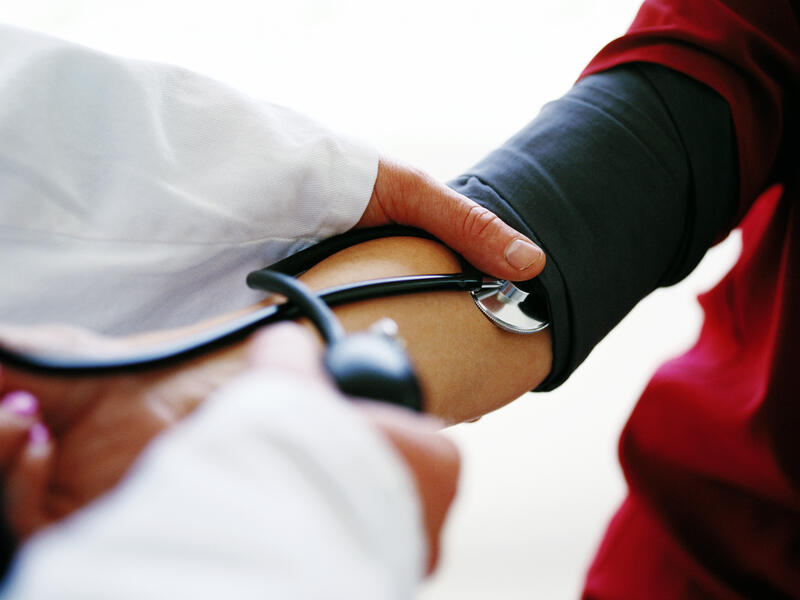
Well, Dr. Desai, thank you for joining us today on this podcast. I’m going to start out right away because this happens to every one of us. I go in for my medical appointment, sit down. One of the first things they want to do is they want to take my blood pressure. What are they looking for when they do that, Doctor?
Dr. Nayan Desai:
Excellent question. So the blood pressure is basically a marker of what your blood is getting ejected by the heart.
So you have two numbers on the blood pressure. The top number, we call it systolic. And the bottom number, we call it diastolic. And, and the way to look at it is, you know, we typically say the nurses spit out a number after they measure it like 130 over 80. And I think I want to emphasize on that 130 over 80 because that is the new 140 over 90, which means we are targeting with the new guidelines from the American College of Cardiology as well as the American Heart Association.
Anybody above the value of 130 for systolic and 80 millimeters of mercury for diastolic, which is 130 over 80, is classified as having blood pressure issues or high blood pressure.
Alan Helgeson:
Well that’s a good answer. It kind of helps me. I always ask what my number is. And luckily, with, you know, good management, they’ve kept me at a good number, so I’m feeling OK here today.
We’re going to go down to a couple of different areas because the theme of this podcast today is talking about hypertension versus hypotension. Very close words, but completely different things in the medical world and how you treat them, right, Dr. Desai?
Dr. Nayan Desai:
That’s a very good point. As I said, I think age dictates a lot of it. Hypotension, again, is defined as a blood pressure when it gets lower and causes symptoms. In contrast to high blood pressure, it can be essentially asymptomatic, which means we see a lot of people just walking around with high blood pressure and sometimes they would not have any symptoms. And that’s why it’s so important to know your numbers.
We kind of go with the goal. Our patients should know what their blood pressure numbers are when they go in doctor’s office and either write down or store it in an app. And we also encourage our patients with borderline high blood pressures or patients with established high blood pressure syndrome or hypertension to record their blood pressures. You don’t have to do it every day, but a couple of times a month, like be in charge of your values, know where that trend is going.
Because it’s so important to talk about even a 10-point increase in blood pressure leads to such a higher risk for causing heart disease, strokes, as well as damaging your kidneys. So that’s why the blood pressure is so important to note when it’s high. And when it is left high for a long and prolonged period of time, these three organ systems gets affected, your kidney, your heart, and your brain and can push you into bad disease states, which can be corrected just by taking care of your blood pressure.
Alan Helgeson:
As we dig into that a little bit deeper, Dr. Desai, what is considered high blood pressure, how it’s diagnosed? Are there some different things that you would do in kind of getting there from people just going, “You know, I know my numbers, but is there something that you would say makes it look like it’s going to be a diagnosis of high blood pressure, hypertension?”

Photo by Sanford Health
Dr. Nayan Desai:
So yes. So as we talked about, 130 over 80 and above is now the new definition for high blood pressure.
We want these results to be consistent. Some of the common themes which we emphasize is garbage in, garbage out. So how is that blood pressure recorded? We want to make sure our patient’s in sitting position, making sure they’ve not had a caffeinated beverage, legs are not crossed, relaxed.
The blood pressure is a dynamic number. It changes every minute to minute, right? When we have our patients in the ICU, we get a tracing and we get their blood pressure every heartbeat. One time it can be high. The next time, if you have smoked a cigarette, had a caffeinated beverage, just come in sprinting into the office for a doctor. Your blood pressure is going to be high. So it’s important it’s measured when you’re sitting down, relaxed.
Make sure that you wait for about at least five minutes. Get your reading. If one reading is elevated, follow the trend. What is it happening at home? Just one isolated reading which is high, unless it’s exorbitantly high and causing you to go to the emergency room with headaches and strokes. That’s different. But for that initial numbers between 130s to 160s, I would say know the numbers, follow the trend, make sure it’s measured consistently and accurately, and don’t react to that one reading.
Alan Helgeson:
Going beyond that a little bit, Dr. Desai, does hypertension typically develop quickly or is it something that just kind of rolls up over time to a person?
Dr. Nayan Desai:
Most of the time we see it’s a slow chronic disease. It’s an unrecognized disease till they have measured their values.
But most other times, you can have episodic high blood pressure. Sometimes in setting of severe pain, the blood pressure goes and shoots up markedly. If they’re having a tear in their arteries in the heart, the blood pressure can rise. With an acute stroke, the blood pressure can go really high.
So most of the situations we are dealing with is a chronic slow disease, except for acute states where patients present in the emergency room with super high blood pressures and damage to their target organs.
Alan Helgeson:
We’ve talked about the bad things that we don’t want to happen to us. How do we get there? What are these primary causes and those risk factors?
Dr. Nayan Desai:
Extremely important. Most of the time, blood pressure becomes higher because of aging as well as because of genetic factors. There is not an identifiable cause. Besides, of course, diet, lifestyle, smoking, alcohol.
We know all the six things which we need to do to have a heart healthy lifestyle, right? We have gone about that DASH diet (Dietary Approaches to Stop Hypertension), restrict salt intake. Make sure you lose weight. We know that reducing weight even by a small number goes a long way in reducing their blood pressure numbers. Having physical activity, as well as alcohol in moderation and avoiding smoking helps.
But it’s not mostly like a cause and effect, OK? I got a cold because I had viral infection. Blood pressure, we don’t identify one factor. It is basically a combination of genetics, aging, as well as family history.
There are some situations where patients have high blood pressure because of secondary causes, which means their kidneys are bad, and now that’s why the blood pressure is high. Or they’re producing a lot of bad hormones in their system, which is driving the blood pressure to be high. In some situations, there is narrowing in some of the arteries in the body, or you have narrowing in the arteries in the kidneys, and that would cause the blood pressure to be high.
But those are, I would say, 10% of the cases; 90% of the cases, the blood pressure being high is primarily driven by lifestyle, diet, and genetics.
Alan Helgeson:
What about stress? Does that play a role in it? Can stress cause high blood pressure?
Dr. Nayan Desai:
Yes, definitely. I think stress kind of causes that acute high episodes of blood pressure, and that’s why relaxation techniques, yoga, meditation will help you to get the blood pressure down.
And, this has been proven in trials, and we see it in our office day in and day out. Somebody walking in, blood pressure is high. Let them have a glass of water, sit down for five minutes, recheck the blood pressure, and it has already gone down by 20, 30 points.
So I would say stress is more responsible for that episodic high blood pressure, but over a period of time that could add up and contribute to high blood pressure state.
Alan Helgeson:
And here’s something else that maybe a lot of people don’t know about, but I want to ask you about this called white coat hypertension. Could you explain that?
Dr. Nayan Desai:
So white coat or episodic hypertension is your home blood pressure values are completely normal. And when you go to a doctor’s office, you have a very high spike in the blood pressure. You’re feeling fine, you’re not having any headaches, but every time you’re in the doctor’s office, even if the doctor is not wearing a white coat, your blood pressure shoots up.
And the only way to clarify that or to make sure that you’re not missing high blood pressure state is by getting readings from their home rate monitors. Making sure that the home monitors are calibrated accurately.
We advise our patients to come to our clinic, get the blood pressure reading on their home monitor, get it on our machine, make sure they are comparable – within 10-point difference, I would say is acceptable. But if the difference is like 20, 30 points, maybe look at a different brand of machine to make sure that you’re not getting wrong readings at home.
Alan Helgeson:
Always just trust in your medical professionals too. They’re here to help you and get you the things that you need. Don’t be scared, right? When you come into those clinic appointments.
All right, let’s move on here. Let’s talk about some things called, some signs and symptoms here with this. What are those warning signs of hypertension? You mentioned that you can walk around and you have this for a while, but are there some things that you start noticing that, gosh, I’m just not feeling great?
Dr. Nayan Desai:
Excellent question. Most of the time, as we’ve talked about, it’s a silent disease. That’s why you need to get it checked, like just your cholesterol numbers.
As the blood pressure becomes more high, you start to go in those 150, 160 range, people start to have chronic headaches. So, you know, early morning headaches. Sleep apnea is an important contributor to high blood pressure in the morning because with sleep apnea, you’re depriving your body for oxygen and the blood pressure shoots up.
The other features would be now that you have allowed that high blood pressure to go uncontrolled, it has taken over your end organs, and we have started to see damages to your major organ systems, your brain, your heart, and your kidney. So you would have signs and symptoms of those disease state, which means you would start to get symptoms of, you know, headaches.
We have talked about strokes. Congestive heart failure, the most common cause, again, for congestive heart failure with the heart muscle becomes more stiff is high blood pressure. And then longstanding high blood pressure causing kidney disease and eventually a few of our patients who are unfortunate land up on dialysis.
So the symptoms from high blood pressure were initially or often ignored and mild. But over a period of time, you would start to see damages to the three main organ systems which we have talked about.
Alan Helgeson:
Are there additional things, Dr. Desai, that people can do on their own to help manage hypertension?
Dr. Nayan Desai:
Yes. I think salt has historically been overstated. I would say yes. Limiting the salt in the diet does reduce your blood pressure, but the effect is modest. It would reduce your blood pressure by about three to five points.
Making sure we talked about weight loss, such an important thing. Every kilogram or pound of weight loss does have such a positive effect on blood pressure. We see our patients who lose like 50, 70, 80 pounds have to back off their blood pressure medicine. And the reason is simple, right? High blood pressure is driven by high weight.
Talking about physical activity, the American Heart (Association) recommends 150 minutes of activity, moderate activity per week. So trying to space out that frequent levels of physical activity, try and get your heart rate up, definitely improves your blood pressure.
We talked about stress management, relaxation techniques, avoiding excessive alcohol, smoking, and importantly, sleep apnea.
These are the modifiable factors where lifestyle changes can go a long way and complement your medications, allowing you to take less medicines and have a more beneficial effect to lower your blood pressure.
Alan Helgeson:
Somebody’s doing all these things. They’re doing the right things. They’ve lost some weight. They quit smoking. They’re not having as much alcohol, taking their medications. Can somebody that’s diagnosed with hypertension, can it go away completely or is it that friend and diagnosis that’s still going to hang with you?
Dr. Nayan Desai:
For most of the patients, it is the lifelong diagnosis, unless the lifestyle changes which we talked about are dramatic, right? We are not talking about now five, 10 pound of weight loss. We are talking about 80 pound weight loss after bariatric surgery, say for example. Then we do see we back off and stop the medications.
Always visit with your doctor. Most of our patients feel like my blood pressure looks perfect, 120 over 80. Why am I on all the medicines? The medicine is making the blood pressure perfect. And we would see if we back off or take away the medicines, your blood pressure will start to climb up again. So just because the blood pressure is good on medications does not mean it’s controlled. It is controlled because of taking those high doses of medications.
But yes, there is in some patients a hope with diet, lifestyle, exercise changes, you could potentially get rid of blood pressure medicines. So far, it is in the mild to moderate range. Once we are talking about severe high blood pressure, you might still be left with medications after lifestyle choices when lifestyle is not enough.
"I would say, 90% of the cases, the blood pressure being high is primarily driven by lifestyle, diet, and genetics." Dr. Nayan Desai
Alan Helgeson:
Let’s change our focus now. I want to talk about people that are starting a family. How does hypertension affect pregnancy or people that are trying to become pregnant?
Dr. Nayan Desai:
Pregnancy and high blood pressure is a very important topic because now the criteria for blood pressure are lower. It starts to not only affect maternal health, but also the baby’s health.
High blood pressure during pregnancy is treated very aggressively. We want to make sure the mom does not have any protein spilling in the urine because of high blood pressure. The number and the target and the goals are even lower than what we would want for somebody who is non-pregnant. We are more aggressive with medications. Most of the time, we call it pregnancy-induced hypertension, which means patients in their 20s and 30s are young, healthy women would not have a diagnosis of high blood pressure. Because of changes during pregnancy in their second and third trimester, they would start to see elevations in their blood pressure. But if it is all driven by pregnancy six weeks after they have delivered, right?
All those changes should revert back to normal, which means Mom should be able to get off the medication six weeks after having a healthy baby. The blood pressure should go back to baseline, which means it should be at the same level what they started before they were pregnant.
But pregnancy-induced hypertension is also a specific risk factor to cause blood pressure higher later in life. Somebody who has had two or three babies, they’ve had high blood pressure with every pregnancy, fast-forward when they’re in 40s and 50s, now they have established high blood pressure. The pregnancy-induced high blood pressure proves to be an additional risk factor for causing high blood pressure later in life.
Alan Helgeson:
Well Dr. Desai, I apologize. I feel like I’m throwing the kitchen sink at you. What is pulmonary hypertension? And how is this different from traditional high blood pressure?
Dr. Nayan Desai:
Very good question. I deal with a lot of pulmonary hypertension in my practice. So pulmonary hypertension, the pulmonary circulation is a circulation which is going from the right side of the heart into the lungs. So when you look at the heart as a four-box chamber, the right side of the heart as having the blue blood, goes to the lungs, get oxygenated, comes to the left side. The blood pressure which you’re measuring 120 over 80, which is our standard number, we like our patients to be at that goal, that is the pressure on the left side of the heart. That is systemic hypertension.
Contrast to that, pulmonary hypertension is high pressures on the right side of the heart. The number and the values are different. We are talking about 20 millimeters of mercury or higher for the average blood pressure on the right side of the heart classifies as pulmonary hypertension.
And again, pulmonary hypertension is a specific syndrome. Not all patients with systemic hypertension – in fact, most of our patients with pulmonary hypertension would not have systemic hypertension, especially if it is all driven by the right side of the heart.
The factors to look for pulmonary hypertension are usually our young patients with connective tissue disease like scleroderma, lupus. Our patients who are doing meth and drugs is the second most common cause in our geography, believe it or not, where they have pulmonary hypertension because of toxins in their system. If they have had blood clots, pulmonary embolism, that could also in future lead to pulmonary hypertension contributing to higher pressures in that right side of the heart.
Treatment approaches are totally different. Pulmonary hypertension, of course, is treated more by specialists, more a dedicated treatment disease state, different medications as compared to systemic hypertension, which is, of course, systemic hypertension being such a more common problem as compared to pulmonary hypertension.
Alan Helgeson:
What a great education on hypertension. We’ve heard a lot about that. That seems more common, but let’s switch gears now again, and then let’s talk about hypotension. What is hypotension?
Dr. Nayan Desai:
Hypotension is now we are talking about low blood pressures, right? These are values which is affecting the patient wherein their low blood pressure is causing them to become dizzy, lightheaded, especially when they’re standing up from sitting position.
There are different forms of hypotension. The most common form we see in the clinic is orthostatic hypotension or OH, wherein the patients suddenly stand up and the blood pressure drops by 20 points, and that would cause them to become dizzy, lightheaded, and in extreme cases, even pass out.
Most of our patients have adjusted to their lifestyle. They stand up slowly. You know, they wait for two or three minutes before they take their first step because they get dizzy. If you are on high blood pressure medicines, then I would say talk to your doctor and see if we can back off some of those medications, because now the blood pressure is going in the opposite direction. It’s becoming too low and it’s affecting your balance.
The other thing to think about is hydration and compression socks. When you stand up, most of your blood pressure or your blood, excuse me, is getting pulled in the legs. Less blood is going to the brain. The brain thinks it’s starving of blood, and that’s where you get the sensation of dizziness. So making sure you’re hydrated well, wearing compression socks will prevent some of these episodes of orthostatic hypotension or low blood pressure.
Alan Helgeson:
So I’m taking my blood pressure at home. What reading is considered too low, or hypotension?
Dr. Nayan Desai:
Typically, for somebody who have had high blood pressure from me in the clinic, I say 100 or below is getting too low. But some of our patients who have congestive heart failure, who are on medications to make their heart muscles strong, we even let their blood pressure right to 80s and 90s, so far as they are able to have a good quality of life, are not dizzy when they’re standing up.
So for textbook purposes, I would say orthostatic hypotension, the blood pressure drops by 20 points with standing. And for most of our common patients like 90 or below would classify as symptomatic orthostatic hypotension if they have dizziness, lightheadedness with that low blood pressure. But if you’re not dizzy, lightheaded, some of our young patients have always had low blood pressure, they feel fine. Their normal would be 90 over 60.
Alan Helgeson:
So with this too, you know, we talk about people with hypertension and medication can bring it down where it’s kind of low. But can people with hypotension develop over time as well? Can that just happen to people and may just be normal and it just kind of develops over time or not?
Dr. Nayan Desai:
Yes. Hypotension, especially as our patients get more older, elderly patients, they’re just much higher risk for even having symptoms at a lower blood pressure, like 110, 120s may make them dizzy, lightheaded. And that’s where we need to back off on medications.
But I feel with aging, we see it on most of the extreme groups are very young patients and very old patients. And that’s why I say, like, after 90, I let my patient decide which medicines they want to take, just because we don’t want to harm them by doing polypharmacy, which means too many unnecessary medications which are interacting with their system and causing them more symptoms rather than benefit.
Alan Helgeson:
So as we talk about hypotension, what are those primary causes, risk factors? And then again, who’s most at risk as we look at the opposite side of hypertension? So if we put that all together.
Dr. Nayan Desai:
So I would say hypotension, more common in patients who are low body mass index, patients who are more frail, patients who are not staying enough hydrated, as well as patients who are physically inactive. If, you know, some of our patients who have been debilitated, not gotten up, when they suddenly start to even more or do slight activity, the body’s not been accustomed, and they would start to feel symptoms of hypotension.
Alan Helgeson:
Dr. Desai, what are some warning signs of hypotension, and when does low blood pressure become a medical concern?
Dr. Nayan Desai:
Low blood pressure in the hospital is a totally different beast, right? The most common situation for low blood pressure in the hospital setting, I would say, is sepsis. People are sick, they are in the ICU, we are giving them medications to lace their blood pressure high, or they are in a state of something we call a shock.
In an ambulatory clinic setting, I would say hypotension is more like a nuisance. It would cause minor symptoms, not really life-threatening if people know their warnings and do things, which means deescalate medical therapy, stay hydrated, and wear compression socks.
I think we should be spending a lot more time talking about hypertension than hypotension, to be honest. There are some medicines which we can give to our patients to raise their blood pressure, but we have almost 15, 20 classes of medicines to make their blood pressure go down. We don’t have good medicines to make their blood pressure go up.
The other two common things to think about when they have low blood pressure, make sure that thyroid hormones and their adrenal hormones are good. If they’re having thyroid hormone issues or their adrenal gland is not secreting steroids, they would have low blood pressure. So think about that outside the box if somebody’s struggling with low blood pressure.
Alan Helgeson:
Quite a difference between the two. And, and finally, we know what can happen with unchecked hypertension. What can happen if hypotension goes unchecked and untreated?
Dr. Nayan Desai:
Outside of the hospital setting, hypotension would be more a nuisance, as we talked about. But talking about passing out episodes, getting dizzy, going on the floor, breaking hip bones, fractures, brain injuries can be some of the more negative implications for hypotension.
And if you’re hypotensive and sick, you better get to the ER because that could be, as we talked about, a totally different problem where you could be in a state of shock and you need medications, fluid pumps in you, as well as some special medicines to get your blood pressure up more in an ICU setting.
Alan Helgeson:
Let’s bring this over and talk about pregnancy and hypotension, Dr. Desai. Or is low blood pressure more common during pregnancy?
Dr. Nayan Desai:
Yes, I think the baby kind of presses on the cava of the mother. The cava is the main blood flow, which goes up to the heart. So you might see episodes of hypotension because the baby’s pressing on the blood flow, which is returning back to the heart. We call it more like, especially when moms are laying on their back and sometimes just tilting a little bit, sleeping on one side, may correct this issue.
Alan Helgeson:
Are certain medications ever responsible for hypotension?
Dr. Nayan Desai:
Yes. I think that’s the number one culprit, right? The first thing you want to do is somebody’s complaining of hypotension is to de-prescribe the medications and do non-pharmacological measures.
Alan Helgeson:
Well, let’s move on. Some interesting questions additionally to ask Dr. Desai. What blood pressure reading should prompt an ER visit?
Dr. Nayan Desai:
I would say no single reading should kind of make you go to the ER, but a high blood pressure reading with other signs and symptoms. Symptoms of stroke, symptoms of congestive heart failure. High blood pressure with the tearing pain in the middle of the chest. Vision difficulties.
We did not spend a lot of time, but remember the retina of the eye is very sensitive to blood pressure changes. You would start to see in those arteries signs and effects of long-standing high blood pressure. So I would say, yes, for most of the time we say anytime above 200 and it’s not getting better, it is better to get checked in with the emergency room.
But I would say importantly, even 180 with symptoms which is not improving, where you’re going into congestive heart failure, you’re acutely short of breath, and you’re having symptoms or signs of stroke, you should get immediate medical attention.
Alan Helgeson:
People that have sleep apnea, how does that affect high blood pressure?
Dr. Nayan Desai:
I would say most common treatable cause or most common way to treat high blood pressure without medications would be sleep apnea, right? The body’s kind of deprived of oxygen. The blood pressure ramps up. And you would see once our patients start wearing sleep apnea masks consistently, you would see about 10 to 20 point lower effecting on the top blood pressure and the systolic blood pressure goes down by 10 to 20 points when they’re consistently wearing their sleep apnea mask.
Alan Helgeson:
I absolutely know one of your favorite things is when people come in because they’ve researched everything on Google first, right? (Laugh) Yeah. OK. So Dr. Desai, I want to know, what are some of the biggest myths people believe about blood pressure?
Dr. Nayan Desai:
I think as human nature, we always want to think about my high blood pressure is episodic. We want to chuck it to something else, right? Oh, I was, I had a coffee. Let me think about it. We as humans inherently don’t want to accept the diagnosis, I feel.
So the first hurdle is if you get a high blood pressure reading, don’t get demotivated. Make sure you are getting consistent readings at home. Get a trend and then do another doctor’s visit and say, yes, my trends have been consistently higher than 130 over 80 or more like 140s over 90s.
Let’s talk about how we can collaborate on this, do shared decision-making, and come with a better plan so long-term, I don’t get damage to my end organs. I would say that’s the number one thing.
The second common myth is my blood pressure is controlled. It’s perfect right now. Why do I need to still keep taking meds? And we have addressed that. It’s controlled on the med, you take the medications out of your system, blood pressure is going to go back up.
Evolutionary guys, I would just kind of bring about some historical talk here, you know? We have humans have crawled out of the seawater, right? The seawater is rich in salt electrolytes. So when we think about evolution back in our days when we were just, how did we get into this three meals a day habit, right? It is all from the work industry.
Historically, our forefathers were only eating one meal a day. The body had to conserve salt, electrolytes, and nutrients. So the body used to make hormones to conserve that, and now that has worked against us. We are in such a salt-rich environment, and the body has not stopped conserving salt, and that has driven up the whole high blood pressure problem.
We’ve not talked about dementia as one of the important risk factors with high blood pressure. It’s been proven by research that besides the three organ systems we talk about, dementia, sexual dysfunction, erectile dysfunction will also be some of the potential side effects of long-standing uncontrolled high blood pressure.
Alan Helgeson:
A lot of people have home blood pressure machines. Are there better or worse times of the day to take blood pressure?
Dr. Nayan Desai:
I would say trying to take it immediately when you get up, especially if you’re on medications, may not be a good idea. We recommend to wait for at least two hours after they have had their morning medications in their system to try and help control the blood pressure and get it down.
Alan Helgeson:
Any final thoughts, Dr. Desai? If someone may be experiencing or affected by any of the symptoms that we may have discussed today, where would someone start for care and why or who should they call first?
Dr. Nayan Desai:
I think blood pressure is a bread and butter medical problem for us as professionals, right? Yes, me as a cardiologist, we try and kind of figure out the relationship of high blood pressure in the heart, but start with your regular doctor. Any doctor who is treating patients is very familiar with blood pressure because that’s the basic most common problem they encounter in their day-to-day practice. They’ll be able to give them good medical advice to the patients and get that treated.
There have been a lot of advances in the last, I would say, six months to one year with high blood pressure. Now, besides taking medications, we can go inside the arteries and the kidneys of our patients, burn the nerves, and get the blood pressure lowered down, get our patients off some of their medications, as well as there are some newer blood pressure medications which are now available for our patients to take, where in the last 15, 20 years, this is the major breakthrough for us.
I would also like to bring up the topic of renal denervation. So renal is kidneys, denervation is getting rid of the nerves, right? The, the kidneys and the nerves around the kidneys contribute to higher blood pressure by producing hormones.
And research has shown that by going into both the kidneys on the right and left side, in selective patients who are on multiple blood pressure medicines, three, four, five, we can now get their blood pressure lowered by a newer procedure, and we are happy to offer that procedure at all our Sanford sites with the renal denervation. And I would recommend that our patients talk to their providers, and if they’re interested, get more information from their cardiology team.
Matt Holsen (announcer):
This episode is part of the “Health and Wellness” series by Sanford Health. For additional podcast series by Sanford Health, listen wherever you hear your favorite podcasts and on news.sanfordhealth.org.
Get more episodes in this series
…
Posted In Bismarck, Family Medicine, General, Health Information, Health Plan, Healthy Living, Heart, Internal Medicine, Senior Services, Specialty Care, Symptom Management, Vascular