
Episode Transcript
Alan Helgeson (announcer):
This is the “Health and Wellness” podcast brought to you by Sanford Health. The conversation today is about Alzheimer’s and dementia, the importance of early recognition, the science behind memory loss, and clarifies some of the common myths around these conditions.
Our guest is Dr. Nicole Norheim, a clinical neuropsychologist with Sanford Health in Bismarck, North Dakota. Our host is Mick Garry with Sanford Health News.
Mick Garry (host):
As it applies to our conversation today, tell us some things about the kind of patients you have, what your job is, and how do you serve in this role?
Dr. Nicole Norheim (guest):
Sure. So I’m a clinical neuropsychologist. I have a doctorate in psychology, but extra training in neuropsychology. So my specialty is assessing testing patients’ cognition with a series of cognitive tests. And so that’s my specialty. I’m actually lifespan, so I see kids to adults, but I know within the North Dakota population we’re really needed more with the older adults and concerns with dementia.
So with that being said, my specialty is going to look at cognition. We’re going to look at, when I say cognition – memory, attention, language, visuals, spatial deficits – and see what those strengths and weaknesses mean. Is it dementia, is it normal aging or is it something else going on? And that’s kind of what we do. We do an interview, testing and then feedback.
Mick Garry:
All right. First question then, could you explain the difference between Alzheimer’s and other forms of dementia?
Dr. Nicole Norheim:
That’s a great question. That is actually my most common question I get, especially during my feedback portions of my evaluation.
So think about it as, actually, I’m going to say thinking is on a line. On the far left side is normal aging. As we get older, we’re not as sharp as we used to be. We process information slower, but that’s typical as we age.
In the middle, we have a mild cognitive impairment. It’s where people have a little more thinking difficulties, memory problems than normal, but they still can drive, manage medications, manage medical, finances, cook, clean, no significant difficulties.
But then on the other end of the spectrum, on the other side, we have people with significant problems with thinking and memory, but now it’s impacting their day-to-day. They’re getting lost while driving. They’re forgetting to take their medicine, forgetting to pay their bills, having more confusion paying their bills, burning things.
And then the broad term is dementia. So dementia is a broad term. And so there’s different types of dementia. Alzheimer’s disease is a type of dementia. There’s frontal temporal dementia, there’s Parkinson’s disease dementia, there’s vascular dementia. There are many different types of dementia.
But the most important thing is that Alzheimer’s disease is a type of dementia where people get kind of confused. They use those words interchangeably a lot, like, oh, so-and-so has dementia, but it’s like, OK, what type of dementia? And they’re, “Oh, I didn’t know there were different types.” So again, dementia is the broad term. Alzheimer’s disease is a type of dementia.
Mick Garry:
Now, understanding the conditions here, what are some early signs? What are the earliest signs that people should look for?
Dr. Nicole Norheim:
Think about it as normal aging. As I said, you know, we’re going to have an occasional forgetting of names and appointments, but people remember them maybe later on, or with help. And then maybe occasional errors with finances or completing complex tasks. Some people need, with normal aging, help with technology or learning something new or occasional word-finding difficulties.
Think about this. These difficulties are occasional with kind of the early symptoms of Alzheimer’s disease. Now the memory problems are happening more frequently and they’re actually disrupting people’s lives. So they’re forgetting, you know, their bills. They are forgetting more common recipes that they had either easier to follow along or else they had previously memorized.
They’re forgetting how to complete daily tasks of driving familiar routes where they’re like, “I have to put in my GPS now, but I used to remember how to get to my daughter’s place,” or they have trouble following conversations. So now think about it as it’s more disrupting the day-to-day living a little more.
Mick Garry:
And how is Alzheimer’s diagnosed as well as other forms of dementia? How do you determine that OK, this is something that as a patient that you’re going to have to expect is coming next?
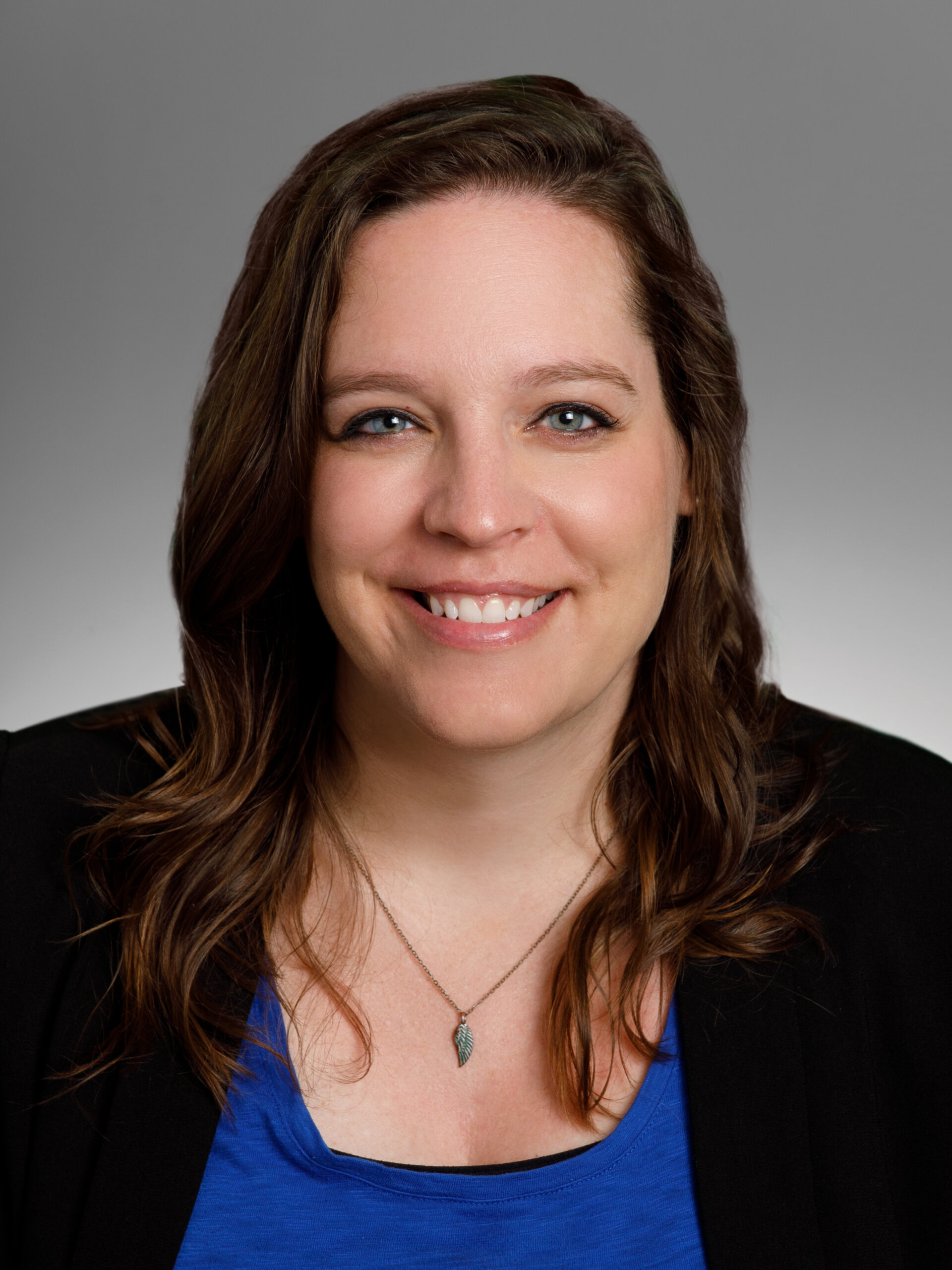
Photo by Sanford Health
Dr. Nicole Norheim:
Great question. So I think about it as there’s a lot of pieces to the puzzle.
So we look at cognitive testing, which I do. We look at people’s labs and even neuroimaging like brain scans. Again, every piece is a piece of the puzzle.
So for a patient or a family member, if they’re concerned about memory, they’ll probably bring it up to their primary care doctor or a neurologist. And the primary care doctor either will even do kind of a brief screening test. And most of these screening tests are five to 10 minutes long. And again, it’s really brief cognitive screening. It’s not diagnostic by any means, but it’s kind of, “OK, where are you at? OK, you’re within the normal range, or OK, there are more difficulties so we’re going to refer you to neuropsychology.”
And with neuropsychology we’re going to do a more in-depth testing. So, more paper and pencil testing. I think about it as more like schoolwork. We’re going to ask a lot of questions about how they remember things, but also look at their, you know, as I said, language, name things and see as best they can do things.
And so that can kind of help us decide on, OK, is it normal aging? Because when we do this testing, it’s actually going to compare their scores to other people their same age because I expect a 60-year-old to perform different than a 25-year-old or a 90-year-old. And so then that can help us decipher of, OK, is it normal aging or is there something more going on?
And based on strengths and weaknesses in neuropsych testing, that can tell me what type of dementia maybe we’re working with. So that’s the cognitive testing portion.
I also have people do lab work. So we all run our typical lab work, our metabolic kind of panel, but a lot of those metabolic panels don’t include B12 TSH, which is your thyroid and folate.
So I will always look at people’s lab work to make sure that those additional labs were also done because if they’re low or high, that can really affect our thinking as well. Another lab is looking at the biomarkers.
Recently, the FDA approved a new P tau 217 test, which can measure the abnormal tau proteins in our blood. And that can be associated with Alzheimer’s disease. Unfortunately, it is not covered by insurance, so it’s going to cost $500. But that also can further help you decide if like, “OK, are we really dealing with Alzheimer’s disease?”
Another test that we could do is neuroimaging, so a head CT or a brain MRI. And so that can look at the structure of the brain. Importantly, it’s not a one-to-one ratio just because our head CT or brain MRI comes back normal, or unremarkable.
It doesn’t mean that we’re not going to have cognitive deficits as well. I’ve seen very good MRIs, very bad testing. I’ve seen it the other way around where I’ve seen very bad MRIs, but very good testing. So again, it’s not a one-on-one ratio, but it can help tell us of what’s going on. Again, all these are pieces of the puzzle.
Another last one that people ask about is genetic testing. So whether it be through 23 and Me or Ancestry, you can get genetic testing for the APOE gene. Just because we have that genetic factor does not mean we are going to get Alzheimer’s disease, but it can indicate that there is an increased risk of having it.
So again, cognitive testing, neuroimaging labs and genetic testing are all kind of pieces of the puzzle that can help determine, “Do we have Alzheimer’s disease – or what’s going on cognitively?”
Mick Garry:
This next question – I think back to other diseases like lung cancer – it’s obvious that early detection means a lot there. In this context, what does early detection mean? Why is it important?
Dr. Nicole Norheim:
Yes, there are so many elderly who actually refuse to come and see me or refuse to actually comment about their memory difficulties because there’s like, “There’s nothing we can do about it.” Well, there is. There’s so many things we can do. So the earlier we can catch it, the better outcomes we have.
So it is very helpful for treatment options, care planning, and just long-term quality of life. So, if we can catch it early and kind of get, as I previously said, kind of that mild cognitive stage, it’s kind of like the stage right before we technically meet criteria for dementia.
There are medications that can slow down the progression. Yes, there’s no cure for Alzheimer’s disease, but there are medications that can slow down the progression. We also can look at possible other reasons for why are these people having these memory problems. So we can address comorbid conditions like, “OK, are we dealing with sleep apnea that’s not treated?”
“Are we looking at your medications that can really affect memory? Are we looking at, you know, low vitamin B12 or low vitamin or low folate, low thyroid?”
So if we can detect these cognitive difficulties early, we can address things that are treatable like sleep apnea or medication changes or adding just a supplement like B12.
Also, it’s so important to kind of get it detected earlier because we can make healthier decisions, staying cognitively active, socially active, physically active. I actually see a handful of patients that really decline after they retire because they’re not as active as they once used to be. So if we know we have these cognitive difficulties, then it kind of drives us to stay more active, whether it be cognitively, socially, or even physically.
And then my last is health family planning. So we hope for the best, but we do plan for the worst. So with Alzheimer’s disease, it is progressive and so we want to hope that we can slow down the progression, but we do want to plan, anticipating at some point we won’t be able to make our own decisions. So let’s get the power of attorney in place.
And so we can decide that our daughter or son of a family member is going to help, whether it be current legal decisions when we can’t do it ourselves, financial decisions or even long-term care. There might be a point where assisted living or nursing home might be better. Some people prefer to stay at home.
So if you make those wishes sooner when you’re cognitively cognizant, then that’s made better in the outcome. So early detection is key for, again, treatment options, care planning, and just long-term quality of life.
Mick Garry:
How does Alzheimer’s typically progress over time? I understand that that’s a fairly involved question, but some of the basics on what you can expect – understanding that it probably depends on the individual.
Dr. Nicole Norheim:
That is so true. It is a progressive disease, but it’s different for every person. And so when patients come and see me, I see them for that point in time. I am like, “I don’t know how you were a year ago. I don’t know how you were five years ago. I don’t know how you’re going to be in year or five years.” So when I see them, it’s that point in time.
I highly recommend they usually come back and see me in six to 12 months so we can redo the testing and kind of help inform the trajectory. Do we have only a mild decline? Do we have a moderate decline? And that can help us. However, there are things that can impact progression such as age of onset, the earlier age of onset, the worse prognosis we have, the faster progression it is.
So typically, normal age of Alzheimer’s disease onset is going to be after age 65. If we see it before age 65, it’s going to be considered like early onset compared to the age. And that’s going to be a faster progression.
If we have more onset cognitive difficulties at age 80, it’s going to be a little slower progression versus somebody who was 55, 60. Also, I think about it as people’s cognitive reserve. So it’s kind of like their functioning, their cognition prior to age of onset. If we have somebody who maybe struggled in school, maybe intellectually disabled a little bit, they’re going to have more vulnerability to the cognitive changes. Versus somebody who has high cognitive reserve, whether they have a doctorate or whatnot, they’re going to have that safeguard better for them and they can defer the cognitive changes a little longer than somebody who has lower cognitive reserve.
Other things that affect progression is medical history. If we have medical comorbidities, like any kind of cardiovascular risk factors like heart failure, diabetes, high blood pressure, high cholesterol, and then we get into Parkinson’s disease or sleep apnea, those things can affect our cognition within itself. So it can actually progress the Alzheimer’s disease a little more.
And then also if we’re not active, if we are just watching TV all day every day, not staying socially, cognitively or physically active, that really can impact the progression as research has shown. If we do stay active, that can really deter but also slow down the progression.
Mick Garry:
Without getting too sciencey here, what is going on in the brain when these things are manifesting themselves in your daily lives?
Dr. Nicole Norheim:
So, as we get older, our brain shrinks. That’s why we’re going to have more cognitive difficulties. Think about it as our, even especially our hippocampus, two little parts of the brain that sit in the back and that’s where they store the memory. And so as we get older, they get smaller and smaller and smaller. So that’s why we can’t hold as much information as we as we used to.
But with Alzheimer’s disease, our brain shrinks a lot faster. And so then we’re going to have more difficulties holding that information and eventually it’s going to even affect our whole brain. So we’re going to have more difficulties, not with just memory, but with our language, attention processing speed, and then that’s when we’re going to have more of those difficulties. So it’s just kind of like your brain is shrinking just a little faster than we’d expect.
We’re not going to see that all the time on a brain scan such as an MRI, but sometimes we can. And that’s why it’s so important to have that piece of the puzzle be like, “OK, let’s look at the brain scan. Is it a little smaller – atrophied, we call it – more than somebody else we’d expect their same age?”
Now with the biomarkers, the blood tests and things like that, now we can look at like the tau proteins and things like that. I think that is another good way to kind of look at how the brain changes as we get older and whether it’s Alzheimer’s disease or not. But our kind of go-to one more day-to-day is going to be that brain MRI and the shrinkage of the brain and seeing if we can see that that’s shrinking.
Mick Garry:
How can a loved one distinguish between normal aging and something distinctive?
Dr. Nicole Norheim:
Yes, I would say most of the time it’s going to be loved ones being concerned and saying, “I think your memory’s a little worse than it should be.” And very rarely, but it does happen where patients will think about it as themselves. They’re like, “Hey, I think I’m struggling a little more.”
But again, I’m kind of going to go back to, with normal aging, it’s going to be more of that occasional forgetting. And maybe if you remind them or they can remember things later on, occasional errors, needing some help with technology, you know, some extra help learning something new, occasional word-find difficulties.
But when we are starting realize, “I’m repeating myself a lot to my mom” or “I’m repeating a lot of stuff to my dad or my spouse” – now we’re kind of questioning that. Or, “My wife used to know the recipe and she didn’t have to even remember the recipe. Now she’s having difficulties remembering the recipe or even following the recipes. And we used to be able to drive. She used to be able to drive very easily around Bismarck, but now we’re having more difficulties. And so now we’re having more of these difficulties day to day.”
And that should be a little alarming. And it’s where we do want to bring something up to the primary care doctor, to the neurologist and say, “You know, I’m a little more concerned about the memory. Should we get a little more evaluated?”
Mick Garry:
And we alluded to this a little bit earlier with the importance of early detection, but what are some treatment options out there that are available right now? And what are the types of things that you can realistically accomplish in, being part of these treatments?
Dr. Nicole Norheim:
Yeah, it’s kind of part, as we said, the early detection. So medications, there’s no cure for Alzheimer’s disease, but the medications such as Aricept, Namenda, Exelon, they can slow down the progression. And so they kind of put more of this neurotransmitter – more of this chemical in the brain to hopefully form those memories for people to slow down the progression.
But it’s also just making healthier decisions. You know, staying active is the biggest thing. Staying socially, physically, cognitively active. A lot of people, as Alzheimer’s disease progresses, it affects memory, but it also affects language. So they’re going to have more word-finding difficulties.
And because they’re having more word-finding difficulties and potentially kind of following conversations because they’re having more difficulties remembering conversations, they’re going to start socially withdrawing. And so we really don’t want them to do that because now we’re not going to be using our language, not going to be using our brain as much.
And so we can decline faster and faster and faster. So we really need to stay socially active, but also cognitively active. Sitting in front of the TV, watching rerun after rerun. My older men love “Gunsmoke.” And so I’m like, no, we can’t want keep watching that over and over and over and over again.
We want to do stimulating things. We want to play board games, card games, jigsaw puzzles, watch game shows, “The Price is Right,” “Wheel of Fortune,” “Jeopardy!” That’s all going to be stimulating the brain.
Reading is really helpful. But again, the worst we can do is just sit and watch TV as there’s just no interaction. We’re not using kind of our brain because we’ve seen this episode a million times and we’ll just keep watching it. So we really just have to stay active.
And then also what we can do is, what we call disease-modifying therapies. This is relatively new. Often people hear about Leqembi; it clears amyloid plaques with infusions. I reserve this kind of treatment for people who have, it’s early onset as I’m saying, kind of early before 65 and who have no medical history.
So if we have a medical history of these cardiovascular risk factors like Type 2 diabetes, high blood pressure, high cholesterol, stroke history, then you’re even more likely to have this brain swelling and microbleeds. So the benefits don’t outweigh the cost as of right now, but again, if we catch it super early, early onset, no significant medical history, then it’s also an option.
This is very promising. I think we’re in the right direction and hopefully in the next few years, five, 10 years, that this is going to be even way better as of maybe even a kind of cure, but only time will tell.
And then lastly is just, I talked about being physically, socially, cognitively active, eating healthy and just getting good sleep. There’s a lot of people with sleep apnea, maybe they don’t like their CPAP, but I cannot stress enough how sleep can be so beneficial to our cognition, especially our memory.
So if we have sleep apnea every night, that indicates that we’re stopping breathing at night or we’re snoring and something’s blocking our airway. So we’re not getting enough oxygen to the brain. And if we’re not getting enough oxygen to the brain, it’s going to cause cognitive difficulties, specifically memory. And so we really need to push that CPAP use if we have sleep apnea.
I have seen where people have cognitive difficulties, they didn’t know they had sleep apnea, or didn’t use their CPAP. They come back a year later after using their CPAP, they actually revert back to normal. So it does really impact our cognition, especially our memory.
So things that we can do to kind of help with treatment options are memory medicine, staying physically, socially, cognitively active, eating healthy, getting a good sleep, use your CPAP. And as I said, there is also those disease monitoring therapies that can help for certain populations.
Mick Garry:
And for sure no more “Gunsmoke.”
Dr. Nicole Norheim:
No more “Gunsmoke.” Stop watching “Gunsmoke.” No, I know it’s really great. My dad watches the show and I don’t know how many times I joke with people to stop watching “Gunsmoke.” And they’re like, “But I love it.” And I was like, “Oh, you do. OK.”
But again, watching a show is fine. It’s great. But it’s just when we watch it all day every day, that’s when we have the problems that we need to do something else to keep that brain engaged.
Mick Garry:
You’ve answered a lot of these questions that I have here that I was going to ask that you’ve already answered. But what do you wish more people understood about Alzheimer’s and dementia?
I think that because you’re on the battlefield every day and you see the challenges from your patients, but also the people around them and their challenges. And I think this speaks to the people around them. How should you view this if you have somebody like this in your life?
Dr. Nicole Norheim:
Kind of the takeaways is many people think that as you get older, dementia’s inevitable, like you’re just going to get dementia. And so I get that a lot because I ask people about their family history and they’re like, well she had dementia but she was 102. Well, yep, you’re going to have cognitive difficulties as you get older, but just because you’re older, you’re not going to get dementia.
So yes, the true question is whether the difficulties go above and beyond the normal aging. And sometimes yes, the cognitive screening tests, whether it be like a 30-question item or 30-point evaluation, it just gets in “OK, I’m giving this 30-question, or I should say 30-point questionnaire, cognitive screening test, a 25-year-old, a 90-year-old, a 60-year-old, and you just get this one lump sum with neuropsych testing.” We really look in depth of what is going on, looking at your scores compared to other people your same ages.
Like “OK, yep, your 102-year-old grandma, this is normal aging, this is what we’d expect. You’re going to forget things.” But then the next person that comes in, I’m like, “Oh, this goes above and beyond.” So there are things we can do and we can help decipher if it’s normal aging or dementia. And then that’s how we create these specific recommendations.
The next thing is, “OK, is it Alzheimer’s disease or is it another type of dementia?” And so if we can decipher that as well, the recommendations change as well.
One of the other biggest things that I deal with is caregiver stress. It is so difficult being the caregiver for people who are progressively in the dementia phase. It is hard to be a caregiver. And so when people come in to see me, you know, yes, I’m taking care of the patient, but I also take care of the family.
And so I’ll ask, “OK, how are you doing? Are we still able to take care of, you know, dad at home?” OK, we’re struggling. Do we need help? Do we need home health care? Do we need assisted living? Do we need something more than that?
Then the next thing is, “OK, now we have to talk about like medication, whether it be memory medicine, anxiety medicine, agitation medicine.” While I do not prescribe medicine, I can kind of help people decipher of like what medication would be good. There are options because anxiety, depression, agitation can be common as the disease progresses. Hallucinations, paranoia can also happen.
So we want to manage the symptoms and medication is helpful, but also behavioral techniques for the caregiver. It can be frustrating to be the caregiver. People will say, “I’ve said the same thing 30 times today,” and we lose patience.
That is normal. That is common. And so we just have to remember that we are a person, we are human, so we are going to get frustrated. We are going to snap sometimes or snap back I should say. And so I’m really there for the caregivers on, “OK, there’s support groups for you.”
These are also, we have to remember that this is a brain disease. This is not them being on purpose of asking you the same question to be annoying. So we want to make sure that we don’t argue with them. People with dementia are always right. Do not argue. They’re always right. If their mom who passed away 30 years ago visited them yesterday, you say, “Oh, they did? What you do talk about?”
And so if we argue with them – they believe in their realm of life that their mother visited yesterday – and if you say that did not happen, you’re going to argue with them. And then now you’re getting them agitated and then their cognition even gets worse. So this vicious cycle.
So providing this caregiver support also during my problem is really beneficial. Don’t argue – they’re right. If they’re anxious about something, paranoid about something, we distract. And having all that for the caregiver is very helpful too. So these appointments, not just for the patient but also the caregivers.
Mick Garry:
What can communities do? We’re painting with maybe a little bit broader brush here, but are there things that again, as a community, that you can do to make this a little bit smoother ride?
Dr. Nicole Norheim:
I think just being aware – awareness. We all know about Alzheimer’s disease, but it does look different for every person. Even dementia in general looks different for every person. So sometimes we have this preconceived notion of what Alzheimer’s disease looks like or what dementia looks like, so we might not understand the person in the grocery store. Why are they acting the way they are?
So being just more aware of the different dementias or different ways that Alzheimer’s disease can look, then we have just a better understanding of, “OK, that’s maybe we’re dealing with dementia.” Or we don’t get mad at somebody when they’re maybe not remembering something on the phone or if we see them at the grocery store that they kind of yelled at you like, “OK, maybe they’re dealing something cognitively.”
But also I think Bismarck is doing, and I even think just North Dakota, United States in general is doing a really great job of having more awareness with Alzheimer’s disease, having the support groups. There are support groups everywhere, whether they be online, whether they be in town, whether they be at the senior center. And so there’s tons of support groups. And so I think that’s really helpful for the patients, but even the caregivers.
And I do think that we are getting better and better with just more of the research and being knowledgeable of Alzheimer’s disease in general as a whole. And I think that’s kind of where we’re going is we’re only going to get better, especially with the diagnosis, especially with the treatment.
And I’m really happy with the way we’re looking forward and what kind of support we have. My number one go-to is the Alzheimer’s Disease Association. There’s such a bountiful information. They don’t work with just people with Alzheimer’s disease, but anybody of dementia, they’ll come to your house. I can even put a referral in. Or you can just call people from Alzheimer’s Disease Association.
And what we’ll do is they will come to your house and be like, “OK, what can we help you with? Is it home health care? Is it financial planning? Is it safety? What can we do?” And get you the right resources. And that’s free of charge, which is really great. So I really push the Alzheimer’s Disease Association. They’re a great resource.
Alan Helgeson:
This episode is part of the “Health and Wellness” series by Sanford Health. For additional podcast series by Sanford Health, listen wherever you hear your favorite podcasts, and on news.sanfordhealth.org.
Get more episodes in this series
…
Posted In Behavioral Health, Bismarck, General, Health Information, Healthy Living, Senior Services, Specialty Care, Symptom Management