
Episode Transcript
Dr. Elizabeth Hultgren (guest):
It certainly doesn’t mean that like this is the end of, you know, good sex. This doesn’t mean that this is the end of me being able to live my life as I want. This doesn’t mean this is the end of me having the body that I want or the functional status that I want. Really, menopause is just the next phase and for some women, this can be really empowering.
Announcer:
Welcome to “Her Kind of Healthy,” an informative and unfiltered podcast series by Sanford Health. We want to start new and honest conversations about age-old topics from fertility to postpartum and so much more with our Sanford Health experts.
Courtney Collen (host):
We are taking a deep dive into menopause during this conversation, specifically focusing on that hormone shift and some of the symptoms we see as a result, including weight gain, a change in vaginal health, and so many more that we’ll talk about here. And I have Dr. Elizabeth Hultgren joining me for this conversation. She is a board-certified OB/GYN at Sanford Health and I am so grateful to have her here, her insights for this podcast. Dr. Hultgren, welcome. Thank you so much for your time.
Dr. Elizabeth Hultgren (guest):
Yeah, thanks for having me here today.
Courtney Collen:
We want to continue educating and better yet normalizing conversations around menopause.
To level set, I do want to start with a brief overview of what is happening in the body during menopause. We have a lot of wonderful content on this topic at Sanford Health, but I do want to start with like what’s happening in the body during this stage of life, what contributes to some of these symptoms, and then we’ll dive deeper into what those symptoms are and how to manage them.
Dr. Elizabeth Hultgren:
Yeah, absolutely. So when we talk about menopause, we are essentially talking about the decrease in estrogen and progesterone from the ovaries that naturally occur as women age. We can see – average age is 51 for women in the United States, but really can be happening as early as kind of like early- to mid-40s all the way into like mid- to upper-50s as the normal age range for this. And women can start to experience symptoms of perimenopause up to five to seven years even before that.
So really these are conversations that we’re having with women as early as you know, late 30s, early 40s, up until symptoms resolve, which can be 50s, 60s and beyond for some women.
Courtney Collen:
What contributes specifically to weight gain and some of those other symptoms during that season of life? I mean, we can talk about what those symptoms are that you see most often in the clinic and why does it feel harder to manage some of those, including our weight during that stage of life?
Dr. Elizabeth Hultgren:
So weight gain is something I hear a lot of women discuss either at their well woman visits or when they’re coming in for a problem specific visit. What they notice is they may be eating exactly how they did a decade ago.
They may be having the same activity level, however they notice that either weight redistribution, so they’re starting to gain more of their weight more kind of in their midsection as opposed to like their breasts and buttocks area.
Or they may have actually weight gain and they’re like, “I haven’t changed anything. I’m doing the exact same thing I was a decade ago, but my clothes fit different. I feel different.” And so having those conversations about what we can do to help with this as well as the why behind it, I think is very important.
Courtney Collen:
What would be something that you would encourage women to do to manage the weight gain?
Dr. Elizabeth Hultgren:
So typically as women age, their estrogen and progesterone levels are dropping. As those estrogen and hormone levels drop, we tend to lose muscle mass, truly. And so when we think about the number one cause of weight gain as we go into like the perimenopausal and menopausal kind of timeframe, it’s typically that loss in muscle mass. That is really one of the true components of why women start to gain weight.
I always talk to my patients, you know, we just tend to lose not only bone density but our muscle mass as we age. And so really addressing how can I not only maintain my muscle mass, but actually build it as I go into this perimenopausal and menopausal timeframe? How can I do that in order to kind of be the most healthy me that I can be?
I’m not a huge fan of like strict counting calories, but really kind of focusing on OK, to build and maintain muscle, what do I need? I need the exercise to actually do that, to put the stress on those muscles, to actually break down those muscle fibers and rebuild them.
So we talk about weightlifting. There’s nothing that makes me happier than I hear a woman that’s lifting weights two to three times a week. Because I know that’s not only going to be great from like a cardiovascular and overall how they view their physical appearance, but they’re also really maintaining their functional health, which is really something that I focus on as women are going into this menopausal transition.
How can you be that grandma that’s able to get up off the floor, play on the monkey bars with their grandchildren in their 60s, 70s, and beyond? So really kind of focusing on that functional aspect. How can you maintain your strength and therefore typically bone density as we age, decrease risk for things like falls, osteoporotic fractures. And so really when I’m talking about you know, weight, those are all things that enter into the conversation as well.
How can we not only upkeep our physical appearance, but how can we maintain our functional health as we go through this transition? So kind of number one thing I talk about with women, what are you doing to not only build that muscle but maintain that muscle? So we really talk about weightlifting and lifting heavy enough to kind of break down those muscle fibers. Two to three times a week we talk about maintaining cardiovascular health, so getting that 150 minutes of exercise each week that’s recommended to maintain, again, that functional health, that cardiovascular status.
And then kind of focusing on the dietary aspect of this as well. We know that as we age, we lose muscle and therefore our metabolism slows down. So while you may say I’m not eating as much as I used to, the answer to that is you probably don’t need to be because you don’t have the same metabolic needs that you had 10, 20, 30 years ago.
And so kind of making that mental mind shift of I’m doing the exact same thing and I’m not seeing any change, making that mind shift of what do I need to do to feel my body at this stage in my life. And so we talk about, and not like strict carb counting or strict calorie counting, but are you getting the protein that your body needs to not only maintain the muscle mass that you have but gain that muscle that you hope to, you know, build in order to maintain that metabolic activity.
So for most women, they really recommend at least 1.2 to 1.5 grams of protein per kilogram. So for most women, we’re talking about like a hundred grams of protein a day is really what they need to be getting. Most women do not get that.
Courtney Collen:
It seems unrealistic to get that much protein. How do we feel about that?
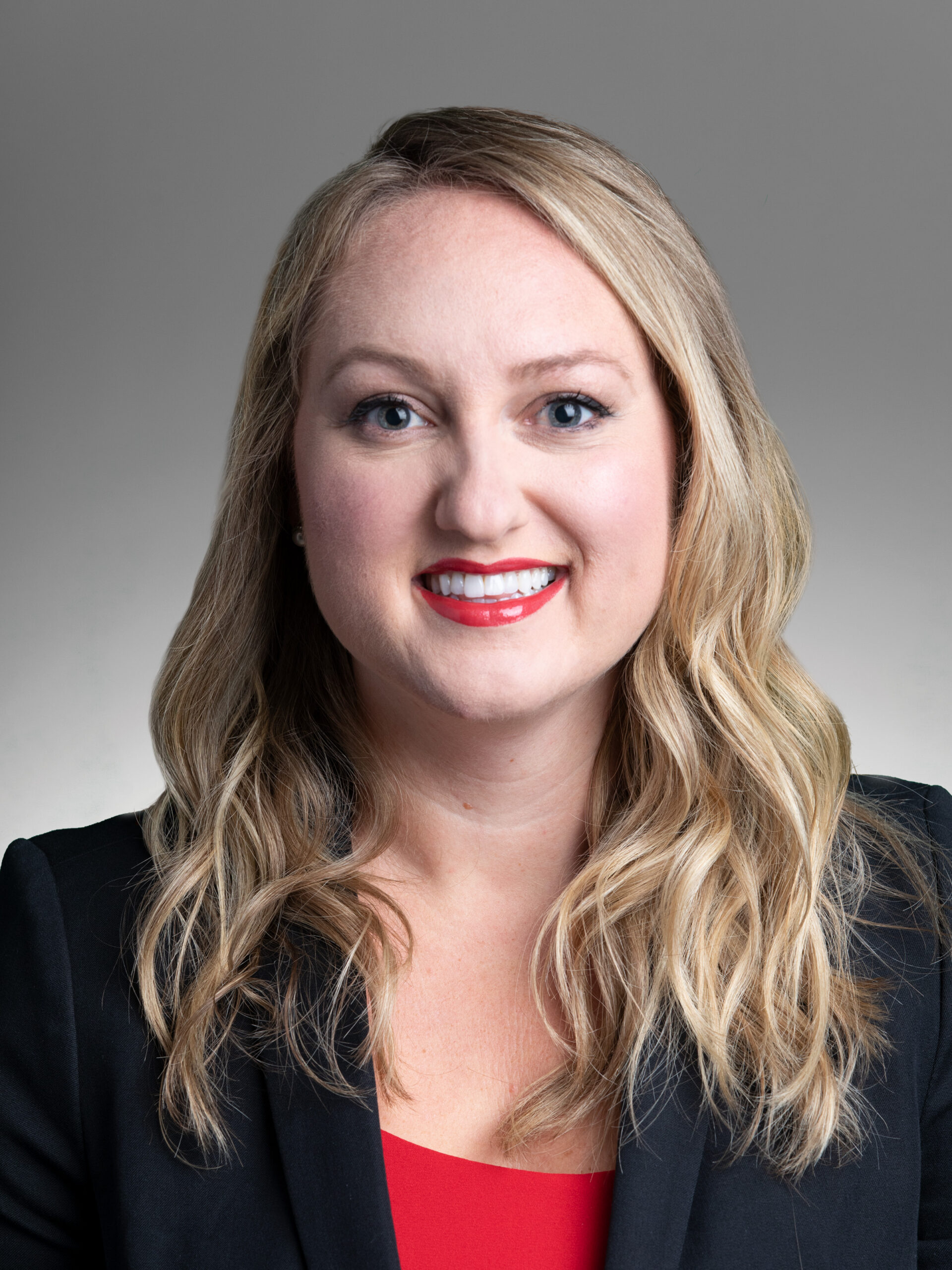
Photo by Sanford Health
Dr. Elizabeth Hultgren:
So I think you need to be really intentional about it. You know, being intentional of like, what am I putting in my body and how is this fueling what my goals are? Certainly we know that you do need carbohydrates. You need carbohydrates for brain function, you need carbohydrates for just daily metabolic activity, but you also need really good protein intake as well. You want to maintain those muscles. You want to build those muscles. And so having those basic building blocks there that your body can utilize to help you reach those goals is really important.
Courtney Collen:
When somebody asks you like to break down, OK, well, define protein. What type of protein should we be looking into? I know this is not like a nutrition or dietitian-based podcast (laugh), but if somebody asks a question like that – when we look at shooting for potentially a hundred grams of protein per day – I mean is this five protein shakes? Is it red meat? I mean, talk about maybe what that might look like practically speaking.
Dr. Elizabeth Hultgren:
I really like to meet women where they are. No one’s going to make a huge dietary shift and have it be sustainable. So kind of meeting women where they are. Here in the Midwest we’re very much meat and potatoes kind of like people as a whole. And so if that’s what your diet is, let’s look at how we can incorporate some really good lean proteins into your day to day.
I’m a mom of young kids. I work full-time. We’re constantly on the go. How can I really incorporate that into my life? You know, I can grab three hard boiled eggs on my way out the door on my way to work and throw it in my lunchbox that I can, you know, have while I’m finishing charts over my noon hour. I can grab like a protein shake in my morning that I can have like ready to go in my fridge. I have a box of protein bars in my desk at work in case you know, if I’m eating in the middle of a meeting (laugh), that I can certainly kind of incorporate that into my lifestyle.
Now that’s not for everyone. You know, I have patients that come to me say I’m vegetarian; how do I really do this? There’s really good plant-based proteins out there, introducing legumes and other forms of like chickpeas, beans, those type of things into your diet. Even things like adding nutritional yeast on top of your vegetables, nutritional yeast kind of has like this cheesy flavor to it. It really has a lot of umami to it. So it can be a really good way to add in some extra protein without really even noticing.
So you know, adding, how do I add in little things and keep eating the foods that I like to eat and how can I help adapt it to whatever my lifestyle is?
Courtney Collen:
Sure. This is so good. Thank you.
Dr. Elizabeth Hultgren:
And I’m not a nutrition expert by any means. This is just how I try to incorporate it into my day to day.
Courtney Collen:
No, this is so helpful. Even just again, practically speaking, some of the things, I mean I add cottage cheese to my egg bites. I bake in the morning for the week. You know, things like that. I know the extra protein boost is so important.
We talked earlier about strength training. I think one thing that is very trendy right now, a weighted vest for menopausal women, middle of life, working out walking and we know the benefits of walking, at least moving our bodies several times a week. How do we feel about weighted vests and is that something you want to comment on?
Dr. Elizabeth Hultgren:
Sure. If people like weighted vests, go for it. Absolutely. Whatever’s going to like motivate you to take that, those extra steps to make that extra time outside. A hundred percent I’m on board with it. If you love it, go for it. Now if you hate it, don’t do it because you’re not going to continue with it and it’s going to drive you away from being active. But if you think it’s helpful, love it.
Weighted vests can be really helpful, not only because you’re having to work your muscles that much harder to carry that. But you’re also putting that extra impact on your bones, which again, I like to talk about like functionally how do I help you meet your functional goals as we age? And so if putting that extra stress on your bones through the use of a weighted vest is going to help maintain that bone density, help decrease risk for things like osteoporosis and osteopenia and overall decreased risk for osteoporotic fractures as we age, so if it’s something you like? A hundred percent, go for it.
The other thing I’ve kind of found with this weighted vest trend is more people are getting outside more because they’re like, I have this vest, I’m going to use it and I’m going to go for a walk outside with it. There’s really good data that shows just being outside for 30 minutes every day, not only does it boost our natural vitamin D levels but it also improves things like mood. It improves things like energy and can be equally as effective to some of our antidepressants that we have on currently on the market today.
So I’m a huge believer. Get outside 30 minutes every day, whether it’s just sitting on your porch drinking coffee, whether it’s bundling up and getting that weighted vest on in the middle of winter, even when it’s five degrees outside, whatever’s going to cause you to like make that better health decision. Yeah. A hundred percent on board.
Courtney Collen:
So good. Thank you so much.
There’s a lot of gray area around hormone replacement therapy. Can you first clarify what it actually is?
Download your free menopause guidebook from Sanford Health
Dr. Elizabeth Hultgren:
Yes. Typically we want to refer to it as hormone therapy and not necessarily hormone replacement therapy because of the fact that we use hormones really starting from a younger age as far as treatment of several medical conditions.
And so incorporating really hormone therapy into that same category when we’re talking about contraception, when we’re talking about like menstrual management, it’s really along a continuum and we use hormones for the treatment of so many symptoms that we really like to refer to it more as like hormone therapy instead of like hormone replacement therapy because there’s not a level that we’re necessarily trying to replace.
And I think this is when you go to talk to an OB/GYN about your menopausal symptoms, about some of the symptoms of menopause, this is probably where we break away from a lot of the wellness clinics that you’re seeing in and around your community. When we start talking about hormone therapy, we’re truly talking about how could we utilize hormones to help with some of the symptoms that you’re having.
When we talk about hormone therapy, there’s not a level that we’re trying to achieve. And really when we talk about the American College of Obstetrics and Gynecology as well as the Menopause Society – which is truly kind of your mainstays that you should be looking at as far as recommendations – they don’t recommend routine estrogen, progesterone levels because of the fact that we’re not treating to a hormone level. We’re truly treating to symptom management.
And so I think that’s probably one of the biggest differences you’ll see when you’re seeing a physician or even an advanced practice provider and they’re talking about let’s get you feeling better as opposed to let’s order 500 labs, let’s put you on 10 supplements and let’s check these labs all the time because we’re not truly treating towards an actual lab level.
We know that this is a natural part of aging. So there’s not necessarily a level that we’re trying to maintain. What we’re trying to do is really how can we help with symptom management? And I think that’s really kind of the mindset when you go into these appointments is that’s really what I’m shooting for.
Courtney Collen:
Can you break down like the benefits of this type of therapy? Any risks or common myths and what might make somebody a good candidate for this?
Dr. Elizabeth Hultgren:
So when I have a woman that comes into my clinic, we first discuss what symptoms are you having? Is it the hot flashes? Is it drenching through your sheets at night, so night sweats? Is it more brain fog? You know, what is this that we’re really trying to achieve? And then kind of basing our treatment based on whatever symptoms you’re having.
If it’s, “yes I’m having hot flashes, it’s disruptive to my daily activities, they get worse when I’m leading a board meeting, how can I help with this?” Yes. Let’s talk about hormonal options and let’s talk about nonhormonal options. Because there’s really a large variety of treatment options that we have depending on really what your goals are.
Really hormone therapy with estrogen is going to be the gold standard for women that have hot flashes that are disruptive to their daily activities. And that’s kind of what I talked about. We talk about how disruptive are your symptoms to your day-to-day life. If women are like, yeah, I’m going through menopause, every once a week I get a hot flash. Not really disruptive to me. We don’t necessarily need to do anything.
We can acknowledge it, say “yes, my body is changing. I’m having a shift in my hormonal status, but it’s not really disruptive to me.” So we don’t need to really treat it. When we talk about women that are saying I’m having eight hot flashes a day, I’m not able to get through my workday or not able to get through my daily activities, it’s disruptive. Then let’s talk about, let’s treat it.
When we talk about estrogen use, we oftentimes are talking about supplemental estrogen that’s used at about one-tenth the dose that people would normally be seeing from like a birth control pill, which is something I think many women are very comfortable kind of talking about. We talk about that. The risk for things that would maybe take you out of contention for using an estrogen-containing birth control really aren’t always strict factors in which we can’t use hormone therapy after age of menopause.
We talk about starting with a low dose and kind of working our way up until we have symptom allievement. So we don’t necessarily talk about screening numbers because again, we’re not treating towards a number. We’re treating towards symptoms, and we start talking about this as soon as these symptoms start to develop.
So I have women that come to me in their 40s. They’re like, I’m still having periods but I’m starting to get hot flashes. And we can say, “OK, your estrogen levels are probably starting to decline, not enough that you’re not having periods anymore. So let’s talk about what we can do with this.”
Really where I start typically for my hormone therapy is let’s talk about using the least dose in like the least risky fashion, which is typically a transdermal approach. We talk about using estrogen patches. There’s a lot of forms of them out on the market and we talk about that this is typically a patch that you’re going to place once or twice a week and we’re going to dose it until your hot flashes go away – for women that are good candidates for that.
Women that are not a candidate for estrogen replacement therapy or estrogen therapy kind of in general are women that have a history of an estrogen-receptor breast cancer. Women that have a history of a deep vein thrombosis or a blood clot that’s formed in their legs. Women that have a history of pulmonary embolism or blood clots that form in their lungs. Those are individuals that were estrogen therapy is not going to be an option.
We also talk about, you know, the decline in progesterone as kind of that other hormone we oftentimes think of coming from the ovaries. This can certainly affect things like sleep dysfunction and night sweats. And so we talk about, you know, using progesterone therapy typically in the form of prometrium, which is a tablet that most women can take at night can be helpful for alleviation and improvement of sleep. Which is probably the number two thing I hear behind, you know, hot flashes is why symptoms women have as they start to enter menopause. I’m not sleeping as long at night. I’m waking up in the middle of the night. I just am not feeling waking up as rested as I may be used to.
Women that do not have a uterus don’t have to be on progesterone therapy. If they’re simply having the hot flashes during the day, we can simply provide estrogen therapy for them and that can alleviate those symptoms. If you have a uterus in place, unopposed estrogen therapy can lead to what’s called endometrial hyperplasia or uterine cancer. So you have to have progesterone for that protective effect.
Courtney Collen:
Very valuable information. Thank you so much. What are some questions that women could bring to their provider?
Dr. Elizabeth Hultgren:
When women come in, part of the conversation I have is do you want hormones or do you want to try nonhormonal options? We kind of talked a little bit about some of the hormonal options as far as estrogen therapy, progesterone therapy.
Nonhormonal options can be everything from, let’s talk about lifestyle changes. Let’s see how can we help just your day-to-day activities. So we talk about things like weight loss, we talk about things like dressing in layers, having a fan in the bedroom at night. You know, sleeping with like just a sheet and a blanket that you can throw off if you start to notice yourself getting warm. We talk about things like weight loss because central adiposity or central kind of obesity is going to likely increase some of those like feeling hotter than I should type of symptoms.
We also know that as that essentially your body’s ability to regulate the, you know, really hot temperatures and really cold temperatures can be a spur for having a hot flash occur. We also know anytime you’re in a stressful situation or have increased anxiety, you’re going to notice a hot flash flare. And that’s because they originate really in the same area of the brain.
And so when we talk about use of like SSRIs or SNRIs, so things like Effexor, venlafaxine, these medications are really treating anxiety and depression symptoms. But we know that these can be like instigators of a hot flash coming on. So really when we talk about like nonhormonal options, those are typically in the conversation as well. How can we help get anxiety into better control? How can we help depression get under better control? Because these are things that can spur on a hot flash during your day to day.
We also talk about – there’s neurokinin receptor pathway modulators. So you might have heard like VEOZAH is a new one on the market, probably came about two to three years ago. It’s a nonhormonal but it essentially affects that thermal regulation pathway in the brain. So it really helps prevent hot flashes from occurring and can be a really nice option for women that with a history of breast cancer, history of pulmonary embolism who aren’t candidates for estrogen therapy. There still are a lot of options out there regarding that.
So just know that I think first kind of conversation are we looking at hormonal options, nonhormonal options and then kind of breaking it down from there as far as what’s going to be the best option to treat your symptoms that you’re currently having.
Courtney Collen:
There’s a lot of discussion around the black box warning label being removed from hormone replacement therapy in 2025. What does this mean, Dr. Hultgren? What is a black box warning?
Dr. Elizabeth Hultgren:
So a black box warning is going to essentially be a warning that’s going to warn the consumer of a potential life-threatening risk, to try to keep it short and sweet. Estrogen has had a black box warning on it. Really perpetuated probably by the Women’s Health Initiative that occurred, I can’t tell you a year, I don’t remember off the top of my head, by the Women’s Health Initiative and what it was warning women of is the increased risk of stroke, heart attack, breast cancer, dementia that can occur with estrogen use.
What was removed is we’ve kind of taken that black box warning away. We still recommend following with your provider if you would like to utilize this type of therapy. But especially in the form of like vaginal estrogen, which really pretty much anyone’s a candidate for vaginal estrogen. Really has no contraindications really in any patient population. And so I’m really happy to see it taken away from especially our vaginal topical estrogens that we use.
What we have found is that women that initiate estrogen therapy prior to age 60 or within 10 years of menopause don’t see any increased risk with cardiovascular disease. We don’t see that increased risk of dementia and we don’t really see that increased risk of stroke and heart attack. And so I’m really happy to see that those warnings have been taken away.
I think it really opens up the conversation that individuals can have with their providers and really help to form a more meaningful conversation without just seeing this giant like “do not use” sign on it and being really afraid to approach this therapy that can be really helpful for a lot of women.
Courtney Collen:
Yeah, absolutely. And that’s what this conversation is all about too. So thank you for that insight.
Let’s talk about women over 65. Dr. Hultgren, do you typically see symptoms continue for women at this age? Like the hot flashes or other things associated with menopause?
Dr. Elizabeth Hultgren:
So while most women will notice a dissipation of their symptoms, typically three to five years after kind of that menopausal transition, there are women that will continue to have symptoms into their 60s, even 70s in some very rare cases. When women come to me with this, there’s several things I really want them to know.
First of all is we’ve talked a lot about the use of estrogen and progesterone therapies today but unfortunately for women that are coming to me for the first time that they continue to have symptoms, what we know is that the initiation of these therapies after age 60 to 65 or greater than 10 years after menopause really can have some serious adverse effects that come with it. We see increased risk for cardiovascular disease, heart disease, and more importantly increased risk of dementia was starting these medications after this age.
We think that a lot of this has to do with the vascular remodeling that’s happening. So the estrogen levels have left these vascular changes that have occurred and now increasing estrogen dosing after this can come with some of these side effects. So typically hormone therapy is not something we’re going to recommend for this population.
But there’s a lot of other things that we do talk about. We talk about lifestyle, we talk about weight loss, we talk about some of the SSRIs and SNRIs that can be really be helpful with decreasing these symptoms by about 80%. Additionally when women are coming to me and they’re saying I’m all of a sudden having symptoms and it’s maybe many years after menopause, I think you have to be really careful in making sure that you’re ruling out other medical conditions that can cause some of these symptoms.
We talk about are we screening for things like obstructive sleep apnea? Are we checking thyroid levels? Are we screening for things like diabetes? Because all of these can really mimic as the initiation of things like hot flashes or memory difficulties or brain fog that some of these women may come in with. So unfortunately after about 10 years after menopause, after the 60 to 65 age group, hormone therapy is not going to be recommended. But just know that there’s a lot of other options on the market of things that we can do again to help treat these symptoms if they’re impactful for a woman’s life.
"Menopause is just the next phase and for some women, this can be really empowering." Dr. Elizabeth Hultgren
Courtney Collen:
Is there a time to stop hormone therapy? Is there a right time to stop hormone therapy?
Dr. Elizabeth Hultgren:
This is I would say is where the art of medicine really comes in. I would say this is definitely a gray area at this point in time. We used to be hard and fast, least amount for the shortest duration possible. We’re going to not have people on it for more than three to five years. And I would say this is an area that we’re constantly seeing developing.
If you start estrogen therapy immediately after menopause, is it maybe somewhat safer to continue beyond this point? Probably. With all my patients I do discuss that there are some risks associated with estrogen therapy, including slight increased risk for things like breast cancer. Beyond that first five to seven years of use, that risk of breast cancer is low. It’s about equivalent to having and enjoying three glasses of wine each week.
But it’s still a slight risk. So these are things that I do want women to know as they’re pursuing some of these therapies as well.
Courtney Collen:
Let’s discuss something that isn’t discussed enough, in my opinion, sexual and vaginal health during menopause. We just touched on that a little bit with some of those topicals. Walk us through some of the changes during this stage of life and why it happens.
Dr. Elizabeth Hultgren:
So we’ve kind of talked about from the very beginning that menopause we see a decrease in our estrogen and progesterone, or the hormones that are produced by our ovaries. With this decrease in estrogen, we can see thinning of the skin of the vagina and the labia. We see decreased blood flow to these tissues as well as decreased collagen production and decreased elasticity.
So as you can imagine, as that skin gets thinner, as we have decreased blood flow to these organs and as we have decreased elasticity of this tissue, things like intercourse, which typically you know, involves the pliability of the vaginal essentially wall pliability of the tissue can become much more uncomfortable. And vaginal estrogen is one of those things that I’m like should be recommended to all women as they age.
We know that 30 to 60% of women do have what’s called disciplinary pain with intercourse, especially as they age. And so how do we help address this? We know that sexual health is a really important part of women’s health in general, but you’re right, it’s not talked about very much. And there’s a lot of reasons behind that. It may be the social construct that they grew up with. It may be discomfort about talking about more of these intimate issues with not only providers but you know, girlfriends or family members or whomever your like confidants are.
And it’s something that’s kind of, I felt like swept under the rug a lot of times. And so I feel as a gynecologist, I talk about this all day every day. But yeah, you know, just in the general public, this is one of those topics in women’s health that I feel is very underrepresented as far as like what our knowledge about it is and what the open conversation is with this. Again, we have many hormonal and nonhormonal options for women that come to me that say my vaginal tissue feels drier than it should. I feel kind of irritated down there. Sex isn’t as enjoyable or as comfortable as it used to be before. And what can I do about this?
For women that are really wanting to stay like nonhormonal, we talk about the use of like vaginal moisturizers. Replens is one that’s on the market available over the counter. I have no obviously like no interest in this company itself, but it’s just one of the examples that you can find in your local pharmacy. You can talk about the use of, are you using good lubrication? Because as that tissue becomes thinner, as you have less elasticity of that tissue and as you have less blood flow to that tissue, your natural self-lubrication decreases as well.
Courtney Collen:
Is there a specific type of lubrication that you would be recommending?
Dr. Elizabeth Hultgren:
Yeah, we typically would recommend – I recommend a lot of silicone-based lubricants for women because it’s going to last a little bit longer during your intercourse session. It’s going to be a little bit more comfortable. And so using a good silicone-based lubricant, make sure it has no colors, no scents, no like anything else to it. Oftentimes you’re going to see a silicone with added vitamin E. But it’s going to last a lot longer for our post-menopausal women. So we talk a lot about silicone-based lubricants.
The other thing that we talk about though is you can’t use a silicone based lubricant with a silicone based either like vibrator or toy of some sort because it’s going to degrade that silicone toy. So if you’re going to be using like a vibrator in the bedroom, make sure you’re using a water-based (lubricant) with that particular toy.
Courtney Collen:
I see. OK. Great.
Dr. Elizabeth Hultgren:
I don’t know if I’m allowed to say that.
Courtney Collen:
That’s fine. I appreciate that insight very much.
Dr. Elizabeth Hultgren:
And then so women that are open to using hormonal based treatment for what we call genitourinary symptoms of menopause or that vaginal dryness, vaginal irritation, pain with intercourse, we highly recommend use of vaginal estrogen for that.
Vaginal estrogen comes in a couple different forms. It comes usually either in like a tablet or a cream. They are forms that are commercially available so you can order them through a pharmacy and they’re typically medication that they’re actually going to place in the vagina two to three times a week. The important thing to realize is the reason I say like vaginal estrogen can be used for anyone is because it doesn’t get taken up systemically.
What we know is that vaginal estrogen is very safe. Even those that are currently undergoing treatment for like an estrogen positive breast cancer. So these genitourinary symptoms of menopause is something that we hear a lot of, especially from our breast cancer survivors. They’ve been without estrogen, it was a really sudden like shift of estrogen being turned off in their body, whether it be through chemotherapy, whether it being through surgical management. And so they went from like a very normal, you know, estrogen level to sometimes it being taken away almost overnight.
And so they can see a really drastic shift in the way that their vulva, labial, vaginal tissue feels. And so for these women, we absolutely recommend use of vaginal estrogen. We’ve worked with our oncologists here at Sanford and they’re very much on board with this as well. And it’s because of the fact that your vaginal estrogen is not taking up systemically. So vaginal estrogen is great for the treatment of what we call those genitourinary symptoms of menopause. Otherwise GSM is how you might hear it abbreviated, but it’s really safe to use in a very large population because it’s not taken up systemically.
So if you’re having any symptoms, please go talk to your provider about it. It can be life changing for a lot of women. There’s natural ways to increase the blood flow and elasticity of your vagina as well. And we talk about using it. So whether it’s the use of like penetrative intercourse, whether it’s the use of you know, dilators or vibrators or whatever that is for you, we know that stimulation of that tissue increases blood flow to that tissue and actually can help make intercourse more comfortable.
Now if you’re coming in with pain with intercourse, please let your provider know. Because there’s a lot of evaluation we’re going to want to do to that. We’re wanting to make sure there’s not some underlying pathology that’s causing it. But if it’s truly due to the decrease in estrogen, secondary menopause, know that these are very much things that we can help with.
Courtney Collen:
Fascinating, thank you for adding that. I’ve got a few common misconceptions around menopause I’d like you to clear up for us. I have three of them. The first one: menopause happens overnight.
Dr. Elizabeth Hultgren:
Not true. Essentially we talked about menopause is those ovaries slowly producing less hormone than they were previously producing during your reproductive years. And so for most women, I say most because there’s obviously outliers to this, but for most women it’s going to be a gradual decrease in their estrogen, progesterone production. With this you start to see what we and is being a lot more talked about is perimenopause. So, and this is why I start having these conversations.
If women are coming to me with some of these symptoms, hot flashes, brain fog, changes in their menstrual cycles as early as, you know, five to seven years actually before the onset of menopause. So this is a gradual process. It’s all on a continuum. I think there used to be this really hard and fast rule that we don’t start hormone therapy until your periods have completely stopped. I think there’s been a huge shift in this even in the past five to 10 years where we are starting to provide estrogen, progesterone therapy for those that are still maybe having periods, but they’re starting to have some of these symptoms start to creep up.
And really we’re looking at again treatment of symptoms not towards a hormone level. And so we’re starting to add in, you know, do we start with a low dose estrogen patch and some progesterone at night as early as you know, early 40s to help them kind of start to transition and they may be good on the same dose for three to five years and then they’re like, my symptoms are starting to come back. And so we increase that dose as needed. Again, really focusing on symptom management and not necessarily what your absolute hormone levels are.
Courtney Collen:
OK, number two: weight gain is inevitable and uncontrollable.
Dr. Elizabeth Hultgren:
Absolutely false. Again, we kind of talked about some of the reasons for that. I think as we go into this menopausal transition, it’s helpful to be more mindful and more cognizant of these changes that are happening.
But as we kind of talked about earlier, there’s a lot we can do really focusing on are we giving our body the building blocks that it needs in order to maintain our muscle mass? Are we building muscle mass? So we talked about weightlifting two to three times a week.
Are we maintaining our cardiovascular health and our functional health by getting that 150 minutes of exercise each week? And then knowing that yes, as your estrogen levels decrease, you might have a change in distribution of like where our body is choosing to store some of that. But when we talk about overall weight gain, we talk about overall, you know, is this something that there’s nothing I can do about? Absolutely not.
There’s a lot of things we can do about it. Just being more mindful about it, being more intentional about what you’re putting in your body can really be helpful during this transitional phase.
Courtney Collen:
And the last one: symptoms are something you should just suffer through and deal with.
Dr. Elizabeth Hultgren:
100% disagree with this. We talk about a lot about symptom management and again, we’re not treating towards a specific hormonal value. We are treating towards symptom management. And anytime you’re having, you know, gynecologic symptoms, whether it be periods that are really painful for you, periods that are causing you to miss work or school all the way through, I’m having hot flashes or disruptive to me leading a board meeting.
These are all symptoms that we should be addressing in like the purview of gynecology. So please reach out to your local OB/GYN or your local family practice provider that maybe have some really good helpful suggestions, treatment options if you’re having any of these symptoms.
Courtney Collen:
Dr. Hultgren, what is one thing that you wish every woman understood about menopause?
Dr. Elizabeth Hultgren:
The one thing I would say is that menopause is a natural form of the life cycle. It can have some symptoms that come along with it. There’s a lot of things that we can do to treat these symptoms, but it certainly doesn’t mean that like this is the end of, you know, good sex. This doesn’t mean that this is the end of me being able to live my life as I want. This doesn’t mean this is the end of me having the body that I want or the functional status that I want.
Really, menopause is just the next phase and for some women, this can be really empowering. And so kind of being able to take this knowledge, know that if you’re having symptoms, there’s certainly things that we can do to help treat this. And really embracing this next phase of life and really embracing all that it actually has to offer as well.
Courtney Collen:
Is there anything else that we didn’t touch on here that you wanted to include in our conversation today on this topic?
Dr. Elizabeth Hultgren:
Yeah, what I would say is just, there’s a lot of information out there and so making sure you’re getting your good, your information from a good reputable source. The American College of Obstetrics and Gynecology (ACOG) has a lot of really patient friendly information on this. The Menopause Society, previously known as the North American Menopause Society.
If you just go to the Menopause Society, they have a lot of really good patient information under what’s called Meno Notes. And it’s just one- to two-page leaflets that really describe what is the function of hormonal therapies, what is the function of nonhormonal therapies, what is considered normal during this transition, what can I do about it? What are lifestyle changes I can make? And so really make sure you’re getting your information from a good reputable source.
And if ever you’re uncomfortable with a treatment regimen that’s maybe been prescribed or you don’t feel like you have enough information on it, please reach out to your local OB/GYN, family practice, internal medicine provider. There’s a lot of really good providers in the community that are really knowledgeable about this and I would say if they’re not, they’re going to let you know, and they’re going to help you get to someone that is.
And so there’s a lot of people that are really passionate about helping women age gracefully and age empowered and have knowledge about what’s going on with their body during this timeframe. And so make sure that you’re reaching out to get to one of those providers.
Courtney Collen:
How would you encourage patients or women listening to get the right kind of guidance?
Dr. Elizabeth Hultgren:
In our communities, we’ve seen kind of this uprise in “wellness clinics,” and while some of them I think go into it being very well-intentioned and wanting to help women, I think having the background of just physiology, pathology, what the causes of this are, are really important.
So talking to someone that’s board-certified in their area, talking to a physician that has specialty, essentially knowledge or education in the basis of menopausal therapy – so oftentimes this is going to be your local OB/GYN – can be really important as far as understanding the “why” behind this.
I also want people to be really encouraged to ask questions and make sure that you’re not seeing people that have a lot of financial gain to be gained by you seeing them. As an OB/GYN, I love taking care of women throughout all stages of life. Everything from my young adolescent patients through menopause. And so really being able to empower women to make really good choices for their life and whether that’s talking about lifestyle modifications, medications, or just realizing what’s normal at whatever stage of life they’re in, is really important.
Courtney Collen:
Such a valuable conversation. We really appreciate this insight, Dr. Hultgren, and all that you do to care for women in our communities. We appreciate you.
Dr. Elizabeth Hultgren:
Yeah, thank you.
Courtney Collen:
Thank you. Thank you so much.
Announcer:
This was part of the “Her Kind of Healthy” podcast series by Sanford Health. For more by Sanford Health, visit Apple, Spotify and news.sanfordhealth.org.
Get more episodes in this series
…
Posted In Gynecology, Internal Medicine, Menopause Care, Sioux Falls, Specialty Care, Symptom Management, Women's