Episode Transcript
Dr. Jennifer Schriever (guest):
The two most important meals to get adequate protein, if we’re just gonna look at meals separately, would be breakfast and your evening meal.
Matt Holsen (announcer):
This is the Health and Wellness Podcast brought to you by Sanford Health. The conversation today is about the great protein push is more better. Our guest is Dr. Jennifer Schriever, family medicine physician specializing in obesity medicine, Sanford Weight Management Center, Sioux Falls, South Dakota. Our host is Alan Helgeson with Sanford Health News.
Alan Helgeson (host):
We’re talking with Dr. Jennifer Schriever today joining us for a conversation about protein, because protein is everywhere, in all of the food labels and all the food products. And I just read that Pop-Tarts is coming out with protein-packed Pop-Tarts in a variety of flavors because everybody’s looking for protein in their products. So we’re glad you’re here today, Dr. Schriever. So Dr. Schriever, why don’t you tell us a little bit about what your role is at Sanford Health and what you do so we know a little bit more about you before we start the podcast.
Dr. Jennifer Schriever:
Sure. I have been at Sanford for 22 years, most of the time practicing in family medicine, and in the past three years helped develop the weight management clinic, and now work here full-time to help people improve their health and create a lifelong journey that makes them feel better and have more energy and better metabolic health.
Alan Helgeson:
Well, Dr. Schriever, we’ve had the opportunity to talk with you several times in the past, and grateful to have you come back again and talk about this because it seems to be one of the hot things in the nutrition world these days anyway. And it’s an important topic because everybody needs protein, but we wanna dig into more of what the right amount is, what the right protein is, because there’s a lot there. It’s not all the same for everybody, and hopefully you can give some definition to that. So let’s talk about protein-packed snacks, coffee, protein oatmeal, protein desserts. Is this trend of protein in everything helpful to one’s health? Or is it really just a marketing thing?
Dr. Jennifer Schriever:
I would say that’s a mixed answer. It certainly is a lot of marketing. So often when I talk to patients and you see protein oatmeal on the shelf, how much more protein does your protein oatmeal have? These can be beneficial, but it’s really important to understand what you’re buying and what’s in the label. What is the rest of the content of that protein food? So even you would think a protein yogurt, it’s yogurt, right? It should be great for you. But one protein yogurt isn’t as good as the other. So what you want to look at is the label for the nutritional label and then, you know, the content of what they’ve included. My concern is how much protein is in there? How much sugar is there, especially added sugar? And of course you wanna look at the fat content. And you could look at the ingredients, is it a really long list? So then maybe that has a lot more processing to it. So then it’s probably not a good choice. Now sometimes, you know, depending, like protein bars, we can talk about how to pick a good protein bar versus another. Because those will have a lot of sugar in them, and it’s confusing because one protein bar looks pretty good, but then when you look at the sugar content, it’s really not as good for you compared to the amount of protein in it.
Alan Helgeson:
So you really have to look beyond just that word protein when it comes to labels, right?

Photo by Sanford Health
Dr. Jennifer Schriever:
Right. So for instance, with a protein bar, you can look at just two things. How many grams of protein is in it? One simple way is to add a zero or take a times 10, right? So if you have 14 grams of protein in that protein bar, so now we have 140 that we’re thinking about. How does that number 140 compare to the calories in the protein bar? If it’s more or equal to the number of calories in that protein bar, then you’ve got a good protein bar. If your calories are way above that, then you have a bunch of extra ingredients in there that you probably don’t need, and it’s probably not gonna be worth the value of the protein in that protein bar.
Alan Helgeson:
You walk down the aisles of protein bars and it’s just astounding. It’s overwhelming. So I’m gonna raise my hand and say, I’ve looked for the nicest label. Being honest.
Dr. Jennifer Schriever:
Yep. Or what’s gonna taste the best, right?
Alan Helgeson:
Exactly. A lot of ’em just taste the same.
Dr. Jennifer Schriever:
Yeah.
Alan Helgeson:
Let’s talk about the right way to make sure that protein is spaced out throughout the day. Can you be a little specific about the amounts of protein and how we need to do that throughout the day for us?
Dr. Jennifer Schriever:
Sure. You know, nutrition science just keeps getting better and better. So I think we do have better answers about these things. It might not be definitive, but we are getting better information. So as far as meals, the two most important meals to get adequate protein, if we’re just gonna look at meals separately, would be breakfast and your evening meal. The middle of the day isn’t quite as important. You can look at it a different way too, is we really need a certain amount of protein throughout the day to at least maintain muscle health and build it. If you are getting that protein throughout the day, or don’t wanna necessarily get it all at once, but if you are getting enough protein throughout the day and there’s a time of day that you want to work out fasted, that’s probably fine. You’re gonna make up for that protein content the rest of the day. Interestingly, you kind of need a minimal amount at a meal for adults over 25. To really get enough protein at a meal, you want about 30 grams. Under 25, you’re gonna be better at metabolizing everything and you’re probably gonna get by with good protein muscles, muscle protein synthesis or making your muscles back up with less protein at a meal. But in general, as long as you get enough throughout the day, you’ve divided it up a little bit, you’re gonna be okay. But if we have to look at when we wanna get the most to help the breakdown of muscle that may occur overnight of your muscles, if you don’t have enough nutrients on board, then let’s build up some good amount of protein in the morning as well as at the evening meal.
Alan Helgeson:
So talking about grams per body weight, is there a calculation that you really work with when you talk with people?
Dr. Jennifer Schriever:
So that varies a lot too, and the science, again, keeps changing or there’s different evidence depending on how you’re looking at it. In general, I would say the RDA is not enough and that’s 0.8 grams per kilogram. And then that’s a hard thing to think about, because in the United States, most of us don’t think about what we weigh in kilograms. We think about pounds. So there’s some evidence to support that you really need more like 1.2 as a bare minimum grams per kilogram to just maintain muscle mass. So if we think about if there’s 2.2 kilograms per pound, then that would be at least 0.6 grams per pound. That gets so confusing. The caveat might be if you have any sort of condition where we need to monitor your kidney health or something, then we’re gonna not go by this gram per kilogram or pound of body weight as much. So then we need to know those guidelines separately. But in general, we do about a gram per pound of ideal body weight. Not your current weight, but what we estimate your ideal body weight to be. So you can do that by knowing BMI for your height, you know what a BMI around 22 to 23 might be, and what’s the weight of that? And then you get your gram per pound. That being said too, some people naturally have a whole lot more muscle or are active, so then we’re gonna tell that person to get more protein. It’s very individualized.
Alan Helgeson:
So I’m guessing moving to that next question too, about age, also serving size. How does that roll into it too, Dr. Schriever?
Dr. Jennifer Schriever:
As we get older, protein becomes more and more important because again, we’re not as efficient at using that. That being said, you can maintain muscle mass with protein intake, but if you don’t also do some strength training or resistance training or exercise to activate the muscle breakdown/buildup process, then that protein isn’t gonna be as useful. But you need at least a certain amount to help maintain a reasonable amount of muscle mass. So definitely would shoot for at least 30 grams of protein a meal. If you don’t want to necessarily count that for most people, you can look at the palm of your hand and make it the size of your palm, thickness of your palm. If you’re a taller person, maybe we need to go to the first knuckle and that would be a rough way to look at the size of your portion of meat that you could kind of eyeball that if you don’t want to get into more specifics. If you’re really active, then you know a bigger portion might be, active as far as in strenuous work or strenuous exercise, then we might want to increase your protein intake. We can also talk about it as in percentages of the food intake of a day. So if you know your rough calorie goal, if you’re not as active, we might have at least 30% of your calories from protein. If you’re more active, we might go more towards 40% of calories. But we’re gonna take into account the whole picture. How active are you in general and what is your highest level of activities? So some people have a really physical job or their exercise is really intense.
Alan Helgeson:
So you got into the activity level. How about somebody that’s maybe fairly sedentary, not active at all?
Dr. Jennifer Schriever:
So then as part of percentage of calories, we’d still stick to the 30% and still at least 30 grams of protein a meal. But we’re also still gonna look at the size of the person to give that sort of goal because we don’t want to break down muscle. We’re just gonna get weaker and weaker. Also, the more muscle you have, the longer you’re gonna live, the less you’re likely you’re gonna fall, the better you’re gonna survive any disease states that can hit. We know that even for people undergoing cancer treatment, the healthier and stronger they are, the better they’re gonna make it through any disease state. So that’s why that’s so important.
Alan Helgeson:
This next question, talking about types of protein and breaking out a little bit between, are processed protein products as beneficial compared to protein from whole food sources?
Dr. Jennifer Schriever:
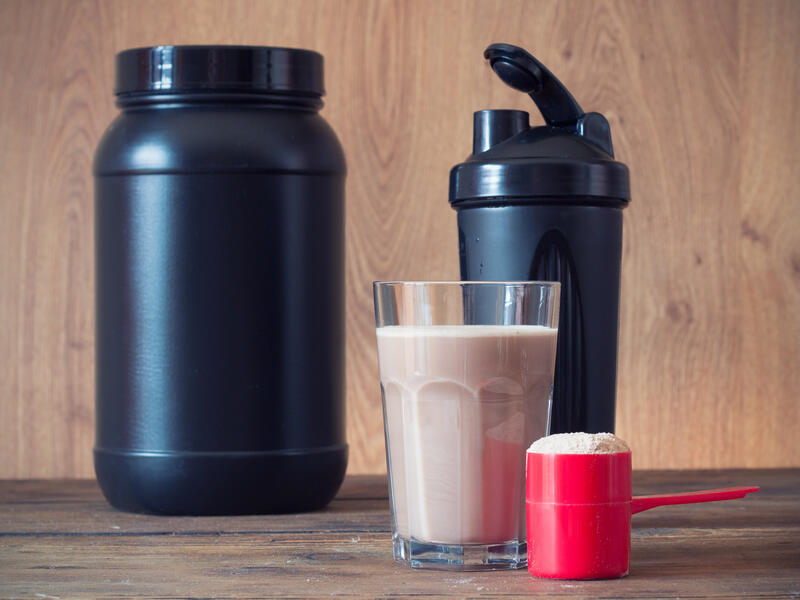
Most of the time I would say from a protein gram goal, it’s probably pretty reasonably equal. But if it’s mostly plant-based source, then you’re not gonna have all the essential amino acids that you need throughout the day. Now if that’s just one portion of your intake throughout the day, then that’s probably just fine to have a plant-based source if it doesn’t have the full essential amino acid picture. The benefit of having whole foods over processed foods is everything else that whole food has. So taking a steak versus a whey protein, that steak is gonna take longer to digest. That’s gonna make you feel fuller. Even though the protein gram amount is gonna be equal, it also might have some extra vitamins and minerals that maybe what weren’t included in your whey protein shake. So you know, sometimes I think those whey proteins might have some extra vitamins in them as a supplement, but that steak is definitely gonna have some B vitamins and other things that you need. And so if you are also one that tends to be hungry throughout the day and struggle with fullness, let’s avoid the shakes and get more whole food because you’re gonna feel fuller longer. Even that breakfast meal can make that day go so much better.
Alan Helgeson:
Does the human body actually absorb and utilize the protein in these artificial sources?
Dr. Jennifer Schriever:
I think you’re referring to like these extra marketed protein labeled foods. Yeah, it’s going to use them just fine, and often those are supplemented. Even a whey protein is gonna be used in protein bars or pea protein or an egg white protein. Your body is going to be able to utilize whey proteins more quicker than pea protein than raw eggs for instance. But there’s a lot of benefits to eggs. I’m just not sure we wanna eat raw eggs ’cause of what else we’d be at risk, therefore. So it does, but the disadvantage still is that’s highly processed. What have they used to process it? Have we added extra ingredients, salt, sugar, other things that might even cause inflammation so that we don’t feel as well eating them? What is the sugar substitute? Sometimes I don’t in general think sugar substitutes are necessarily bad in moderation and not in high amounts, but some sugar substitutes are gonna bother people. So then you’re gonna be uncomfortable. But then you’re also lacking probably fiber in some of those supplements or a different form of fiber because they’ll often add them to certain things. But how do you feel when you take those? And if we’re causing inflammation from these extra ingredients, that’s just gonna disrupt metabolism in some way or joint pain or other bodily processes.
Alan Helgeson:
Dr. Schriever, are you able to break down the structure a little bit between these manufactured protein sources versus the whole food protein sources?
Dr. Jennifer Schriever:
What some of the concern is they’re plant-based protein sometimes and then I guess I don’t know for sure, but it seems like there is some evidence that depending on what they’ve used to make those proteins, that you don’t break them down as easily or aren’t able to use them as well as whole food. But it depends on which one you’re talking about and what they use to make it.
Alan Helgeson:
So there’s a trend out there now about a protein shake before bed. Can you talk a little bit about how this may or may not be beneficial to nutrition but also to the quality of sleep?
Dr. Jennifer Schriever:
Sure, and I think this is gonna depend on the person. A protein shake before bed can be useful. Did you reach your protein goal? Did you miss a meal? Is this gonna help supplement what you missed during the day? Or a lot of us have been in that habit throughout our lives, or it’s just the routine to have an evening snack. So is that a better alternative than your typical evening snack? I think evening snacking is partially because we’ve been busy all day working and now we’re more relaxed, have less distraction and unfortunately the kitchen’s really handy. So it can provide a balance or a substitute for a time when you are hungry and if you didn’t eat enough during the day. So then that’s gonna support you sleeping overnight. If you tend to wake up in the night and be more hungry, that shake might help you feel fuller overnight. If you can add even some fat to it a little bit and maybe a little carbohydrates, that’s gonna help balance your sugar better overnight and you can have a more even sleep. That being said too, you might not wanna have that very close to bedtime because you’re gonna be at more risk for having heartburn or having it sit in your stomach longer ’cause you’re sleeping and resting. Then it can disrupt one’s sleep. It’s all gonna depend on how you handle food timing before you go to bed and until you really start to focus and pay attention. I don’t think people notice how that food timing for each individual helps. Some also will have tryptophan in them, which is also in turkey and that’s why you get so tired after turkey dinner. So maybe they’re gonna help with sleep that way.
Alan Helgeson:
If only they were turkey and gravy flavored. Right? Well on this next one, for someone who may be just starting out or overwhelmed by all of the information out there, what are some of those foundational principles that you would say, ‘Hey, just focus on these’?
Dr. Jennifer Schriever:
Really focus on whole foods. It’s back to, you know, shop on the outer aisles of the grocery store and not go in the middle. Buy something that’s not boxed or packaged. One simple way is try to add more vegetables to your day so you add more fiber. Add more fruit. I think vegetables tends to be the biggest challenge for most people. Or reduce the sugar in your nutrition, you could start that way. Try to snack less. But also if you want to, look at specific plates. Like, one good one is myplate.gov or Harvard has a healthy eating plate. So if you like a one pager with some simple, like, this is what my plate should look like, and these are the foods that make up that sort of thing. Fries are not a vegetable <laugh>. Get back to the basics and then have someone maybe visit with a dietician or someone else that can help you move on from there. But you can really do a lot by just doing those things.
Alan Helgeson:
What are some red flags or maybe what should people be skeptical of? Things to look for in various trends that they maybe should go, ‘eh, I gotta watch out for that. That doesn’t look right.’
Dr. Jennifer Schriever:
Anything that just makes a new and amazing claim. You know, just like anything else, if it’s that great and supposedly that innovative, I’d really start to question it. If you don’t see it from more than one resource, if you can find more information on it about something that’s, you know, health system supported or WebMD, and look at a few different ones and see if that information is comparable, that’s what I would definitely worry about. Or does it guarantee a certain amount of weight loss or a certain health benefit that you’ve never heard from before? Also, you kind of wanna look at who’s making money from it, what is their experience, what is their education? Just like you’re gonna be worried about the latest and greatest of anything. It’s the same with supplements and food. All those things.
Alan Helgeson:
What would you recommend as some of those reliable sources people can use for accurate science-backed information?
Dr. Jennifer Schriever:
If it’s an individual, you’d wanna look at their credentials. So you really wanna look for a dietician, not a nutritionist. A dietician with the right education to earn that title is gonna be what you’re looking for versus a nutritionist might not have that level of education. If you’re looking at a website, if it says .org, .edu, that’s gonna be an organization that has spent a lot of time studying and deciphering what is accurate information for you. So if it has .net, if you’re curious, then let’s look for other resources that are more reliable. If it’s biased towards a certain brand, they say is better than another, then I doubt most supplements have enough studies to prove that because it’s just very expensive to study those things. But I would look for at least more than one source and make sure at least a couple of them are reliable and trusted.
Alan Helgeson:
Dr. Jennifer Schriever, always a pleasure to talk to you and always such a great source of information. Thank you again for joining us.
Dr. Jennifer Schriever:
Yeah, thank you.
Matt Holsen:
This episode is part of the Health and Wellness series by Sanford Health. For additional podcast series by Sanford Health, listen wherever you hear your favorite podcasts and on news.sanfordhealth.org
Get more episodes in this series
…
Posted In General, Health Information, Healthy Living, Nutrition, Sioux Falls, Specialty Care, Weight Loss