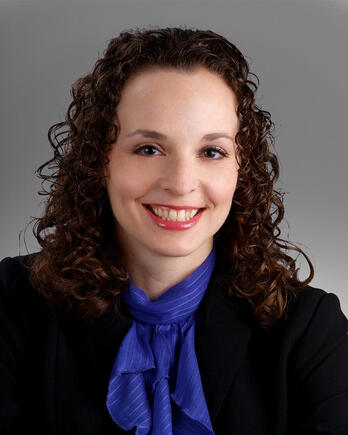
Christina Tello-Skjerseth, MD - Sanford Health News

Mammography vs. thermography for detecting breast cancer

Dr. Christina Tello-Skjerseth:

I think some people just feel better with getting some kind of exam that is pain-free and doesn’t have radiation. And that’s fine for some people, but you need to know that it’s not actually detecting cancer. And just because you get a negative thermogram does not mean you don’t have cancer. And you really should be using modality like mammography, which has all the data behind it and that’s federally regulated so that things are done consistently and accurately.

Courtney Collen (host):

This is “One in Eight,” a podcast series by Sanford Health. I’m your host, Courtney Collen, with Sanford Health News. One in eight women will be diagnosed with breast cancer during her lifetime, so we want these conversations to shed light on awareness, featuring expertise from our Sanford Health providers that could save your life or the life of someone you love. We’re so glad you’re here.

This conversation breaks down the difference between mammograms and thermograms. To help us do that, I want to welcome Dr. Christina Tello-Skjerseth. She is the chief of radiology at Sanford Health in Bismarck, North Dakota, and chief of staff at the medical center, and specializes in diagnostic imaging as a radiologist. Dr. Tello, welcome.

Dr. Christina Tello-Skjerseth (guest):

Thank you so much for having me again. I’m looking forward to this talk.

Courtney Collen:

Me too. So happy to have you here. I’m not familiar with thermography in this space, especially when it comes to screening for breast cancer. Can we start by having you break down the differences between mammography and thermography?

Dr. Christina Tello-Skjerseth:

Sure. So mammography is essentially obtaining a specialized X-ray of the breast where you can see the different kinds of tissues in the breast. And the purpose of that is to find breast cancers when they’re smaller and, you know, earlier and better to treat.

Thermography is a different type of exam. It’s actually like a heat sensing camera that can take the temperature of the skin surface and then make like a different pictorial representation of that. So it doesn’t actually show anything inside the breast. It doesn’t really show you any detailed anatomy, and it’s FDA approved because of its safety profile. It’s a safe technology, but it’s not approved because of its efficacy.

So we actually don’t use thermography to detect breast cancer. It’s really just sensing temperature on your skin. And, you know, the theory behind that is that breast cancers are hypermetabolic, meaning they essentially take up more blood flow because the cancer is making more vessels, and it essentially eats more, if you want to think of it that way. So the thought process is that more vessels, more metabolism, makes that area hotter. It gives off more heat, and then you can see that on your skin surface.

Now, the research behind thermography, most of the data out there is from the ‘70s and ‘80s. There’s really no recent information about it showing that it can actually detect breast cancer. And the FDA actually will put out warnings to facilities that that advertise thermography as a breast cancer detection tool. That’s really not what it’s used for. It’s approved to be used in addition to another type of screening or a diagnostic test, not a stand-alone tool.

Mammography is extremely regulated by the government, by the FDA and MQSA, which is Mammography Quality and Standards Act, since 1992. So there are a lot of guidelines, rules, and certifications we have to stick with and follow every three years to make sure that our equipment is appropriate. Our technologists are up to date, and the radiologists, and how we interpret exams, even the language we use in the reports, it’s all standardized and very regulated. So everyone across the U.S. should be doing it the same if they’re certified in mammography. Thermography really has nothing like that.

Courtney Collen:

What kind of misinformation are you hearing or reading about specifically when it comes to thermography as some might compare it to mammography? Can you help clear the air there?

Dr. Christina Tello-Skjerseth:

Let me start with the main benefit of mammography. It’s the only tool we have, the only screening tool we have that has shown – from decades and decades and decades of research – to decrease mortality from breast cancer, meaning your chance of dying from breast cancer. And studies have shown that there’s a 40% reduction in breast cancer mortality using screening mammography.

Some of the harms of mammography, and I say “harms” in quotes, the main one is radiation. So yes, we’re taking X-rays of the breast and that makes radiation. So your body is getting radiation from the machine. And most of our data regarding the harms of radiation in general come from atomic bomb survivors in the ‘40s and other different atomic disasters we’ve had. And it’s all extrapolated data showing what the potential risks are for having certain doses of radiation.

Now, mammography has a very, very low dose of radiation. It’s about equivalent to maybe getting three to five chest X-rays. And to us living here on Earth, we get cosmic radiation every day that comes down from the sun, space, everything outside the Earth. And so there’s a certain dosage that we get every year. And getting a mammogram is about equivalent to just living on Earth for two months. It’s about that same dose of radiation. So it’s a very low dose.

Our equipment is very technologically advanced. It’s very modernized. So we’re able to calibrate very well and get the dose as low as reasonably possible. It’s very safe, and there’s been no data out there showing that mammography causes cancer. And that’s really the main I’ll say advertisement that people use for thermography is that there’s no radiation. There’s not an increased chance of getting cancer from that tool.

Thermography is also reported as painless because there’s not any compression of the breast. That’s another one of the, I’ll say, harms or downsides of getting mammography is that you are in a compression paddle. So some people are really sensitive to that and it can hurt for the most part, you know, having them myself, I would just say it’s just uncomfortable, but it’s just for a couple of seconds. There’s no long-term damage for that.

So I guess to kind of summarize that the main issues with mammography are the radiation, the pain.

Another one is the callback rate, meaning if you have a screening mammogram and then we find something and bring you back for more imaging, people get very anxious and concerned about that. But what people need to realize is that there’s really only a 10% callback rate. So for every thousand mammograms that we read, we’re only really calling back 10 people, I’m sorry, a hundred people to get further imaging. And the vast majority of those people will just get sent back to screening or have like a short term follow-up. The biopsy rate is quite small. The actual rate of cancer is quite small. It’s about five to eight people per a thousand mammograms will actually get diagnosed with cancer. So it does cause a lot of anxiety.

Thermography really doesn’t have any of that related to it, so to speak. But one thing I want to highlight is if you do get a thermogram and they find something “abnormal,” the next thing to do is to get a mammogram. So you’re really not preventing getting further imaging. And they’ll actually send you to your doctor and they’ll do a full workup of the breast. So it’s not like you’re completely cutting out mammography or radiation as a whole. But I think the bottom line is that the radiation profile of mammography is very safe and it has not been shown to cause cancer.

Courtney Collen:

And the mammogram is still the recommended tool in prevention and detecting breast cancer early. Correct?

Dr. Christina Tello-Skjerseth:

Absolutely. Yep.

Courtney Collen:

What question should I be asking my provider regarding a mammogram or a thermogram?

Dr. Christina Tello-Skjerseth:

Well, I think now in 2024 we’re really getting more towards a sense of individualized medicine, and having those conversations with your provider as far as your risk profile. There’s a lot of genetics that go into your risk for breast cancer, but there’s a lot of environmental things as well: the age at which you had a child, the age at which you started your menstruation, drinking, smoking, there’s all kinds of different environmental things out there that can increase your risk, if you had biopsies before, if you have certain medical conditions. So it’s important to have those conversations with your doctor early.

We actually recommend having some kind of risk assessment by the age of 25 just to see if you would fall into those average risk guidelines for mammography versus high-risk guidelines. And those do change. If you’re average risk, the recommendation from all of the major societies that we follow in this country are to start annual screening, mammograms at age 40, so you get those every year. If you’re higher risk, we may start you as early as 30. If you’ve had a relative – a first year relative, like your mother or sister had it in their 30s – maybe you’d start 10 years earlier. So even in your 20s. So we are actually screening some women in their 20s.

Additionally, you may add on a breast MRI if you’re high risk. So there’s really a lot of options we have. So again, it’s really important to have that risk conversation with your primary care provider to decide what schedule you should be on.

Courtney Collen:

What role, if any, does thermography play in breast cancer screening?

Dr. Christina Tello-Skjerseth:

You know, to be honest, it really doesn’t play a role in screening. I think some people just feel better with getting some kind of exam that is pain-free and doesn’t have radiation. And that’s fine for some people, but you need to know that it’s not actually detecting cancer. And just because you get a negative thermogram does not mean you don’t have cancer. And you really should be using modality like mammography, which has all the data behind it and that’s federally regulated so that things are done consistently and accurately.

I will also say that the FDA does a really good job at watching some of these facilities that offer thermography, and mostly they’re going to be like medical spas or naturopathic, homeopathic type places, chiropractic care, that offer thermography. The FDA watches these facilities pretty closely. And if they advertise thermography as a screening tool and advertising it as having the ability to detect breast cancer, the FDA will send those facilities a letter, essentially telling them to cease and desist and to not give out that misinformation to the community.

We have one here locally that advertises it, but they advertise it appropriately and saying that this tool does not detect breast cancer. It’s to be used as an adjunct tool. So they’re at least advertising it correctly. But again, thermography really doesn’t have any data behind it showing that it can detect breast cancer and that it’s a good stand-alone tool and it’s not approved to be a breast cancer screening modality on its own.

Courtney Collen:

Sure. And like you said, if they were to detect anything, then a mammogram in most cases is the next step.

Dr. Christina Tello-Skjerseth:

Exactly. And when you really think about it, again, it’s a camera that’s detecting the temperature of your skin. So anything that’s increasing your temperature in that area could cause a positive thermogram. I could touch my breast and just put a little pressure on it. That’ll increase the heat there. Being outside will increase the heat. I mean, there’s lots of things, any type of inflammation will increase that heat. So it’s not specific for cancer.

Courtney Collen:

  1. And to recap, schedule your first mammogram starting at age 40 every year. And then if you’re high risk, sometimes as early as 30, and some women are even screened in their 20s in some cases.

Dr. Christina Tello-Skjerseth:

Yep. And then adding on some kind of supplemental screening if you’re high risk such as a breast MRI. That’s really the number one tool that we use in addition to mammography.

Courtney Collen:

Such valuable information. Thank you so much, Dr. Tello. What else do you want us to take away from this conversation?

Dr. Christina Tello-Skjerseth:

I guess I would just say if you do have any questions, please talk to your provider. I’m hoping you know that a lot of people now have good information about thermography so that they can have those conversations with their patients. And if the providers ever have questions, they can always call the radiology department. There’ll be a breast imager there that can answer any of their questions before they talk to those patients.

But I think just as a whole, it’s good to have good information, ask questions out there, whether you’re a medical provider or a patient, just to kind of know what the options are and what’s appropriate. And again, please know that mammograms are completely safe and very federally regulated so that things are being done safely and effectively. And again, it’s the only modality we have that can decrease your chances of dying from breast cancer, and that’s from decades and decades of research.

Courtney Collen:

Dr. Tello, thank you so much for your time and for all that you do.

Dr. Christina Tello-Skjerseth:

Thanks for having me. I appreciate it.

Courtney Collen:

This was “One in Eight,” a podcast series by Sanford Health. Find more of these podcast conversations featuring our Sanford Health medical experts on Apple, Spotify, or news.sanfordhealth.org. For Sanford Health News, I’m Courtney Collen.

Get more episodes in this series

Preparing for your first mammogram

Courtney Collen (Host): Hi, welcome to the “Health and Wellness” podcast by Sanford Health. I’m your host Courtney Collen with Sanford Health News. We are continuing an important conversation all about breast cancer as 1 in 8 women will be diagnosed with breast cancer in her lifetime.

I’m so happy to have Dr. Christina Tello-Skjerseth who is a radiologist at Sanford Health in Bismarck, North Dakota. And we are talking all about that breast cancer screening, the mammogram Dr. Tello-Skjerseth, thanks so much for being here.

Dr. Christina Tello-Skjerseth: Thank you for having me. I’m happy to be here.

Courtney Collen (Host): So let’s start with the most basic. What is a mammogram?

Dr. Christina Tello-Skjerseth: That’s a great question. So a mammogram is a special X-ray of your breast and we do it bilaterally, which means both breasts. Every year, they get that special X-ray. There’s a special machine that takes the images. It’s not just your regular X-ray machine like when you get a chest X-ray. It’s a special unit that’s just for evaluating the breast tissue and taking breast images.

And there is a difference between a screening mammogram and a diagnostic mammogram. A screening mammogram: you come in with no symptoms, whatsoever. You’re not having any breast lumps or breast pain. You’re just there for your normal screening exam. A diagnostic mammogram, however, is different. You come in for that when you actually have a breast symptom. Now it does use the same machine to take the images, but the difference is for a screening mammogram, we’re just taking two images of each breast. For a diagnostic mammogram, you take images, you take usually three or more images of each breast and they’re shown directly to a radiologist and then they guide whether or not you need additional imaging with the mammogram or if you’re going to go on to ultrasound right away. Whereas a screening mammogram, essentially, you get those done, you leave and those images get put into a queue or, you know, essentially a pile of other mammograms and then we radiologists read those in packs.

Courtney Collen (Host): So how do we know when it’s time to come in for that very first mammogram?

Dr. Christina Tello-Skjerseth: Well, there are a lot of guidelines out there. The ones that we follow here at Sanford are the American College of Radiology, the Society for Breast Imaging, the American Congress of Obstetricians and Gynecologists, as well as the NCCN guidelines, which is the National Cancer Comprehensive Network. And they all recommend beginning annual screening mammograms at age 40. And the reason why we support those guidelines is because we have done the extensive research and reading into all of the different literature out there that’s been performed, all of the studies. And we know that when you start screening at age 40 and do it every year, that has the greatest mortality reduction. What that means is the risk of dying from cancer decreases significantly if you start at age 40 and do it every year. So those are our recommendations.

Courtney Collen (Host): OK. That’s great to know. And would there be any reason someone needs to go sooner than age 40?

Dr. Christina Tello-Skjerseth: Absolutely. That’s another great question. These recommendations are for women who have average risk of breast cancer. An average risk is 1 in 8 women in their lifetime essentially will get breast cancer. Now, if you’re at a higher risk, if you have significant family history, like a number of a female relatives or male relatives that have had breast cancer before, maybe specifically, your mother, your sister, close relatives, and even sometimes, you know, those in your extended family, that could possibly indicate that you’re high risk.

There’s also a number of gene mutations out there. Almost everyone has heard about BRCA one and BRCA two or BRCA gene mutations, but there’s about 30+ other gene mutations out there that can be associated with a higher risk of breast cancer, as well as other types of cancer. Another risk factor, if you have dense breasts, meaning that you have more of that glandular breast tissue that can increase your risk. If you’ve had a childhood cancer like lymphoma or Hodgkin’s lymphoma or leukemia, where you’ve had radiation to your chest for treatment, that can increase your risk.

So there are some very specific risk factors out there that insurance companies will follow and that the American Cancer Society and other organizations follow, as well. And if you have more than a 20% increased risk based on those risk factors, you fall into the high risk category and you should probably start screening earlier than 40.

Now, if you have one of those known gene mutations, we recommend you start getting annual screening MRI at age 25 and then you start your annual screening mammography at age 30. So it depends on a lot of different things. As a general rule, we usually say you should start screening 10 years before the youngest close relative of yours had breast cancer. So for example, if your mother had at age 40, you should start mammograms at age 30 and probably also start your annual screening MRI in conjunction with your mammogram.

Courtney Collen (Host): Let’s prepare for that first appointment. Tell us some do’s and don’ts to keep in mind.

Dr. Christina Tello-Skjerseth: Sure. You know, so again, I want to stress the fact that these are screening mammograms, not diagnostic mammograms. So a screening mammogram means you have no breast symptoms. So when you’re getting ready to schedule your mammogram, make sure that, you know, you’re feeling well, you don’t have any of those symptoms like a breast lump, nipple discharge, breast pain, things like that. If you do, then you want to make sure you see your doctor first and get scheduled for a diagnostic mammogram.

Sometimes, you know, based on your age, if you still have your menstrual cycle, there can be certain times of the month where your breasts might be a little more tender or even more glandular tissue so that can change what your breast looks like on the mammogram. Now, there isn’t a set guideline as to when you know you to get your mammogram during your menstrual cycle. It’s usually whenever you want. And then us radiologists, you know, know when you have it and know what to look for on the mammogram, but, you know, personally, if you’re feeling a little more tender or having pain, you might want to hold off until that goes away, based on your cycle.

Another thing to know is if you have had a recent immunization or a shot, like a flu vaccine or a COVID vaccine, that can cause a reaction in your lymph nodes or your glands up in your armpit area, which we call the axilla and we can see those lymph nodes on the mammogram, and they can be enlarged because your body’s reacting to the shot you got in your arm. So you might want to hold off just a little bit if you’ve had a recent shot.

The other thing is, you know, wearing deodorant, we can see the calcifications in the deodorant on the image. If you do wear deodorant the day of your mammogram, we’ll probably ask you to wipe it off with a wipe. So, other than those, you know, do’s, and don’ts as far as what to expect on your first mammogram. Here in Bismarck, our mammogram center is here in the hospital, we have other clinics in the area that also have mammography, but majority will be down here at the hospital.

Courtney Collen (Host): OK. So now it’s time for that first appointment. Walk us through the experience of that first mammogram and what that appointment looks like at Sanford Health.

Dr. Christina Tello-Skjerseth: So you’ll come in and go through your routine check-in procedure. Then you’ll change into a gown that opens in the front, and then you’ll wait in the waiting room. We’ll call you back. That is usually one of our radiology technologists who is specially trained in mammography. They will ask you some questions, you know, how you’re feeling that day, if you have any breast complaints, pain, discharge, lump, anything like that. They might ask you some of your risk factors, if any of your family history has changed recently, maybe a new member got diagnosed with breast cancer or a type of cancer. They’ll ask about how many kids you’ve had, how old you were when you first had your first child, cause all that can affect how much estrogen or hormones in your body and that can affect again, risks of breast cancer and how your tissue looks.

So you’ll be asked some questions as you walk back. Then we take you to our room that has that special mammogram camera to obtain the images. They’ll have you clean off your armpit area, usually, to get all that deodorant off.

And then we’ll take two pictures of each breast during the picture or the image acquiring process. There’s a paddle that comes down and compresses your breast tissue. Now, this is the part where some women will say really hurts and they hate having mammograms because of that pain. It’s very variable and subjective. You know, some people just say it’s a light pressure. Some people cry in pain, it’s very variable. So that’s something to expect.

And the reason why we compress the breast tissue is one, so we can spread all the tissue out as much as possible. So we can look for those tiny cancers if there are any hiding in the breast tissue. We also do that compression so that you don’t move because motion can blur what we’re seeing on the mammogram. And we want to be able to see everything so we can find those tiny early cancers if they’re there.

Now, there are two types of mammograms that are used in the U.S. One is called the 2D mammogram, which is probably what everyone has been used to. There’s also a 3D mammogram, which has been in the news, you know, for years. We call that tomosynthesis. What that means is, instead of just taking a flat 2D image of the breast, we’re taking multiple images of the breast at different angles. Then those images get stacked by the computer and they give us an image we can actually scroll through. So we’re looking at each millimeter of tissue, not just one flat image of the breast. So, that allows us to see through some of that dense tissue that could possibly have hidden the cancer.

So with 3D mammography, which we do a 100% of the time here at Sanford across the enterprise, when we do that, we find those early tiny, more advanced cancers because they don’t hide as much in that dense tissue. So most patients will be getting that 3D mammogram. Insurance does cover it. There are a few insurances that maybe don’t cover it. So if that’s the case, they’ll probably get that traditional 2D mammogram. Now you won’t know a difference between getting one or the other as far as how long you’re in compression or any other differences. Really, the camera does moves above your breast a little bit when you’re getting a 3D, but it doesn’t increase the amount of pain, or how long you’re in compression.

And then after that, we take you out of the machine, make sure you’re okay, and then you go on your way. If it’s a screening mammogram, those images get put into a pile with a bunch of other patients and then us radiologists will read them in packs during the day. And then you’ll get a message when the mammogram final report is ready for you.

Courtney Collen (Host): What are other common questions or things we should know as we prepare for that first appointment?

Dr. Christina Tello-Skjerseth: Yes. So I will tell you if you’re scheduled for your first mammogram and you’ve never had a mammogram before, what that means is we just have those first images. We have nothing to compare it to until you get your next mammogram. So when we don’t have any comparisons, what that means for us as radiologists is that we don’t know what your breast tissue normally looks like. So there is a higher rate of callback, meaning we’re going to, we’re going to find some things that may be abnormal. We don’t know. And that you’ll get called back to take additional images, which is the diagnostic mammogram, maybe even an ultrasound, maybe even a biopsy. So, a lot of people get concerned when they get called back, especially for their first mammogram. So our technologists tend to tell people now, “Hey, if this is your first mammogram, don’t get too excited if you do get called back for something, because we have no other priors.” You know, it was someone who is 65 and who’s been getting mammograms for, you know, 15, 20-some years, we have a lot of priors to go on. But someone who’s 40, we don’t have anything to go on. So there is a higher rate of call back.

The other thing I will tell women in general is, you know, that the recall rate or the callback rate nationwide is about 10%. So 1 in 10 women getting a screening mammogram will get called back for additional imaging, meaning that we’re seeing something that we’re not sure what it is. It could be a cancer. Mostly it’s usually gonna be something benign, but 10% will get called back for more images. And 10% of those that are called back will go for a biopsy. And about 20% of those patients will end up being cancer. So 80% of biopsies are normal. That does change a little bit based on your age. You know, if you’re between 40 and 50 or 50 and 60, et cetera, it does increase the older you get. But I always tell women, don’t get too excited if you get called back for something. Cause again, the chance of it being anything cancerous are pretty, pretty tiny.

Courtney Collen (Host): And finally remind us why it is so important to get this done.

Dr. Christina Tello-Skjerseth: Sure. So I’d like to stress the importance of annual screening mammograms beginning at age 40. So 1 in 8 women in their lifetime will get breast cancer. Now the average age or median age in the U.S. is age 63. However, we do see a lot of women in their 40s, even younger than 40 that do get breast cancer. And honestly the vast majority of them don’t have any high risk factors. So, while we know that the older you get, you know, the more likely you’re at risk of having breast cancer, what we’ve found through decades and decades of well-researched literature and studies is that the greatest mortality reduction for breast cancer occurs when you start screening at age 40 and do it every single year. And that mortality reduction means your chance of dying from breast cancer decreases significantly. That’s because we’re finding them earlier when they’re less aggressive and usually more treatable. So that is the goal of screening mammograms to save lives. We want to do it as soon as possible and as efficiently as possible. So, start at age 40 and do it every year.

Courtney Collen (Host): Wonderful information and a great way to wrap up. Dr. Tello-Skjerseth, thank you so much for this wonderful insight into the mammogram and reminding us when to start, why we’re doing it and we appreciate all that you do at Sanford Health up in Bismarck. Thanks, again.

Dr. Christina Tello-Skjerseth: Thanks so much. It’s my pleasure. Happy to be here.

Courtney Collen (Host): This was another episode of our podcast series One in Eight by Sanford Health. I’m Courtney Collen. Thanks for being here. Stay well.

Learn more about this topic

Get more episodes in this series

Most-asked questions & answers on screening mammogram


Courtney Collen (Host): Hello. Welcome to One in Eight, a new podcast series brought to you by Sanford Health. I’m your host, Courtney Collen with Sanford Health News. We are really looking forward to kicking off this series all about breast cancer awareness because – and we can’t stress this enough – one in eight women will be diagnosed with breast cancer during her lifetime. Today, we’re talking with Dr. Christina Tello-Skjerseth, a radiologist at Sanford Health in Bismarck, North Dakota. Our topic is all about that breast cancer screening exam: the mammogram. Some common myths misconceptions, and those most-asked questions. Dr. Tello-Skjerseth, thank you so much for being with us.

Dr. Christina Tello-Skjerseth (Guest): Thank you for the opportunity. I’m very happy to be here.

Host: One in eight… that’s a lot of women, isn’t it?

Dr. Christina Tello-Skjerseth (Guest): It is a lot of women. You know, breast cancer is the most commonly-diagnosed cancer in women. And like you said, it affects one in eight women in their lifetime. And more specifically, one in six of those cancers will actually happen in women in their 40s. So I’d really like to stress the importance of mammography for women in their 40s.

Host: To kick things off… Tell us about yourself and your role in Bismarck.

Dr. Christina Tello-Skjerseth (Guest): Sure. Well, um, as you said, I’m a radiologist here at Sanford Bismarck. I was born and raised in Bismarck, North Dakota. So I know the community well, I know the health system well and I know our region very well. I did my training at the University of North Dakota, the medical school there. And then I did my radiology residency at Mayo Clinic in Rochester, Minnesota, which was just a wonderful place to train. And I was very happy to be able to come back to my hometown and provide quality care for the people here.

Here at Sanford, I’m actually the chair of the radiology department. I’m also the lead interpreting physician for our breast imaging department.

Host: What do you most enjoy about being a part of the Sanford Health community?

Dr. Christina Tello-Skjerseth (Guest): Well, one thing I, you know, again, like I mentioned before, being able to have the opportunity to come home to my hometown and treat the people here in this community. I absolutely love working in Bismarck. This is a great place to live a great place to work wonderful people, and I’m very happy to be able to provide that quality care for them… and for Sanford, for giving me that opportunity. As far as Sanford itself, it’s such a wonderful place to work. We have multiple specialists that you wouldn’t expect in this area of the country. I mean, we’re, we’re seen as pretty remote, but we have wonderful specialists that all of our sites and working together as one enterprise, we’re able to have a multidisciplinary approach to treat cancer patients, which is pretty unique in this area of the country.

Host: That’s why we’re so thankful to have you and your team and to be able to have this conversation because year after year, it gets more prevalent and it’s so important to talk about breast cancer and spreading that awareness. So let’s talk about the screening. What is a mammogram?

Dr. Tello-Sjkerseth: I think the important thing to stress here is that we’re doing a screening exam, just like you said. So a screening exam means the patient does not have any symptoms. They’re not having breast pain or a breast lump or any other problem they’re completely asymptomatic. And they’re coming in for an exam that helps us find those early small cancers. So, a mammogram is a specific type of breast cancer screening that we do. And it’s essentially an x-ray of the breast of very specific high-resolution x-ray of the breast that helps us look at the tissue and find little things that can make us suspect a cancer is growing there. So very important as the first step.

Host: What is the recommend at age to get that first mammogram screening?

Dr. Tello-Sjkerseth: There are lots of differing guidelines out there that have come out from various national organizations. Today, I would like to stress the importance of starting annual mammography beginning at age 40. So when you’re 40 years old, you start getting a mammogram and you do it every year as long as you’re healthy. And you would do some kind of treatment if we did find breast cancer, The reason that’s so important is because there has been decades and decades of research showing that annual mammography starting at age 40 has the greatest mortality reduction, meaning it reduces the number of deaths that you can attribute to breast cancer. That’s why it’s so important. Now, some of these other guidelines have come out such as the American Cancer Society or the United States Preventative Services Task Force saying that we should delay that start either to age 45 or 50, and maybe only go every two years.

But I really want to stress the importance today that beginning at age 40 and starting every year is the way to go because, like I said, it has the greatest reduction in breast cancer deaths. And these other societies that have different guidelines still acknowledge that. Their guidelines do say ‘yes, we do agree that the most lives will be saved if you start at age 40 and have it every year’. But some of these other guidelines are basing their recommendations on old data that came out in, in the 80s and 90s when we don’t have, you know, the most recent type of a mammography screening. So our technology is much better. They also are looking more so at the harms than the benefits. So the benefit of annual mammography is like I said, breast cancer reduction, right? We can catch it early. We can treat it early. It’s less aggressive. We can use less aggressive therapies. Now, the harms of mammography that some of these guidelines are stressing include patient anxiety or patient morbidity, meaning they have to have more views or an ultrasound or a biopsy. They also say that radiation can be a harm. The radiation dose is extremely low – it’s essentially negligible. The other thing that they stress as a harm is over-diagnosis, which means that the breast cancer we find would not have resulted in the patient’s death. So, they may die from something else. But the problem with that is we don’t know what cancers will eventually cause death in a patient. There’s no way for us to know that. And just because the patient has a breast cancer, if we find at age 40, it’s going to be earlier and we can catch it and treat it effectively. It’s still going to be there. If they’re age 50 or 45, we just catch it later. So it’s not really over-diagnosis, we’re still finding it, but we’ll find it when they’re 50, instead of 40, the problem with that is it could be more aggressive and then it actually could lead to death in the patient.

So that’s kind of the controversy that we’re facing right now with mammographic screening. I also want to stress that some of these other organizations do not have any specific breast cancer specialists on their panels making these decisions. The organizations that recommend beginning at age 40 and doing it every year are the organizations that are specialists in breast cancer screening, like the American College of Radiology or the American Society of Breast Cancer Surgeons, or the American college of Obstetrics and Gynecology or some of these National Cancer Societies that actually have those specialists on the panels, making these decisions. So that’s why I think it’s better for us to follow those guidelines.

Host: So age 40 every year, would you suggest the same time every year? Would you suggest a certain time of year to get this done?

Dr. Tello-Sjkerseth: Well, the reason why we do it annually is because insurance will cover it if you get one a year and they mean that pretty specific. So if you’re getting it January 1st, you need to wait until at least January 1st, the next year… you can’t get a December 31st or they’re not going to pay for it. Now, now this is just screening mammography. If you have a breast problem, that’s not considered screening, then it turns into a diagnostic mammogram. And that kind of goes down a different route. But we’re just talking about screening. It really doesn’t matter what time of year you get it done. But as long as you get it done, at least once a year and it’s 365 days later, then insurance has no problem covering that. I also want to stress that insurance will cover it starting at age 40 every year, even though there’s different guidelines out there.

Host: I’ve heard a lot of women that make it an annual event around their birthday, Mother’s Day or some significant date. It’s special to them because they know how important it is to get this done.

Dr. Tello-Sjkerseth: Absolutely. I actually do it on my birthday every year. And so does my mother. Well, plus then you kind of remember every year, Oh, it’s my birthday time for my mammogram or, you know, some type of special event that helps you remember because sometimes your, your provider may not remember that you’re due. So it’s important for you to be on top of that.

Host: What’s the difference between a mammogram and, say, a breast self exam. And what are some of the advantages that a mammogram has over any other type of breast cancer screening?

Dr. Tello-Sjkerseth: A mammogram, like I said, is a special type of x-ray of the breast. So we’re seeing the tissue inside the breast. A clinical breast exam either by the patient themselves or by a physician or another provider is when you’re actually examining the breast on the outside and feeling what may be going on in the inside. So you’re looking at the skin, the nipple, is there any, you know, change in coloration? Is there a rash? Is there any puckering of the skin? Is there any thickening? And then of course you feel for lumps or if there’s areas of pain or anything, you know, coming out of the nipple that normally shouldn’t. So, things we may not necessarily see on the mammogram or the x-ray the breast. Now, that’s also very important. It’s very important for women to know what their breasts look and feel like normally. So they’ll know if something becomes abnormal, then they can go to their provider and say, ‘you know what? My breast is is I’m a little different this month. I feel a lump or there I’m getting new pain here, or one is looking a little different than the other’. That brings the attention to something that could be going on underneath. Now. Like I said, that’s the important part is to know about what your breasts look and feel like, but equally important is getting that insight image or that x-ray of the breast. So we can actually see what the tissue is doing. Is there a mass growing in there? Are there calcifications growing in those breast ducts that could become cancer? Those are things we look for on the x-ray part of it

Host: Let’s walk through the mammogram screening and what a woman can expect when she arrives for her appointment.

Dr. Tello-Sjkerseth: Sure. You’ll go through all the normal steps. Just like any other doctor visit, you’ll go through registration. And then you come down to the radiology department, depending on where you’re getting it done. You’ll change into a gown. And then one of our special x-ray technicians called the mammography technician. This is a specialization within a radiology. These techs are specifically trained to do mammography. They’re also certified in it most of the time. They’ll walk you back to our room that has our special mammography extra unit. And then you’ll take one arm out of your gown and place one breast up on our special unit here. And then there is a clear, almost plastic plate that comes down and compresses the breast in two different views. One is an up and down view. So, it’s four images that you take it, it can be painful, you know, it’s very dependent on, on the woman. Sometimes it’s just a little discomfort. Sometimes it’s, it’s pretty exquisitely painful. Sometimes you can have a little nipple discharge with it. And like I said, everyone’s a little bit different, but most patients will just say it’s a little uncomfortable. They may have to push our squeeze a little bit harder depending on if there’s motion. The reason we do that squishing or the compression is so the breast stays still. So we don’t have any motion artifact on the images. So us as radiologists can see everything in the breast really, really  well. So once you do both sides, you put the gown back on and then you’re done and you can go home. The whole thing takes maybe 15 minutes. I mean, it’s very scary. It’s a very high-anxiety type of exam. Most women are, you know, concerned about having breast cancer at time. They come in for their mammogram and they just want it to be over before they even get here. And some are too scared to even come in and get it because they’re worried about what we’re going to find, but, rest assured I mean, overall, there’s a very low chance of having breast cancer as a whole. The vast majority of mammograms are going to be benign. Even if you do get called back for something, let’s say we see a little abnormality on your screening mammogram, and you get a call back that usually sends the women into a pretty high anxiety state. They already assume they have cancer. That’s not the case. The vast majority though is probably 90% of those cases that we call back turn out to be benign. It’s just that we want a couple more extra images to make sure we’re not missing something.

Host: As a physician, what are some of those common questions that you get about the mammogram screening or some of the conversations that you have with patients or friends, women in your life when it comes to getting that mammogram?

Dr. Tello-Sjkerseth: Absolutely. Yeah, that’s the number one question: is it going to hurt? And normally I say, well, yes, it’s uncomfortable, but I guarantee you getting a breast cancer and having to go through that treatment is probably going to be way more painful than the mammogram. I should also say it can be more painful depending on if you’re currently having your menstrual cycle. So, some women may actually time it with their cycle so it’s not during that time of the month when their breast is more sensitive. Pain is a big question. Another question I get all the time is about the radiation and about how ‘well I’ve heard x-rays can cause cancer. And I’ve heard the radiation dose is really high’. It’s not, it’s very, very low. We have new technologies coming out all the time that decrease the radiation dose. The radiation dose from having a standard screening mammographic exam is about equal to the amount of radiation you’re going to get just from living on planet earth for about three months. It’s very similar to a chest x-ray dose. So it’s really very, very low dose. It’s essentially negligible. I also stress that all of this, you know, so-called radiation data we have and how it produces cancers. That’s all based from data from the atomic bomb survivors. So it’s all extrapolated data from all those early studies.

Another question we get a lot is, ‘well, I have dense breasts. I heard mammograms. Aren’t really good with dense breasts’ and you know, the answer to that is kind of ‘yes’ and ‘no’. Mammograms are always the gold standard. Like I said, they’re the only screening tests we have that has shown that reduction breast cancer deaths. Now in women with dense breasts, the sensitivity of mammograms to pick up the cancer, it does drop pretty significantly sometimes by 50%. So that’s why we still do the mammograms, but we offer supplemental screening usually for those women such as 3D mammography. I’m sure most women have heard of that by now. And that’s actually becoming standard of care. So here at Sanford, we do probably 90% or more of our patients get that 3D mammogram, which gives us an even better look at the tissue and makes dense breasts a little easier for us to see through. So even though you have dense breasts, you should still get your mammogram. We can still see some things on mammogram, especially those little tiny calcifications. That’s really the only modality we have that sees those calcifications really, really well. So we want to stress the importance of getting that, even though you do have dense breasts, you may have to get another exam with it, but you’re still getting that gold standard.

Another question I get is, well, ‘if I get a call back, does that mean I have cancer?’ And when I say call back, that means we’re, we’re calling you and saying, we want you to come back and have some extra views… That does not mean you have cancer. It causes a lot of high anxiety and I totally understand that, but like I said earlier, it’s a very, very small percentage of those patients that could get a call back that actually have the cancer. So it’s okay. If you get the call back, most women have had at least one in their lifetime. Some of them get them every year. It’s just something you have to kind of work through and, you know, stay calm and just realize once it gets to the point where we’re really worried, we’re going to let you know, and we’ll talk you through it.

Host: You had mentioned the 3D mammography screening. Are there any other types of mammography screenings? And does it depend on the woman, the type of screening that she will undergo?

Dr. Tello-Sjkerseth: Yes, that’s a great question. So, as far as mammography, we have our regular, you know, we say 2-D or traditional screening mammography, which is being replaced with 3D mammography or Tomosynthesis. That’s the other word for it. So those are the types of essentially x-rays of the breast that we use to screen for mammograms. Now, there are other types of breast cancer screening, such as breast MRI. That’s not a mammogram that is an exam that uses essentially magnets to help us look at the breast tissue. It gives us a much better look at what’s going on. We can also see your lymph nodes. We can see your chest wall. We can see part of your lungs and your liver. It’s a very, very sensitive tool, meaning that it’s going to find that breast cancer, if you have it. It’s better than mammography. And we reserve that for high-risk women because it’s very, very expensive and insurance is not going to cover it for the general population. A breast MRI can be up to $4,000. Women don’t want to pay that. A mammogram can be anywhere from $200 to $300. And so obviously insurance wants to cover the mammogram. So MRI is reserved for the very high-risk women that need that extra screening. The other type of breast imaging cancer screening tool we have is ultrasound. That’s another supplemental tool that we offer women that have dense breasts. So some women will get a mammogram and that whole breast ultrasound at the same time just to give us a little extra look inside and to see if we’re missing anything that we would have not seen on the mammogram. Those are the main types of screening. There are some other ones out there you may have heard of such as a gamma gram, which is like a BSGI or MBI there’s a contrast-enhanced mammogram, which is kind of like what, what you would get during a cat scan or a CT scan, where we inject a dye into your IV and then things in the breast might light up and we can see things better. So there’s, there’s lots of other modalities out there to screen the breasts, but the big one is your annual screening mammograms.

Host: Great. So what are some other common questions, or maybe even some big misconceptions or myths surrounding the breast cancer screening or the mammogram itself?

Dr. Tello-Sjkerseth: Sure. So another question we get is: “I’m seventy years old, should I still be getting mammograms? How long should I get mammograms? At what age should I stop getting mammograms?” And that’s another controversial topic out there. And the vast majority of these different societies that come out with guidelines are saying it should be up to the patient and the provider together. So you can have that conversation with your doctor and decide at what age you might want to stop. Let’s say you’re 80 years-old. You could be perfectly healthy and maybe you’ll live 20 more years. So you’re probably gonna want to keep getting your, however, if you’re 80 years old and maybe very, very sick and have lots of other illnesses, and you may have a shorter life expectancy, maybe you’ll only be alive for another three or five years, or it may be, if you had got a cancer diagnosis at that age, you wouldn’t want to do any treatment. Anyway, you would just say, it’s, it’s fine. I’ll I’m, I’m at end of life. It’s okay. I don’t want to treat the breast cancer. It’s very specific to the woman. Most of these societies will say you should keep getting a mammogram until you have, um, less than a 10 year life expectancy. So you could be a healthy 80 year-old or an unhealthy 80 year-old and decide if you want to do mammograms or not. We do mammogram screening on 90 year-old’s. I’ve had one that was 100 years-old this year. So you can be very healthy and still be a pretty advanced age.

Host: What about men?

Dr. Tello-Sjkerseth: Men absolutely can and do get breast cancer. But it’s on a very smaller scale than women meaning the risk. I think of a man getting breast cancer is less than 1%. It’s very, very low, obviously much more common in women due to multiple factors, but yes, men can still get breast cancer. The men that do get breast cancer usually have some kind of family history of breast cancer or some other types of cancers that run in the family and they may have a gene mutation. Now we don’t regularly screen men for breast cancer. So they’re not getting mammograms every year for us to find them because the incidence is so, so low. So most of these breast cancer we find in men are the men that come in with a lump or some kind of abnormality on the skin that they’re noticing. And that’s how we find them.

Host: Okay, good to know. Let’s shift now to the COVID-19 pandemic and what impact COVID-19 has had on mammography at Sanford Health.

Dr. Tello-Sjkerseth: Breast cancer screening, specifically a modified did drop pretty significantly during those first few months specifically, you know, March and April, it started to come back a little bit in may. And a lot of that was, you know, patients just didn’t want to leave their homes. And, you know, some healthcare facilities were telling patients, you know, don’t come in unless it’s, you know, like an, excuse me, an emergency or some kind of actual problem. And in the grand scheme of things, it probably is okay to delay your screening mammogram maybe for a couple of months. But on the flip side of that, we also had patients that had a breast problem. They had a lump or they had discharged or pain, something abnormal. And those women waited months to come in to get evaluated. And unfortunately, we saw a lot of cancers in women that probably could have been found a lot earlier, but they waited a lot of these patients had issues in January or February and then just delayed it and didn’t come in until July, August, even this month. And we’re, we’re seeing them, these cancers being more aggressive cause we didn’t catch them earlier. Now, I will say we had some various women that still came in for their screening mammograms during the whole COVID time, especially that early time, because they were high-risk and they recognize the importance of getting their mammogram no matter what. And I know of three patients that were high risk that came in during their regular screening time and we found cancer in them. And if they would have delayed a few more months who knows how bad it could have been at that time, because those, those high risk patients usually have more aggressive forms of cancer.

Host: Emphasize again the importance of this screening and especially in a pandemic year that we’re in why it’s not okay to continue putting off this type of care and really encouraging women to get that screening done.

Dr. Tello-Sjkerseth: Yes. So as we said, breast cancer is the most common cancer diagnosed in women. One in eight women will get breast cancer in their lifetime and of those cancers, one in six will be in women in their 40s. Mammography is the gold standard for breast cancer screening detection. It is the only modality we have that has decades and decades of research supporting its use and its mortality reduction benefits. Meaning if you get screened every year, you go through the mammographic screening process, it decreases your risk of dying from breast cancer. That’s why it’s so important every year to get this done.

Host: As we wrap up, tell us how a woman might schedule her mammogram, or maybe just find more information about mammography at Sanford health.

Dr. Tello-Sjkerseth: We have a very active website at Sanford that describes mammograms and MRIs and breast ultrasound and high-risk screening. And what does high-risk even mean? It’s part of our Edith Sanford Breast Center website. We have something here called self-referral so you, anyone can essentially schedule their own mammogram. You don’t necessarily have to go through your doctor or other provider. You can schedule it yourself online, or you can call the radiology department any place you want and get it done. Now you don’t necessarily have to have your doctor at Sanford to get your mammogram here. We can send your mammogram report to any physician or provider you want. And same vice-versa. If you’re out of town or at a different facility, want to get your mammogram there, you can still do that and then get the results sent to your provider at Sanford. It’s very easy to schedule yourself. If you have a primary care provider, the order will go under that physician or nurse practitioner, whoever you see. If you don’t have someone that you can send your results to you haven’t, you don’t have a regular doctor. That’s okay too. You can still schedule your screening mammogram. And we have protocols in place that will assign a doctor to you who will get those results just in case you need to have more and more tests done, or someone to go over the results with you. And then you can choose whether or not you want to keep that provider, but there is always someone that can answer your questions and that will get your results. So they don’t just go off into the wind and you know, you’re left on your own, not knowing what to do,

Host: Dr. Tello-Skjerseth, really great information, insight and expertise. Thank you so much for joining us for this episode of One in Eight. A pleasure getting to talk to you. Thanks again.

Dr. Tello-Sjkerseth: Thank you so much for having me. I hope this helps.