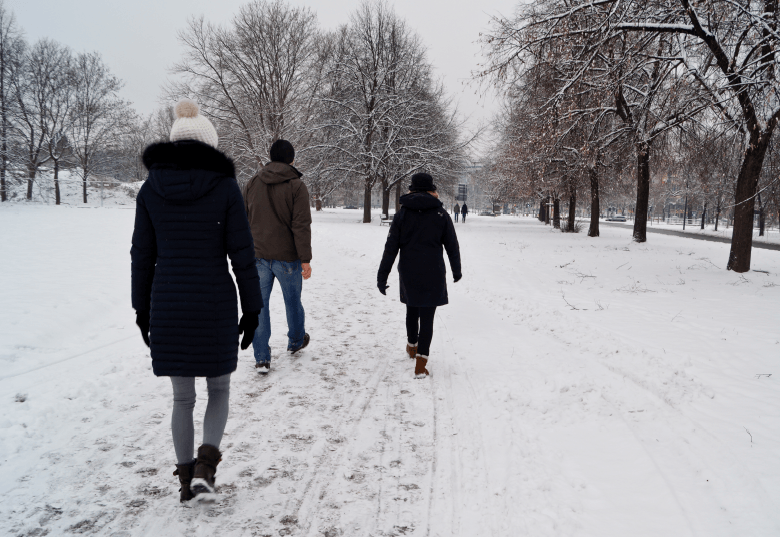
Winter has settled in, and this time of the year can also bring an increase in injuries caused by falls, slips and trips.
Ways to prevent falling on ice
Help lessen your risk of falls and broken bones with these tips from the National Institute on Aging:
- Consider staying inside when the weather is bad, and order deliveries of food or medicine
- Use ice melt, sand or kitty litter to keep stairs and walkways clear of snow and ice
- Ensure handrails are secure
- Wear a shoulder bag, backpack or fanny pack to leave your hands free to hold onto railings
- Wear non-skid, rubber-soled, low-heeled shoes, or lace-up shoes with non-skid soles that fully support your feet
- Be aware of your surroundings, and avoid areas that look icy
- When getting out of your vehicle, use multiple points of contact: grip your car door and either the steering wheel or the grab handle on your door’s frame
- Stay active and do exercises that work on your balance, such as yoga, Pilates and tai chi
Related: Reduce the risk of falling with strength and mobility
Walk like a penguin
If you must walk on ice or slippery snow, experts advise taking your cues from the way penguins shuffle:
- Spread your feet slightly
- Keep your center of gravity over your front leg
- Slow down and take small steps
- Waddle to keep yourself upright
- Keep your hands out of your pockets
If you fall, remember to tuck your chin to prevent landing on your head.
Fall prevention at work
Sometimes, the places we spend the most time can be dangerous. According to the most recent data from the U.S. Bureau of Labor Statistics, nearly half of all nonfatal work injuries resulting in days away from work were related to slips, trips and falls. These injuries can lead to concussions, sprains and strains, as well as fractures of ankles, hips, pelvis, spine and wrists.
To help prevent these injuries, be aware of the hazards that increase the risk of slips and falls. For example, if there is snow or water on the floor, clean it up or report it right away. If there is poor visibility due to a burned-out light, make the appropriate staff aware.
Other common areas where falls, slips and trips occur are sidewalks and parking ramps. Encourage your co-workers to wear proper footwear, and apply sand and salt to the areas as frequently as needed. It’s also helpful to recommend using appropriate passageways.
The benefit of everyone looking out for potential hazards is a safer place to work. An action that may only take a minute to perform may save you months of recovery.
Learn more
- Preparation key to preventing injury while shoveling snow
- Home safety tips help you age in place
- A Matter of Balance: What goes into fall prevention?
…
Posted In Health Information, Healthy Living, Senior Services, Workplace Health