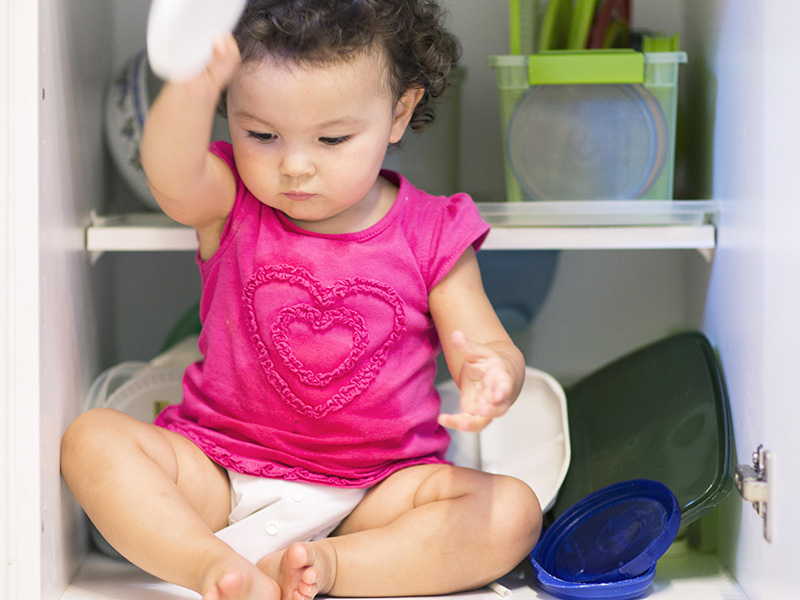
Your baby is likely becoming mobile and starting to get into things as they explore their world. Having a mobile infant means it is time to childproof the house from potential safety hazards and to help your child learn the meaning of the word “no.”
“No” is likely becoming a common word in your household and will possibly even be your child’s first word. Hearing the word “no” and not being able to do what they want can be frustrating to your baby.
Here are some tips to help you say “no” and lessen the frustration it can create between you and your child.
Understanding the meaning of ‘no’
When your child begins to do things that you need to say “no” to, it’s important to be firm and consistent. At this point in your child’s development, they can begin to remember certain things you have told them are off limits. Remember that they are exploring the world around them, including testing the limits you have set as the parent.
- Use nonverbal cues. Your body language says a lot. Even at a very young age, children catch on to nonverbal cues. When you tell your child “no,” use facial expressions that let your child know that what she is doing is something you disapprove of. Your child doesn’t like seeing anything but a smile on your face so expressing your “no” verbally and in facial expressions can be very effective. Also, remember to reinforce your child’s positive behaviors by saying positive words and portraying happy facial expressions.
- Fault the action, not the child. Explain to your child that what they are doing is not OK. Avoid calling your child names such as bad or naughty. Tell your child the right action to do. For example, “No, stop touching the lamp. Play with this ball instead.”
- Be consistent. When you tell your child “no” for something they are doing, follow through with the same request if your child tries to repeat the action. If you let your child get away with something one day but not the next, they will be confused about your expectations.
How to reduce the word ‘no’
- Create a “yes” environment. There are some areas in the house or in other people’s homes that are not child appropriate. The kitchen is usually a good example, or a relative’s house that may have breakable items within your child’s reach. In this case, it is usually easier to move to a “yes” environment such as a different room or outside where your child has more opportunity to explore without being told “no” over and over.
- Teach your child sign language. Teaching your child simple sign language such as “yes,” “no,” “more,” “please,” “eat,” and “milk” can alleviate some frustrations between you and your child before they learn to verbalize these words. It is also a good alternative to always saying “no” out loud.
- Personalize it. Talk to your child specifically by using their name even if you are the only two people in the room. Hearing their name will get their attention. For example, you may say, “Emma, no, no.” This will help your child realize that the comment is directed toward them.
- Explain your reason. Even though your baby is still too little to understand some things, it is helpful to explain why you are telling them “no” to something. For example, if your child is getting too close to the oven, say, “No, hot!” Eventually they will begin to understand what you are talking about when you say these words and will associate them with being near the oven. When your child begins to talk, they will probably repeat what you have taught them by saying “hot” when they see the oven.
- Give another option. When you tell your child not to do something, you may find yourself repeating this request again and again. After you tell your child “no,” tell and show them what they can do instead. For example, if you are asking your child not to pull the dog’s fur, follow that by telling and showing your child that they can gently pet the dog’s fur instead.
Remember that your child is not getting into things to misbehave. They are simply exploring their environment, as everything at this point is new to them. Through their many discoveries in their day, they are learning about the world around them. Make these discoveries ones that you are able to say “yes” to.
For personalized answers to your parenting questions, call Sanford’s Parenting Line at (605) 312-8390 or email parenting@sanfordhealth.org.
Learn more
- Self-control is a struggle for toddlers
- Keep kids safe: The ABCs of childhood injury prevention
- Temper tantrums already? Hang in there, parents
…
Posted In Children's, Family Medicine, Parenting