Cancer survivorship begins at the time of diagnosis and lasts the rest of a person’s life. For Sanford Health, that means addressing all the physical, mental, emotional and social concerns involved in dealing with this disease.
Kimberly Niemann, a nurse practitioner in hematology and oncology at Sanford Cancer Center, spends a lot of time with cancer patients in varying stages of treatment. Together they tackle whatever comes their way.
For Niemann, that means talking with patients about managing symptoms. How are you feeling? How have things gone for you since the last time we talked? If her patients are nearing the end of treatments, she will help them with a surveillance plan moving forward.
In many cases this includes conversations about body image distress brought about by physical changes. Often this disease’s impact goes deeper, however, than being troubled by what you see in the mirror.
“I think a lot of the public might view a patient’s perception of how they feel about themselves as more of a vain thing,” Niemann said. “They believe it’s all based on vanity. But really, that’s not it at all.”
Beyond the physical challenges can be a feeling that their cancer is now, in a sense, driving the bus and making the rules.
“When someone has a cancer diagnosis it’s, ‘Gosh, what have I done? What has my body done?’” Niemann said. “People feel like they’ve failed and they’ve lost the ability to control it. A lot of the time they also feel like they’re misunderstood.”
Connecting with support
The Sanford Health cancer survivorship program aims to improve quality of life by helping patients navigate treatments and whatever may follow. Niemann plays a key role in that effort.
It can be figuring out a “new normal” during treatment or addressing what can be a series of “new normals” after treatments are completed. Physical changes, while not the only issue, can be a part of life after cancer.
“If someone has breast cancer surgery, for example, they might be dealing with the body image change – either with an implant or no implant,” Niemann said. “A lot of patients lose their hair, and it looks different when it comes back. Or it can be weight gain – that’s a big concern for a lot of our patients.”

Survivorship in Niemann’s hands begins with her ears. She listens.
“A lot of my patients just want to feel like they’re being heard,” she said. “They want to feel like someone can empathize with what they’re feeling. We haven’t been in their shoes exactly, but we work with women in their shoes. We have some really great programs here for survivorship mentoring. We can connect patients with other patients who have gone through similar things.”
With input from cancer survivors, Sanford has developed programs that can help. They include:
- Nutritional services
- Spiritual care
- Financial counseling
- Social and psychological support
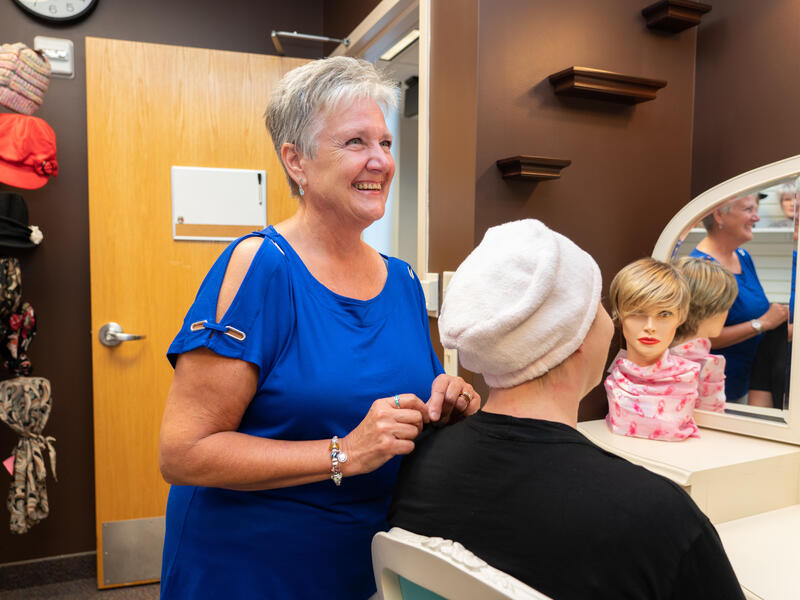
- Wigs, hats and scarves for hair loss
- Beauty and self-care programs
- Survivorship-related news, features and resources
- Palliative care (specialized care for life-limiting diseases)
“We want to meet our patients where they feel like their struggles are,” Niemann said. “We try to be really individualized about it because each person is different. Their life circumstances can vary a lot, so the important thing is to listen to them.”
Patients have access to a survivorship visit with a nurse who will pair their diagnosis with potentially beneficial resources.
“It’s a meeting that lasts about an hour and it’s really a good connection for patients,” Niemann said. “They get phone numbers to call, programs they can participate in — we give them a big folder of important information. We can put it in their hands so they can decide what will work or won’t work.”
Getting past the feeling
A key element to making the most of life after cancer treatment is learning to trust your body again. This can be difficult. Those pre-cancer aches and pains that didn’t amount to anything still show up and still go away but can create more stress this time around.
“Externally you might look the same. It can be difficult for your family or friends to truly get a sense how you are feeling,” Niemann said. “Just getting that diagnosis can forever change a person’s internal sense of themselves, so just bringing awareness to that can be very important.”
Niemann’s sensitivity in offering effective support is based on years of caring for those confronting cancer. She offers inspiration because she sees it in action so often.
“When I think I’m having a bad day, I remind myself I don’t have a clue what a bad day is,” she said. “I’ve learned people are very resilient. They bounce back. What our bodies go through and what they can recover from is truly amazing. My patients show me that every day. I’m honored that I’ve earned their trust and can listen to them tell their stories.”
Email series can help
Those who want to know more about navigating cancer can join Sanford’s survivorship email series, which delivers support right to your inbox.
You will receive a quarterly newsletter that includes information about programs and upcoming events, survivor and staff spotlights, and educational content.
Learn more
- Survivorship: A critical part of the cancer journey
- Breast cancer survivorship 101: What’s next?
- Cancer-related fatigue: The most common survivor symptom
…
Posted In Cancer, Cancer Treatments, Sioux Falls, Symptom Management