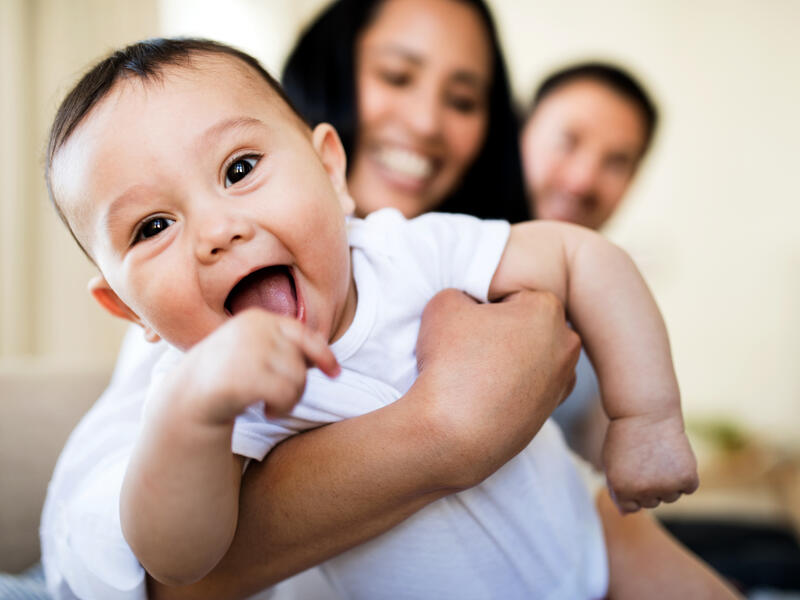
It’s the moment you have been waiting for. Your baby’s first smile! It is such a joy to see your child smile back at you when you talk to them.
Most infants will begin their first social smiles around the end of their second month. By this time, parents and babies have started to find a rhythm to their days and nights. Your baby can stay awake for longer periods of time. Communication is beginning – and it starts with your baby’s smile.
This is also the time when your baby is paying attention to all they see and hear around them. They learn to feel cared for when they are hungry, fussy or tired. They may feel excited and loved when people smile at them, and one day their own smile breaks out in return. This is when “smile talk” begins.
Why does my baby seem to smile past me, not at me?
For some babies, looking intently at their parent is a little overwhelming as they are still adjusting to the world around them. Your baby may not be able to watch your face for a long period of time and may seem to be smiling at something behind you.
This is a normal part of development. They are still learning about your touch, the sound of your voice and your facial expressions. Keep talking to your baby. Practicing the “smile talk” will help your baby learn how to hold their gaze for longer periods.
It is important for parents to know that smiling is part of their baby’s social and emotional development. When you respond consistently to your baby’s cues, you let your baby know that their thoughts, feelings and needs are important.
For example, you may be having an adult conversation while holding your baby, and your baby wiggles or makes noise. When you pause your adult conversation to look down, your baby will break out into a proud, wide smile. Your baby starts to feel good that they know how to control their own little world in other ways besides crying and fussing.
When your baby’s smile gets a positive response from you, your baby begins to feel confident that they can exert a little control over their world. This helps your baby’s self-esteem begin to grow and your relationship to flourish.
For more information about communicating with your baby, attend the parenting class “How I Learn.”
Learn more
- Movement milestones in your baby’s first 6 months
- Is my baby laughing at me?
- 10 ways your baby shows love
…
Posted In Children's, Family Medicine, Parenting