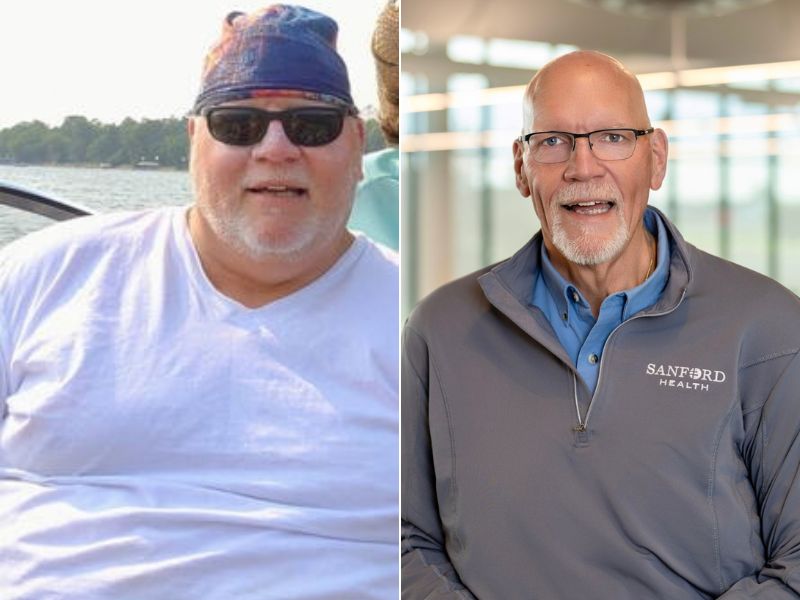
“One day my wife looked at me and said, ‘Are you going to be here when your kids get married? Or am I going to be walking them down the aisle?'”
For Paul Nistler, behavioral health clinical program manager with Sanford Health, that question pushed him to take the first step to better health.
At his highest weight, Nistler weighed 448 pounds. He struggled with high blood pressure, had an increased risk for diabetes and found everyday activities difficult.
Originally from central Minnesota, Nistler enjoyed playing sports, but had always been a bigger kid.
“It just seemed like over time, it got harder and harder to lose weight,” he said. “You get married, have kids and go through your daily routine. I wasn’t really paying attention. Next thing you know, clothes aren’t fitting right.”
His primary care provider encouraged him to lose weight, and Nistler explored his options, including bariatric surgery. But it was his wife’s concern about their future that finally motivated him to act.
“I took that one to heart,” he said.
First step: face his fears
The first hurdle wasn’t surgery. It was asking for help.
“The first fear was actually going in and having the conversation,” Nistler said.
He was referred to Michael Joannides, M.D., a bariatric surgeon who had recently joined Sanford Bemidji Medical Center. Following a patient’s first clinic visit, it usually takes four to six months to get weight loss surgery done because of the preparation required to help ensure success.
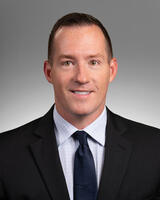
Nistler’s preparation included nutrition counseling, cardiac testing and an upper endoscopy to examine his esophagus and stomach due to his reflux symptoms.
Preparation also meant changing his mindset.
“I had to go from thinking I’m bulletproof, to realizing I’m pretty vulnerable and I’ve got to do this in order to survive,” Nistler said.
Dr. Joannides recommended gastric bypass surgery rather than a sleeve gastrectomy in order to help relieve his reflux symptoms.
Getting with the program
The process required significant commitment before surgery could even be scheduled. Nistler followed the program closely.
“I knew he was going to be successful with how motivated he was because he already had a good game plan going forward. He knew what the expectations were, had already made a lot of dietary changes before surgery and was able to lose about 26 pounds before surgery,” said Dr. Joannides.
As Dr. Joannides’ first bariatric surgery in Bemidji, Nistler’s procedure marked an important milestone for both of them.
“Paul was the perfect patient for me to start off with,” Dr. Joannides said. “He was very motivated to be a success story.”
Nistler also had a familiar face in his corner throughout the process: bariatric coordinator Kayla Persons, RN, CBN. Nistler had known Persons from when she previously worked on his behavioral health team.
Persons helps guide patients through insurance requirements, pre-surgical preparation, support groups and long-term follow-up care.
“My main goal for all of our patients is for them to know we are here for them in any way they need, no matter how far out from surgery they may be,” Persons said. “I want them to feel safe reaching out, no matter how small the concern is.”
For Persons, Nistler’s journey was especially meaningful.
“He went from being my superior to my patient, which was intimidating at first,” she said. “I had to make sure he knew he could trust me and our team while I provided the support he needed.”
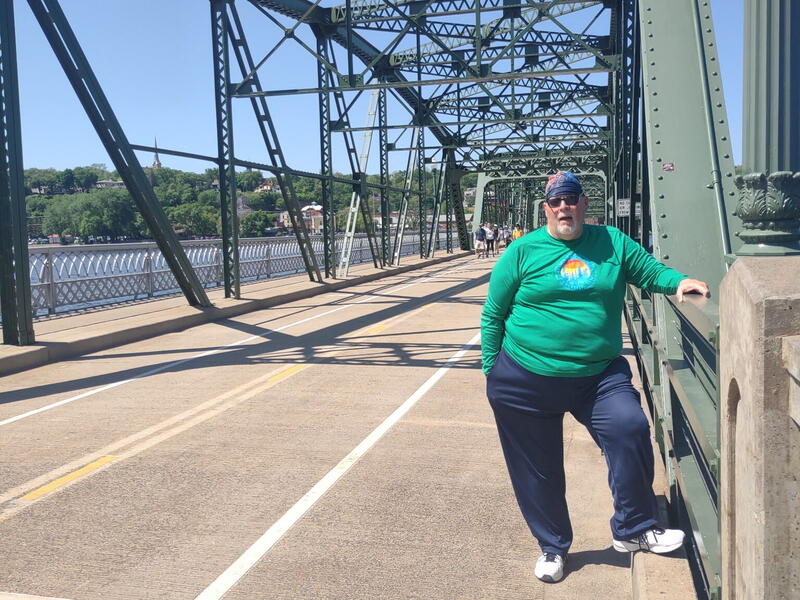
Photo courtesy of Paul Nistler
Weight loss surgery scheduled
Following surgery in April 2023, Nistler was on a liquid diet for two weeks, followed by two weeks of a soft food diet. He now eats a regular diet focused on protein-based foods.
While the surgery itself was a success, Nistler had one challenge several months later. He developed an ulcer after taking ibuprofen and ended up in the emergency department.
“I messaged Kayla, and she actually met me at the ER and sat with me for about an hour and a half while they figured out what was going on,” Nistler said.
For Persons, being there was an easy decision.
“Going to the ER with complications can be overwhelming,” she said. “I was happy to go sit with him as they ran tests to see what was going on.”
Looking back, Nistler credits both Dr. Joannides and Persons for helping him navigate the process.
“I couldn’t have had a better care team,” he said. “The care I’ve had here has been absolutely phenomenal.”
‘He took it to another level’
Nistler’s goal prior to surgery was to lose 220 pounds. He surpassed that. He credits his success to surgery and the healthy habits he developed after.
“He took it to another level. He was always motivated to be active and moving. He did a mixture of walking, swimming and bike riding and that really made him successful, too,” said Dr. Joannides.
Nistler also credits his family for motivating him to seek help.
“They’re the ones that said you need to make some changes here or else you aren’t going to be around,” he said.
Things Nistler used to have difficulties with became routine for him. He said he feels like he’s a better person.
“My wife is very athletic and I struggled. I couldn’t walk more than a block and be out of breath,” Nistler said. “Now, I can walk two miles and not stop. I can walk up stairs. I can sit in a regular chair.”
But some of Nistler’s victories weren’t measured on the scale.
“He had told me he wanted his reflux symptoms fixed, and we wanted to get to a point where he could cut back on blood pressure medications,” said Dr. Joannides. “Him getting up and walking around is changing his life and he’s feeling much better – those are the kinds of things we were focusing on.”
One of the biggest changes Persons noted in Nistler was his happiness.
“There’s a new level of happiness and enjoyment around life our patients reach when they start to meet their goals. His confidence and joy are worth everything,” she said.
Three years after weight loss surgery
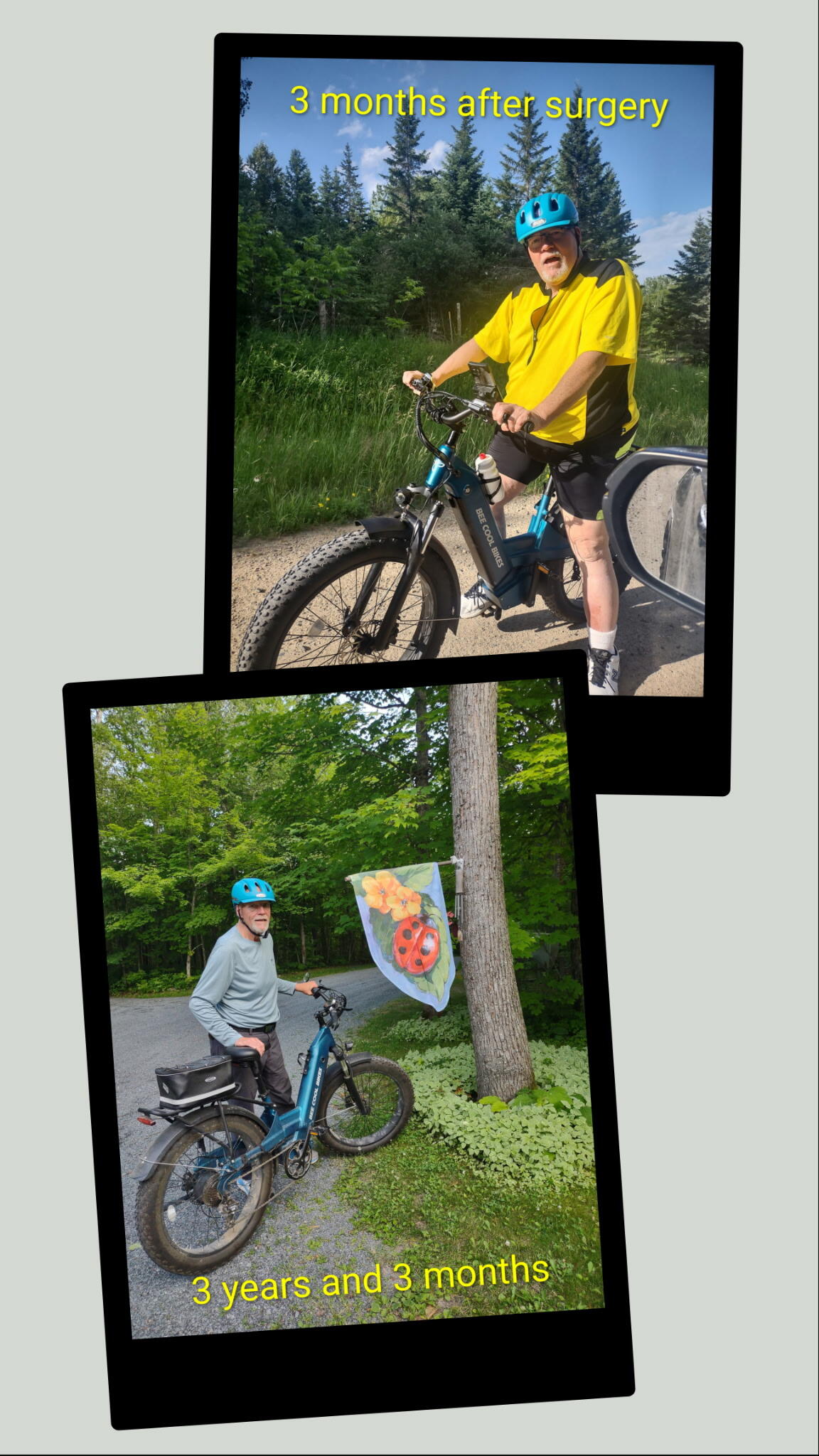
Photos courtesy of Paul Nistler
Today, Nistler weighs 212 pounds.
“I’m at a spot where I’d like to stay,” he said. “I don’t need to lose any more weight, but I want to make sure I maintain where I’m at.”
Looking back, he says he has no regrets.
“I’m proud that I went through it, and I’m grateful I had the opportunity to do it,” Nistler said. “I can plan for future things, where three years ago, God only knows where I’d be today.”
For five years following surgery, patients do regular check-ins with their surgical team to help keep the pace of weight loss in check.
“It’s easier for some people to go back to their old ways after a surgery, but that’s why we always try to have our patients follow up,” said Dr. Joannides.
For Persons, watching her patients’ progress is her favorite part of the job.
“Seeing the joy and excitement on someone’s face when they come in for a follow-up and are excited to share their latest victory with us is incredibly rewarding,” she said. “Our patients are some of the strongest, most determined and courageous people I have had the honor of working with.”
Where to start if you’re considering weight loss surgery
For Dr. Joannides, one factor matters more than any number on a scale: readiness.
“I never do surgery if somebody’s not ready,” said Dr. Joannides. “Because I know if somebody’s not ready for surgery, that motivation isn’t going to be there. Paul had the motivation. He was ready.”
While some people view bariatric surgery as the easy way out, Dr. Joannides says that misconception overlooks facts about obesity.
“We’re learning that obesity is a disease process, and there does become a point where your body is trying to maintain that weight,” he said.
For some patients, weight loss medications may be the right starting point.
“The medications are a great tool,” he said. “I think there’s a good way to use all of our tools. If somebody doesn’t quite qualify for surgery, needs to lose weight before surgery or wants additional support after surgery, weight loss medications can play an important role.”
Whether someone pursues medication, surgery or another approach, Dr. Joannides encourages people not to wait until their weight significantly impacts their health.
“It might be time to talk with your healthcare provider if high blood pressure, diabetes or other health conditions are affecting your quality of life,” he said. “Or if there are activities you used to enjoy that have become difficult because of your weight.”
As for Nistler, he’s grateful he took the first step.
“I never saw myself like this because I was used to the old Paul,” he said. “But the new version of Paul, I like a lot.”
He’s also excited about what comes next.
“My wife and I have a lot of plans,” Nistler said. “Before, we both wondered what the future might look like. Now, I’m excited for the future.”
Learn more
- How weight loss surgery improves overall health
- Weight loss surgery Q&A with an expert
- Weight loss surgery changes Bismarck woman’s life
…
Posted In Bemidji, Sanford Stories, Weight Loss