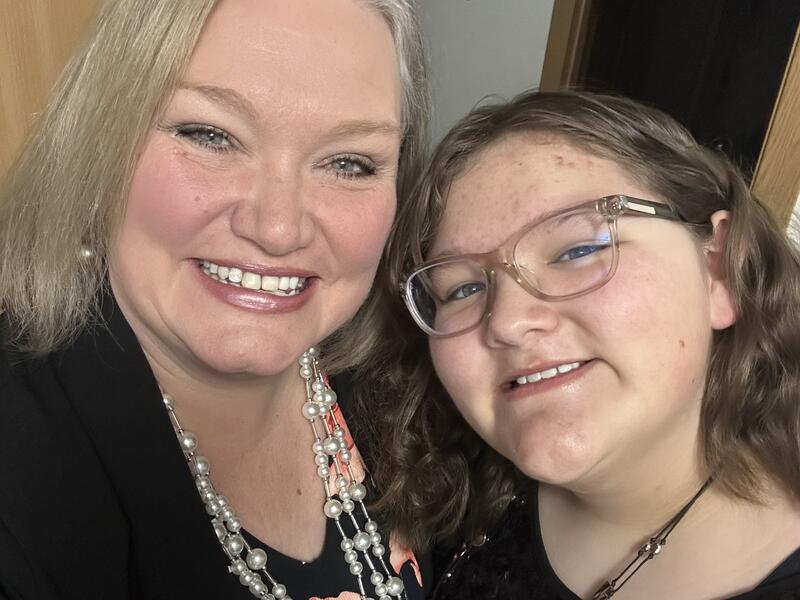
A simple screening at a routine physical changed everything for Ciyah Guffin, a seventh grader from Sioux Falls, South Dakota.
After Ciyah’s appointment, her family was informed that her blood test revealed markers indicating a higher risk of developing type 1 diabetes.
Her mother, Sandy Guffin, was diagnosed with celiac disease, an autoimmune condition that causes gluten intolerance, shortly after Ciyah was born. That led Sandy to enroll Ciyah in Sanford Health’s PLEDGE study (Population Level Estimate of type 1 Diabetes risk Genes in children), a large-scale screening study for type 1 diabetes and celiac disease.
When a child is enrolled, a small blood sample is collected during routine care appointments to screen for type 1 diabetes or celiac disease markers. Screenings can detect these markers, called autoantibodies, before a child shows symptoms.
“I thought this would be an easy way to check for celiac disease because she had gluten intolerances as a baby. We weren’t expecting the result we got.” Sandy said. “Ciyah took it hard. She was 11 years old, and you think your whole world’s going to change.”
Ciyah’s screening was negative for celiac markers, but positive for type 1 diabetes autoantibodies.
This early detection gave the Guffin family a head start in managing Ciyah’s blood sugar.
Knowledge of type 1 diabetes risk becomes power
By enrolling for follow-up care in the PLEDGE monitoring study, the Guffins gained access to ongoing monitoring tools. This allowed them to monitor for blood glucose, or sugar, changes early.
“We enrolled because we wanted to understand what’s going on with her condition,” Sandy said. “She goes in every six months for glucose tests, blood work and a 10-day glucose monitoring period. It helps us stay ahead of her condition.”
The hope is to ease into next steps, like starting insulin, and eliminate health scares or a hospital stay due to sudden changes.
Support at home, school and clinic
“Ciyah was scared at first. You go to all the worst-case scenarios, but we’re not there,” Sandy said. “Her team was incredible. They connected her with a counselor who did a beautiful job of explaining where we are and where we’ll be if she starts to show more symptoms.”
Her PLEDGE monitoring study care team provided all needed supplies to monitor blood sugar at home. She also now sees an endocrinologist annually.
As Ciyah’s routine and care needs changed, the Guffin family also made changes in their personal lives.
“I’ve met with the nurses for the middle and high school, and we have a plan in place for when she starts insulin or glucose monitoring,” Sandy said.
The family adjusted their eating habits and became more mindful of the foods they buy. They’ve also become more active.
“Before this year, Ciyah had never played sports, so I encouraged her to join the volleyball team because it’s something she enjoys,” said Sandy.
They also reference a chart from her care team for managing blood sugar or other type 1 diabetes symptoms at home. It outlines steps for checking blood sugar levels, when to contact her doctor, emergency actions and more.
PLEDGE has impact for mom, too
The study not only changed Ciyah’s life, but also had a profound impact on Sandy’s.
Sandy was diagnosed with type 2 diabetes shortly before Ciyah was entered into the PLEDGE study, but she wasn’t responding to medication. During a visit with Ciyah’s endocrinologist, they discussed family history and noticed Sandy’s symptoms resembled Ciyah’s.
“She encouraged me to make an appointment for myself,” Sandy said. “That’s when I found out I had LADA, not type 2 diabetes.”
LADA (latent autoimmune diabetes in adults) is a form of type 1 diabetes that develops much more slowly in adults and may often be mistaken for type 2 diabetes. This can lead to delays in starting insulin therapy.
To Sandy, her new diagnosis was a blessing. She credits the PLEDGE study for opening the door to a new life.
“The world is now very different for me. I feel like a human again. I don’t know that we would have found this had it not been for my daughter being in this study,” she said.
PLEDGE brings peace of mind
“This is something you never want to have happen to your child,” Sandy said. “But the process has made it less frightening. I feel like we are all part of the same team and ahead of the game.”
The Guffin family encourages other families to consider screening through the PLEDGE study. Eligible patients include:
- Newborns, enrolled by pregnant women at 36 weeks gestation
- Children ages 0-5 or 9-16
- Children ages 6-17 who have a sibling with type 1 diabetes or type 1 diabetes antibodies
“It’s peace of mind to know that your child doesn’t have one of these conditions, but it gives you the ability to take control of things if they do,” Sandy said. “Our family transitioned gradually into this lifestyle change, rather than changing everything overnight. Having that knowledge ahead of time and being ahead of the game is priceless.”
Learn more
- Olympic gold medalist promotes diabetes research at Sanford
- How to enroll in type 1 diabetes prediction study
- Early diabetes detection prevents serious illness in toddler
…
Posted In Children's, Digestive Health, Endocrinology, Genetics, Research