Episode Transcript
Courtney Collen (announcer):
“Reimagining Rural Health,” a conversation series brought to you by Sanford Health. In this series, Sanford Health leaders and expert guests share insights, innovations and real-world solutions to the toughest challenges in healthcare today. Each episode explores the ideas, tools and partnerships advancing rural healthcare and strengthening care in communities across the country.
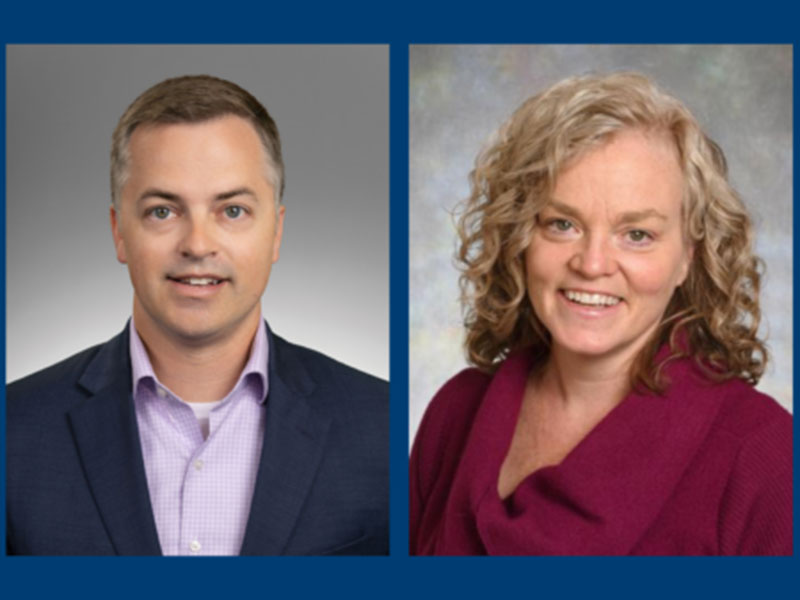
Joining us in this episode is Dr. Daniel Hoody, chief medical officer and chief physician at Sanford Health in Northern Minnesota, as well as Dr. Meghan Walsh, chief academic officer and president of the medical staff at Hennepin Healthcare.
Together, they explore how a rural-urban residency rotation model offers an innovative, scalable approach to physician training — one that addresses rural workforce challenges while strengthening the resident experience.
Dr. Dan Hoody (host):
Meghan, welcome. Thanks for joining us. I’ve been really looking forward to this conversation.
You oversee residency programs at a large Level 1 safety net academic medical center, Hennepin Healthcare of Minneapolis. So, when you consider that only 2% of residency training programs occur in rural communities where 20% of the population lives, what does that tell you about how we’re building the physician workforce today?
Dr. Meghan Walsh (guest):
Dan, the reality is that nearly half of the residents who train in a state stay in the state when they’re done training, and nearly two thirds remain in the region where they train. So, it tells me that where we’re training folks is where they’re remaining in the vast majority of training in urban areas. So that’s one of the challenges that we’re facing in graduate medical education is that over 95% of our training programs are in big cities.
Dr. Dan Hoody:
Well, I’ll be honest, I did not fully appreciate that gap until I came back to Bemidji. I grew up here, as you know, and I was always aware of some of the staffing challenges. My dad was in a similar role that I’m in now here. And so, I grew up hearing about how hard it was to get clinicians up into Bemidji. But seeing the data in front of us really brings us into focus.
Dr. Meghan Walsh:
I think what that tells you is that residency and fellowship is one of the most powerful and reliable levers for building a workforce. We have to move residency education and fellowship education into communities where we’re looking to grow a longstanding pipeline for doctors to work in smaller communities. And it does begin with programs like ours.
Dr. Dan Hoody:
Yeah, we can’t really expect physicians to practice in rural communities if they really never trained there and don’t know what it’s about. You know, in the context of the partnership that we’ve developed with Hennepin here at Sanford Bemidji, you know, thinking back to the conversations that the teams had years ago, what was the hope from the Hennepin side on what could be built?
Dr. Meghan Walsh:
You know, our original vision began in emergency medicine. So, we’ve been training residents and fellows since the late 1800s. We have over 20 programs, over 270 residents and fellows that train here at Hennepin come here to train. And we retain the vast majority. Over 70% remain in the state when they’re done, but they stay in the big cities.
And so emergency medicine came to me saying, I think we need to have some training time in smaller communities. I’m worried about our workforce readiness when we graduate an emergency medicine resident who has only worked in a Level 1 trauma center.
In their department, in our department, probably within three to five minutes, they can get any specialty at the bedside in the emergency department. Neurosurgery, general surgery, psychiatry, OB/GYN, you name it, they can get bedside assistance from other specialists, from other team members, from advanced technology, et cetera.
And then we graduate these trainees and they go out to communities all over the country. And many of them enter their first job not having trained in maybe perhaps lesser resourced areas or where certain subspecialties don’t exist. And frankly, a career is a long time to be afraid.
And so the emergency medicine groups that we really want to have among at minimum opportunity for residents who want to work in smaller communities or outside the metro to be able to train in these spaces. You know, Sanford Bemidji was the perfect partner because there was some core faculty members at Sanford who were also, who trained in big cities, who moved to Bemidji, who really wanted to teach and train in emergency medicine.
I think that the partnership began with a relationship, and the relationship was with faculty and between faculty. And once we started with that relationship, the rest was logistics. So it was a pilot trial, and it was so popular that it moved from one specialty with one resident and now has expanded to, gosh, five specialties. And I mean, I don’t know, I think we’ll have over 20 residents having experienced Sanford Bemidji in a wide array of fields.
Dr. Dan Hoody:
You know, and as I reflect on that approach, what comes to mind is my experience growing up as a rural kid and getting all the rural interventions, going through a rural med school, going through the rural track at the rural med school, and spending a majority of my career in an urban center, while this intervention doesn’t really focus on rural kids.
It’s with the emergency medicine approach that we all took that it takes every single resident, even those that have never had a rural experience at all. And that’s a different fundamental intervention than most of the interventions we’ve had to try to get medical trainees in rural practice.
And so when you think about that in particular, there are lessons learned from the, not just the “I’m interested in rural medicine” (trainees), but we’re going to take all comers from a residency specialty. Are there lessons learned there that we can extrapolate as we move forward?
Dr. Meghan Walsh:
You know, the current state in the United States around rural training is that rural health systems need to build and grow their own training programs. That’s where the federal funding is. That’s where a lot of the expansion criteria exist within accrediting bodies. You know, create either a rural residency program or a rural training program where, you know, one-third of the time or just under half the time is spent at an urban center and the rest is spent in a rural community.
But what hasn’t been, I think, really explored to the degree that we are creating here in Minnesota is a one-month rotation for every single member of a residency. You know, basic back of the napkin math, if you grow an emergency medicine residency program, you want a rural program, it’s going to take you years to build it up. You are going to have to carry all of the infrastructure and the accreditation requirements, which is a lot of work, a lot of personnel, a lot of investment. And you may recruit three, four per class over a three-year program. You will graduate nine ER residents, emergency medicine residents in three years, plus whatever it took to build.
In this model, we send one resident per month. We have 12 per class. So, in three years, you’re having 36 residents experience Sanford Bemidji, the emergency medicine program there, meet the faculty, see other ways of practicing. It’s just a completely different scale with less investment. And I think it’s a great way to try out a new space and make sure that it works for everyone. And I’d be lying if I said I knew that this was going to really grow and that this would be really popular.
But every single resident that has gone up there from emergency medicine to now internal medicine, general surgery just came back from their first month up there, psychiatry is going up there. And I think all of these specialists, these specialties have been really well received, and the residents have come back and they’ve spread frankly the joy and convinced their peers that this is an important experience. So, they moved it farther and faster than you and I could have just kind of telling people it was a good experience.
Dr. Dan Hoody:
You know, I would agree with that. I’ve heard similar feedback on the ground here from our staff. And I think when I think of the outlay and design that you just walked through, I imagine the majority of the residents coming up here sitting at 80% of our medical trainees that have never set foot in a rural facility in their training.
And so what’s exciting to me as I think and reflect on what we’ve accomplished so far is that we really are turning a passive decision about not to practice rural into an active one for so many of the medical trainees that are coming through here, which is exciting.
And I want to pivot a little bit to build on your last comments there. So the resident experience. So you shared that residents and applicants were in interviews, had started to ask, is there a rural experience? Is there any way to get me out of downtown Minneapolis for at least part of my time? That stood out to me both as a rural kid, somebody who’s worked urban and now back in the rural setting.
So what were you and your program directors hearing from residents? How did that interest evolve over time? And what lessons can we learn from that going forward?
Dr. Meghan Walsh:
Well, the current state of either you train in an urban hospital or you go to a rural training program, which by the way doesn’t exist for every specialty. Rural programs are primarily primary care, maybe a sprinkling of general surgery.
There’s one up in Duluth, which isn’t truly rural. And you kind of recruit to the region. And I think what that did is it selected for folks who said, I want to work in a city or I want to work in a small town. And I think that we really decrease the opportunity to really learn differently and maybe open the door to people wanting this future practice.
And so I think this hybrid mix of the two really helped us bring folks in who want to do some real time, but don’t want all of their training there. I mean, I want to be a general surgeon or if I want to be a general surgeon and I come to Hennepin and I want to really have the reps and I am going to get the reps at a Level 1 trauma center. But I think I want my life to be in a smaller community.
There is a lot of fear in a resident’s mind that they aren’t going to have the skills to practice in a rural community. What do I do when I don’t have all these specialists? How do I enter into maybe doing C-sections as a general surgeon when I never did them in a trauma center because I have OB? And so I think that residents started coming to Hennepin saying, wait, I get the moon and the stars. I get to have all the reps in an urban center. And I also get to try out a smaller community.
And in fact, Dan, I just got an email back from our first general surgery resident who was up there last month. I think you met him. He sent this great email about this being a phenomenal rotation. And he mentioned things that I hadn’t thought of. One of them is that he had exposure to techniques that we don’t do at Hennepin. So he said, I got to do all these different procedures that I don’t do at Hennepin because ENT does it or ortho does it. And I got to do it.
But he said also techniques that come from Mayo and Marshfield and UND and other graduating programs. When I tell you that 87% of our faculty trained at Hennepin, we start to generate a culture of this is how you do things. But when you leave our system and you go to yours, they’re starting to see, wait, there’s multiple ways that I can approach this procedure. And he thought that might have been the most valuable part of going up there is just getting all these other skills that he’s never been introduced to. And he’s a fourth-year surgery resident.
"We can't really expect physicians to practice in rural communities if they really never trained there and don't know what it's about." Dr. Daniel Hoody, Sanford Health
Dr. Dan Hoody:
You know, and as we’ve had the good fortune of being able to take some of the residents out for dinners and other activity excursions and they fill us in on the experience they’ve had here so far. And we were just out at a resort on the north side of Lake Bemidji earlier this month.
And one of the emergency medicine residents alluded to that similar thing. There’s the Hennepin way and then there’s a whole bunch of other ways. And this is a great way to learn the other ways. As we’ve reflected on the resident feedback, it’s also been interesting to see the staff feedback here.
When I remember the discussions shortly after I got on the ground and we were talking about the emergency medicine residents to come up, I had heard from staff, not just in the emergency department, but in other specialties that were understanding we may be expanding this at some point, they said, I didn’t come here to teach. And we had a lot of discussions about that.
And as we unpacked things, even before the first resident got on the ground, it was important for people here to understand that we weren’t expecting chalk talks on sodium transporters in the kidney or the Krebs cycle or anything else like that, that our staff were going to teach by just showing residents how they take care of patients in Bemidji versus the Level 1 trauma center and all those apprenticeship learnings that the 200-plus clinicians here have brought from their own training programs, the apprenticeship of medicine.
And so it was exciting on the ground here to see even with that first emergency medicine resident, the flip after two shifts in the ED, where it went from, “hey, I’m not sure I want a resident” to “when does the resident get to work with me?”
And I was actually meeting with all the emergency medicine physicians last night at my house, just reflecting on the last year and planning for the next year. And one of the most exciting things was hearing all the staff around the table highlighting their commitment to and how they wanted to better standardize the resident experience in Bemidji.
They all want the residents and they want to make sure that if somebody else has a cool case, when the resident’s working with another staff, we have a good understanding of how we can make sure they’re getting the best experience that they can.
So, it’s been really exciting, not just to see the staff appreciation and the staff interest and the staff curiosity and the emergency medicine side, but we’ve seen that expand into internal medicine. The surgery experience you just talked about was great. The surgeons here loved it, and they’re excited for the three residents that are going to come up next year.
It’s been really fun to see that powerful effect that the trainees can have on just increasing the curiosity in the clinical care environment here. So it’s been a great big win on our side too. And some myths that didn’t turn into truths, and the truths have been really largely positive.
Dr. Meghan Walsh:
Well, and I think your faculty had largely been working with medical students, which is a very different experience than working with residents who have had a ton of experience in the OR who, you know, open or close semi-autonomously, right, to an ED resident who can grab an ultrasound and diagnose something independently. And I think that that contributes to actually your ability to care for patients, your ability to learn in both directions.
And I think we underestimate how much a training environment or a trainee also teaches me. I work in a clinical environment where I am learning. When did we, you know, I remember when pro-calcitonin started getting ordered and I thought, what, you know, grand rounds did I miss? Everybody’s, you know, ordering pro-calcitonin, telling me the literature, starting to share it. We’re talking about applications and it’s true. And ultrasound – one of the things we worked with your team on is how could we get more ultrasounds on campus through state support?
And in turn, our residents are getting, especially in the emergency department, a ton of ultrasound training. And then they can bring it up to some of your faculty who may not have had that in their own training programs. Then I think it moves everybody to a higher bar because the teachers become the learners and the learners become the teachers.
Dr. Dan Hoody:
Such a great and powerful point. And it’s been exciting to see, I know Casey, the surgery resident we had this last month, gave a grand rounds on, I believe it was frostbite or some other surgical complication that is very common here. And it was a, what I heard it was a full house. So it’s been exciting to see them integrated into our learning environment beyond just the clinical care. Absolutely.
Dr. Meghan Walsh:
Can I ask you a question? Are you finding that by having trainees, it’s affecting your ability to recruit?
Dr. Dan Hoody:
It’s an interesting question. It’s a powerful one. The goal of this is educational right? We want to do our part for educating the future of rural clinicians throughout America and so ultimately on its own if residents leave with a better understanding of what it’s like to practice in rural America, it’s a success for us.
There’s a secondary component that we are hopeful to see if there are some particular residents that really find a resonance with working here that they’d be interested in choosing a career here. And I can say prior to 2024, I think we had zero emergency medicine residents in the previous 10 years interested in a job in Bemidji. And since this started, I believe we’ve discussed employment with six. And I think we have our first two emergency medicine clinicians that will be working here in the fall as staff physicians. So it’s been exciting to see that component.
We obviously hope that we can put on a good experience for the residents and if it’s good enough that they want to come back and join us. This is a great place to work. Rural medicine obviously has a lot of benefits to offer people that even ones that have never lived or practiced in a rural community and so it’s been exciting to see that. We’ve also heard interest from some of the other specialties that we’ve had here as well.
So we expect in the coming years to see ultimately the fruition of whatever pipeline forms from this intervention throughout the different specialties that we’re looking at.
Dr. Meghan Walsh:
That’s great.
Dr. Dan Hoody:
You’ve highlighted, Meghan, a few of the resident feedback components. Are there any others, feedback or reflections that stand out beyond what you’ve already highlighted?
Dr. Meghan Walsh:
Well, I’ve gotten two pieces of feedback about how the environment that they’re staying in, their housing, just how supportive the community has been. Minneapolis has been hard. The hospital has been a hard place to work with a lot of sort of events over the last few years. And it isn’t always this sort of welcomed environment for a physician learner to be in a setting where they feel like there’s a lot of gratitude for being in medicine or taking care of a patient for a whole bunch of different reasons.
But I think the fact that the community really welcomes them and says hi to them and says, are you the resident? I keep hearing stories of like, I feel like I’m part of something. And even in a short period, of, I’m not just the resident over there, but I’m actually kind of been invited into the community.
I have one internal medicine resident went to his first ever hockey game. He could not stop talking about how fun it was. Another resident that went out for dinner or drinks or something. And there was a whole community of faculty who were there.
And I think just seeing, you know, the lived experience of what does it feel like to, I mean, to sort of build that identity formation, because they’re all in training, but they’re trying to figure out what does my life look like? How do I want to live it? Where do I want to work?
You know, are you all loving where you are or not? And I think there’s much more integration of work-life happening in your space than they get at Hennepin. We all go home, we all leave the hospital, and there isn’t a lot of intersection between the faculty world and the resident. And I think that there’s some real value to sharing in that a little bit more.
Dr. Dan Hoody:
That’s great to hear. And it also reminds me of some of the feedback we’ve heard even just recently this week in a primary care meeting of patients attributed to our primary care clinicians that are coming back from visits in the emergency room saying what a wonderful experience they had.
They got two doctors, they got a resident and another doctor. And as we’re talking about expanding into other specialties, we’re hearing more and more from our patients that they also, they like it and they can see the benefit of having trainees in the community.
I did hear there was some disappointment in that we have not fine-tuned the alert for when the Northern Lights are. We’ve had a couple of residents that have had great experiences with the Northern Lights. A couple were disappointed because we had the Northern Lights and apparently nobody told them, so we’re working through that. So there’s still a few you work out, but largely we’re trying to really give them the full experience.
Dr. Meghan Walsh:
You know, I’ve spent a lot of time at the Capitol because Hennepin’s just going through a lot and it has been so powerful to have greater Minnesota legislators recognize that we’re doing this shared work with, you know, in Beltrami County, with Sanford Bemidji, that the fact that patients recognize that a resident doctor, that’s meaningful because that also generates more support for the necessary kind of resources we need as a teaching hospital to stay viable.
So I think more and more of these partnerships, building bridges between the rural and the metro regions, having residents have an experience where when they get a call from a rural community and there is a provider on the other end of the line who is really unable to manage something that they may have the knowledge to manage, but they don’t have the resources or other means to take care of it, there is a lot more empathy in that connection in how do we get you here? How do we support the patient?
Hennepin has always served that state role, but I think that it has built out this whole cohort of resident physicians who are showing up differently when they think outside of these walls of being in an urban hospital. So I think the impact is so much bigger than, right, did I learn how to manage tamponade in the emergency department? But the people they meet, the stories they hear, the connections that they have over, I think, a longer run is going to be valuable for our state through programs like this.
Dr. Dan Hoody:
It’s interesting you say that because I think a quoted fact is that 80% of the physicians in Minnesota trained at Hennepin at some point or somewhere in that ZIP code, is that right?
And I’ve been on the ground here two and a half years and it’s not infrequent that I go into our doctor’s lounge here and there’s a majority of our clinicians have rotated through Hennepin, whether it’s in a med school or residency. And you hear a lot of stories talking about Hennepin and the wonderful staff there and their incredible experiences they had. So it’s been easy to see historically, you know, what a statewide resource Hennepin is.
And I think to your point, this expansion of actually getting trainees on the ground in rural Minnesota, for all the reasons that we’ve highlighted and more, it really brings front and center what a tremendous asset it’s been to us as a rural system, in particular Northwest Minnesota trying to achieve what we’re trying to achieve for not just education, but again, overall workforce goals.
So we’re excited to see where this can go in the future, which is I think a good segue to where we talk about what’s next. So, you know, a lot of learnings, a lot of successes, I’m just curious from your perspective, Meghan, you’ve got a tremendous amount of both experience on the ground in the Twin Cities as well as national experience through ACGME (Accreditation Council for Graduate Medical Education) and other national educational forums.
What do you see as next for this partnership from your perspective, and then how do you see this informing the national conversation about what should the future of the rural component or GME strategy for ensuring that we’re training doctors for all of America, not just the urban centers?
Dr. Meghan Walsh:
Well, it’s a big question. I think absolutely what we are seeing in only a two-year run is that as little as four weeks in another community during residency can change the trajectory of a physician’s practice. They may graduate from an urban center and actually spend the rest of their career in a smaller community.
I’m also seeing that it is more affordable. It is easier to stand up. It translates across multiple specialties. It’s a little bit of a lower investment, not just in the financial, but in the infrastructure needed to sort of have an accredited health system. So that helps smaller, lesser-resourced hospitals and clinics actually take a stab at trying to partner with training programs throughout the state and actually get them into their communities.
So, I think we’ve shown that it works. It’s a win-win for both of us, right? It’s a win for me to recruit amazing talent to my training programs, knowing that they get an opportunity to go to this other system and see it. I think it’s great for you to sort of also have the ability to show the amazing resources and faculty and community that might be a place that that person wants to spend the rest of their career. So that’s been really valuable.
I think the state has seen this. So, I really need to highlight that MDH in Minnesota (Minnesota Department of Health) has helped make our program financially viable for our health system and for yours. So this was a big experiment, and they funded us with a really sizable grant to get the program off the ground. Came back, funded us again for internal medicine, surgery, psychiatry, emergency medicine, internal medicine, combined programs.
And they are thrilled with the results that the residents love it, that many of them want to actually practice in greater Minnesota and that it isn’t requiring you creating an entire, you know, teaching hospital in Sanford Bemidji. And I think this experiment in our state becomes an experiment for the country. I think that CMS (Centers for Medicare and Medicaid Services) has been very rigid in how they fund resident training. It’s only been through sponsoring institutions.
That is why big cities have big hospitals that have the lion’s share of residency training. And if we keep training them in big cities, our graduates are going to keep working in big cities. So how do we help change CMS’s funding model such that CMS starts to say, maybe there is value in a one-month rotation? Maybe we do need to look at exclusive partnerships where every resident goes to this, you know, this other city to train. This is not a common practice throughout the country.
We are one of a few, and I would say we are the only one doing it to this degree. Exclusive partnership, rural, urban, multiple specialties, and frankly, the residents loving it such that they’ve become our PR for the program. I don’t have to force people. I don’t have to ask people. They are building the energy that makes every class after them want to do the program.
And more importantly, it’s actually recruiting medical students who are interested in this combined, I get both big city and small community and I get to sample them both and see what I want to do for the rest of my life.
Dr. Dan Hoody:
It reminds me of in my role of recruiting our staff clinician workforce, more than once in the last year have I had what I would consider very top priority recruits ask, can I teach? When I highlight that the success we’ve had in this program so far, the extrapolation of this program into other medical and surgical specialties, it has made a difference in our ability to hire.
So, we just hired one of our most difficult recruits, we signed them last month. A key component of that was saying, can I take residents? And so it’s really, it’s been exciting to see that component on the end of pipe workforce for our Northern Minnesota needs really come to fruition through this program. And it really, to me, it highlights that urban medical centers, in particular academic medical centers, not only can be part of the solution. I think they need to be for the rural workforce clinician crisis in particular.
And that what I really like about this, being a continuous improvement junkie, this is a relatively small change in training design, and it has the potential to have a really meaningful workforce outcome. And that, to your point about national extrapolation or generalization of what we learned here, it makes me really excited for what the future holds in both here in Bemidji and with the partnership with Hennepin and other training centers, but also how we can take lessons learned into other portions of America that are really being burdened by the rural crisis.
Dr. Meghan Walsh:
Well, I know I’ve said this a couple of times, but to not underestimate that a single month can completely change a worldview, right? And so the very first resident, we intentionally picked a resident who was going to be our first experiment. He is a high, he was a high performer. He was super upbeat. He was thrilled about going up to Bemidji.
And so we sent him for emergency medicine, wondering how’s this going to land. And he came back after the most thrilling month where he felt that he had autonomy, but he had supervised support, that he could really stretch his wings and be challenged, but also realize his training positioned him to take great care of patients in this community, and that he didn’t need all the Level 1 trauma wraparound services to really provide excellent care.
And it gave him such confidence, and I’ve heard this repeatedly, that he took a job after graduation in a rural community in Utah specifically because of this experience.
Obviously, I’d want to benefit Minnesota, but I even more so want to open hearts and minds to a very satisfying career in a smaller community because you spent one month in that program. And I think that’s going to be – perhaps it’s unmeasured now – but I think we’re going to see more and more of that stemming out of this program in the next year or two.
Dr. Dan Hoody:
And I think, correct me if I’m wrong, I think that resident was the first one to, in Hennepin history to actually hit his case log for a fishhook removal. Yeah, did not know how to remove a fish hook up prior to this rotation and he’s pretty proud of it and actually I believe you got to keep the fishhook so not sure if that’s protocol. I think he kept it. We’ll keep that one off the record. Any final reflections or comments just on the partnership that we’ve had and the future that sits in front of us?
Dr. Meghan Walsh:
I do think that for a program like this to work, there has to be a cultural “choose Hennepin for the mission.” And I think that Sanford Bemidji shows up the same way. There is a population served and a mission to sectors of the population.
You have travel communities in your vicinity. You have eager faculty that are open-minded to take on a trainee. I’m not sure that the model is so perfect that it could be planted anywhere and work.
So there are some things we’ve seen, housing availability, a community that welcomes them, trust in someone you’ve never met coming into a rotation for a month, a high performing team on your end and on my end where we got all the logistics down so that we could get all of the paperwork necessary for accreditation. And so it was a perfect pairing.
And I think if you’re looking to build something like this, really making sure that you have that cultural alignment so that you can really take off. And I think that was part of our secret sauce that in retrospect I think really mattered. And I might not have seen all of these aspects as we entered into this before we got going. So I’m really happy for that.
I think that it was a really terrific fit and I can see us having more of our trainees wanting to head up there.
Dr. Dan Hoody:
When I first got on the ground here, Rod Will, who’s been one of our internists for decades, he told me that Sanford Bemidji is the Hennepin of the North. He trained at Sanford or at Hennepin. And I think that speaks to the cultural alignment.
There’s been so much integration and experience and apprenticeship coming through the Twin Cities and Hennepin, in particular that cultural alignment I would agree is very strong. There’s a very strong community centric orientation to the medical group here. They really take accountability in serving everybody in the community and it shows up to your point in the success of this partnership.
Dr. Meghan Walsh:
Well, and I mean, think of recruiting people who really want to be good doctors. They’re going to do the reps. They want to be clinically excellent. They may not want to be in a research pathway or other things as for a career.
And so I think this idea that a general surgeon comes to Hennepin to operate and then goes to Bemidji where they’re given the opportunity to do that. I think if your future is, I want to do heart transplants, I’m not sure that Bemidji is the place for you.
But it sure as heck is for Casey and his wife, both who came from North Dakota, who came to our program to be really great surgeons, but who want their future to be in a small rural community. And they don’t want to be afraid to be a surgeon in that community because they weren’t trained well enough.
Dr. Dan Hoody:
Such a great point. Thank you so much, Meghan, for joining me today. I appreciate the conversation. More importantly, I appreciate the partnership, your leadership, and your commitment to thinking differently for how we train the next generation of physicians.
I just want to close by saying the work that we’re doing here together has real impact, not just for Hennepin or Sanford Bemidji or Sanford Health as a whole, but for all the communities that we serve. And I’m really excited about what’s ahead.
Dr. Meghan Walsh:
Thank you, Dan. Same with us. It’s really opened the door in ways that gets us out of these four walls in downtown Minneapolis. I think the state is watching. And legislators are thrilled with a lot of the work that’s come out of this shared program. So thank you.
Dr. Dan Hoody:
Thank you. We’ll see you on the lake.
Courtney Collen (announcer):
Thank you for listening to “Reimagining Rural Health,” a conversation series brought to you by Sanford Health.
Hear more episodes in this series or other Sanford Health series on Apple, Spotify, or news.sanfordhealth.org
Get more episodes in this series
…
Posted In Leadership in Healthcare, News, Physicians and APPs, Rural Health, Senior Services, Thought Leadership