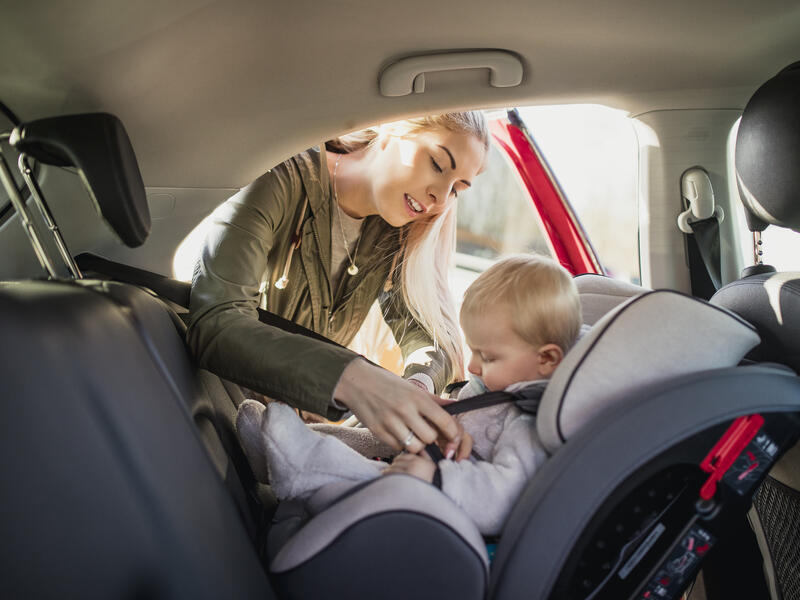
Engineers work hard to ensure that cars and car seats are designed to keep kids as safe as possible. But it’s up to every parent to take full advantage of these innovations by making sure car seats and booster seats are used and installed correctly.
Many parents are eager for their infants to “graduate” from rear-facing to a forward-facing position. If your child is placed in a forward-facing position too early, they are at risk for head, neck and spine injuries in a crash.
Why are rear-facing car seats best?
Your child riding rear facing is much safer than a child who is riding forward facing. In the event of a crash, a rear-facing car seat will absorb the forces from the crash. This allows the shell of the car seat to:
- Support your child’s head
- Support your child’s neck
- Protect your child’s spine
It is especially important for rear-facing children to ride in a back seat away from the airbag.
When can I turn my child’s car seat forward-facing?
The American Academy of Pediatrics recommends children remain in a rear-facing car seat as long as possible, until they reach the highest weight or height allowed by their seat – usually until they’re at least 2 years old.
The height and weight limit is located on the labels on the side of the car seat or in the owner’s manual.
How do I know my child is safe in their rear-facing car seat?
There are several things to look for when strapping your child into the car seat:
- Inch test. Once your car seat is installed, give it a good tug at the base where the seat belt goes through it. Can you move it more than an inch side to side or front to back? A properly installed car seat will not move more than an inch.
- Pinch test. Make sure the harness is tightly buckled and coming from the correct slots (check your car seat manual). With the chest clip placed at armpit level, pinch the strap at your child’s shoulder. If you are unable to pinch any excess webbing, you’re good to go.
- Anchor check. To lock the car seat in place, for both rear- and forward-facing child safety seats, use either the car’s seat belt or the lower anchors. In addition, for forward-facing seats, use the top tether to lock the car seat in place. Don’t use both the lower anchors and seat belt at the same time. They are equally safe, so pick the one that gives you the best fit in your vehicle.
Make it a rule to make every passenger safe in the car:
- Toys can injure your child in a crash, so be extra careful to choose ones that are soft and will not hurt your infant. A small, loose toy can be dangerous and injure your baby in a crash. Secure loose objects and toys to protect everyone in the car.
- Be a good example and buckle up for every ride. Be sure everyone in the vehicle buckles up, too.
- Never leave your child alone in a car, not even for a minute. While it may be tempting to dash out for a quick errand, the temperature inside your car can rise 20 degrees and cause heatstroke in the time it takes for you to run in and out of the store.
Seventy-three percent of car seats are not used or installed correctly, so before you hit the road, check your car seat. If you are having even the slightest trouble, questions or concerns, certified child passenger safety technicians can help you install your car seat or double check your already installed car seat at Sanford Children’s CHILD Services.
Remember to check the labels on your car seat to determine when to turn your seat from rear-facing to forward-facing. Rear-facing is the safest position for your child.
Contact Sanford Children’s CHILD Services at (605) 312-8390 for more information about car seat safety or call the Helpline Center at 211 to make an appointment at your local fire station.
Learn more
- From infant to teen: Proper car seat for each age
- Should my child be in a booster seat?
- Keep kids safe: The ABCs of childhood injury prevention
…
Posted In Children's, Family Medicine, Parenting