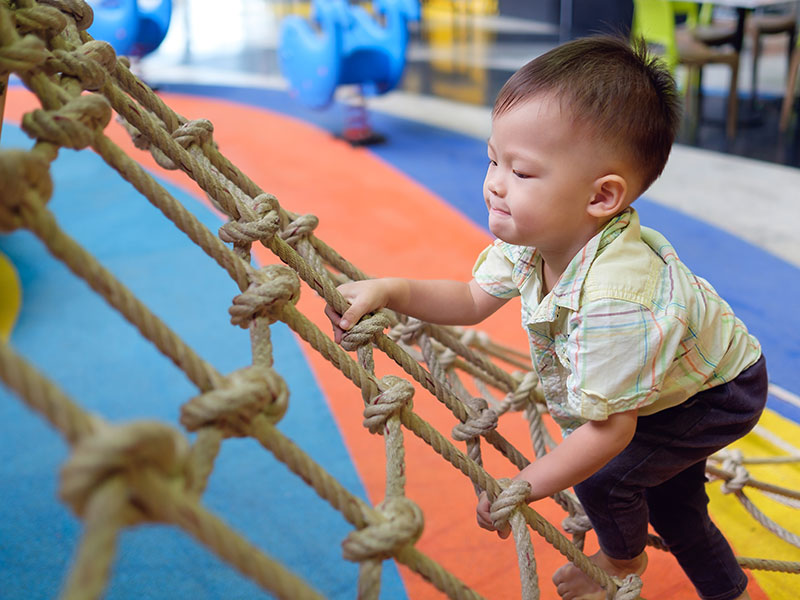
Children are born with a desire to explore and understand everything around them. They put things in their mouths, they touch everything, and they want to get into every room and every cupboard. Children are also very curious about what is inside of them – or what they can do.
At 2 years of age, children have typically already mastered several skills that help them to explore, like walking and climbing. Parents want children to develop the skills that will be the foundation of children’s ability to be more independent, help with responsibilities, and enjoy activities that require coordination.
Check your protective reflexes
There are a few things parents do that might discourage children from exploring what their body can do:
- Panicking at minor falls and mistakes
- Lack of childproofing leading to accidents and fear of exploration
- Placing too many restrictions on a child’s area to explore
- Denying children sufficient time to work on different types of movement and coordination
How we can avoid some of these mistakes:
- Stay calm and provide encouragement to your child to keep trying if they have a small fall.
- Childproof your home with approved safety items.
- Make the childproofed area as large as you can while still being able to safely supervise the child. Room to move fast or slow or tumble or navigate around furniture leaves a lot of options.
- Avoid keeping your child in swings, cribs or play yards. Instead, provide them with plenty of space to move. If you can regularly go to parks or wide-open, outdoor spaces, that is even better.
Some children may not want to try out new ways to move and do things. Provide extra support and encouragement to these children. Pay attention to their cues to offer breaks or affection when they are too stressed. Don’t give up on helping them take the next steps in their development of movement and coordination skills.
Encourage movement milestones
Here is a list of activities that your 2-year-old child should get regular opportunities to work on:
- Enjoying and seeking out various ways to move and play
- Having adequate endurance and strength to play with peers
- Using hands to help move from one position to another
- Coordinating movements needed to play and explore
- Usually walking with heel-toe pattern and not primarily on toes
- Ability to maintain balance to catch a ball or when gently bumped by peers
- Ability to walk and maintain balance over uneven surfaces
- Walking through a new room without bumping into objects and people
- Only leaning on furniture, walls, or people and sitting slumped over when tired
- Ability to throw and attempt to catch a ball without losing balance
- Coordinating both hands to play, such as swinging a bat or opening a container
- Using both hands equally to play and explore toys
- Coordinating hands and fingers
If your child is not quite able to master these skills, you can keep trying in small bursts or take a little break for a few days or weeks. They might become more interested in the new skills a little later. You can contact your pediatrician if you have concerns about developmental delays.
Learn more
- Twenty tips to keep your toddler safe
- Top toddler discipline strategies to try
- Childhood exercise: How much do they need each day?
…
Posted In Children's, Family Medicine, Parenting