The bodily changes that come with pregnancy are wide-ranging. In regard to your skin, issues like acne, dark patches and rashes can show up and make you uncomfortable.
Like other health care concerns that come with preparing to give birth, treatment options can change. What might be a standard and accepted care for acne, for instance, can be the wrong medicine if you’re pregnant.
Alexandra Geiger, M.D., is a dermatologist at Sanford North Dermatology Clinic in Bismarck, North Dakota, who cares for patients with a variety of skin conditions. She helps guide those who are pregnant toward effective and safe methods to reduce the impact of skin problems during pregnancy.
“For any pregnant woman who has a spot or a rash that is new since they have become pregnant, I’d advise them to see their OB/GYN or primary care provider,” Dr. Geiger said. “If they deem it useful to see a dermatologist, we are more than happy to see them.”

Acne is a common issue
Increased blood flow and oil production are factors behind the radiant pregnancy glow. The increased oil production can also result in acne.
Dr. Geiger emphasized there are certain acne and skin care products that should not be used in pregnancy.
The prescription anti-acne drugs isotretinoin (commonly known by its former brand Accutane) and tretinoin (Retin-A, Altreno, Renova) can cause birth defects and should never be used during pregnancy. Doxycycline (Vibramycin, Monodox, Acticlate), an antibiotic sometimes used for acne, is not recommended in pregnancy.
“Tretinoin is a cream we use a lot for acne,” Dr. Geiger said. “It’s in the same family of medicines as Accutane. Accutane, which is taken as a pill, is not safe during pregnancy because it can cause serious birth defects.”
Generally, most over-the-counter acne cleansers and treatments are safe to use in pregnancy, she said. Keeping affected skin clean and oil-free can help, though it’s best to avoid abrasive scrubs or exfoliants that can irritate sensitive skin.
Better options for acne
The good news is that acne typically goes away shortly after delivery, and there are safe and effective treatments that don’t affect pregnancies.
“We have workarounds for treating acne,” Dr. Geiger said. “Azelaic acid is an over-the-counter or prescription-strength topical that sometimes I will advise patients use, or will prescribe. Additionally, topical antibiotics like clindamycin and erythromycin are typically considered safe as well.”
Pregnancy-safe acne treatments:
- Salicylic acid (Clearasil, Stri-Dex, Neutrogena, CeraVe in low, over‑the‑counter concentrations)
- Azelaic acid (Paula’s Choice, Azelaic Acid Booster)
- Topical antibiotics (Pan Ox, Oxy10, Clean & Clear, Cleocin, EES, Erythrocin)
“We have a short list of treatment options that we can use,” Dr. Geiger said. “But we will work with the patient and find a sustainable and safe solution for them.”
Dark spots on skin
A natural increase in melanin during pregnancy is responsible for areas of darkened skin, especially on the face. To minimize this “mask of pregnancy” called chloasma:
- Be sure to wear sunscreen or wear a hat while in the sun.
- Decrease the amount of time you spend in the sun.
- Stay out of the sun during the peak hours between 10 a.m. and 2 p.m. This is when the sun’s rays are most direct.
Most of these brownish-colored areas fade over time, often within a few months after giving birth.
“Sunscreen is always a good thing to use,” Dr. Geiger said. “In pregnancy there isn’t any concern about any added ingredients. Finding something that has a short ingredient list is best but doesn’t need to be anything too fancy.”
Dealing with rashes
Rashes that appear with pregnancy are common and often appear during the third trimester. They are most often brought on by skin stretching or hormonal changes.
They’re typically harmless and fade away quickly after birth, but they can be extremely uncomfortable while present.
“There are certain rashes in pregnancy that can change,” Dr. Geiger said. “When in doubt, it is best to have a dermatologist to take a look and get their evaluation.”
Skin care procedures
Customarily, procedures like biopsies to remove a concerning mole or lesion are delayed until after giving birth, Dr. Geiger said. Anything suspicious or potentially cancerous may still need to be removed after careful risk-benefit discussion, however.
Elective procedures like laser treatments, as well as Botox injections and chemical peels, are also usually delayed. Micro-needling is OK as long as it isn’t paired with an accompanying topical treatment that’s potentially harmful to your developing baby.
Your skin care routine
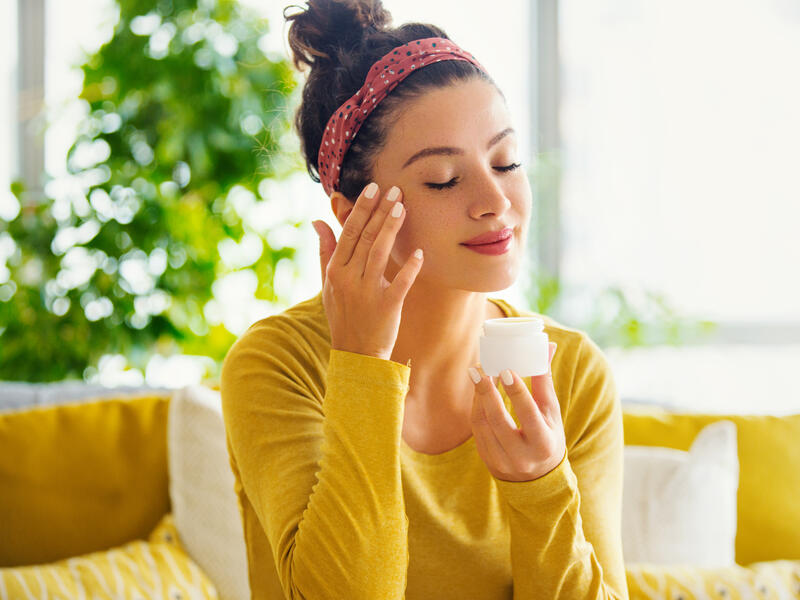
Being proactive in taking care of your skin can have positive effects regardless of whether you’re pregnant. Establishing a skin care routine with cleansers, sunscreen and moisturizers can make a difference.
“In the morning, I recommend a gentle skin cleanser – it doesn’t have to be anything expensive,” Dr. Geiger said. “If your skin is on the dry side or the oily side, you should look for something that targets your skin type.”
The same no-nonsense care principles apply at bedtime.
“I will recommend drugstore brands like La Roche-Posay for nighttime,” she said. “If you want to use a cleanser, you can certainly use the one you used in the morning.”
Seeking care
If you’re pregnant and want effective advice about a skin problem, contact your Sanford OB/GYN or primary care provider. There are safe treatments available that will protect you and your baby.
Katie Foutz, Sanford Health News principal editor, contributed reporting to this story.
Learn more
- Pregnancy glow vs. pregnancy skin
- Protect your skin during the summer months with these tips
- Safe medications during pregnancy
…
Posted In Bismarck, Dermatology, Pregnancy, Women's