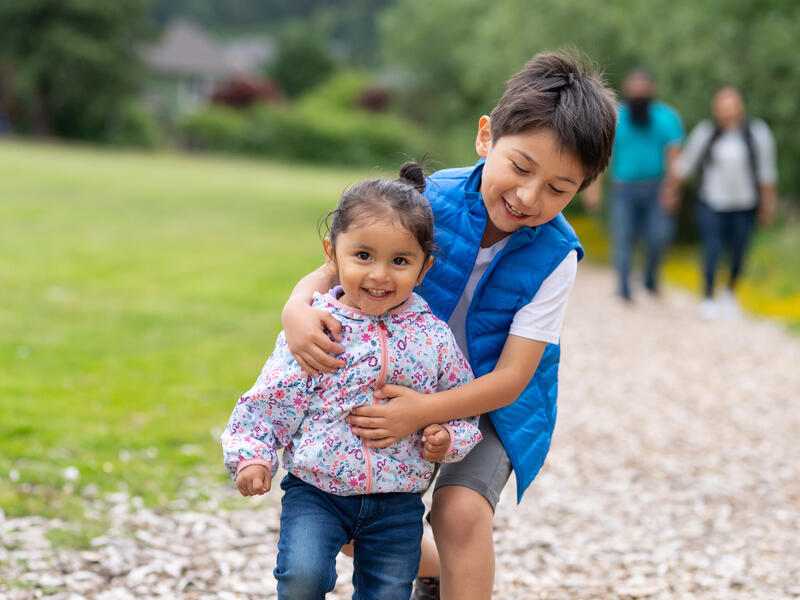
From the moment you told your first child they would be a big brother or sister, you probably imagined a close relationship between them and their new baby sibling.
That cautious moment in the hospital when they were first introduced or that first time you caught the older child reading to the younger one are moments we hope will lead to a harmonious sibling relationship as they grow.
Whether they are already getting along or far from it, there are intentional actions you can take as their parent to help build their bond.
Start small
- Eat one meal together each day. While Mom is in another room breastfeeding the baby and Dad is just trying to get the older sibling to stay at the table for more than three minutes, this may seem impossible. The goal behind family meals is to connect and communicate. If that means the one meal you all eat together each day lasts 10 minutes and the only question you each got to answer was, “What was the best part of your day?” call it a win! You can follow up with what each person shared when the next opportunity presents itself. During bath time, for example, asking follow-up questions lets your child know you heard them and are genuinely interested in what they shared during the meal. For example, “When you got to feed the fish at school today, did the fish come eat the food right away or didn’t she seem hungry yet?”
- Take turns. Take turns choosing family activities, that is. The next free Saturday morning you all have, let one child choose if they’d rather get bagels as a family or all take the dog to the dog park. The next time there’s a chance to all do something together, let another sibling choose the activity. Avoid making the older sibling always concede to the younger sibling’s ideas, as that can make the older one feel that their opinions are less important than their sibling’s.
Grow together
- Spend one-on-one time. Plan time when you as the adult can concentrate on each of your children individually. If one of the kids naps and the other doesn’t, take that opportunity to draw or play outside with the other one. Follow your child’s interests and set your screens aside to show them how much you value your time with them. This allows you to model healthy relationship skills that they can use with each other.
- Step in or let them “hash it out?” It’s hard to know whether you should intervene or let your kids figure it out during disagreements. If someone’s safety is at risk, always step in to break it up. Once they have had time to cool off and are calmer, they can talk through their individual perspectives and a solution. Depending on their ages, they may need help expressing how they feel, coming up with ideas they are both comfortable with, and arriving at a solution. The more they practice respectfully listening to each other and problem-solving together, the better they’ll be at it as they grow.
Sibling relationships can be some of the most challenging and most special relationships throughout childhood. By intentionally incorporating opportunities to build these relationships and helping kids learn to address issues with their brothers and sisters, their bond can be just as strong as we parents always hoped it would be.
Learn more
- Preparing your child to become a sibling
- Help older siblings adjust to a new baby
- Sibling rivalry actually gives kids valuable experience
…
Posted In Children's, Family Medicine, Parenting