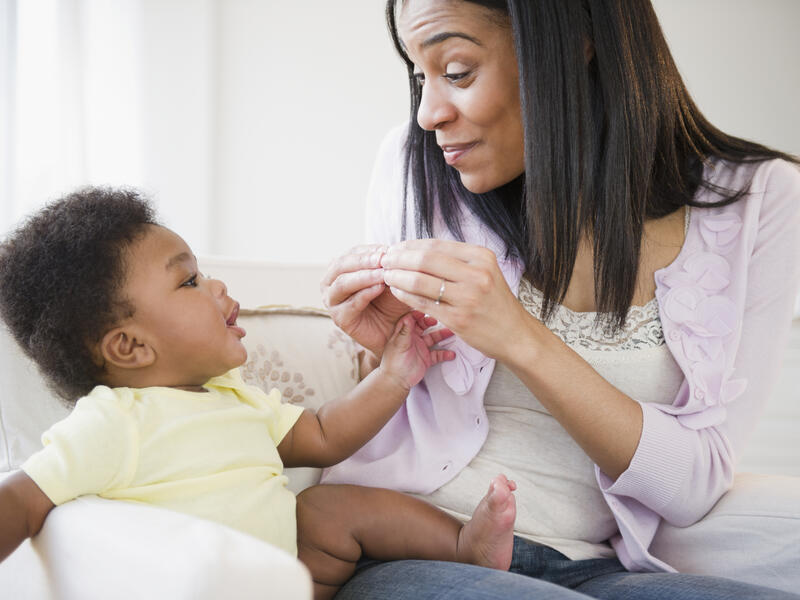
Parents might think of play as toddlers going down a slide, preschoolers pretending, and elementary kids playing tag. But babies can play, too.
In fact, play is crucial to their brain growth, attention development and problem solving. Play-based learning describes how exploring their environment and interacting with toys and positive adults leads to learning for children.
So how do we do it? First, know if your baby is ready. If they can focus their eyes on an object and hold a toy in their fist, they’re ready for play-based learning.
What to use for play-based learning
Open-ended materials like blocks, balls, and stacking toys allow babies to use them in many ways and are great options for play-based learning. Materials like books or photos that feature people that look and sound like those in your baby’s family help them connect with the play. Make sure toys are safe and easy to clean.
As your baby plays with toys, describe what they are seeing. Say things like, “Look, there’s baby in the mirror! That’s you.” Include feelings vocabulary like, “It made you sad that the ball rolled away,” and talk back to your baby when they make sounds to keep discussions going.
Once your baby is mobile, provide filling and dumping toys like non-breakable bowls, buckets, and balls for them to explore. Your baby will learn persistence, cause and effect, and problem solving as they repeatedly fill and dump using these items and toys.
Continue to your build baby’s vocabulary as they play. Describe the colors, textures, and sounds they hear. Talk about what your baby does with the items and the effect. This builds language and cognitive skills.
Play simple games with your baby like “Baby See, Baby Do” as you wave your hand or blow a kiss and encourage your baby to imitate you. Play “Where Is It?” as you hide a toy under a blanket and you respond enthusiastically when they find it. This interaction provides moments of connected play between the two of you. Other interactive games like Peekaboo and Pat-a-Cake help grow your baby’s memory and self-control.
To find out more on how to encourage your child’s development, check out the class, “Why I Do What I Do,” online or in-person.
Now, get back to playing with your baby.
Learn more
- Baby sign language improves communication and bonding
- Babies learn while on the move
- Create safe and simple household baby toys
…
Posted In Children's, Family Medicine, Parenting