
No one likes going to the hospital. Especially young kids. Because of that, Sanford Health offers support in the form of their child life program. It’s a no-cost service provided to families to help ease children’s fears, prepare them for procedures, and of course, allow them time and space to play.
When a child and their family are experiencing stress and uncertainty, the child life services team helps through preparation and education. As experts in play and the psychological needs of kids, they understand how to help children heal through engaging activities.
Easing anxieties
Lorri Ferguson has been at Sanford Health in Fargo, North Dakota, for 34 years. As a certified child life specialist, she works to help make sure kids are well cared for mentally, preparing them for some of their most anxious moments at the hospital.
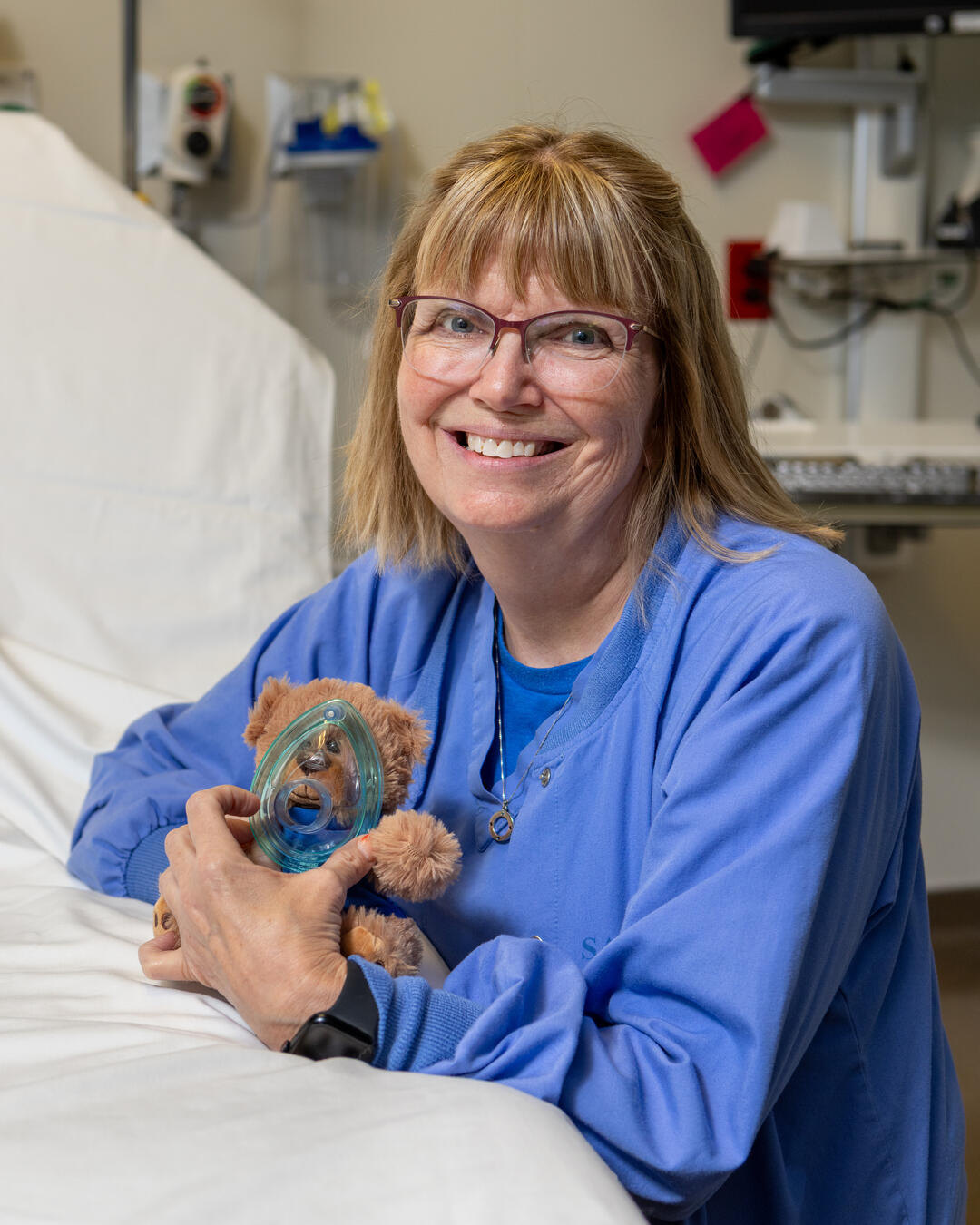
Photo by Travis Jensen, Sanford Health
“A lot of what I do every day is getting kids ready to go for surgery. I have an anesthesia mask that they can play with and use. Depending on the age of the child, we might play with a teddy bear and maybe we pretend that the teddy bear is going to the surgery unit. We might then show them what an IV looks like, talk to them about when it goes in. It’s alleviating some of those fears. A lot of times kids will come in being afraid they’re going to get a poke,” Ferguson said. “Sometimes that education is all that they need.”
Ferguson stressed the importance of honesty and expectation setting with her patients, but she also said bedside manner goes a long way, especially during those scary shots.
“Be honest, but kindly honest. There’s a difference between ‘This is going to hurt’ – that’s honest – and ‘This is going to feel uncomfortable, but you can do this and I’m going to be there with you,’” Ferguson said. “We don’t want to hide things from kids. They’re pretty smart cookies. If we are keeping something from them, then they’re going to worry more.”
Many ways to play
Child life isn’t just for helping kids prepare for tough moments though. The program also provides some much-needed fun during a stressful time.
“A child who’s here for an extended period of time, they may get a daily schedule. Depending on the age of the child, it may include play time, whether it’s making slime or watching a movie. Sometimes it’s as simple as an iPad. Sometimes it’s more like we’re singing a song.
“I had one young man who he loved jokes, so I have my Pinterest list of jokes. We have a facility dog. Music therapy. We had a young man who really wanted to watch this football game, so we shut down Cully’s Cabin for him. We know teenagers very much need their friends. That’s kind of one of their coping mechanisms. They had Cully’s Cabin to themselves and they had a football party in there that Sunday afternoon,” Ferguson said.
Kids staying in the hospital during the school year can connect with an on-staff teacher as well, to stay up-to-date on their school work.
Many child life activities are designed to boost morale, but some are tailored to a patient’s physical recovery as well.
“We want to encourage kids to meet those discharge goals, so maybe that’s going for a walk. One day I was working up on the pediatrics floor and our musical therapist was singing songs and helping this child to walk to those songs,” Ferguson said.
The child life team has the leeway to get creative, and the specialists work hard to make each individual patient comfortable during their stay.
Helping siblings cope
Child life isn’t solely about patients though. They help families too, including parents. They also make it a point to support siblings who may be struggling with their brother or sister’s time in the hospital.
“Every age group is different, but they care about their sibling,” Ferguson said. “Those younger kids, they may feel like ‘I caused this problem,’ or ‘Because I was mad at them, then they developed cancer or they broke their leg.’”
The specialists once again use compassionate honesty to talk to those siblings and ease their anxieties. That can be especially impactful when preparing them to see a brother or sister in a hospital bed.
“We want to be honest with siblings. If it’s something that would be hard for them to see right away, we’re asking parents to let us prepare the child to go in,” Ferguson said. “Maybe their sibling is intubated. That’s hard to walk right into. So let us help.
“I would do pictures and discussion, and in the very end, if it’s OK with the parents, the last picture is usually of the child who is intubated. And I would tell them, ‘OK, this is what your sister looks like right now because we are helping her. She has a tube in her throat. We’re helping her breathe. Do you want to come and see her?’ If they tell me no, then I turn to the parent and I say, ‘Maybe this isn’t the best time. Let’s go to the playroom,’ and then maybe later they want to see their sister. We give them the choice.”
For those siblings, hospital time can also feel lonely with so much focus on their loved one. Child life provides support in that area as well.
“We want families to realize that a lot of attention gets put on the sick child, and so we encourage families to also spend a little time with the sibling doing something special with them,” Ferguson said. “We want to incorporate them wherever we can. And then if they come to bedside and they’ve had enough of that, we want to give them permission to go to the playroom with a parent.”
Child life specialists offer a wide array of support for patients and families at Sanford Health. Perhaps their most significant contribution though, is simply letting kids be kids and making their stay a little bit less scary.
Learn more
- Child life specialists provide invaluable help to families
- VR headsets help children’s patients in ND
- Sanford Children’s named one of best US pediatric hospitals
…
Posted In Children's, Fargo, Foundation